
Ultra ince öğütme teknolojisi, 0,5 ila 5,0 mm boyut aralığındaki malzemeleri mikrometre hatta nanometre ölçekli parçacıklara ayırmak için mekanik veya akışkan dinamiği kullanan gelişmiş bir tekniktir. Geleneksel öğütme yöntemlerine kıyasla, malzeme tasarrufu, daha hızlı işlem hızları ve daha ince, daha homojen bir parçacık boyutu dağılımı avantajları sunar.
Bir ölçüde, ultra ince öğütme teknolojisi sadece yiyeceklerin dokusunu ve tadını iyileştirmekle kalmaz, aynı zamanda vücudun besinleri emilimini ve kullanımını da geliştirerek farklı gıdaların işlevsel faydalarını daha iyi sunmasını sağlar.
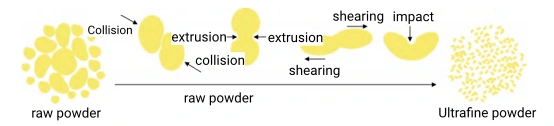
Gıda İşleme Sektöründe Ultra İnce Öğütme Teknolojisinin Avantajları
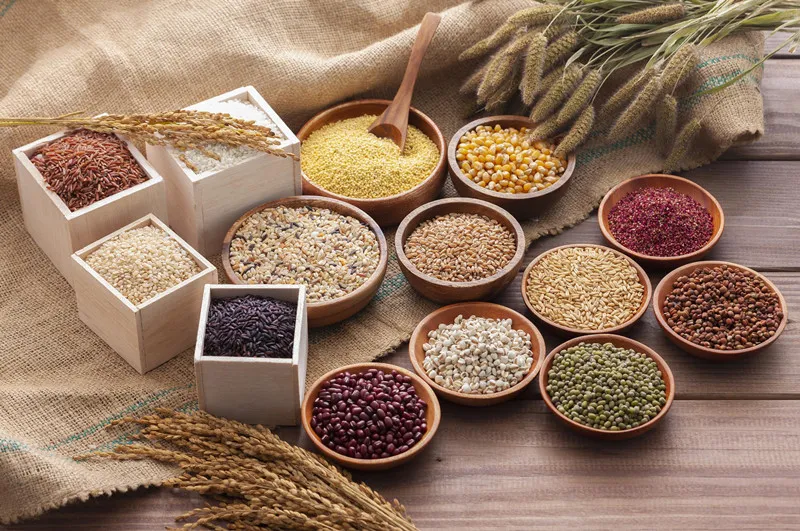
Yüksek öğütme hızı ve iyi sıcaklık kontrolü
Ultra ince öğütme işleminin tamamı neredeyse hiç aşırı ısınmaya neden olmaz ve düşük sıcaklıklarda çalışabilir, bu da onu düşük sıcaklıkta öğütme teknolojisi yapar. Mikro toz üretim süreci kısadır ve bu sayede biyolojik olarak aktif kimyasal bileşenlerin çoğu işlem sırasında kaybolmaz, bu da gerekli tüm yüksek kaliteli mikro toz ürünlerinin üretimini kolaylaştırır.
Küçük ve homojen parçacık boyutu dağılımı, malzemelerin fizikokimyasal özelliklerinin iyileştirilmesi ve reaksiyon hızlarının artırılması
Ultra ince öğütme teknolojisinde ham maddelere uygulanan dış kuvvet çok düzgün bir şekilde dağıldığı için, elde edilen toz homojen bir parçacık boyutu dağılımı sergiler. Ultra ince öğütme işleminden sonra, malzemenin özgül ağırlığı ve yüzey alanı kademeli olarak artar. Bu, biyolojik ve kimyasal reaksiyonlar sırasında temas alanını artırarak çözünme oranlarını ve reaksiyon hızlarını iyileştirir.
Hammadde Tüketiminin Azaltılması ve Kullanımının İyileştirilmesi
Yüksek oranda lifli yapıya sahip bazı malzemeler geleneksel öğütme yöntemleri için uygun değildir; büyük parçacıkların oluşumu önemli miktarda hammadde israfına yol açabilir ve çoğu üretim süreci, kullanım gereksinimlerini karşılamak için ara adımlar gerektirir. Ultra ince öğütme teknolojisi kullanılarak üretilen ürünler, üretim süreçlerinde doğrudan kullanılabildiğinden, nadir ve değerli hammaddeler için uygundur.
Çevre kirliliğini azaltır ve işlenmiş malzemelerin kalitesini artırır.
Tüm ultra ince öğütme işlemi, dış kontaminasyonu önleyen ve dış ortama herhangi bir kirliliğin salınmamasını sağlayan kapalı bir ortamda gerçekleşir. Bu teknoloji, yüksek çevre standartları gerektiren gıda ve sağlık ürünlerinde kullanım için uygundur. Ultra ince öğütme, herhangi bir yabancı maddeyi eklemeyen veya karıştırmayan fiziksel bir işleme yöntemidir. Bu, özellikle sağlık takviyeleri ve geleneksel Çin bitkisel ilaçlarının işlenmesinde, hammaddelerin doğal özelliklerinin korunmasını sağlayarak, hammaddelerin hem doğal bütünlüğünü hem de güvenliğini garanti eder.
Vücut Tarafından Besinlerin Sindirimi ve Emilimi İyileştirilir
Araştırmalar, ultra ince öğütme işleminden sonra malzemenin sindirim sistemine 10 ila 25 μm veya daha küçük boyutlarda çok küçük parçacıklarla girdiğini göstermektedir. Besinler uzun ve karmaşık bir süreçten geçmek zorunda kalmadan salınır ve parçacıklar daha küçük olduğu için ince bağırsak astarı tarafından daha kolay emilir. Bu, besin salınım hızını artırarak ham maddelerin tamamen emilmesi ve kullanılması için daha fazla zaman tanır.
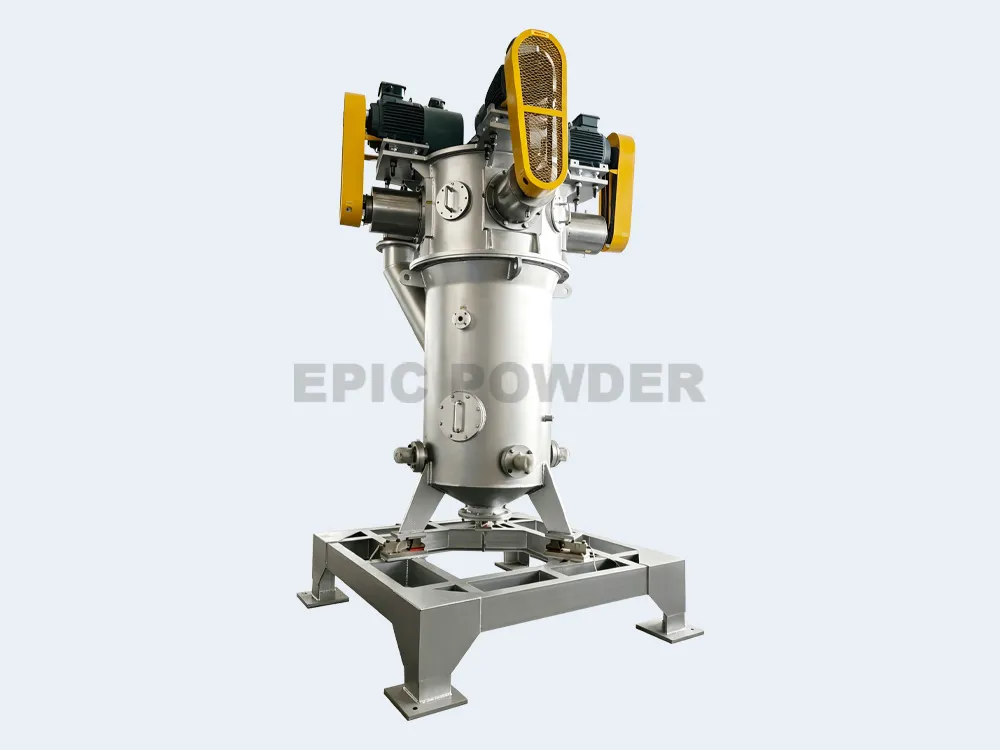
Gıda İşlemede Ultra İnce Öğütme Teknolojisinin Avantajları
| Teçhizat | Çalışma prensibi | Uygulamalar / Hammadde | Parçacık Boyutu |
| Bilyalı değirmen | Silindir döner ve içindeki öğütücü bilyeler belirli bir yüksekliğe kadar yükselir, ardından düşerek malzemeyi darbe ve sıkıştırma yoluyla ezer. | Bitkisel materyaller ve mantarlar (hem kuru hem de ıslak öğütme için geçerlidir) | Mısır nişastası: 30,8 ± 10,8 nm |
| Jet değirmeni | Sıkıştırılmış hava nozullar aracılığıyla dışarı atılarak yüksek hızlı hava akışı ve hız gradyanı oluşturulur. Parçacıklar öğütme haznesi içinde dairesel bir yörüngede hareket ederek güçlü bir dönme akış alanı oluşturur. Parçacıklar birbirleriyle çarpışır, hava tarafından darbe ve kesmeye maruz kalır ve ayrıca hazne duvarlarına karşı darbe, sürtünme ve kesmeye uğrar. | Bitkisel materyaller ve su ürünleri yan ürünleri için uygundur (kuru öğütme). | Arpa: 31,34 ± 1,12 (birim belirtilmemiş, muhtemelen µm veya nm) |
| Titreşim değirmeni | Malzemeyi boyut küçültmek için, yüksek frekansta titreşen (silindir içinde sürekli dönen) öğütme ortamı (bilyeler veya çubuklar) kullanarak malzemeye çarpma, sürtme ve kesme işlemi uygular. | Hayvansal/bitkisel hammaddeler ve yan ürünler için yaygın olarak uygulanabilir (kuru öğütme) | Tavşan kemiği: 16,92 ± 0,15 (birim belirtilmemiş) |
| Yüksek basınçlı homojenizatör | Malzeme, valf yuvası ile homojenleştirme valfi arasındaki dar bir boşluktan geçer; burada basınç artar ve hız yükselir. Darbe halkasına çarptığında, kesme, yüksek frekanslı salınım ve kavitasyon meydana gelir. Valften geçtikten sonra basınç aniden düşer ve homojenleştirme etkisi oluşur. | Çeşitli sıvı malzemeler için, özellikle emülsifikasyon (ıslak öğütme) için uygundur. | Pancar posası: 38,28 ± 0,66 (birim belirtilmemiş) |
| Mikroakışkanlaştırıcı | Malzeme önceden belirlenmiş bir seviyeye kadar basınçlandırılır, ardından bir etkileşim odasında ultra yüksek basınca maruz bırakılır. Çarpışan jet prensipleri kullanılarak, akışkan yoğun kesme, yüksek frekanslı salınım, yüksek hızlı çarpma, hızlı basınç salınımı ve kavitasyon yoluyla emülsifiye edilir ve parçalanır, bu da makromoleküllerde yapısal değişikliklere neden olur. | Esas olarak gevşek yapılı sıvı malzemeler için, emülsifikasyon (ıslak öğütme) işleminde kullanılır. | Soya sütü tozu: 5,14 ± 0,04 (birim belirtilmemiş) |
| Kolloid değirmeni | Rotor (dönen dişler) ve stator (sabit dişler) birbirlerine göre yüksek hızda dönerler. Malzeme, kendi ağırlığı veya dış basınçla hareket ederek aşağı doğru spiral bir kuvvet oluşturur. Dişler arasındaki boşluktan geçerken, güçlü kesme, sürtünme ve yüksek frekanslı titreşime maruz kalır ve böylece toz haline gelme ve emülsiyonlaşma sağlanır. | Yüksek viskoziteli veya iri taneli malzemeler için uygundur (ıslak öğütme). | Kivi kabuğu: 58 (birim eksik) |
Tahılların Belirli Fizyolojik Fonksiyonları Üzerine Ultra İnce Öğütmenin Etkileri
| İşlev | Besinler | Bileşenlerin Etki Mekanizması | Tahılların Ultra İnce Öğütülmesinin Etkileri | Temsilci Tahıllar |
| Hipoglisemik (kan şekerini düşürme) | Diyet lifi, protein, nişasta, polifenoller, flavonoidler vb. | Parçacık boyutunun küçültülmesi, özgül yüzey alanını, gözenekliliği, yüzey enerjisini ve faydalı bakterilerin bolluğunu artırır. | ① Glikoz emilimini ve bağlanma kapasitesini artırır, glikoz difüzyonunu geciktirir; ② Pankreas adacık β hücrelerini korur ve onarır, insülin seviyelerini artırır; ③ Sindirim enzimlerini inhibe eder, glikoz metabolizmasını iyileştirir; ④ Bağırsak mikrobiyotasını iyileştirir ve bağırsak mikroekolojisini restore eder. | Karabuğday, Yulaf, Highland arpa |
| Antioksidan | β-karoten, polifenoller, polisakkaritler, vb. | Antioksidan aktiviteye sahip küçük moleküllü maddelerin ve özgül yüzey alanının artışı. | Reaktif oksijen türlerinin neden olduğu oksidatif hasarı önleyin. | Siyah barbunya fasulyesi, Job's tears (Yahudi gözyaşı otu), Karabuğday, Yulaf |
| Antihipertansif (kan basıncını düşürme) | Çözünür diyet lifi, protein vb. | Aktif grupların açığa çıkması ve yapısal gevşemenin artması. | Katyon değişim kapasitesini artırın. | Kırmızı fasulye, karabuğday, maş fasulyesi |
| Hipolipidemik (kan lipidini düşürme) | Diyet lifi, nişasta, polifenoller, protein vb. | Parçacık boyutunun küçülmesi, aktif grupların açığa çıkması, özgül yüzey alanının artması ve yapısal gevşeklik. | ① Kolesterol adsorpsiyon kapasitesini artırır; ② Safra tuzu adsorpsiyon kapasitesini artırır; ③ Pankreatik lipaz aktivitesini inhibe eder. | Siyah barbunya fasulyesi, Job's tears (Yahudi gözyaşı fasulyesi), Kırmızı fasulye, Karabuğday |
| Zararlı maddelerin azaltılması | Diyet lifi, polifenoller, protein vb. | Parçacık boyutunun küçülmesi, özgül yüzey alanının artması ve yapısal gevşekliğin iyileşmesi. | ① Ağır metal adsorpsiyon kapasitesini artırır; ② Nitrit adsorpsiyon kapasitesini artırır; ③ Bağırsak sağlığını iyileştirir. | Mung fasulyesi, Karabuğday kepeği |
Yedi Ana Gıda Kategorisinden Ultra İnce Tozlar Üretmek için Ultra İnce Öğütme Teknolojisi
| Gıda Kategorisi | Ultra İnce Öğütme Ürünleri |
| Meyve ve Sebzeler | Portakal tozu, elma tozu, armut tozu, havuç tozu, kabak tozu, kereviz tozu, ıspanak tozu vb. |
| Hayvancılık, Kanatlı ve Su Ürünleri | Sığır eti tozu, tavuk eti tozu, domuz eti tozu, karides tozu, kemik tozu vb. |
| Baharatlar ve Çeşniler | Zencefil tozu, sarımsak tozu, karabiber tozu, acı biber tozu, mantar tozu vb. |
| Besin Takviyeleri | Kemik tozu, deniz yosunu tozu, havuç tozu, polen vb. |
| Yapraklar: | Çay tozu, dut yaprağı tozu, ginkgo yaprağı tozu, gynostemma pentaphyllum tozu |
| Tıbbi ve Yenilebilir Bitkiler: | Meyan kökü tozu, krizantem tozu, mandalina kabuğu tozu, Ophiopogon kökü tozu, kayısı çekirdeği tozu, Polygonum multiflorum tozu, melek otu tozu, vb. |
| Sağlıklı Gıdalar: | Yapışkan pirinç unu, mısır nişastası, soya fasulyesi unu, yeşil fasulye unu, kırmızı fasulye unu, buğday kepeği unu, yer fıstığı unu vb. |
Gıda İşlemede Ultra İnce Öğütme Teknolojisinin Uygulamaları
Baharatlar
Baharat işleme sürecinde, ultra ince öğütme teknolojisi, baharatlar, baharat tozları ve baharat sosları gibi çeşitli ürünlerin üretiminde kullanılabilir. Ultra ince öğütme, tozların renk parlaklığını, kimyasal özelliklerini ve katalitik özelliklerini değiştirerek su çözünürlüğünü, adsorpsiyon kapasitesini ve akışkanlığını artırır ve biyoaktif maddelerin çözünme hızını yükseltir. Bu nedenle, ultra ince öğütme, baharatların kalitesini öncelikle şu şekillerde etkiler: dokuyu ve ağızda bıraktığı hissi iyileştirme, aroma bileşiklerinin salınımını teşvik etme, aktif bileşenleri çıkarma ve rengi geliştirme.
Ancak, aşırı öğütme veya uygunsuz işlem, toz kalitesinde değişikliklere yol açabilir. Bir yandan, aşırı öğütme aşırı küçük parçacık boyutlarına neden olabilir. Ultra ince öğütme aşırı olduğunda, parçacıklar çok küçülür, bu da yığın açısının artmasına, akışkanlığın azalmasına ve havadan nem emme eğilimine yol açarak topaklanma ve diğer sorunlara neden olabilir. Öte yandan, ultra ince öğütme işlemi sırasında uygun olmayan sıcaklıklar da kaliteyi etkileyebilir. Öğütme sıcaklığı çok yüksek olduğunda, malzemedeki enzimatik maddelerin salınımını hızlandırabilir, böylece oksidatif reaksiyonları yoğunlaştırabilir ve antioksidan kaybına yol açabilir.
Toz Halindeki Baharatlar İçin En Uygun Parçacık Boyutu Aralığı
| Öğütülecek malzeme | Optimum parçacık boyutu aralığı / μm |
| Şitake mantarı (mantar özü) | 100–154 |
| Zencefil | 70–150 |
| Baharat | 820–1,500 |
İri Taneler
Ultra ince öğütme, öncelikle tahıllarda bulunan nişasta, protein ve diyet lifinin yapısındaki değişiklikler nedeniyle, iri taneli unun fizikokimyasal özelliklerini değiştirir. Tarımsal yan ürünlerin ultra ince öğütülmesine benzer şekilde, ultra ince öğütme işleminden geçmiş iri taneler de, özellikle daha büyük parçacıklara sahip iri tanelerden önemli ölçüde farklılık gösteren bazı özellikler sergiler; bunlar arasında kristalleşme özellikleri, hidrasyon özellikleri, jelatinleşme özellikleri, yoğunluk ve akışkanlık, fonksiyonel özellikler, yağ tutma kapasitesi ve renk yer alır.
Bazı iri tanelerin fizikokimyasal özelliklerine ultra ince öğütmenin etkisi
| Özellikler | Hammadde | Öğütme Yöntemi | Ana Bulgular |
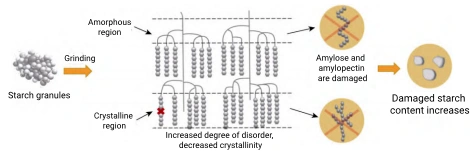
| Kristal özellikleri | Coix tohumu Sorgum | Titreşim değirmeni Bilyalı değirmen | Nişasta kristalleri hasar gördü, kristalliği azaldı. Kristaller amorf hale dönüştü. |
| Hidrasyon özellikleri | Highland arpa kepeği Yulaf | Jet frezeleme Gezegen tipi bilyalı değirmen | Su tutma kapasitesi 4,12 g/g'den 2,72 g/g'ye düştü. Şişme kapasitesi ve çözünürlük arttı. |
| Yapıştırma özellikleri | Siyah pirinç Darı | Jet frezeleme Jet frezeleme | En yüksek viskozite, nihai viskozite, bozulma, geri dönüş ve jelatinleşme sıcaklığı azaldı. En yüksek viskozite, nihai viskozite, bozulma ve geri dönüş önce arttı sonra azaldı; jelatinleşme sıcaklığı arttı. |
| Yoğunluk ve akışkanlık | Tatar karabuğday kepeği Mung fasulyesi | Bilyalı değirmen Jet frezeleme | Yığın açısı ve kayma açısı arttıkça akışkanlık azaldı. Sıkıştırılmış yoğunluk 56.1% oranında önemli ölçüde azaldı. |
| İşlevsel özellikler | Yulaf kepeği | Titreşim değirmeni | Katyon değişim kapasitesi, kolesterol, safra asidi ve glikoz adsorpsiyon kapasiteleri iyileştirildi. |
| Diğer özellikler | Tatar karabuğdayısı Kırmızı adzuki fasulyesi | Jet frezeleme Titreşim değirmeni | Petrol tutma kapasitesi: önce arttı sonra azaldı. Renk özellikleri: Ultra ince toz, geleneksel toza kıyasla belirgin bir renk farkıyla daha parlak hale geldi. |
Geleneksel öğütme yöntemlerine kıyasla, ultra ince öğütme teknolojisi, tam tahıllı unun partikül boyutunu etkili bir şekilde küçültebilir ve moleküler yapısını değiştirebilir; bu da besin maddelerinin ve biyoaktif bileşiklerin salınmasını kolaylaştırır. Bu, vücudun besinleri emilimini artırır ve elde edilen tam tahıllı un daha ince bir dokuya sahip olur, bu da yiyeceklerin ağızda bıraktığı hissi iyileştirir. Ek olarak, ultra ince öğütülmüş tam tahıllı un daha büyük bir özgül yüzey alanına sahiptir; bu da emilim ve çözünürlük gibi fiziksel özelliklerinin yanı sıra kimyasal reaksiyon hızını da iyileştirmeye yardımcı olur.
Nişastanın Çok İnce Öğütülmesinin Etkileri
Ultra İnce Öğütmenin Proteinler Üzerindeki Etkileri
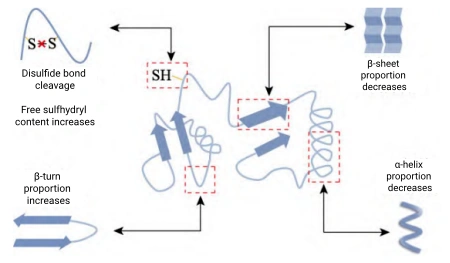
Ultra İnce Öğütmenin Diyet Lifleri Üzerindeki Etkileri
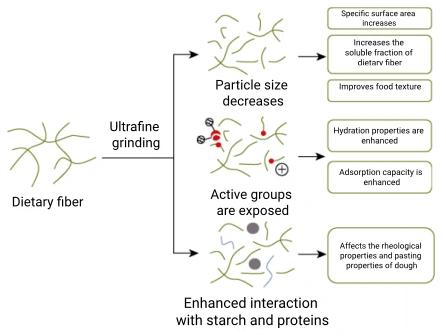
Ultra İnce Öğütmenin Diyet Lifinin Yapısal ve Fonksiyonel Özellikleri Üzerindeki Etkileri
Meyve ve Sebzeler
| Meyve/Sebze tozu | Öğütme yöntemi | Öğütme koşulları | (Kaba tozla karşılaştırıldığında) Değişiklikler |
Fangzhu bambu çekimi | Hava jeti mikronizasyonu | Bilyalı değirmen hızı 350 rpm, süre 5 saat, küçük bilye çapı 3 mm, bilye-malzeme oranı 1:1.3:1.5:1.7:1.9:1 | 30 dakikalık mikronizasyondan sonra, Dx(50), kaba toza kıyasla 199 μm azaldı. |
| Su kerevizi | Titreşimli mikronizasyon | Çin bitkisel öğütücüsünde 2 dakika boyunca kaba öğütme, ardından 5, 15 ve 25 dakika boyunca mikronizasyon işlemi. | 25 dakikalık mikronizasyondan sonra, Dx(50), kaba toza kıyasla 278,52 μm azaldı. |
| Tatlı patates | Titreşimli mikronizasyon | 5, 10, 15, 20, 25, 30 dk frezeleme | 5 dakikalık mikronizasyondan sonra, Dx(50), kaba toza kıyasla 4,73 μm azaldı. |
| Taro kabuğu | Titreşimli mikronizasyon | 10, 20, 30, 40, 50, 60, 90 dk frezeleme | Mikronizasyon işleminden sonraki 20 dakika içinde ortalama parçacık boyutu 352 μm'den 20 μm'nin altına düştü. |
| Alıç | Harçla öğütme, kesme kırma ve hava jetiyle mikronizasyon | Harç, 9 dakika boyunca 100 rpm hızda öğütüldü; 1,0 mm'lik elekten geçirildikten sonra 10.000 rpm hızda kesme işlemi uygulandı; 10 Hz frekansta ve 70 MPa basınçta hava jeti ile mikronizasyon yapıldı. | Fırında kurutma ve hava jetiyle mikronizasyon işleminden sonra en yüksek L* değeri 51,35 oldu. |
| Lotus kökü | Gezegensel bilyalı değirmen | Bilye-malzeme oranı 2:1, 5:1, 8:1; sırasıyla 4, 8, 12 saat boyunca 200, 300, 400 rpm'de öğütülmüştür. | Bilye-malzeme oranı 8:1, hız 300 rpm ve öğütme süresi 12 saat olduğunda, L* değeri en yüksek değer olan 69,2'ye ulaştı. |
| Chazhigan turunçgil özü | Düşük sıcaklıkta mikronizasyon | 10–13 °C'de 10, 30, 60, 120 dakika süreyle öğütüldü. | Sıradan kırma işlemine kıyasla, 60 dakikalık mikronizasyondan sonra L* değeri 68,34'ten 89,17'ye yükselmiştir. |
| Gordon euryale tohumu (tilki fındığı) | Gezegensel bilyalı değirmen | Bilyalı değirmen hızı 100, 200, 300 rpm; malzeme-bilye oranı 1:10, 1:20, 1:30 (g/g); öğütme bilyesi çapı 4, 8, 10 mm; öğütme süresi 10, 20, 30 dk. | Dönme hızı, tozun L* değeri üzerinde önemli bir etkiye sahipti; en yüksek L* değeri (93,69) 300 rpm'de elde edildi. |
Soğan | Gezegensel bilyalı değirmen | Önce 20 gözenekli elekten geçirilerek kaba öğütme, ardından 0, 6, 12, 18, 24 saat boyunca 300 rpm'de bilyalı değirmende öğütme. | 24 saatlik bilyalı öğütme işleminden sonra L* değeri 58,0'dan (iri toz) 64,5'e yükseldi. |
Ultra ince öğütme teknolojisi, meyve ve sebze tozlarının ve yan ürünlerinin fizikokimyasal özelliklerini iyileştirebilir, biyoaktif bileşiklerin salınımını artırabilir, tadı zenginleştirebilir ve ürün çeşitliliğini artırabilir.
Fiziksel ve Kimyasal Özellikler: Ultra ince öğütme teknolojisi, hücre duvarlarını ve pigmentlerin gömülü olduğu yapıları parçalayarak pigment bileşenlerinin salınımını teşvik eder. Ek olarak, ultra ince tozların artan özgül yüzey alanı ve gelişmiş ışık yansıtıcılığı, daha homojen ve canlı renklere yol açar. Bununla birlikte, aşırı öğütme veya lokal yüksek sıcaklıklar pigment bozulmasına, kahverengileşmeye ve diğer sorunlara yol açabilir. Aynı zamanda, ultra ince öğütme teknolojisi, meyve ve sebze tozlarının ve yan ürünlerinin hidrasyon özelliklerini önemli ölçüde iyileştirerek su emme ve su tutma kapasitesini artırabilir. Ancak, partikül boyutunun küçülmesi ve yüzey yapısındaki değişiklikler, tozları nem emilimine ve kümelenmeye daha yatkın hale getirebilir, bu da yığın açısı ve kayma açısı gibi akışkanlık göstergelerinde bozulmaya ve sonuç olarak akışkanlığın azalmasına yol açabilir.
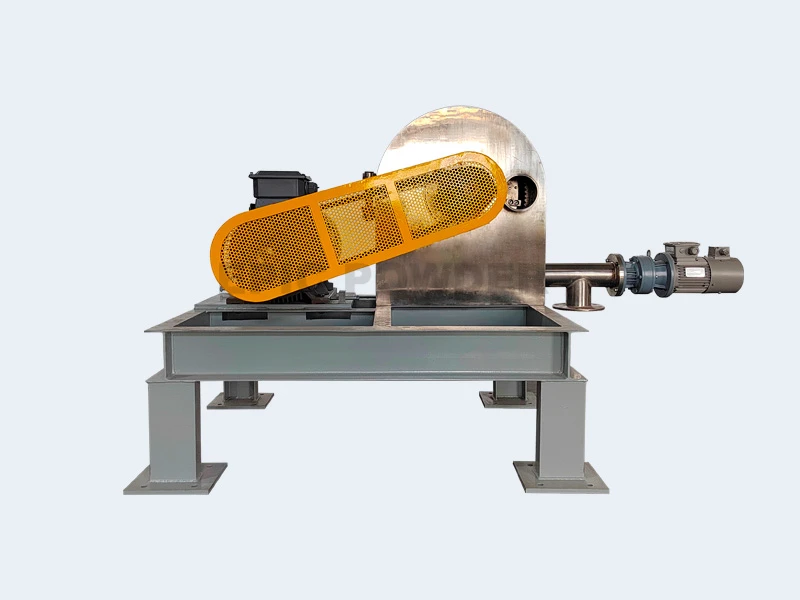
Ultra İnce Öğütme Teknolojisinin Meyve, Sebze ve Yan Ürün Tozlarının Parçacık Boyutu ve Rengi Üzerindeki Etkisi
| Meyve / Sebze Tozu | Öğütme Yöntemi | Öğütme Koşulları | (Kaba tozla karşılaştırıldığında) Değişiklikler |
| Domates | Ultra ince öğütme | 28.000 rpm, 2.200 W gücünde ultra ince bir öğütücüde öğütüldükten sonra sırasıyla 40, 100 ve 200 mesh'lik eleklerden geçirildi. | Ultra ince tozun protein çözünme hızı, kaba tozunkinden önemli ölçüde daha yüksekti ve en yüksek değer 1,24 g/100g'ye ulaştı. |
| Ekşi hünnap çekirdeği | Gaz-sıvı ultra ince öğütme | 1 dakika boyunca dondurulmuş halde öğütme, 80 mesh'ten geçirme, ardından 1 dakika boyunca gaz-sıvı ultra ince öğütme ve 150 mesh'ten geçirme. | Ultra ince tozun ortalama protein ekstraksiyon verimi, sıradan öğütmeye kıyasla 6,85% artmıştır. |
| Gri hünnap (Huizao) | Titreşimli ultra ince öğütme | Önce 2 dakika boyunca evrensel öğütücüde, ardından 6 dakika boyunca titreşimli ultra ince salınımlı öğütücüde işlem görerek ultra ince toz elde edilir. | Ultra ince tozun protein içeriği, piyasada bulunan hünnap tozuna kıyasla önemli ölçüde daha yüksekti ve 100 gramında 0,49 gramdı. |
| Hindistan cevizi | Titreşimli ultra ince öğütme | Önce üniversal öğütücüden, ardından 60 mesh'lik elekten ve 5 °C'de sırasıyla 5, 10, 20, 30, 40, 50 dakika süreyle titreşimli ultra ince öğütücüden geçirildi. | 20 dakikalık öğütme işleminden sonra, çözünür protein içeriği, kaba tozla karşılaştırıldığında 58.81% oranında arttı. |
| Fangzhu bambu çekimi | Gaz-sıvı ultra ince öğütme | Önce 10 dakika boyunca evrensel öğütücüde, ardından 10, 20 ve 30 dakika boyunca hava jetli ultra ince öğütücüde öğütme işlemi uygulayın. | Öğütme işleminin 30. dakikasında toplam şeker içeriği 9.25% ile en yüksek değerine ulaştı. |
| Hünnap | Yüksek enerjili nano darbeli taşlama | 10 saniye boyunca evrensel öğütücüden geçirildi, 60 mesh'ten geçirildi; ardından 380 rpm'de, <20 °C'de 6 saat boyunca yüksek enerjili nano darbeli öğütücüde öğütüldü. | Toplam şeker içeriği, iri taneli tozla karşılaştırıldığında 100 gramda 5,76 gram artmıştır. |
| Havuç | Gezegensel bilyalı değirmen | Farklı kurutma yöntemleriyle elde edilen iri toz, daha sonra 4 saat boyunca gezegen tipi bilyalı değirmende öğütülür. | Toplam şeker içeriği, 109–120 μm partikül boyutu fraksiyonu için en yüksekti (3.05%). |
Jak meyvesi | Titreşimli taşlama | Kaba toz 100 mesh'lik elekten geçirildi; farklı partikül boyutlarında tozlar elde etmek için 5, 10, 15, 20 dakika boyunca ultra ince öğütme işlemi uygulandı. | Kaba tozun VC içeriği 14,55 mg/100g idi; ultra ince öğütmenin 10 dakikası içinde, öğütme süresi arttıkça VC içeriği azaldı ve daha sonra esasen değişmeden kaldı (10,40 mg/100g). |
Besin ve Fonksiyonel Özellikler
Ultra ince öğütme teknolojisi, meyve ve sebzelerdeki proteinlerin fizikokimyasal özelliklerini iyileştirebilir. Hücre duvarlarını parçalayarak ve hücresel içeriğin açığa çıkmasını hızlandırarak, meyve ve sebze tozlarının ve yan ürünlerinin toplam şeker çözünürlüğünü artırır. Özellikle çözünmeyen diyet lifi olmak üzere diyet lifinin fizikokimyasal özellikleri, kaba tozlara kıyasla ultra ince öğütme sonrasında önemli ölçüde iyileşir. Ultra ince öğütme ayrıca tozların fizyolojik fonksiyonlarını ve uygulama değerini artırabilir ve antioksidan aktivitesini de yükseltebilir.
Lezzet Kalitesi: Ultra ince öğütme, geleneksel öğütmeye kıyasla tozların lezzetini önemli ölçüde artırabilir; ancak, mekanik ısı oluşumunun ısıya duyarlı lezzet bileşiklerini bozmasını ve temel enzimlerin aktivitesini engellemesini önlemek için öğütme süresi kesinlikle kontrol edilmelidir.
Sağlıklı Gıdalar
Öğütme işlemini, öğütme ortamını, öğütme ortamını ve öğütme sonrası işlemleri optimize ederek, sağlıklı gıdalardaki besin maddelerinin biyoyararlanımını artırmak, dokuyu iyileştirmek, biyoaktiviteyi artırmak ve raf ömrünü uzatmak mümkündür.
Çözüm
Gıda endüstrisinde önemli bir hammadde formu olan gıda tozları, fırıncılık, içecekler ve süt ürünleri de dahil olmak üzere çeşitli sektörlerde yaygın olarak kullanılmaktadır. Eşsiz fiziksel ve kimyasal özellikleri, gıda tozlarının gıda işleme sırasında dokuyu iyileştirme, raf ömrünü uzatma ve besin içeriğini artırma gibi çoklu işlevleri yerine getirmesini sağlar. Gıda endüstrisinin sürekli gelişmesiyle birlikte, gıda tozlarına olan talep artarken, aynı zamanda bunların hazırlanma teknolojisine yönelik talepler de yükselmektedir.
Epik Toz
At Epik Toz, Geniş bir ekipman modeli yelpazesi sunuyoruz ve özel ihtiyaçlarınızı karşılayacak çözümler geliştiriyoruz. Ekibimiz, çeşitli toz işleme alanlarında 20 yılı aşkın deneyime sahiptir. Epic Powder, maden endüstrisi, kimya endüstrisi, gıda endüstrisi, ilaç endüstrisi vb. için ince toz işleme teknolojisinde uzmanlaşmıştır.
Ücretsiz danışmanlık ve size özel çözümler için bugün bizimle iletişime geçin!

“Okuduğunuz için teşekkürler. Umarım makalem yardımcı olmuştur. Lütfen aşağıya yorum bırakın. Ayrıca EPIC Powder çevrimiçi müşteri temsilcisiyle de iletişime geçebilirsiniz. Zelda Daha fazla bilgi için lütfen iletişime geçin.”
— Jason Wang, Mühendis