
Naarmate de wereldwijde veiligheidsnormen voor gebouwen steeds strenger worden, vraagt de Australische markt voor brandwerende materialen om betere prestaties en aangepaste deeltjesgrootteverdelingen voor glaspoeder. Als anorganisch vlamvertragend vulmiddel heeft de deeltjesgrootteverdeling van glaspoeder een directe invloed op de filmvormende dichtheid van brandwerende coatings en het beglazingseffect onder hoge temperaturen.
De Australische opdrachtgever is toegewijd aan de ontwikkeling van een nieuwe generatie hoogwaardige brandwerende materialen. Voor dit project was het volgende vereist: nauwkeurige scheiding van ruw glaspoeder in ultrafijn poeder (om de gladheid van de coating te verbeteren) en grof poeder (om structurele ondersteuning te bieden). De klant stelde strenge eisen aan zowel de productiecapaciteit als de nauwkeurigheid van de sortering.
Project Overzicht
- Locatie: Australië
- Materiaal: Glaspoeder met een laag smeltpunt
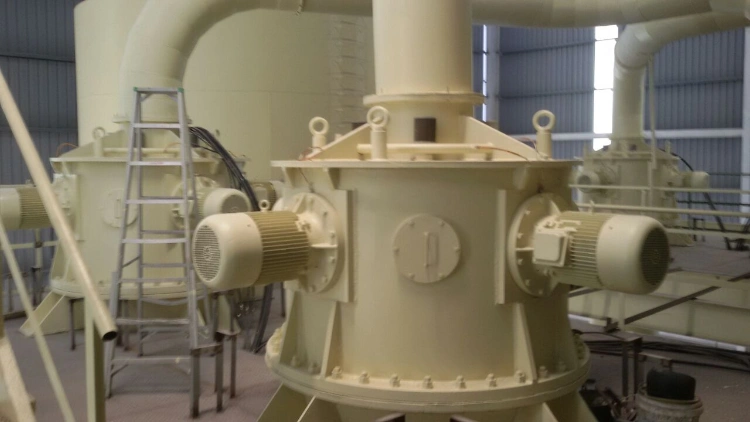
- Apparatuur: Episch poeder HTS Luchtclassificator
- Beoordelingseisen:
- Fijn poeder: D97 = 10 μm
- Grof poeder: D50 = 18 μm
Technische uitdagingen en oplossingen
1. Precisie in glaspoeder Classificatie
Brandwerende materialen vereisen een extreem strikte deeltjesgrootteverdeling (PSD). Om een fijn poeder met een D97 van slechts 10 μm te verkrijgen, moet de classificator beschikken over een krachtig centrifugaal krachtveld en een uitstekende regeling van het stromingsveld. De Epic Powder HTS 315 maakt gebruik van een verticale structuur met één rotor. Door de rotorsnelheid aan te passen via frequentieomzetting, kan het fijn poeder nauwkeurig worden gescheiden, waardoor een zeer smalle PSD voor de fijne fractie wordt gegarandeerd.
2. Slijtagecontrole
- Oplossing: Het sorteerwiel en de belangrijkste systeemcomponenten van de HTS 315 zijn behandeld met keramische voeringen of slijtvaste materialen. Dit verlengt niet alleen de levensduur van de apparatuur, maar zorgt er ook voor dat het gesorteerde materiaal vrij blijft van ijzerverontreiniging, waardoor de zuiverheid en kleur van het glaspoeder behouden blijven.
3. Efficiënte scheiding van grof en fijn poeder
Voor dit project was het vereist dat het grove poeder een D50-waarde van 18 μm bereikte. Dit vereist dat de classificator de grove deeltjes snel en zonder meesleur afvoert nadat het fijne poeder is afgescheiden. Het geoptimaliseerde ontwerp van de secundaire luchtinlaat van de HTS-serie "spoelt" effectief het fijne poeder dat in het grove materiaal is opgesloten, waardoor de classificatie-efficiëntie aanzienlijk wordt verbeterd.
Projectresultaten
Na installatie en inbedrijfstelling presteerde het systeem uitzonderlijk goed op de locatie van de Australische klant:
- Nauwkeurige deeltjesgroottecontrole: Laserdeeltjesgrootteanalyse bevestigde dat het fijne poeder voldeed aan de D97-eis van ≤10 μm, waardoor de prestaties van de ultradunne brandwerende coatings van de klant aanzienlijk werden verbeterd.
- Stabiele doorvoer: Het systeem handhaafde een constante output en voldeed aan de commerciële productiebehoeften van de klant.
- Intelligente bediening: Dankzij de PLC-automatisering kunnen operators snel schakelen tussen verschillende productspecificaties door simpelweg de rotorsnelheid en de luchtstroomparameters aan te passen.
Belangrijkste voordelen: Epic Powder HTS-serie luchtclassificator
- Classificatie met hoge precisie: Speciaal ontworpen classificatierotoren kunnen een zeer hoge scheidingswaarde van D97 < 5 μm bereiken.
- Hoge doorvoer: Vergeleken met traditionele sorteermachines biedt de HTS-serie een hogere materiaaldoorvoer bij hetzelfde energieverbruik.
- Veelzijdigheid: Deze apparatuur is ideaal voor de classificatie van glaspoeder en maakt een flexibele productie van verschillende deeltjesgroottes mogelijk, waarmee aan uiteenlopende markteisen kan worden voldaan.
Episch poeder (Qingdao Epic Powder Machinery Co., Ltd.) is toegewijd aan het leveren van geavanceerde oplossingen voor de classificatie van ultrafijn poeder aan klanten wereldwijd. Het succes van dit Australische project bewijst eens te meer ons professionele leiderschap in de verwerking van zeer schurende materialen met hoge precisie-eisen.
Fout: Contact formulier niet gevonden.