
天然ココアパウダーとダッチプロセス製法ココアパウダーの違いは何ですか?
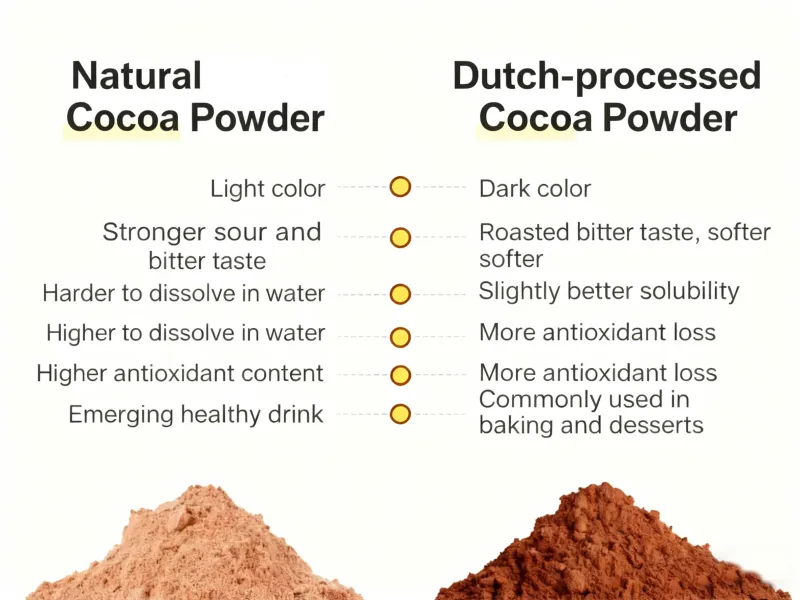
Cocoa powder is one of the most essential ingredients in chocolate production, baking, and beverage preparation. It not only determines the flavor depth and color intensity but also directly affects the final product’s texture and appearance. Among all the parameters of cocoa powder, the most frequently mentioned distinctions are “Natural Cocoa Powder” and “Dutch-processed Cocoa Powder” (also known as alkali-processed cocoa powder), as well as their particle fineness determined by “Air Classifier Mill” during processing. Natural Cocoa Powder Natural cocoa powder is the closest form to the original flavor of cocoa beans. The production process is relatively simple: Characteristics: Applications: American brownies, chocolate cakes (where baking soda is needed), devil’s […]
熱分解カーボンブラックについて知っておくべきこととは?
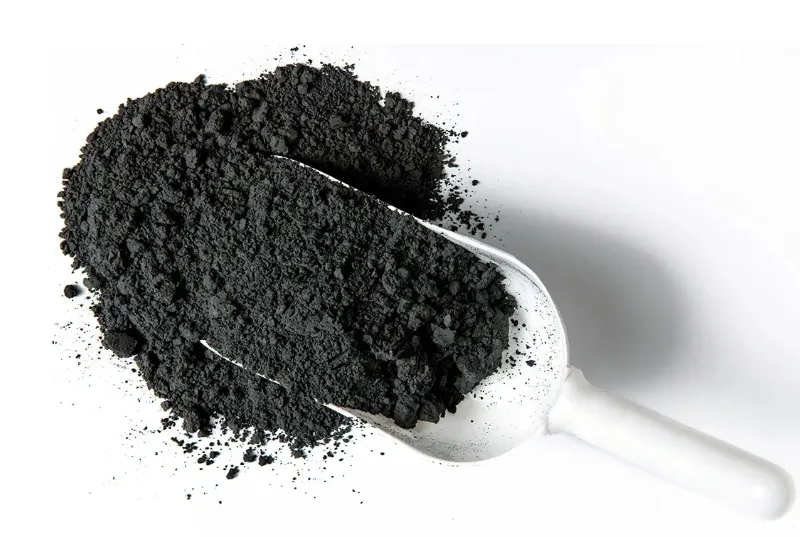
Q:What Is Pyrolysis Carbon Black? Pyrolysis carbon black (commonly referred to as PCB, Pyro-CB, or rCB) is the solid carbon black product obtained from the pyrolysis of waste tires, waste rubber, or other carbon-rich polymer materials.During pyrolysis (typically at 450–900°C under oxygen-deficient or low-oxygen conditions), the industrial carbon black originally present in tires (such as N330, N660, etc.) is thermally decomposed. The resulting product is carbon black whose surface is coated with pyrolysis oil, tar, polycyclic aromatic hydrocarbons (PAHs), and other organics, while the ash content (ZnO, SiO₂, sulfides, etc.) becomes significantly higher—hence the name “secondary carbon black.” Q:What Are the Differences Between Virgin Carbon Black and Pyrolysis Carbon Black? […]
熱分解カーボンブラック粉砕技術に関する研究

Pyrolytic Carbon Black (PCB) is a type of carbon black obtained through pyrolysis of organic materials like waste rubber and plastic. It has a high specific surface area and strong physicochemical stability. It is widely used in industries such as tires, rubber, plastics, coatings, and inks. It serves as a blackening agent, filler, or conductive material. With the advancement of environmental policies and the demand for a circular economy, pyrolytic carbon black has gained significant attention as a sustainable resource. Pulverization Requirements for Pyrolytic Carbon Black Pyrolytic carbon black typically has a large particle size (usually above 50 microns). It needs to be pulverized to a finer level to meet […]
カーボンブラック粉末粒子の親水性を高めるにはどうすればよいか?
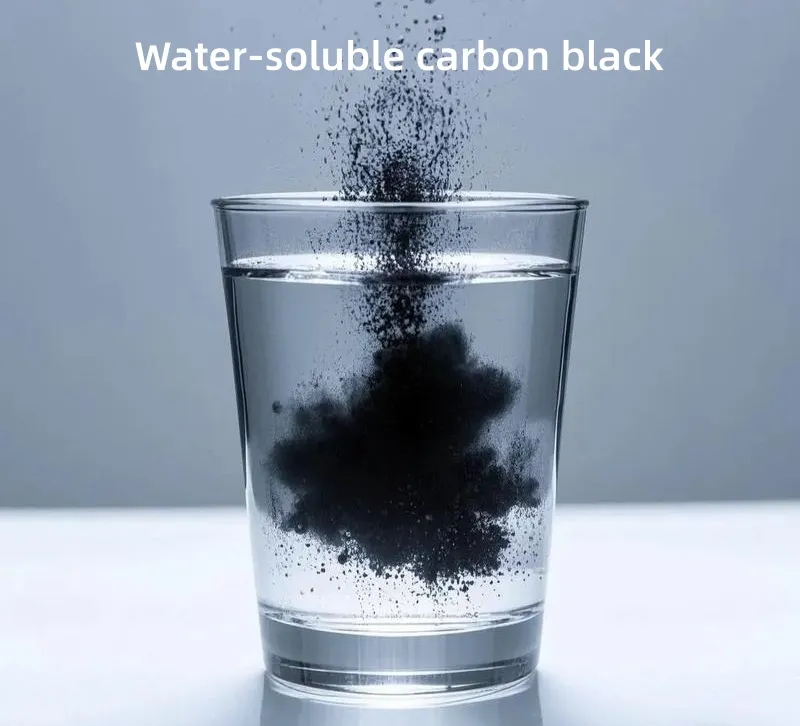
Enhancing the hydrophilicity of carbon black powder particles is key to improving their dispersion stability in water and increasing compatibility with polar media. This is crucial in fields such as coatings, inks, and rubber composites. Surface Chemical Modification Oxidation Modification Grafting Modification Physical Coating and Dispersant Modification Polymer Coating Dispersant Application Process Optimization and Auxiliary Techniques Mechanical-Chemical Treatment Plasma Treatment Salt-Induced Assembly Application Verification and Performance Optimization Conclusion The core of improving the hydrophilicity of carbon black powder lies in introducing polar functional groups and enhancing steric hindrance. For low-cost scenarios, oxidation modification (liquid-phase nitric acid oxidation) or surfactant coating is preferred. For high-performance requirements, ultrasonic-assisted grafting with polyacrylic acid […]
ホワイトカーボンブラックとカーボンブラックの比較
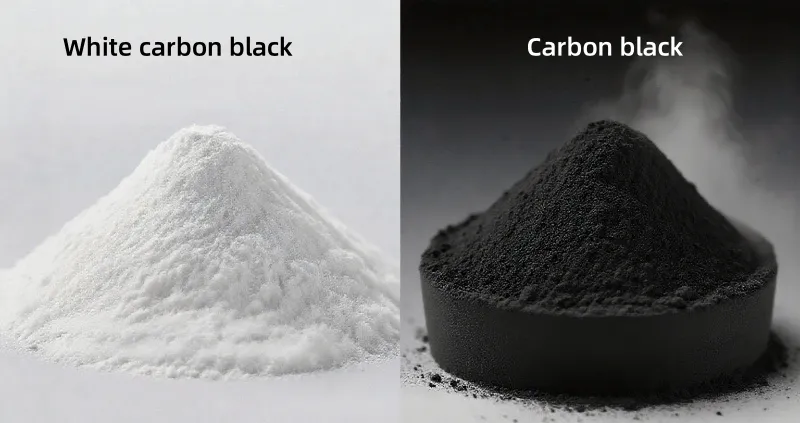
In the field of powder materials, white carbon black (precipitated silica) and carbon black are two important inorganic functional fillers. Although their names are similar, they differ significantly in structure, properties, preparation methods, and applications. In many industries, they not only demonstrate unique advantages but also complement each other. Basic Concepts and Properties White Carbon Black (SiO₂·nH₂O) Carbon Black (C) Preparation Methods White Carbon Black: Produced mainly by the precipitation method (reaction of sodium silicate with sulfuric or hydrochloric acid) and the fumed method (hydrolysis of silicon tetrachloride in a hydrogen–oxygen flame). The precipitation method has lower cost and higher output, while the fumed method produces purer and higher-performance products. […]
熱分解カーボンブラック:改質戦略と応用展望

Pyrolysis carbon black (also known as recovered carbon black, rCB) is a solid product obtained from high-temperature pyrolysis of waste tires, waste rubber, and other organic wastes under oxygen-free or oxygen-limited conditions. Difference from Conventional Carbon Black Conventional Carbon Black: Produced by incomplete combustion of petroleum or natural gas. The process is controlled, yielding uniform purity, structure, and surface chemistry. Pyrolysis Carbon Black: Composition is more complex, containing inorganic impurities (zinc, sulfur, silica, ash) and residual hydrocarbons from tire additives. Its surface activity is low, structure irregular, and direct performance significantly lower than conventional carbon black.Thus, modification is essential before rCB can be reused as reinforcing filler in rubber, plastics, […]
ModifiedStarch and ACM Grinding: Key to Enhancing Food and Industrial Applications

Starch, a crucial natural polysaccharide, is widely used in food processing, papermaking, textiles, pharmaceuticals, and chemicals. However, traditional starch often cannot meet the physical and chemical demands of modern industries. To address this, modified starch has been developed. By using physical, chemical, or enzymatic methods to ModifiedStarch, its functional properties can be enhanced, allowing it to serve a broader range of industrial needs. Meanwhile, classification grinding technology, an essential tool in powder processing, plays a critical role in the production of modified starch. Basic Concept of ModifiedStarch Modified starch refers to starch that has been altered through physical, chemical, or enzymatic methods to change its original structure and properties, making […]
タンパク質粉末加工におけるエアクラシファイアミルの重要な役割
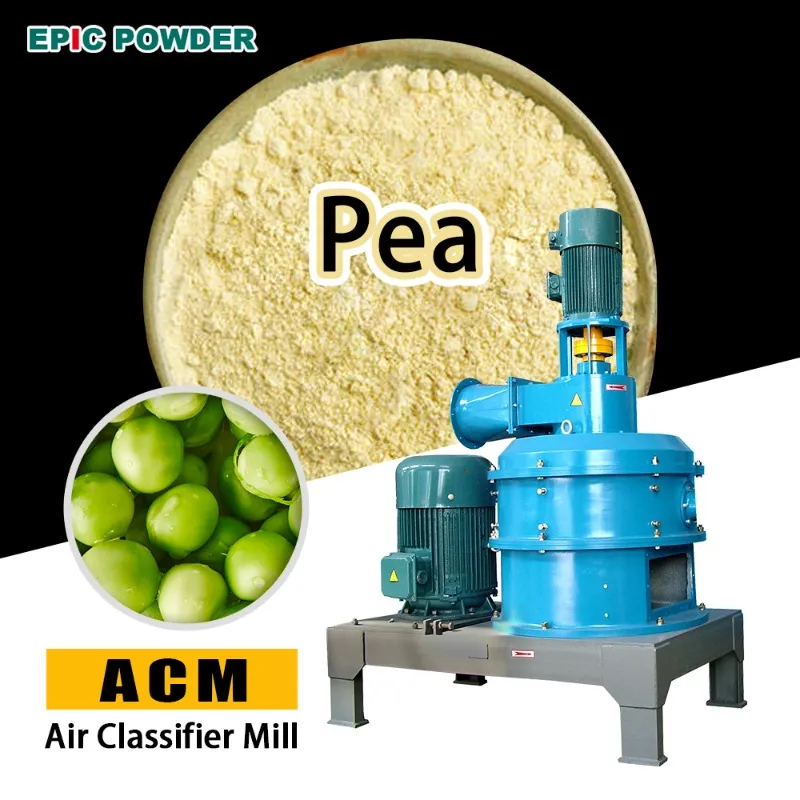
The global food supply chain is undergoing significant changes, driven by rising population and increasing demand for sustainable protein sources. Traditional livestock farming, which requires vast amounts of land and water, can no longer meet this demand alone. As a result, alternative protein sources—such as plant-based, mushroom, insect, algae, and bacterial fermentation biomass—are becoming crucial for future food security. Among the key technologies enabling this shift is the air classifier mill in protein powder processing, which offers an efficient and sustainable method for producing high-quality plant protein. Currently, the mainstream approach involves extracting protein from soybeans through wet processing, which requires large amounts of water, chemicals, and energy-intensive drying. This […]
米澱粉の秘めた魅力:小さな粒子、大きな可能性

Among all known grains, rice starch has the smallest particle size, with an average diameter of only 2-8 μm. In comparison, corn starch ranges from 5-25 μm, wheat starch from 2-45 μm, sorghum starch from 5-25 μm, and potato starch from 15-100 μm. The small particle size and high specific surface area of rice starch give it many superior physical and chemical properties compared to other starches. It can be used as a fat replacer, is easy to digest, low in lipids and minerals, and has very low protein allergenicity. Additionally, rice starch is the whitest of all starches and can be used as a glossy coating for candies or […]