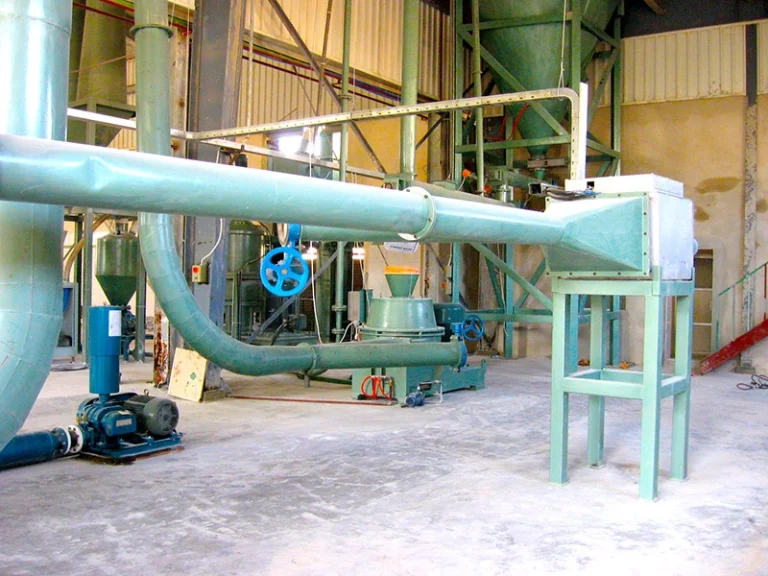
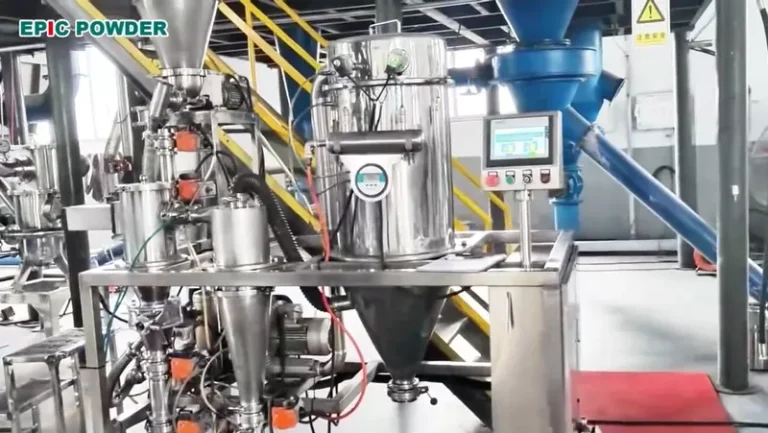
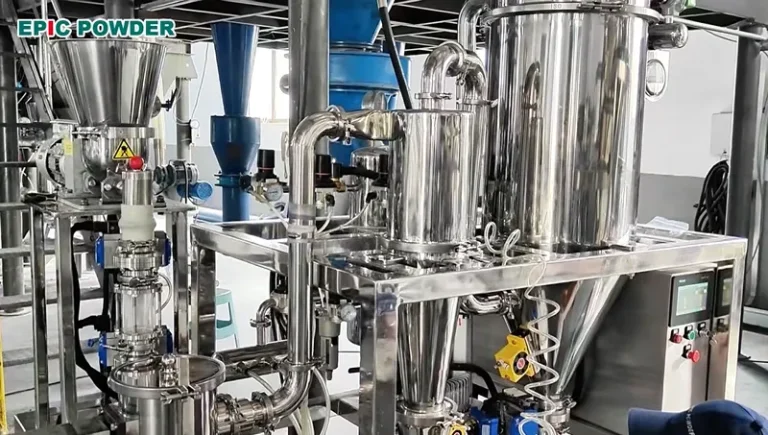
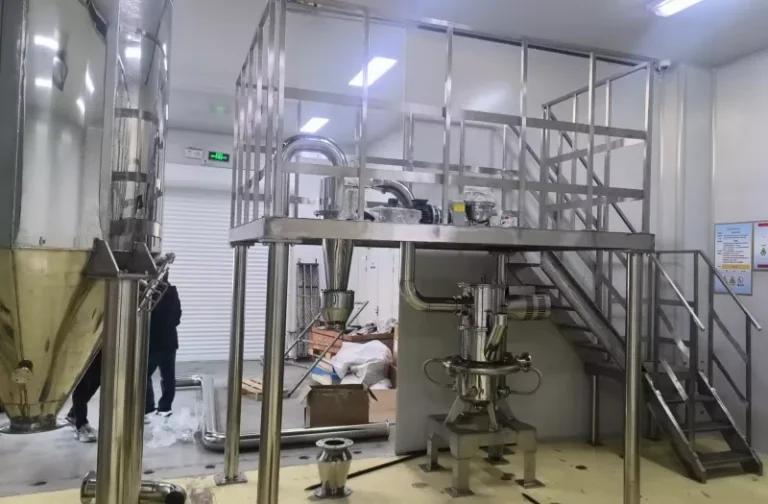
อากาศอัดหรือไอน้ำร้อนยวดยิ่งหรือบรรยากาศเฉื่อยอื่นๆ จะเข้าสู่ท่อจ่ายก๊าซจากช่องฉีดก๊าซป้อน ภายใต้การกระทำของแรงดันของมันเอง ก๊าซจะไหลผ่านหัวฉีดหลายอันที่จัดเรียงเป็นรูปวงแหวนรอบเบาะเพื่อสร้างไอพ่นความเร็วสูงและชนกับวัสดุที่เข้าสู่ห้องบด หัวฉีดป้อนอาหารประกอบด้วยถังพัก หัวฉีดป้อน และท่อ Venturi ใช้เป็นอุปกรณ์ป้อนอาหาร วัสดุในถังจะถูกขับออกไปยังท่อ Venturi โดยกระแสน้ำจากหัวฉีดป้อน ในท่อ Venturi วัสดุและการไหลของอากาศจะถูกผสมและสร้างแรงดัน และเข้าสู่ห้องบด วัสดุที่ถูกบดจะถูกส่งไปยังท่อกลุ่มกลางโดยการไหลของอากาศและไหลผ่าน ท่อปล่องจะเคลื่อนไปตามแกนเข้าไปในท่อไอเสียตรงกลางขึ้นหรือลงในหน่วยรวบรวม
ก๊าซอัดถูกใช้เพื่อส่งผ่านตัวเป่าป้อนเพื่อนำวัตถุดิบที่บดเข้าสู่ห้องบด และขับเคลื่อนด้วยการไหลของอากาศความเร็วสูงจากหัวฉีดหลายตัว มันถูกพ่นลงบนผนังการเจียรในลักษณะสัมผัสเพื่อให้ได้ผลของการเจียรเสียดสี . โดยการปรับความลึกตามยาวของห้องบด การปรับความดันการบดหรือความเร็วในการป้อน สามารถควบคุมความละเอียดของการบดได้ เมื่อเปรียบเทียบกับ Spiral Jet Mill ความสามารถในการควบคุมความละเอียดของการบดจะน้อยกว่า
| แบบอย่าง | ขนาดอาหาร (มม.) | ขนาดอนุภาค (D97: µm) | กำลังการผลิต (กก./ชม.) | ปริมาณการใช้อากาศ (ลบ.ม./นาที) | ความดันอากาศ (Mpa) | กำลังติดตั้ง (กิโลวัตต์) |
|---|---|---|---|---|---|---|
| MQP01 | < 2 | 8~150 | - | 1 | 0.7-0.85 | 7.5 |
หมายเหตุ: กำลังการผลิตมีความสัมพันธ์อย่างใกล้ชิดกับขนาดอนุภาค ความถ่วงจำเพาะ ความแข็ง ความชื้น และตัวชี้วัดอื่นๆ ของวัตถุดิบ ข้อมูลข้างต้นใช้สำหรับการอ้างอิงการเลือกเท่านั้น
By working with a tolling partner’s technical team, you will gain efficiency. They will help choose the best mill type. They will also pick the right speed and feed rate. They will also cover any special project needs.
The team brings focused insights and extensive experience to the table. However, you should also expect to provide safety data sheets and answer a few questions, such as:
A jet mill is a type of ultrafine grinding equipment. It is a machine that uses a lot of energy. Therefore, the feed particle size of the air flow mill should be as fine as possible. It is recommended that the feed particle size be less than 80 mesh. Under normal circumstances, the feed particle size needs to be less than 1 mm.
Jet milling usually makes particles that are 1 to 10 microns in size. This is referred to as micronization.
Some product formulations require particles as small as 200 nanometers. The material's properties determine how small these sizes can be. You can make them smaller by increasing the mill's power. Additionally, by increasing the time the material spends in the milling chamber.
Some products require particles larger than 10 microns. This can be achieved by reducing the power to the mill or increasing the feed rate to the equipment.
In both circular and fluidized bed mills, jets of air or steam are made by gas. The gas is compressed to a gauge pressure of 50 to 120 psig. The most common gas used is commercially compressed air.
Superheated steam (392–980°F) is compressed to 100–220 psig. It can also be used on raw feed materials that are not heat-sensitive. Some of the other gases used include:
Nitrogen, which can protect materials from oxidation and/or fire
Argon, another inert option, though more expensive than nitrogen
Helium, used to achieve higher-velocity impact between particles
A great deal of energy is needed to create enough momentum to cause particles to break on impact. The compressor and nozzles turn high air pressure into energy. They do this within the mill. Large particles recirculate, and multiple high-velocity collisions progressively reduce their mass.
ติดต่อเราทาง WhatsApp
กรุณากรอกแบบฟอร์มด้านล่าง
ผู้เชี่ยวชาญของเราจะติดต่อคุณภายใน 6 ชั่วโมงเพื่อหารือเกี่ยวกับความต้องการเครื่องจักรและกระบวนการของคุณ
ข้อผิดพลาด: ไม่พบแบบฟอร์มติดต่อ.