
Ultrafine powder is not only the basic material for the preparation of structural materials, but also has unique functional properties. It is widely used in fine ceramics, electronic components, bioengineering, and new printing materials. It can also be used in many fields such as high-performance refractory materials and fine chemicals. As these industries continue to increase their requirements for powder performance, the position of ultrafine powder classification technology in the entire powder processing technology has become increasingly prominent. It has become a key link in improving product quality and energy efficiency.
The Importance of Ultrafine Powder Classification
During the crushing process, only some particles can reach the target particle size. If this part of qualified powder is not separated in time, it will continue to be crushed together with the unqualified particles. This will not only waste energy, but also may cause excessive crushing of some materials and reduce product quality.
At the same time, as the particle size decreases, the agglomeration tendency between particles increases, and the phenomenon of “crushing and re-aggregation” is prone to occur. It may even lead to deterioration of the crushing effect. Therefore, efficient classification must be carried out in the preparation process of ultrafine powders. On the one hand, the product particle size distribution is controlled within the ideal range. On the other hand, fine powder is separated in time to improve crushing efficiency and reduce energy consumption.
With the increase of powder fineness and the expansion of production capacity, the difficulty of classification is also increasing. The efficient classification of ultrafine powders has become a bottleneck restricting the progress of powder technology. Therefore, classification technology is also regarded as one of the basic core technologies of powder engineering.
Basic Principles of Ultrafine Powder Classification
In a broad sense, powder classification is based on the physical and chemical properties of particles, such as particle size, density, color, shape, chemical composition, magnetism, radioactivity, etc.
In a narrow sense, classification usually refers to the use of particles in a specific medium (such as air or water) to produce different movement behaviors due to different particle sizes under the action of gravity, inertia or centrifugal force.
Thereby achieving effective separation.
Key Technical Issues of Classification
For any classification method, the key to achieve a better classification effect is how to improve the dispersion of the classified materials and choose a suitable classification force field.
After ultrafine processing, the material presents different properties from the original material. First, the specific surface area increases and the surface energy increases. Secondly, the proportion of the number of atoms or ions on the surface is greatly increased, which increases its surface activity. The attraction between particles increases or it is easy to aggregate due to the effect of foreign impurities such as water.
Ultrafine particles are also easy to gather on large particles due to collision absorption during the crushing process or due to static electricity and other forces after crushing. Whether in the air or in the liquid phase, it is easy to generate secondary particles with larger particle sizes. This makes the classification of ultrafine products more difficult than that of ordinary products.
Therefore, the first task of classification is to disperse the particles. Make them in a monodisperse state, thereby improving the dispersibility of the powder. That is, the basis of ultrafine powder lies in the dispersion of powder particles. It can be said that sufficient dispersion can make the classification process more efficient.
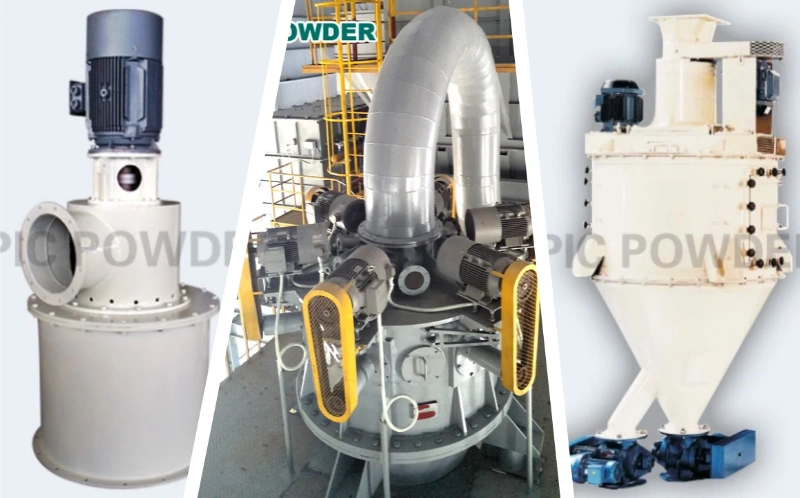
EPIC Air Classifier
Horizontal Air Classifier -HTS
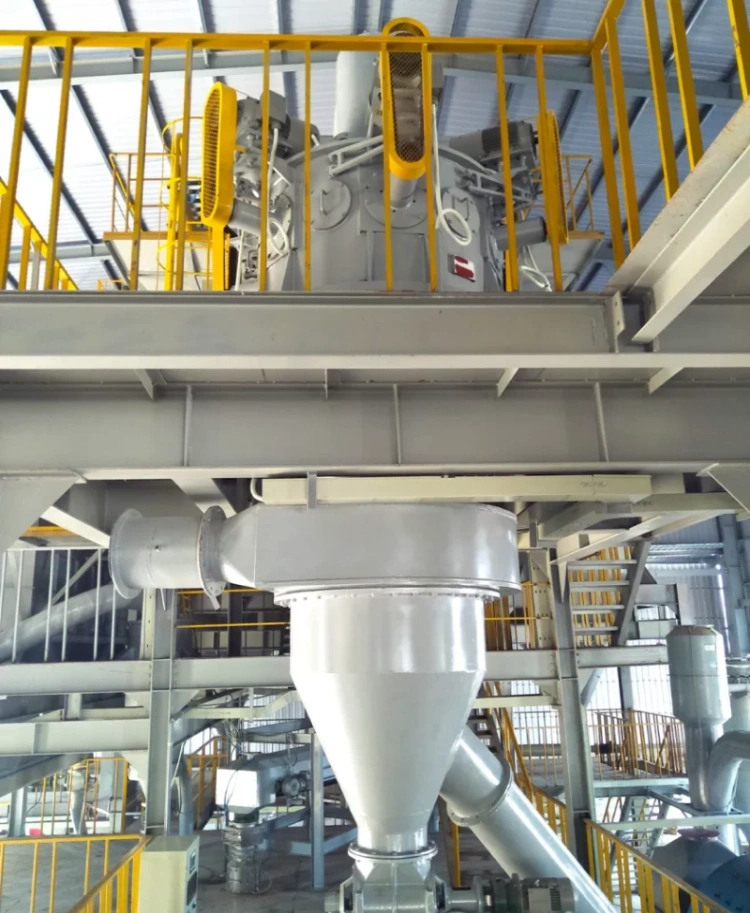
단일 분류 휠:
- 수평으로 설치된 다단식 로터로, 선형 속도는 100m/s에 도달할 수 있습니다.;
- 회전 속도는 주파수 변환을 통해 조절할 수 있으며, 힘 분배도 유연하게 조절할 수 있습니다.;
- 건조된 미크론 크기의 물질을 정밀하게 분류하는 데 적합합니다.;
- 사용 가능한 D50 범위: 1.5-25μm.
다중 분류 휠:
- 로터 직경은 315mm~630mm이며, 2~6개의 로터가 장착되어 초미세 분말 분류에 사용됩니다.;
- 분류 휠은 사일로 상단의 분류 공간을 넓혀줍니다.;
- 인버터 제어, 속도 조절 가능;
- 단일 로터보다 출력이 더 높습니다.
수직형 공기 분류기 – ITC
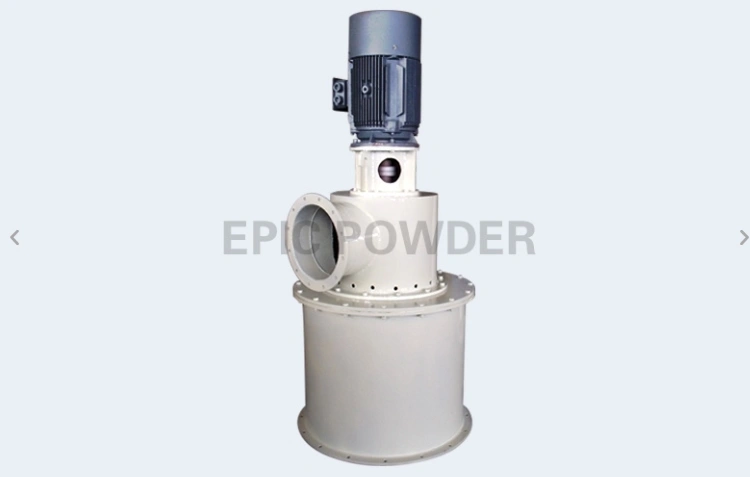
- 이 제품은 초미세 제품 및 중간 미세 제품의 끝부분을 절단하는 데 매우 적합합니다.
- 입자 크기가 매우 다양한 분야에 적용 가능하며, 가장 굵은 입자는 200미크론에 달할 수 있습니다.
- 생산량에 따라 다양한 모델이 있으며, 가장 큰 모델의 공급 용량은 시간당 800톤에 달할 수 있습니다.
- 내마모성 설계로 경도가 매우 높은 분말 제품에도 사용할 수 있습니다.
- 내부 공기 순환 설계는 투자 비용을 절감하고 바닥 공간을 절약할 수 있습니다.
- It can be combined with a 볼밀 to form a closed-circuit production system for grinding various materials.
원심분리형 분류기-CTC
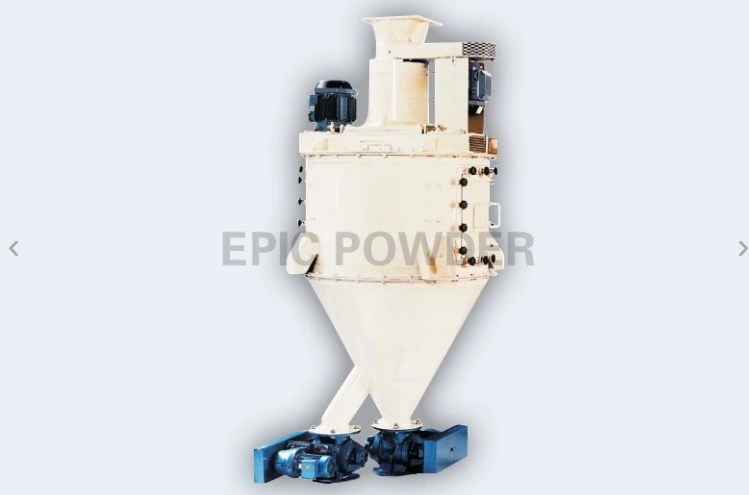
- 정점 상단 절단 분류: d97<32μm.
- Wide range of particle size: 32-250μm.
- 처리 용량 범위: 시간당 1~50톤.
- 이 기술은 독일에서 개발되었으며, 디자인은 안정적이고 신뢰할 수 있습니다.
- 해당 장비는 에너지 소비량이 적고, 투자 비용과 유지 보수 비용이 낮습니다.
- 별도의 장비가 필요 없고, 설치 공간이 작습니다.
- 연마재, 석영 모래, 대리석 및 기타 단단한 재료에 적합합니다.
에픽 파우더
에픽 파우더는 초미세 분말 산업에서 20년 이상의 경력을 보유하고 있습니다. 초미세 분말의 분쇄, 연삭, 분류 및 개질 공정에 집중하여 초미세 분말의 미래 발전을 적극적으로 추진하고 있습니다. 무료 상담 및 맞춤형 솔루션을 원하시면 지금 바로 연락주세요! 저희 전문가 팀은 고객의 분말 가공 가치를 극대화할 수 있도록 고품질 제품과 서비스를 제공하기 위해 최선을 다하고 있습니다. 에픽 파우더 - 믿을 수 있는 분말 가공 전문가!