
Ultrafine powder is not only the basic material for the preparation of structural materials, but also has unique functional properties. It is widely used in fine ceramics, electronic components, bioengineering, and new printing materials. It can also be used in many fields such as high-performance refractory materials and fine chemicals. As these industries continue to increase their requirements for powder performance, the position of ultrafine powder classification technology in the entire powder processing technology has become increasingly prominent. It has become a key link in improving product quality and energy efficiency.
The Importance of Ultrafine Powder Classification
During the crushing process, only some particles can reach the target particle size. If this part of qualified powder is not separated in time, it will continue to be crushed together with the unqualified particles. This will not only waste energy, but also may cause excessive crushing of some materials and reduce product quality.
At the same time, as the particle size decreases, the agglomeration tendency between particles increases, and the phenomenon of “crushing and re-aggregation” is prone to occur. It may even lead to deterioration of the crushing effect. Therefore, efficient classification must be carried out in the preparation process of ultrafine powders. On the one hand, the product particle size distribution is controlled within the ideal range. On the other hand, fine powder is separated in time to improve crushing efficiency and reduce energy consumption.
With the increase of powder fineness and the expansion of production capacity, the difficulty of classification is also increasing. The efficient classification of ultrafine powders has become a bottleneck restricting the progress of powder technology. Therefore, classification technology is also regarded as one of the basic core technologies of powder engineering.
Basic Principles of Ultrafine Powder Classification
In a broad sense, powder classification is based on the physical and chemical properties of particles, such as particle size, density, color, shape, chemical composition, magnetism, radioactivity, etc.
In a narrow sense, classification usually refers to the use of particles in a specific medium (such as air or water) to produce different movement behaviors due to different particle sizes under the action of gravity, inertia or centrifugal force.
Thereby achieving effective separation.
Key Technical Issues of Classification
For any classification method, the key to achieve a better classification effect is how to improve the dispersion of the classified materials and choose a suitable classification force field.
After ultrafine processing, the material presents different properties from the original material. First, the specific surface area increases and the surface energy increases. Secondly, the proportion of the number of atoms or ions on the surface is greatly increased, which increases its surface activity. The attraction between particles increases or it is easy to aggregate due to the effect of foreign impurities such as water.
Ultrafine particles are also easy to gather on large particles due to collision absorption during the crushing process or due to static electricity and other forces after crushing. Whether in the air or in the liquid phase, it is easy to generate secondary particles with larger particle sizes. This makes the classification of ultrafine products more difficult than that of ordinary products.
Therefore, the first task of classification is to disperse the particles. Make them in a monodisperse state, thereby improving the dispersibility of the powder. That is, the basis of ultrafine powder lies in the dispersion of powder particles. It can be said that sufficient dispersion can make the classification process more efficient.
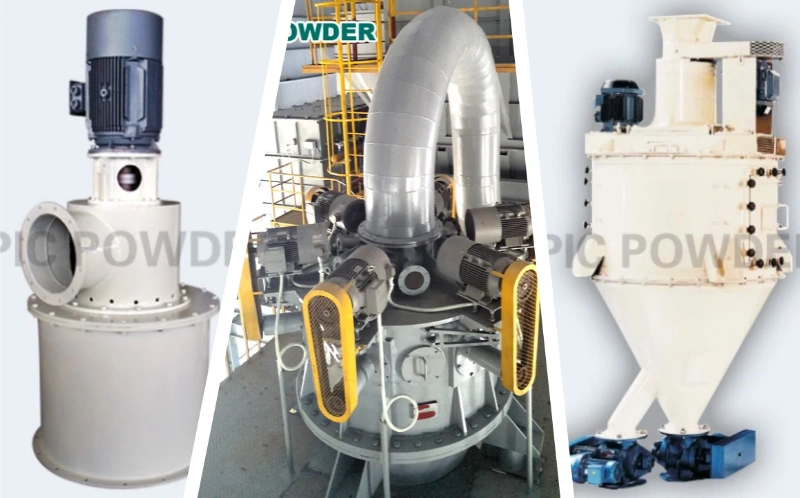
EPIC Air Classifier
Horizontal Air Classifier -HTS
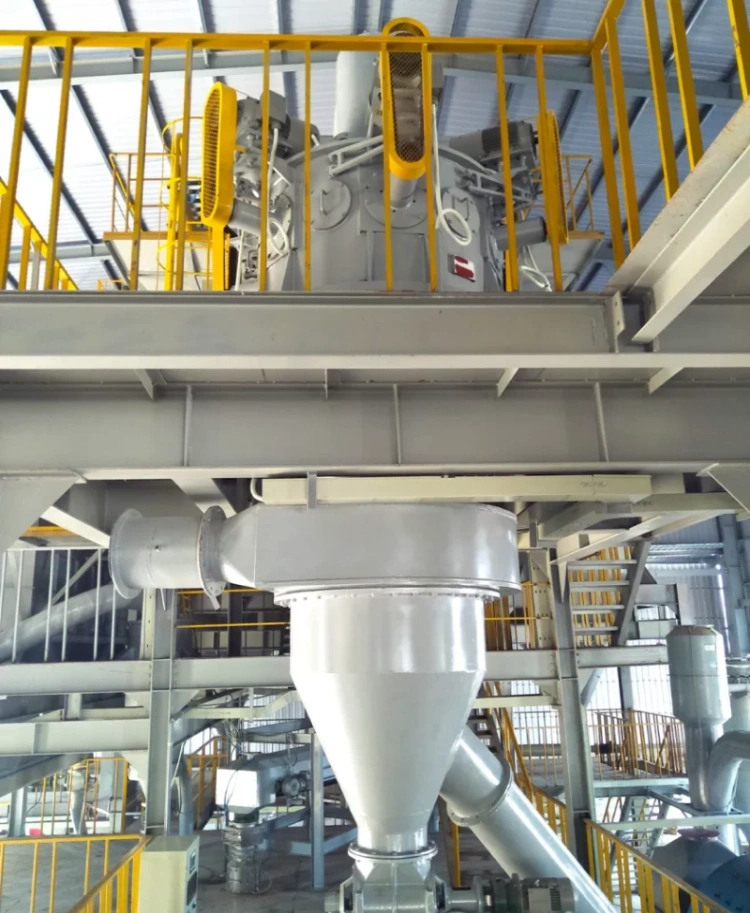
عجلة تصنيف مفردة:
- دوار أفقي مثبت على مراحل، يمكن أن تصل سرعته الخطية إلى 100 متر/ثانية؛;
- يمكن تعديل سرعة الدوار عن طريق تحويل التردد، ويمكن تعديل توزيع القوة بمرونة؛;
- مناسب للتصنيف الدقيق للمواد الجافة ذات الحجم الميكروني؛;
- نطاق D50 المتاح: 1.5-25 ميكرومتر.
عجلة تصنيف متعددة:
- يبلغ قطر الدوار 315 مم - 630 مم، و2-6 دوارات، والتي تستخدم لتصنيف المساحيق فائقة النعومة؛;
- تعمل عجلة التصنيف على زيادة مساحة التصنيف في الجزء العلوي من الصومعة؛;
- التحكم في العاكس، سرعة قابلة للتعديل؛;
- إنتاجية أعلى من الدوار الأحادي.
مصنف الهواء العمودي – ITC
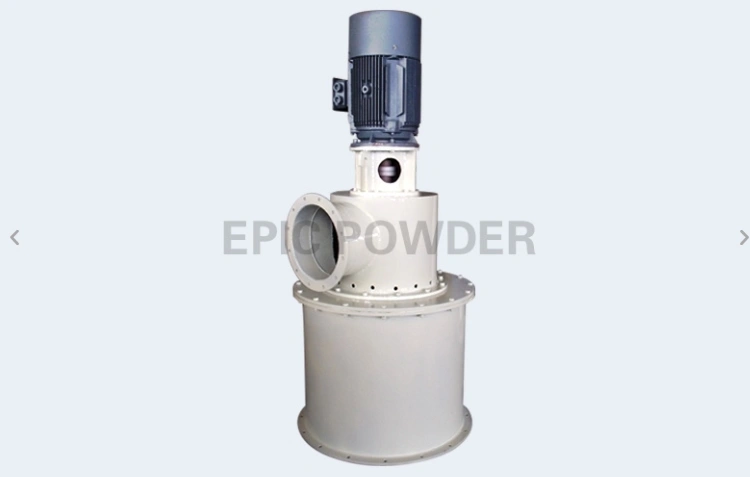
- إنه جيد جداً لقطع قمة المنتجات فائقة النعومة والمنتجات متوسطة النعومة.
- ينطبق على نطاق واسع من أحجام الجسيمات، ويمكن أن يصل حجم الجسيمات الأكثر خشونة إلى 200 ميكرون.
- توجد نماذج مختلفة لتلبية متطلبات الإنتاج المختلفة، ويمكن أن تصل سعة التغذية لأكبر نموذج إلى 800 طن/ساعة.
- تصميم مقاوم للتآكل، يمكنه التعامل مع المنتجات المسحوقة ذات الصلابة العالية للغاية.
- يمكن لتصميم نظام دوران الهواء الداخلي أن يقلل من الاستثمار ويوفر مساحة الأرضية.
- It can be combined with a مطحنة كروية to form a closed-circuit production system for grinding various materials.
المصنف المركزي - CTC
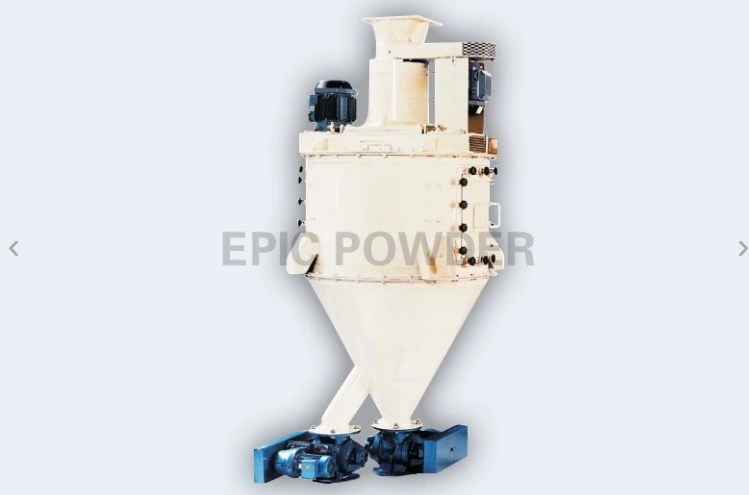
- تصنيف القطع العلوي للقمة: d97<32μm.
- Wide range of particle size: 32-250μm.
- نطاق قدرة المعالجة: 1-50 طن/ساعة.
- تأتي التكنولوجيا من ألمانيا، والتصميم ناضج وموثوق.
- يتميز هذا الجهاز بانخفاض استهلاك الطاقة، وانخفاض تكلفة الاستثمار، وانخفاض تكلفة الصيانة.
- لا حاجة لمعدات طرفية، حجم صغير.
- مناسب للمواد الكاشطة، ورمل الكوارتز، والرخام، وغيرها من المواد الصلبة.
مسحوق إيبك
إبيك باودر، خبرة تزيد عن 20 عامًا في صناعة المساحيق فائقة النعومة. نسعى جاهدين لتطوير هذه المساحيق، مع التركيز على عمليات التكسير والطحن والتصنيف والتعديل. تواصلوا معنا للحصول على استشارة مجانية وحلول مصممة خصيصًا لتلبية احتياجاتكم! فريقنا من الخبراء ملتزم بتقديم منتجات وخدمات عالية الجودة لتحقيق أقصى استفادة من عمليات معالجة المساحيق. إبيك باودر - خبيركم الموثوق في معالجة المساحيق!