
This grinding cost calculator turns your mill’s power draw, throughput and site costs into one number: dollars per ton. Supplier quotes usually stop at the machine price — this one shows what the powder actually costs to make, and which line item is eating the margin. Every field is editable, so replace the defaults with your own meter readings and invoices.
Running on defaults: 5 t/h, 250 kW at 85 % load, 6,000 h a year and USD 0.10/kWh. None of these is an EPIC quotation — they are placeholders for your own numbers.
Cost per ton is not a single measurement, it is five costs divided by the same tonnage. The grinding cost calculator builds each one separately so you can see which is out of line with the rest of the industry.
Specific energy is the pivot. The calculator derives it from installed power, load factor and capacity rather than asking you to guess:
SEC (kWh/t) = installed power × load factor ÷ capacity
250 kW × 0.85 ÷ 5 t/h = 42.5 kWh/t. At
USD 0.10/kWh that is USD 4.25 of electricity per ton.
If you already log kWh at the mill motor, use that figure instead — metered energy always beats a nameplate calculation, because nameplate ratings are quoted at a duty point the plant rarely sits on. Background on how specific energy relates to particle size is in the Bond work index literature; electricity price benchmarks by country are published by the US Energy Information Administration.
Four variables move the number more than everything else combined. If a quotation looks cheap or expensive against your own plant, one of these is usually the reason.
Energy does not scale with the tonnage, it scales with the new surface you create. Grinding from 150 µm to 45 µm roughly doubles specific energy; going from 45 µm to 10 µm can multiply it again. This is why a mill that looks efficient at filler grade can be uneconomic at coating grade, and why every cost comparison has to state the target D97 first.
Hardness sets the energy, abrasiveness sets the wear bill. Two powders with the same target size can differ by a factor of two in kWh/t and by a factor of five in wear parts, which is why a cost model built on one material should never be reused for another without re-checking the wear line.
Labour and depreciation are fixed per hour, not per ton. Running a 5 t/h line at 3 t/h doubles both on a per-ton basis while the energy line barely moves. This is the single most common reason a plant’s actual cost per ton misses the number in the feasibility study.
Energy is the largest variable cost in most grinding operations, typically 30–50 % of conversion cost. A tariff difference of USD 0.05/kWh moves a 40 kWh/t product by USD 2/ton — often more than the entire wear budget.
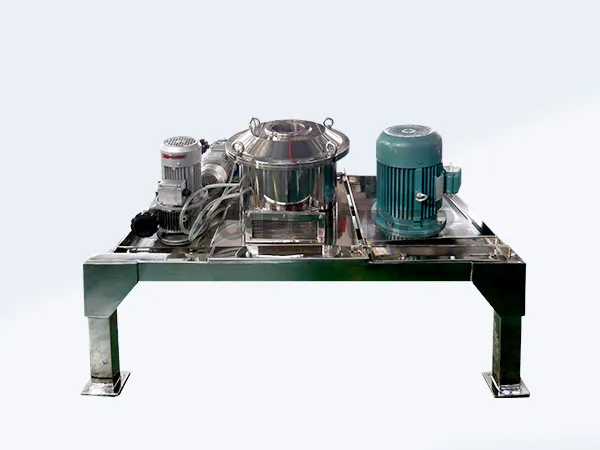
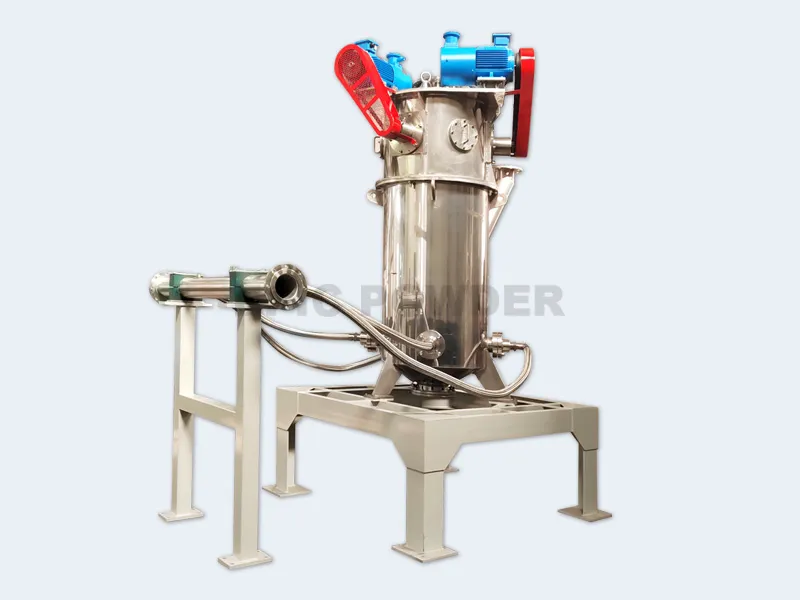
Jet mills are usually described as expensive, and per kWh they are: compressed air carries most of the energy, so a fluidised bed jet mill can draw three to eight times the power of a mechanical mill for the same tonnage. But that comparison only holds above roughly 20 µm, where a mechanical mill is comfortably inside its range.
| Target D97 | Mechanical mill | مطحنة نفاثة | What usually wins |
|---|---|---|---|
| > 45 µm | Efficient, low wear per ton | Over-specified, 3–5× the energy | Mechanical, clearly |
| 20–45 µm | Inside range, wear rising | Energy penalty still large | Mechanical, unless contamination rules it out |
| 10–20 µm | At or past the limit, energy climbs steeply | Becoming competitive | Depends on the product — run both numbers |
| < 10 µm | Often impossible in one pass | Designed for this range | Jet mill, usually the only option |
Ranges are engineering rules of thumb, not quotations. Contamination limits frequently decide the answer before cost does: a jet mill adds no wear metal to the product, which is why battery and high-purity ceramic powders stay on jet mills well above the crossover point.
In the order we usually find them during a plant review, measured by how quickly they pay back.
Most lines run below nameplate because of upstream interruptions, not because the mill is small. Recovering ten points of utilisation usually cuts labour and depreciation per ton by the same proportion — no capital required.
Every millimetre removed from the feed before the grinding stage reduces specific energy downstream. Moving from a 25 mm to a 10 mm feed is normally the cheapest energy saving available, and it costs a screen or a second crusher stage rather than a new mill.
If the classifier sends finished powder back to the mill, you pay to grind the same particle twice. A cut-point that is 3 µm off can inflate circulating load enough to hide inside the energy bill without anyone noticing. Check the tromp curve before blaming the mill.
Grinding is one of the few processes that can be moved in time. Running the mill in an off-peak window, or shifting the fine-grinding pass to cheaper hours, moves the largest cost line without touching the equipment.
A liner that costs twice as much and lasts three times longer is the cheaper liner. Ask for the wear rate in grams per ton, then compare: USD per ton of product, not USD per kilogram of steel.
Figures below come from published industry sources, not from EPIC quotations. They are useful for sanity checking your own number, and useless as a substitute for it — every one of them depends on fineness, material and utilisation.
| Benchmark | Published figure | Conditions stated |
|---|---|---|
| Grinding energy | ~27 kWh/t | Mid-volume ground mineral, USD 0.09/kWh = USD 2.43/t for grinding alone |
| Specific energy, GCC 1250 mesh | 35–50 kWh/t | Vertical roller mill, USD 0.05–0.15/kWh = USD 1.75–7.50/t |
| Wear parts, GCC | USD 0.50–1.50/t | Roller and disc life of 8,000–12,000 h |
| Labour, GCC | USD 0.30–1.00/t | 1–2 operators per shift at high tonnage |
| Total operating cost, GCC 1250 mesh | ~USD 13.46/t | 20 t/h, 40 kWh/t, USD 0.10/kWh, raw material included |
| Grinding stage, hard rock | USD 1.84/t | Large mineral processing plant, ore only |
Sources: published cost-estimation guides for industrial mineral processing and calcium carbonate operations. Treat as order-of-magnitude. Note that the GCC total includes raw material and packaging, while the calculator above deliberately excludes them — it prices conversion, not the whole business.
Conversion cost only: energy, wear parts, labour, depreciation and maintenance. It excludes raw material, inbound freight, packaging, drying and margin, because those vary so much between plants that folding them in would make the comparison meaningless. If you want a landed cost, add your own material and packaging lines on top of the result.
Usually utilisation, not equipment. The benchmarks assume the mill runs at or near nameplate for most of the year; a line running at 60 % of capacity carries the same labour and depreciation over far fewer tons. Check the annual output figure the calculator reports against your actual shipments before concluding that the mill is inefficient.
Measured, every time. Nameplate ratings are stated at a design duty point, and the load factor box exists precisely to approximate the gap. If you can read amps at the mill motor for a week, convert to kW and use that number — the difference is often 10–20 %, which is larger than most of the savings people chase elsewhere.
Accurate enough to rank options and find the outlier line item, not accurate enough to sign a contract on. The model has no way to know your actual wear rate, your tariff structure or how often the line stops. Use it to decide which machine to test, then replace the estimates with three months of real production data.
Below about 10 µm it is frequently the cheaper option, because a mechanical mill either cannot reach the size or spends so much energy recirculating that the gap closes. Above 20 µm the energy penalty is real and hard to justify unless contamination limits rule out wear metal.
Yes, by running the numbers twice with the same capacity and hours but different installed power, wear budget and capex. The mill type selector shows the typical specific energy band for each family so you can see whether your entered power is plausible before comparing the totals.
Give us the material, the target D97 and the tonnage per hour, and we will return a machine selection with a specific energy estimate and a wear-part consumption figure you can drop straight into the calculator above.
Request a costed proposal Browse powder machinery