
新エネルギー産業におけるエネルギー密度と速度性能に対する要求が継続的に高まる中、 粒子サイズ 分布(PSD) リン酸鉄リチウム (LFP)はスラリーを決定する重要な要因となっている コーティング 品質と電気化学的性能。.
これらの要求に応えるため、国内大手メーカーは、イオン拡散経路の短縮と材料活性の向上を実現するため、リチウム電池正極材料の粉砕に着目しました。同社は、金属不純物(亜鉛摩耗など)の増加を厳密に抑制し、狭い粒度分布を維持しながら、LFP材料をD50 1.30μmまで粉砕することを要求しました。.
1. リチウム電池正極材料粉砕用コア機器の選定
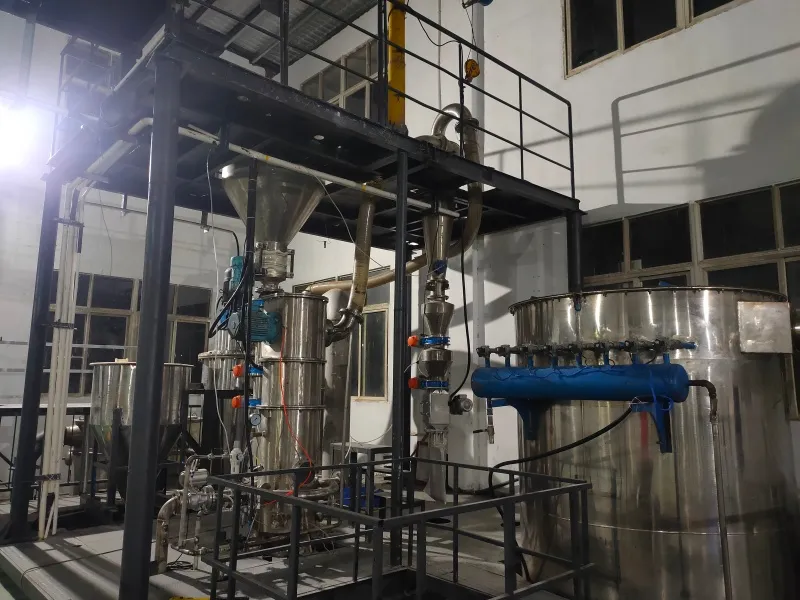
装置: エピックパウダー MQWシリーズ 流動層ジェットミル
技術的特徴:
- マルチノズル協調設計:
MQWシリーズは、粉砕室の周囲に対向配置されたノズルを採用しています。超音速気流が粒子同士の衝突と自己粉砕を促進し、装置壁の摩耗を大幅に低減します。. - 高精度分類:
水平型高速分級ホイールを搭載。回転速度(RPM)を調整することで、大きすぎる粒子も正確に分級できます。. - 完全なセラミック保護:
バッテリーグレードの材料については、製品接触部品(ノズル、分級ホイール、ライナー)はすべてアルミナまたは炭化ケイ素セラミックタイルで作られており、 金属汚染ゼロ.
2. 製造パラメータと測定結果
1.30 μm をターゲットとした現地試運転中に、次のデータが記録されました。
| アイテム | プロセスパラメータ/テスト結果 |
|---|---|
| 飼料粒子サイズ | D50 ≈ 15~20 μm |
| 研削圧力 | 0.7~0.8MPa |
| 分類ホイールの速度 | 3,500~4,200 RPM(モデルに応じて調整) |
| 最終製品D50 | 1.30μm |
| PSD特性 | 狭い分布曲線、D100を効果的に制御 |
3. コアとなる利点
- 形態保護:
機械式ミルと比較して、MQW ジェットミル 粉砕中に発生する熱は極めて少なく、LFP 粒子の炭素コーティング層への損傷を効果的に防ぎます。. - 高効率分散:
の ジェットミリング このプロセスは強力な脱凝集作用を提供し、超微細 LFP 粉末の凝集傾向を解決します。. - 高度な自動化:
このシステムは、負圧収集と自動制御を統合し、規制に準拠した粉塵排出とバッチ間の一貫した品質を保証します。.
4. 結論
を採用することで エピックパウダー MQWシリーズジェットミルにより、お客様はリン酸鉄リチウムの微粒子から超微粒子への安定した粒子径変化を実現しました。1.30μmの精密制御により、粉砕速度が向上しただけでなく、 電池材料, だけでなく、高出力バッテリー市場における同社の競争力に強力な技術的サポートを提供しました。.