
South African Rooibos Tea Superfine Pulverization Process: How Jet Milling Achieves Particle Size Control at 8-12 Microns While Preserving Bioactivity
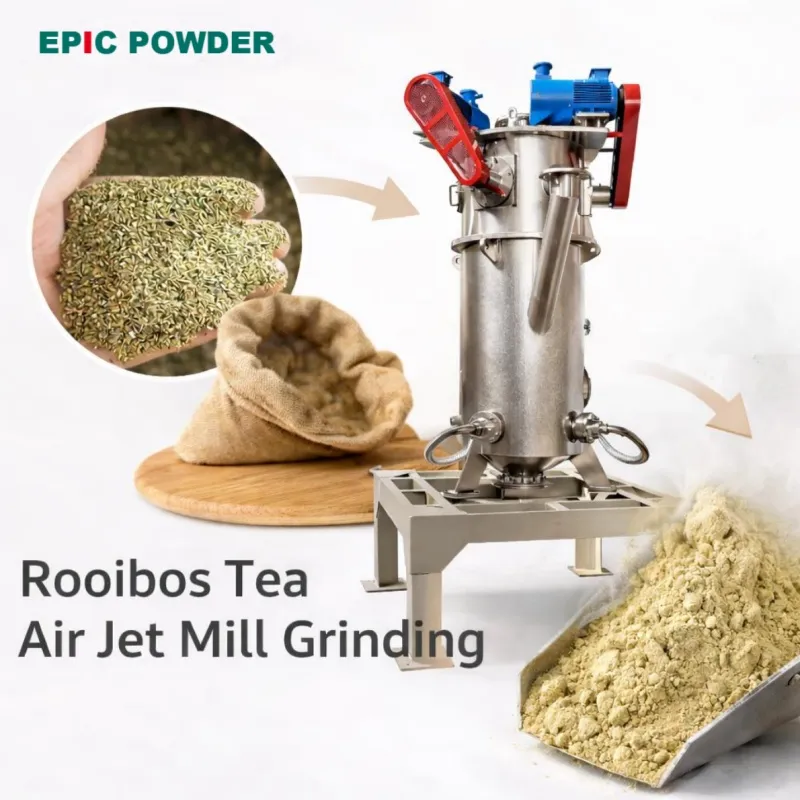
Rooibos tea (Aspalathus linearis) is also known as redbush tea or South African national treasure tea. It is a shrub from the legume family. It grows in the Cederberg Mountains north of Cape Town, South Africa. Renowned as the “South African ruby,” it is caffeine-free. It is low in oxalic acid and tannins. Furthermore, it is rich in unique flavonoids (such as aspalathin), polyphenols, antioxidants, and minerals. These minerals include copper, iron, zinc, and magnesium. For centuries, indigenous South Africans have used it as a daily health beverage. Modern research confirms its multiple benefits, including antioxidant effects, sleep improvement, gastrointestinal health support, immune enhancement, and cardiovascular disease prevention. The health […]
What Are the Core Advantages of Bentonite as a Herbicide Carrier and How Does Ultrafine Grinding Empower It ?
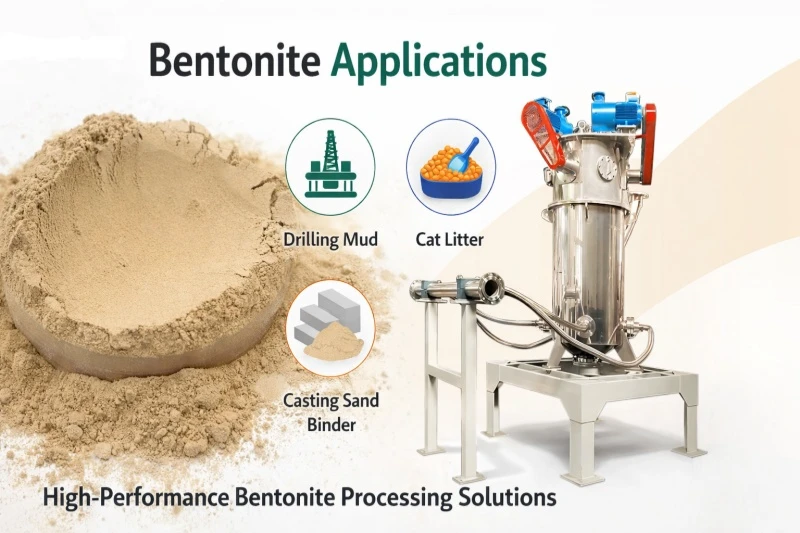
Bentonite is a natural clay mineral primarily composed of montmorillonite. In the industrial world, it is widely known as the “universal clay.” Montmorillonite has a typical 2:1 layered silicate crystal structure. In this structure, one aluminum-oxygen octahedron layer is sandwiched between two silicon-oxygen tetrahedron layers. Its unique interlayer regions are rich in water molecules and exchangeable cations, such as Na⁺、Ca²⁺、Mg²⁺. This micro-structure gives bentonite remarkable hydrophilicity, high cation exchange capacity (CEC), and high swelling capacity when exposed to water. Natural bentonite inherently possesses a high specific surface area (usually between 60-800 m²/g) and a well-developed pore structure. With the growth of modern precision agriculture and green pesticide formulation technologies, utilizing […]
Glass Powder: How to Improve the Performance of Architectural Coatings and Refractory Materials?

Glass Powder is a functional filler known for its high strength and transparency. It is quietly becoming a “behind-the-scenes hero” in the world of modern high-performance materials. It possesses excellent chemical stability, weather resistance, and electrical insulation. Furthermore, it can significantly enhance the hardness and abrasion resistance of base materials. However, the performance of glass powder is closely related to its particle size distribution. The key to releasing its full potential lies in using advanced ultra-fine grinding equipment. This process refines the glass powder to micron or even nanometer scales. This article will explore the applications of glass powder in architectural coatings and refractory materials. It will also analyze the core […]
リン酸鉄リチウム粒子の形態は、その性能にどのように影響するのか、また、粉砕装置を最適化するにはどうすればよいのか?
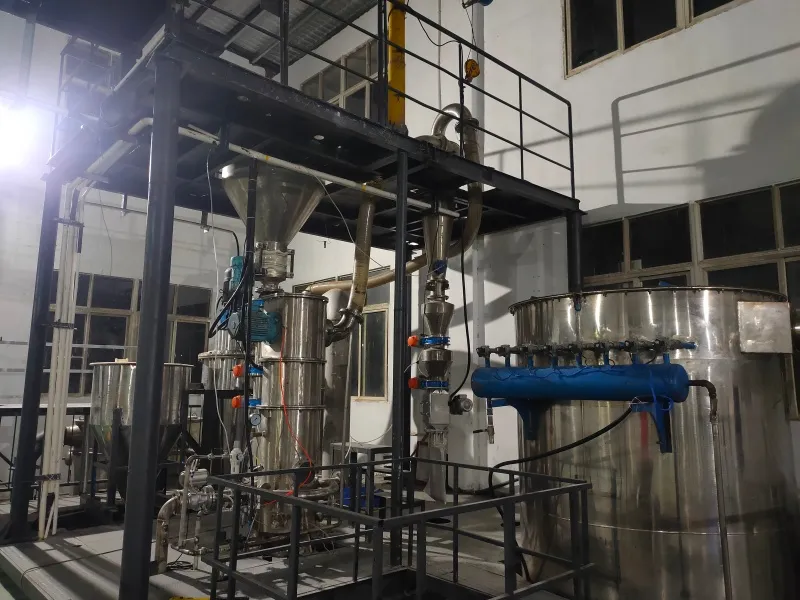
With the rapid development of new energy vehicles and energy storage batteries, Lithium Iron Phosphate (LiFePO₄, or LFP) has become a preferred cathode material. This is primarily due to its high safety, long cycle life, environmental friendliness, and cost advantages. However, LFP performance is not solely determined by chemical composition; it is also closely linked to particle morphology. These factors—including particle size, distribution, shape, and surface structure—directly affect the battery’s charge-discharge rate, cycle life, conductivity, and energy density. The Relationship Between LFP Particle Morphology and Performance The particle morphology of lithium iron phosphate mainly manifests in the following aspects: The Role of Grinding Equipment in Controlling Particle Morphology The morphology […]
球状リン酸鉄リチウムはどのように製造されるのですか?
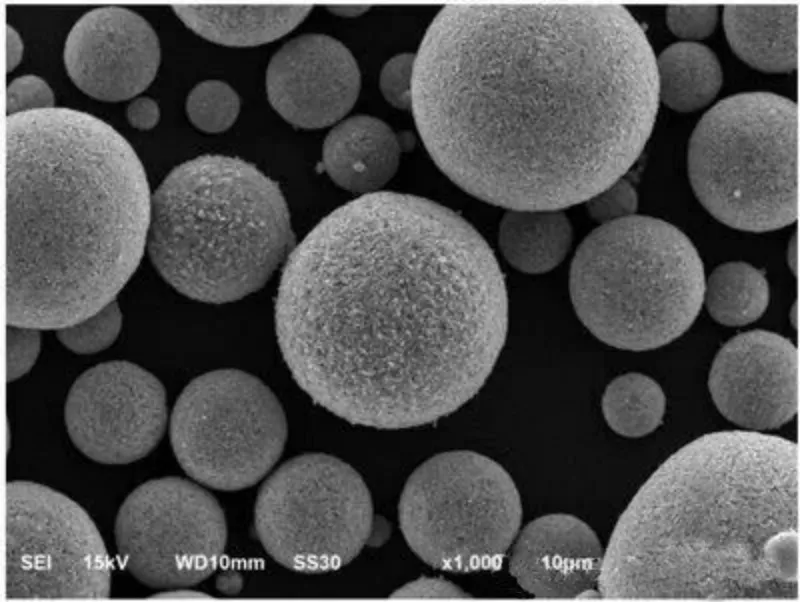
Spherical Lithium Iron Phosphate (LiFePO₄ or LFP) is one of the most important cathode materials used in modern lithium-ion batteries. It is widely applied in electric vehicles, energy storage systems, and power tools due to its excellent safety, long cycle life, and thermal stability. However, producing high-performance spherical LFP cathode material requires a complex manufacturing process that combines materials science, chemical engineering, and powder processing technologies. This article provides a comprehensive overview of the industrial production process of spherical lithium iron phosphate, from raw material selection to spray drying, sintering, and ultrafine grinding. 1. Why Spherical Lithium Iron Phosphate Matters Early generations of LFP materials typically consisted of irregular particles, […]
How to Achieve D50 < 1μm in NCM Ultrafine Pulverization Without Damaging Crystal Structures?
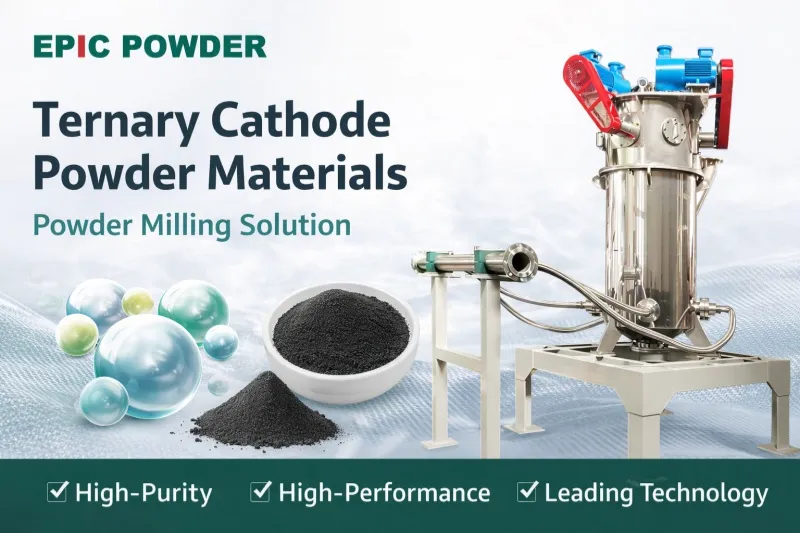
In the field of lithium-ion battery cathode materials, NCM (nickel-cobalt-manganese ternary layered oxide, LiNiₓCoᵧMnzO₂) has become one of the mainstream choices for electric vehicle power batteries due to its high energy density, good cycling stability, and relatively low cost. With the trends toward high-nickel content (Ni ≥ 80%) and single-crystal/nanocrystallization, reducing the D50 (median volume particle size) of NCM materials to below 1 μm (even in the 0.2–1.0 μm range) has emerged as a key strategy for significantly improving rate performance. Ultr-fine particle size can dramatically shorten lithium-ion and electron transport pathways, reduce interfacial impedance, enhance fast charge-discharge capability, and to some extent mitigate particle pulverization during cycling. However, as […]
ナトリウムイオン電池用プルシアンブルー正極材料の研究現状と課題とは?
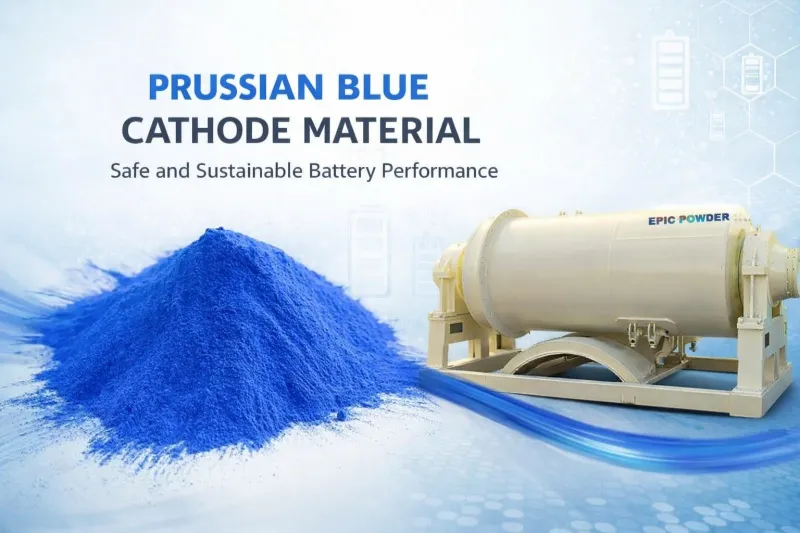
In recent years, lithium-ion batteries have been widely used in power and energy storage markets. As a result, lithium resources have become increasingly scarce. Sodium-ion batteries operate on a similar principle and show comparable performance to lithium-ion batteries. However, compared with lithium-ion batteries, sodium-ion batteries have several clear advantages: They also offer good power performance, wide temperature adaptability, high safety, and no over-discharge problems. Therefore, sodium-ion batteries are widely regarded as an important alternative technology for large-scale energy storage. Because the ionic radius of Na⁺ is significantly larger than that of Li⁺, cathode materials suitable for lithium-ion batteries are not necessarily suitable for sodium-ion batteries. Developing cathode materials with larger […]
炭酸ナトリウムの超微粉砕は、ナトリウムイオン電池のレート性能の低さという問題を本当に解決するのか?

Sodium-ion batteries (SIBs) have attracted significant attention in recent years due to abundant sodium resources, low cost, and advantages in low-temperature performance and safety. However, compared to mature lithium-ion batteries, SIBs still face a prominent shortcoming — poor rate capability. Rate capability refers to a battery’s ability to maintain capacity and enable fast charge/discharge at high current densities (high C-rates). There is a popular claim that ultra-fine pulverization of industrial sodium carbonate (Na₂CO₃, soda ash) — reducing particle size to submicron or even nanoscale via jet milling or planetary ball milling — and using it as an additive or precursor can significantly improve the rate performance of sodium batteries. This […]
粉末粒子の形態制御を実現するには?
Morphology control of powder particles is one of the core technologies in advanced material preparation. It directly determines the packing density, flowability, sintering activity, and the final microstructure and performance of ceramic products. The objective of morphology control is to obtain particle shapes that are specific, uniform, and reproducible. The following sections detail the mainstream preparation methods and the underlying principles behind these approaches to achieve powder particles control. Mainstream Morphologies and Control Strategies The following table details the characteristics, common preparation methods, and core control principles of different target morphologies. Morphology Control Strategy Table Target Morphology Characteristics & Advantages Typical Preparation Methods Core Principles of Control Spherical / Near-Spherical […]