
South African Rooibos Tea Superfine Pulverization Process: How Jet Milling Achieves Particle Size Control at 8-12 Microns While Preserving Bioactivity

Rooibos tea (Aspalathus linearis) is also known as redbush tea or South African national treasure tea. It is a shrub from the legume family. It grows in the Cederberg Mountains north of Cape Town, South Africa. Renowned as the “South African ruby,” it is caffeine-free. It is low in oxalic acid and tannins. Furthermore, it […]
What Are the Core Advantages of Bentonite as a Herbicide Carrier and How Does Ultrafine Grinding Empower It ?
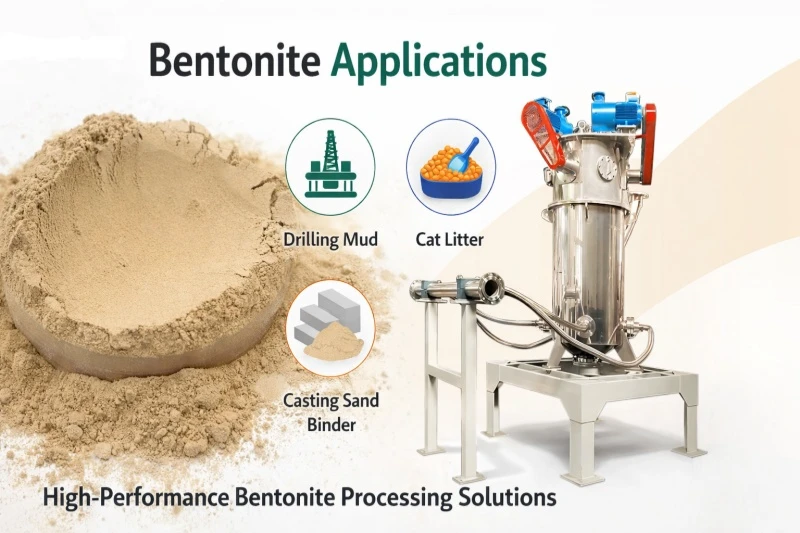
Bentonite is a natural clay mineral primarily composed of montmorillonite. In the industrial world, it is widely known as the “universal clay.” Montmorillonite has a typical 2:1 layered silicate crystal structure. In this structure, one aluminum-oxygen octahedron layer is sandwiched between two silicon-oxygen tetrahedron layers. Its unique interlayer regions are rich in water molecules and […]
Glass Powder: How to Improve the Performance of Architectural Coatings and Refractory Materials?

Glass Powder is a functional filler known for its high strength and transparency. It is quietly becoming a “behind-the-scenes hero” in the world of modern high-performance materials. It possesses excellent chemical stability, weather resistance, and electrical insulation. Furthermore, it can significantly enhance the hardness and abrasion resistance of base materials. However, the performance of glass powder […]
How Does Lithium Iron Phosphate Particle Morphology Affect Its Performance, and How Can Grinding Equipment Be Optimized?
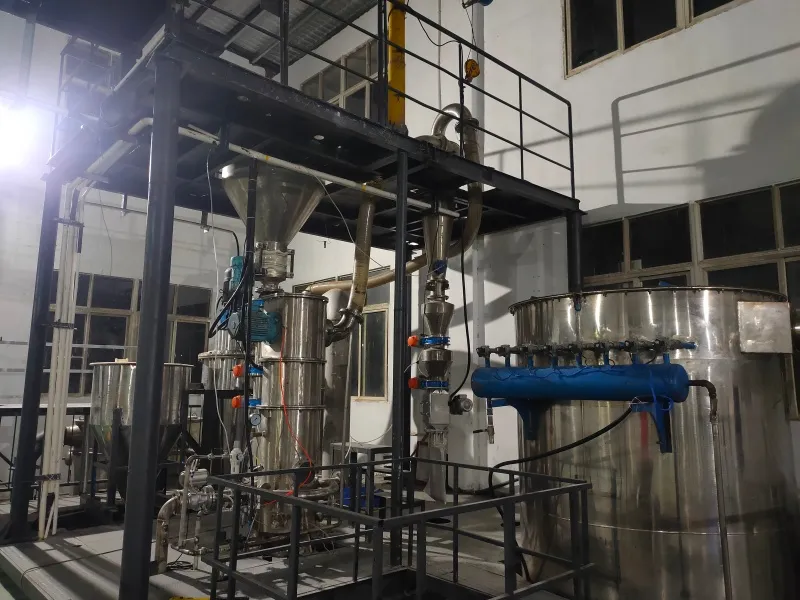
With the rapid development of new energy vehicles and energy storage batteries, Lithium Iron Phosphate (LiFePO₄, or LFP) has become a preferred cathode material. This is primarily due to its high safety, long cycle life, environmental friendliness, and cost advantages. However, LFP performance is not solely determined by chemical composition; it is also closely linked […]
구형 리튬인산철은 어떻게 제조되나요?
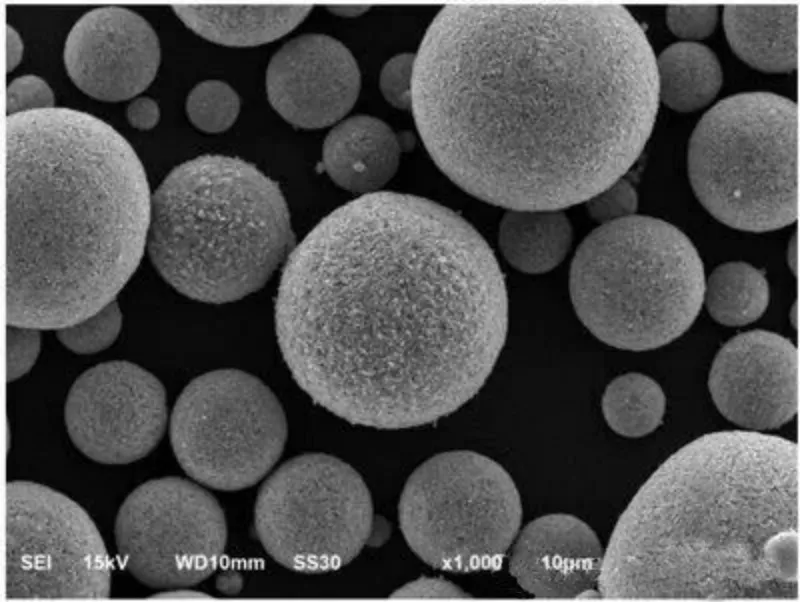
Spherical Lithium Iron Phosphate (LiFePO₄ or LFP) is one of the most important cathode materials used in modern lithium-ion batteries. It is widely applied in electric vehicles, energy storage systems, and power tools due to its excellent safety, long cycle life, and thermal stability. However, producing high-performance spherical LFP cathode material requires a complex manufacturing […]
결정 구조 손상 없이 NCM 초미세 분쇄에서 D50 < 1μm를 달성하는 방법은 무엇일까요?
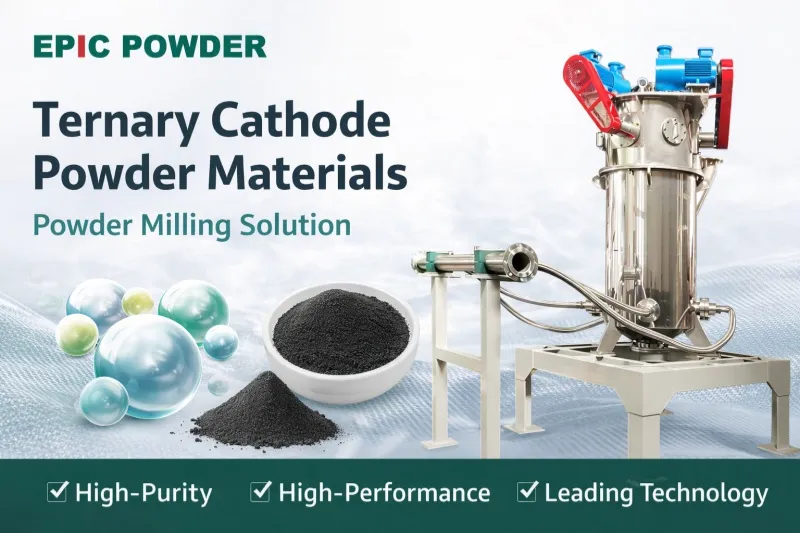
In the field of lithium-ion battery cathode materials, NCM (nickel-cobalt-manganese ternary layered oxide, LiNiₓCoᵧMnzO₂) has become one of the mainstream choices for electric vehicle power batteries due to its high energy density, good cycling stability, and relatively low cost. With the trends toward high-nickel content (Ni ≥ 80%) and single-crystal/nanocrystallization, reducing the D50 (median volume […]
What are Research Status and Challenges of Prussian Blue Cathode Materials for Sodium-Ion Batteries?
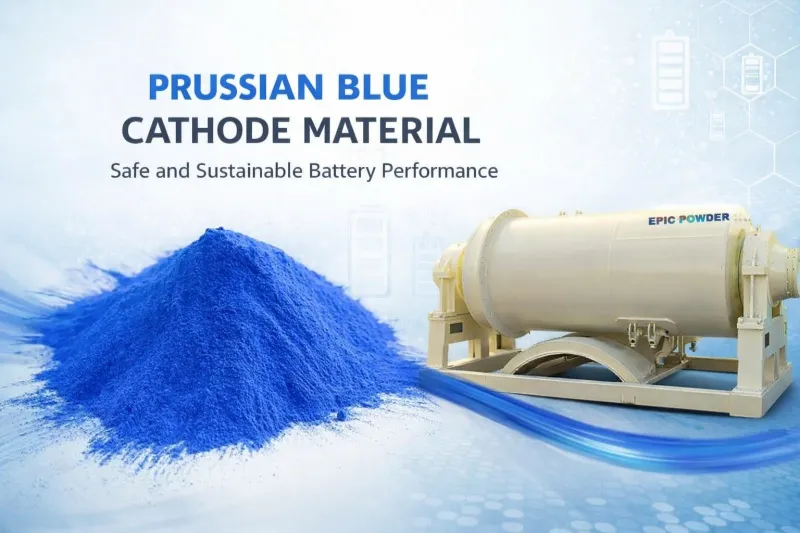
In recent years, lithium-ion batteries have been widely used in power and energy storage markets. As a result, lithium resources have become increasingly scarce. Sodium-ion batteries operate on a similar principle and show comparable performance to lithium-ion batteries. However, compared with lithium-ion batteries, sodium-ion batteries have several clear advantages: They also offer good power performance, […]
탄산나트륨의 초미세 분쇄가 나트륨 이온 배터리의 저조한 충방전 성능 문제를 정말로 해결할 수 있을까요?

Sodium-ion batteries (SIBs) have attracted significant attention in recent years due to abundant sodium resources, low cost, and advantages in low-temperature performance and safety. However, compared to mature lithium-ion batteries, SIBs still face a prominent shortcoming — poor rate capability. Rate capability refers to a battery’s ability to maintain capacity and enable fast charge/discharge at […]
분말 입자의 형태를 제어하는 방법은 무엇일까요?
Morphology control of powder particles is one of the core technologies in advanced material preparation. It directly determines the packing density, flowability, sintering activity, and the final microstructure and performance of ceramic products. The objective of morphology control is to obtain particle shapes that are specific, uniform, and reproducible. The following sections detail the mainstream […]