
Barite (mainly composed of BaSO₄) is an important non-metallic mineral resource. Barite is characterized by its high specific gravity (4.2–4.6), strong chemical inertness, acid and alkali resistance, and non-toxicity. Traditionally, about 80–90% of barite is used as a weighting agent in oil and gas drilling fluids. The remaining portion is applied as a chemical raw material or industrial filler. However, conventional processing is dominated by coarse grinding (200–325 mesh), resulting in low added value. Products are mainly exported as raw ore or primary-grade powder, leading to low resource utilization efficiency and limited economic benefits. With rising performance requirements in modern industries, fine grinding—especially ultrafine grinding to 1250 mesh and above, or even 3000 mesh—has become the key pathway to increasing the added value of barite. Through ultrafine grinding, particle size distribution, whiteness, and dispersibility can be significantly improved. This enables expansion into high-end application fields. It also facilitates the transformation from low-end weighting materials to high-value functional powders.
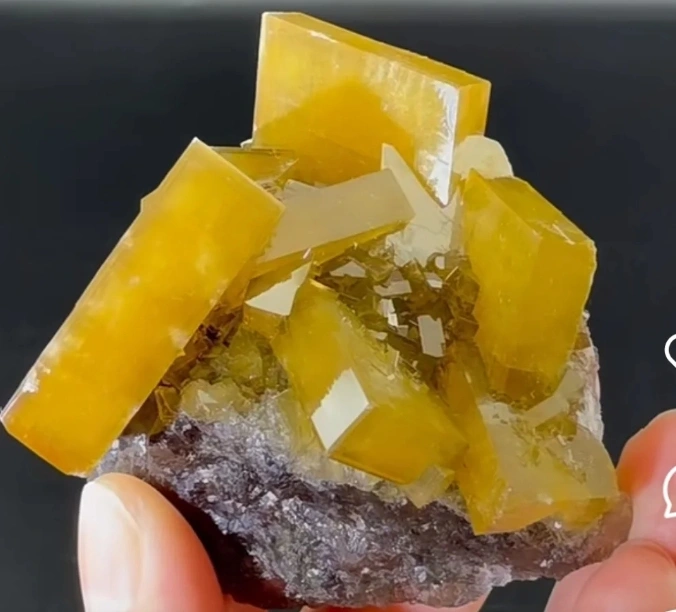
Effects of Ultrafine Grinding on Barite Powder Properties
The industrial performance of barite powder is closely related to its particle size. Coarse powders mainly rely on high density. Fine grinding significantly increases the specific surface area. It also improves particle uniformity and surface activity. As a result, overall powder performance is greatly enhanced.
- Relationship Between Particle Size and Physical Properties
Coarse powder (below 325 mesh) settles easily and is suitable for drilling fluids. Medium-fine powder (500–1250 mesh) shows improved dispersibility and coverage. Ultrafine powder (1250–3000 mesh, or even D97 ≤ 5 μm) features finer and more regular particles. It significantly increases whiteness (>95%), gloss, and hiding power. At the same time, oil absorption is reduced. Weather resistance and abrasion resistance are also enhanced. - Enhancement of Chemical and Functional Properties
Ultrafine grinding activates the particle surface, allowing stronger interaction with matrix materials and the formation of stable adsorption or reaction layers. This improves the strength, hardness, and aging resistance of composite materials. In addition, finer particle sizes enhance radiation shielding performance by utilizing barium’s strong absorption of X-rays and γ-rays. - Economic Value Enhancement
Conventional drilling-grade barite powder is priced at approximately RMB 500 per ton, while ultrafine coating-grade or filler-grade products can reach RMB 2,000–3,000 per ton or even higher. Fine processing can increase the value by several hundred RMB per ton, significantly improving market competitiveness.
Surface Modification: Endowing Minerals with “Active Functionality”
Fine grinding is not merely a reduction in particle size, but also a process of activating surface properties. Integrating surface modification during grinding represents the highest level of value enhancement.
- Integrated Grinding and Modification
Silane coupling agents or fatty acids are introduced during fine grinding. The newly generated particle surfaces exhibit extremely high activity, allowing modifiers to uniformly coat the particles. - Value Creation
Modified barite powder transforms from hydrophilic to organophilic, enabling excellent compatibility with polymer materials such as PP, PE, and PVC. The market price of such “activated barite powder” is often several times higher than that of conventional powder.
Optimizing Particle Size Distribution (D50/D97): Improving Product Stability
For industrial customers, the most stringent requirement is often not the average fineness, but product stability.
- Narrow Particle Size Distribution Technology
By combining fine grinding with high-performance ultrafine classifiers, particle size can be controlled within a very narrow range (e.g., D97 ≤ 5 μm). Such uniform powders are indispensable in high-end paper coating and lead-acid battery paste fillers, serving as the core source of premium pricing.
Main Application Fields and Added Value Enhancement of Finely Ground Barite
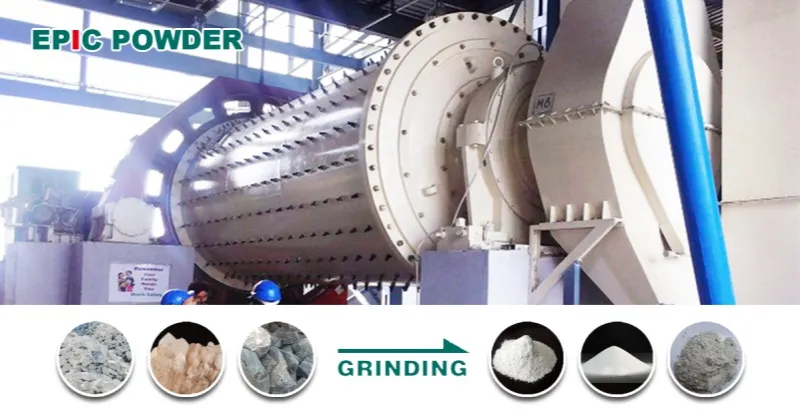
Through ultrafine grinding, barite transitions from a low-value weighting agent to a high-value functional material, with major applications including:
- Paints and Coatings Industry
Ultrafine barite powder (1250–2500 mesh) is used as a functional filler to increase film thickness, strength, durability, and gloss, partially replacing titanium dioxide. It is widely applied in high-end architectural coatings and automotive paints, with whiteness requirements exceeding 95%. - Plastics and Rubber Industry
Fine powder (800–2000 mesh) improves hardness, wear resistance, aging resistance, and density. Ultrafine powders enhance dispersion, rigidity, and impact resistance in pipes, cables, and automotive components. - Paper Industry
High-fineness powder (above 1250 mesh) serves as a filler and coating pigment, improving whiteness, smoothness, and printability while reducing material costs. - Radiation-Shielding Materials
Leveraging high density and radiation absorption properties, fine barite powder (325–1250 mesh) is used in barite cement, mortar, and concrete for nuclear power plants, hospitals, and radiation shielding facilities. - Pharmaceuticals and Chemicals
Ultrafine, high-purity powders are applied in gastrointestinal contrast agents, barium salt production, conductive composites, and advanced functional materials. - Emerging Applications
Nano-scale barite powders are used in high-reflectivity coatings, battery materials, and conductive pigments, expanding into military and new energy sectors.
These high-end applications require extremely fine particle size, high whiteness, and low impurity levels—conditions that can only be achieved through ultrafine grinding, driving the transformation from resource-based to technology-driven products.
Fine Grinding Processes and Equipment Selection
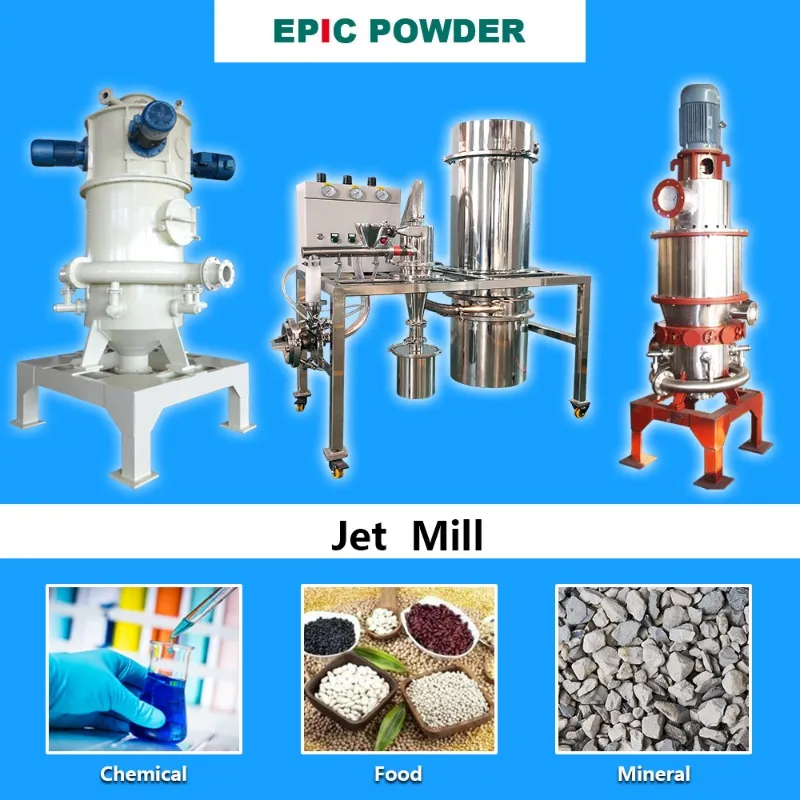
Equipment selection is critical to achieving these value-added goals:
| Target Product Grade | Recommended Equipment | Key Advantages |
|---|---|---|
| Ultrafine functional powder (1250–3000 mesh) | Ball mill | Large-scale production, high energy efficiency, stable fineness |
| Nano / submicron powder | Stirred mill / sand mill | Wet grinding, nano-scale fineness, excellent dispersion |
| High-purity / high-whiteness powder | Jet mill | No mechanical wear contamination, extremely high purity |
Conclusion: Ultrafine Grinding as the Engine for Barite Industry Upgrading
Ultrafine grinding is a decisive pathway for enhancing the industrial added value of barite. It not only expands application boundaries but also significantly improves resource utilization efficiency and overall economic returns.
As a specialist in ultrafine powder processing, Epic Powder provides integrated solutions covering crushing, fine grinding, ultrafine classification, and surface modification. Customized ball mill–classifier systems and jet milling technologies ensure stable D97 control and narrow particle size distribution. High whiteness, high purity, and consistent product quality can be achieved at industrial scale.
By partnering with Epic Powder, barite producers can move beyond traditional drilling-grade products. They can successfully enter high-end coating, plastic, paper, and radiation-shielding markets. This supports a sustainable transition toward high-value, green, and technology-driven development.

“Thanks for reading. I hope my article helps. Please leave a comment down below. You may also contact Zelda online customer representative for any further inquiries.”
— Posted by Emily Chen