
Barit (chủ yếu bao gồm BaSO₄) là một nguồn tài nguyên khoáng sản phi kim loại quan trọng. Barit có đặc điểm là trọng lượng riêng cao (4,2–4,6), tính trơ hóa học mạnh, khả năng chống axit và kiềm, và không độc hại. Theo truyền thống, khoảng 80–901 tấn barit được sử dụng làm chất làm tăng trọng lượng trong dung dịch khoan dầu khí. Phần còn lại được sử dụng làm nguyên liệu hóa học hoặc chất độn công nghiệp. Tuy nhiên, quy trình chế biến thông thường chủ yếu là nghiền thô (200–325 mesh), dẫn đến giá trị gia tăng thấp. Sản phẩm chủ yếu được xuất khẩu dưới dạng quặng thô hoặc bột cấp sơ cấp, dẫn đến hiệu quả sử dụng tài nguyên thấp và lợi ích kinh tế hạn chế. Với yêu cầu hiệu suất ngày càng cao trong các ngành công nghiệp hiện đại, việc nghiền mịn—đặc biệt là—cần được chú trọng. nghiền siêu mịn Việc nghiền siêu mịn đến kích thước 1250 mesh trở lên, hoặc thậm chí 3000 mesh, đã trở thành con đường then chốt để gia tăng giá trị của barit. Thông qua quá trình nghiền siêu mịn, sự phân bố kích thước hạt, độ trắng và khả năng phân tán có thể được cải thiện đáng kể. Điều này cho phép mở rộng sang các lĩnh vực ứng dụng cao cấp. Nó cũng tạo điều kiện thuận lợi cho việc chuyển đổi từ các vật liệu làm nặng cấp thấp thành các loại bột chức năng có giá trị cao.
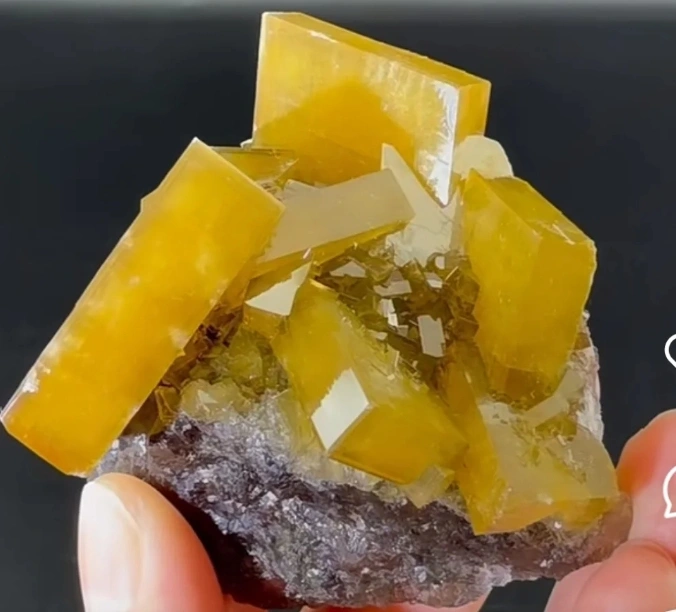
Effects of Ultrafine Grinding on Barite Powder Của cải
The industrial performance of barite powder is closely related to its particle size. Coarse powders mainly rely on high density. Fine grinding significantly increases the specific surface area. It also improves particle uniformity and surface activity. As a result, overall powder performance is greatly enhanced.
- Relationship Between Particle Size and Physical Properties
Coarse powder (below 325 mesh) settles easily and is suitable for drilling fluids. Medium-fine powder (500–1250 mesh) shows improved dispersibility and coverage. Ultrafine powder (1250–3000 mesh, or even D97 ≤ 5 μm) features finer and more regular particles. It significantly increases whiteness (>95%), gloss, and hiding power. At the same time, oil absorption is reduced. Weather resistance and abrasion resistance are also enhanced. - Enhancement of Chemical and Functional Properties
Ultrafine grinding activates the particle surface, allowing stronger interaction with matrix materials and the formation of stable adsorption or reaction layers. This improves the strength, hardness, and aging resistance of composite materials. In addition, finer particle sizes enhance radiation shielding performance by utilizing barium’s strong absorption of X-rays and γ-rays. - Economic Value Enhancement
Bột barit thông thường dùng trong khoan có giá khoảng 500 nhân dân tệ/tấn, trong khi các sản phẩm siêu mịn dùng cho lớp phủ hoặc chất độn có thể đạt giá từ 2.000 đến 3.000 nhân dân tệ/tấn hoặc thậm chí cao hơn. Quá trình gia công tinh có thể làm tăng giá trị thêm vài trăm nhân dân tệ/tấn, giúp nâng cao đáng kể khả năng cạnh tranh trên thị trường.
Biến đổi bề mặt: Endowing Minerals with “Active Functionality”
Fine grinding is not merely a reduction in particle size, but also a process of activating surface properties. Integrating surface modification during grinding represents the highest level of value enhancement.
- Integrated Grinding and Modification
Silane coupling agents or fatty acids are introduced during fine grinding. The newly generated particle surfaces exhibit extremely high activity, allowing modifiers to uniformly coat the particles. - Value Creation
Modified barite powder transforms from hydrophilic to organophilic, enabling excellent compatibility with polymer materials such as PP, PE, and PVC. The market price of such “activated barite powder” is often several times higher than that of conventional powder.
Optimizing Particle Size Distribution (D50/D97): Improving Product Stability
For industrial customers, the most stringent requirement is often not the average fineness, but product stability.
- Narrow Particle Size Distribution Technology
By combining fine grinding with high-performance ultrafine classifiers, particle size can be controlled within a very narrow range (e.g., D97 ≤ 5 μm). Such uniform powders are indispensable in high-end paper coating and lead-acid battery paste fillers, serving as the core source of premium pricing.
Main Application Fields and Added Value Enhancement of Finely Ground Barite
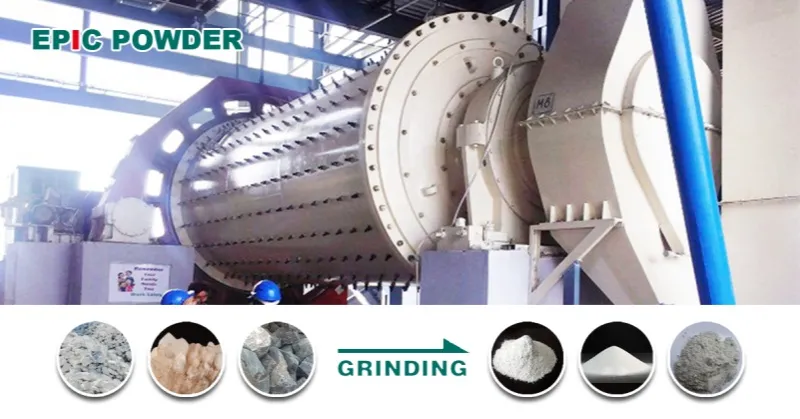
Through ultrafine grinding, barite transitions from a low-value weighting agent to a high-value functional material, with major applications including:
- Paints and Coatings Industry
Ultrafine barite powder (1250–2500 mesh) is used as a functional filler to increase film thickness, strength, durability, and gloss, partially replacing titanium dioxide. It is widely applied in high-end architectural coatings and automotive paints, with whiteness requirements exceeding 95%. - Plastics and Rubber Industry
Fine powder (800–2000 mesh) improves hardness, wear resistance, aging resistance, and density. Ultrafine powders enhance dispersion, rigidity, and impact resistance in pipes, cables, and automotive components. - Ngành công nghiệp giấy
High-fineness powder (above 1250 mesh) serves as a filler and coating pigment, improving whiteness, smoothness, and printability while reducing material costs. - Radiation-Shielding Materials
Leveraging high density and radiation absorption properties, fine barite powder (325–1250 mesh) is used in barite cement, mortar, and concrete for nuclear power plants, hospitals, and radiation shielding facilities. - Pharmaceuticals and Chemicals
Ultrafine, high-purity powders are applied in gastrointestinal contrast agents, barium salt production, conductive composites, and advanced functional materials. - Emerging Applications
Nano-scale barite powders are used in high-reflectivity coatings, battery materials, and conductive pigments, expanding into military and new energy sectors.
These high-end applications require extremely fine particle size, high whiteness, and low impurity levels—conditions that can only be achieved through ultrafine grinding, driving the transformation from resource-based to technology-driven products.
Fine Grinding Processes and Equipment Selection
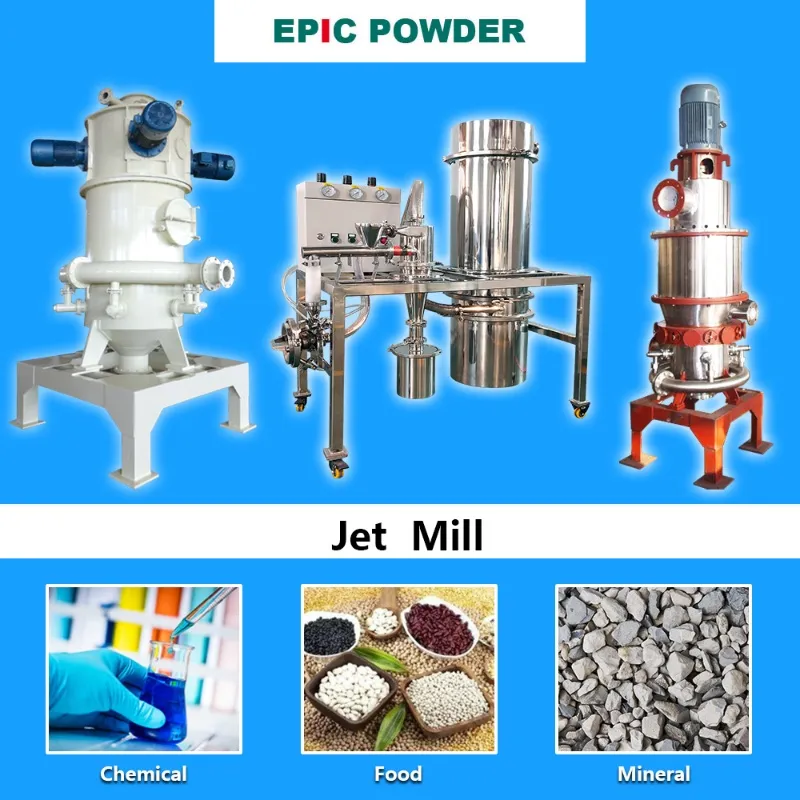
Equipment selection is critical to achieving these value-added goals:
| Target Product Grade | Recommended Equipment | Key Advantages |
|---|---|---|
| Ultrafine functional powder (1250–3000 mesh) | Ball mill | Large-scale production, high energy efficiency, stable fineness |
| Nano / submicron powder | Stirred mill / sand mill | Wet grinding, nano-scale fineness, excellent dispersion |
| High-purity / high-whiteness powder | Jet mill | No mechanical wear contamination, extremely high purity |
Conclusion: Ultrafine Grinding as the Engine for Barite Industry Upgrading
Ultrafine grinding is a decisive pathway for enhancing the industrial added value of barite. It not only expands application boundaries but also significantly improves resource utilization efficiency and overall economic returns.
As a specialist in ultrafine powder processing, Tuyết tuyệt vời Cung cấp các giải pháp tích hợp bao gồm nghiền, xay mịn, phân loại siêu mịn và xử lý bề mặt. Hệ thống máy nghiền bi – phân loại tùy chỉnh và công nghệ nghiền phun đảm bảo kiểm soát D97 ổn định và phân bố kích thước hạt hẹp. Độ trắng cao, độ tinh khiết cao và chất lượng sản phẩm ổn định có thể đạt được ở quy mô công nghiệp.
By partnering with Epic Powder, barite producers can move beyond traditional drilling-grade products. They can successfully enter high-end coating, plastic, paper, and radiation-shielding markets. This supports a sustainable transition toward high-value, green, and technology-driven development.

“Cảm ơn bạn đã đọc. Tôi hy vọng bài viết của tôi hữu ích. Vui lòng để lại bình luận bên dưới. Bạn cũng có thể liên hệ với đại diện chăm sóc khách hàng trực tuyến của Zelda nếu có bất kỳ thắc mắc nào khác.”
— Được đăng bởi Emily Chen
Lỗi: Không tìm thấy biểu mẫu liên hệ.