
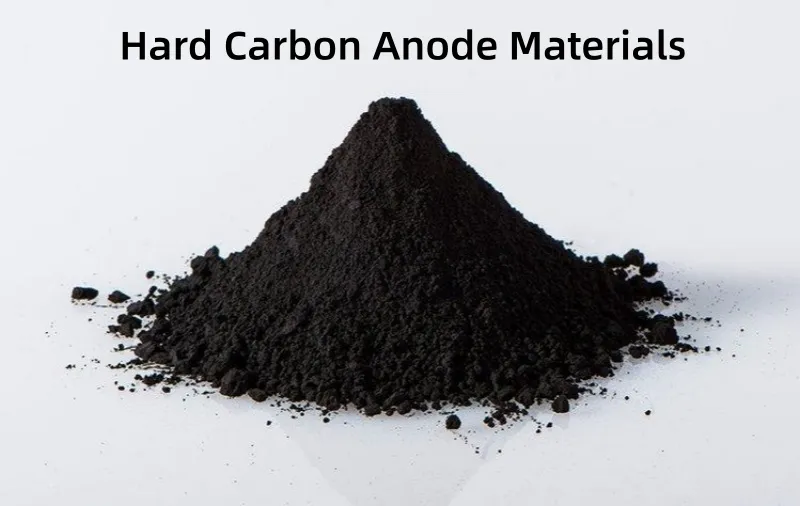
The practical performance of hard carbon anode materials in sodium-ion batteries is highly dependent on their microstructure, and the particle size distribution (PSD) and morphology are key factors determining ion diffusion pathways, electrode packing density, first-cycle Coulombic efficiency, and cycle stability. Air jet mill, as the most commonly used ultrafine grinding method in hard carbon preparation, has its process parameters directly influencing the final particle size, distribution width, and morphological characteristics, thereby profoundly affecting electrochemical performance. This article will systematically analyze the main process parameters of air jet milling and their specific effects on the particle size and morphology of hard carbon.
Principle of Air Jet Mill and Key Process Parameters
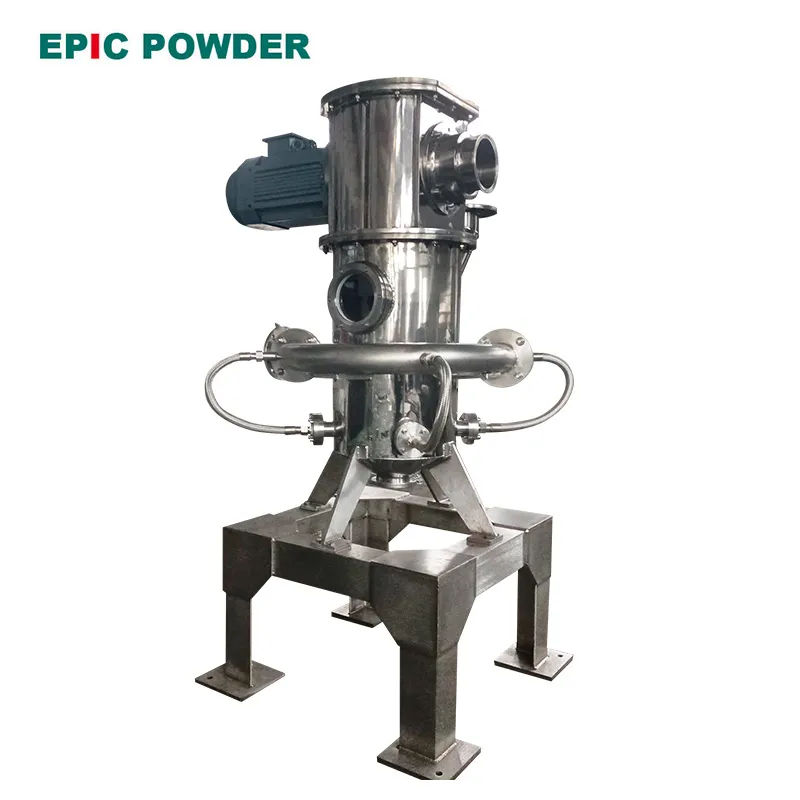
Air jet mill (also known as fluidized bed opposed jet mill or flat jet mill) accelerates particles to supersonic speeds using high-pressure gases (usually nitrogen or compressed air) and crushes them through collisions at the center of the grinding chamber. The main adjustable process parameters include:
- Milling pressure (0.6–1.2 MPa)
- Classifier wheel speed (1000–5000 rpm)
- Feed rate (kg/h)
- Auxiliary airflow rate to main airflow ratio
These parameters collectively determine the collision energy, residence time, and classification accuracy of the particles.
Influence on Particle Size Distribution (PSD) of Hard Carbon Anode Materials
| Process Parameter | Effect on Particle Size (Increase) | Typical D50 Change Range | Effect on Distribution Width (Span) |
| Grinding Pressure | D50 significantly decreases | 12μm→4μm | Narrows first, then slightly widens |
| Classifier Wheel Speed | D50 linearly decreases | 10μm→3μm | Significantly narrows (Most effective means) |
| Feeding Rate | D50 increases, larger particles increase | 5μm→15μm | Distribution significantly widens |
| Auxiliary Air Flow | Fine particle ratio increases, D50 change insignificant | – | Reduces fine tail, Span slightly decreases |
Measured data shows:
- When milling pressure increases from 0.7 MPa to 1.0 MPa, D50 of the hard carbon decreases from 10.2 μm to 5.1 μm.
- At 1.0 MPa pressure, when the classifier wheel speed increases from 1800 rpm to 3600 rpm, D50 decreases further from 5.1 μm to 2.8 μm, while the Span value ((D90-D10)/D50) decreases from 1.45 to 0.92, showing a narrower distribution.
A narrow and concentrated particle size distribution significantly improves electrode coating uniformity, reduces local overcharging/overdischarge phenomena, and enhances first-cycle efficiency (hard carbon first-cycle efficiency can increase by 3–8%).
Influence on Particle Morphological Characteristics of Hard Carbon Anode Materials
Air jet mill is a typical “self-milling” process. Compared to external force milling like ball milling, it has the following characteristics in terms of morphology:
- Increased Sphericity: Multiple high-speed collisions continuously round off the sharp corners of particles, improving their circularity from 0.65–0.75 to 0.88–0.94, making them more spherical.
- Improved Surface Smoothness: Collision friction removes surface burrs and microcracks, reducing the growth area of the SEI (solid electrolyte interphase) film, which helps minimize irreversible capacity loss.
- Prevention of Overgrinding and Aggregation: Compared to mechanical milling, air jet milling operates at lower temperatures (<80℃), resulting in lower particle surface activity and a smaller tendency for secondary aggregation, leading to better dispersion.
- Special Phenomenon: Sheet-like Formation at Excessive Pressure: When milling pressure exceeds 1.2 MPa and the hard carbon itself has a high degree of graphitization, some particles may exhibit delamination along the layers, forming a sheet-like morphology. This increases the specific surface area (>50 m²/g), which may decrease the first-cycle efficiency. This phenomenon can be avoided by strictly controlling the pressure to ≤1.0 MPa.
Practical Impact of Particle Size and Morphology on Electrochemical Performance (Typical Data)
| D50 (μm) | Span | Specific Surface Area (m²/g) | Tap Density (g/cm³) | First Reversible Capacity (mAh/g) | First-Cycle Efficiency (%) |
|---|---|---|---|---|---|
| 12.5 | 1.82 | 8.5 | 0.92 | 308 | 84.2 |
| 7.8 | 1.21 | 12.3 | 1.05 | 332 | 88.7 |
| 4.2 | 0.89 | 18.6 | 1.12 | 341 | 91.3 |
| 2.9 | 0.93 | 31.2 | 1.08 | 338 | 89.1* |
Note: Excessive fineness leads to an overly large specific surface area, which in turn decreases the first-cycle efficiency.
The optimal performance window is typically found in the range of D50 4–8 μm and Span <1.2.
Industrial Process Optimization Recommendations
Recommended parameter combination (for biomass/phenolic resin-based hard carbon):
- Grinding Pressure: 0.85-0.95 MPa
- Classifier Wheel Speed: 2800-3400 rpm
- Feeding Rate: Not exceeding 70% of the equipment’s rated capacity
- Two-stage air jet milling process: Utilize a first stage for coarse grinding (low speed) + a second stage for fine grinding (high speed) to balance output and particle size uniformity.
- Implement real-time online particle size monitoring (laser diffraction) with automatic feedback control of the classifier wheel speed to achieve closed-loop distribution control.
Conclusion
The air jet mill process, through precise control of milling pressure, classifier wheel speed, and feed rate, can regulate the particle size distribution and morphology of hard carbon anode materials within a wide range. Among these, classifier wheel speed is the most effective means of controlling the distribution width, while an optimal milling pressure (0.6–1.0 MPa) can achieve a small D50, high particle sphericity, and suitable specific surface area. Reasonable optimization of these parameters can result in an ideal microstructure with “narrow distribution, high sphericity, and moderate specific surface area,” leading to higher reversible capacity, first-cycle efficiency, and cycle stability in sodium-ion batteries. This controllability of the process is one of the core technological guarantees for the large-scale industrialization of hard carbon anodes.

“Thanks for reading. I hope my article helps. Please leave a comment down below. You may also contact Zelda online customer representative for any further inquiries.”
— Posted by Emily Chen