
1. Which Powders Require Modification?
- Mineraal Poeders: Zwaar Calciumcarbonaat, Light Calcium Carbonate, Nano Calcium Carbonate, Quartz Powder, Silica Micropowder, Talc, Kaolin, Bentonite, Mica Powder, Wollastonite, Dolomite Powder, Baryte Powder, Precipitated Barium Sulfate, Nano Barium Sulfate, Diatomite, Attapulgite, Halloysite, Tourmaline Powder, Gypsum Powder, etc.
- Functional Powders: Titanium Dioxide (TiO₂), Red Iron Oxide, Yellow Iron Oxide, Brown Iron Oxide, Iron Black, Pearl Mica, Wit Koolzwart, Carbon Black, Nano Zinc Oxide, Hollow Glass Microspheres, Calcium Sulfate Whiskers, Calcium Carbonate Whiskers, Active Calcium Silicate, Flake Zinc Powder, Aluminum Tripolyphosphate Anti-Rust Pigment, etc.
- Flame Retardant Powders: Magnesium Hydroxide, Aluminum Hydroxide, etc.
- Ceramic Powders: Alumina, Zirconia, Aluminum Nitride, Silicon Nitride, Silicon Carbide, Barium Titanate, Strontium Titanate, Magnesium Titanate, Zinc Titanate Series, Cordierite, Forsterite Powder, etc.
- Magnetic Powders: NdFeB Magnetic Powder, Strontium/Barium Ferrite, Fe-Si-Al, Carbonyl Iron Powder and other Soft Magnetic Powders, Nano Magnetite (Fe₃O₄), etc.
- Carbon Materials: Graphite, Graphene Powder, Carbon Fiber Powder, Carbon Nanotubes, etc.
- New Energy Powders: Ternary Materials, Lithium-ijzerfosfaat, Lithium Cobalt Oxide, Natural/Artificial Graphite, Silicon-based Anodes, Lithium Titanate, Vermiculite, Lithium Hexafluorophosphate, Expandable Graphite, Zinc Borate, Silver Powder, etc.
- Metal Powders: Aluminum Powder, Zinc Powder, Copper Powder, Iron Powder, etc.
- Cosmetic Raw Materials: Silicon Dioxide, Titanium Dioxide, Zinc Oxide, Red Iron Oxide, Yellow Iron Oxide, Black Iron Oxide, Chromium Oxide Green, Ultramarine, Manganese Violet, Hydroxyapatite, etc.
- Thermal Conductive Fillers: Gold Powder, Silver Powder, Copper Powder, Tin Powder, Metal Nanowires, Alumina, Hexagonal Boron Nitride, Silicon Carbide, Zinc Oxide, Nano Diamond, etc.
- Traditional Chinese Medicine Powders: Tablet Powders, Extract Powders, Raw Herb Powders.
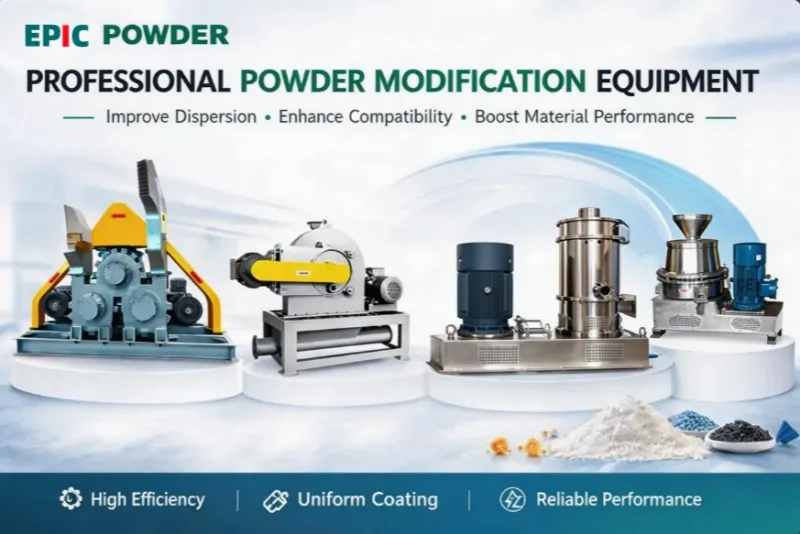
2. Why Modify Powders?
Inorganic powders are hydrophilic and highly polar. They have poor compatibility with organic matrices such as plastics, rubber, and resins. Direct usage may lead to degraded performance. Therefore, modification is necessary.
- Improve dispersibility and prevent agglomeration
Inorganic powders have a large specific surface area and easily form agglomerates. Agglomeration can create defects, reduce material strength, and worsen appearance. After modification, powders are uniformly dispersed without clumping. - Enhance compatibility with organic matrices
Powder surfaces are hydrophilic (polar), whereas plastics, rubber, and resins are hydrophobic (non-polar). Direct mixing results in poor interfacial bonding, like “sand mixed with butter.” After modification, powder surfaces become oleophilic and bond tightly with the resin. - Increase interfacial bonding and improve mechanical properties
Modified powders can form chemisch bonds or strong adsorption with resins. This significantly improves tensile strength, impact strength, flexural strength, hardness, and wear resistance. - Reduce oil absorption and improve processability
Unmodified powders absorb a lot of oil, causing resin viscosity to spike, making processing difficult and limiting filler loading. After modification, oil absorption decreases, allowing higher filler loading and lower costs. - Improve weather resistance, water resistance, and corrosion resistance
Reduces powder water absorption, enhances bekleding resistance to acids and alkalis, and improves aging and yellowing resistance. - Enhance electrical and thermal performance
Improves insulation, enhances thermal conductivity (for thermally conductive fillers), and increases flame retardancy (for magnesium/aluminum hydroxide). - Improve surface gloss, feel, and color
Commonly used in coatings and plastics, resulting in smoother, brighter, and more pleasant tactile properties. - Prevent oxidation, self-ignition, or reactions
Especially for metal powders (aluminum, zinc), modification prevents oxidation and self-ignition, improving storage stability. - Meet special functional requirements
Achieve hydrophobicity, oleophobicity, antibacterial properties, antistatic behavior, magnetic stability, and biocompatibility (for medical powders).
Summary: Modification enables powders to disperse better, have higher compatibility, stronger bonding, higher filler loading, lower costs, and improved overall performance.
3. Powder Modification Methods and Equipment
Powder modification methods can be divided into chemical, physical, and mechanochemical approaches:
3.1 Chemical Modification
- Silane Coupling Agent: Introduces organosilicon groups on the powder surface to improve hydrophobicity and compatibility with resins.
- Titanate/Zirconate Ester Modification: Enhances surface activity, interfacial bonding, and dispersibility.
- Acid/Base Treatment: Removes surface impurities through acid or alkali washing and increases active sites.
- Surface Coating: Deposits a layer of functional material (e.g., aluminum hydroxide, magnesium hydroxide, silicon dioxide) on the powder to achieve flame retardancy, corrosion resistance, or hydrophobicity.
3.2 Physical Modification
- High-Temperature Calcination/Thermal Treatment: Alters powder surface structure, improving flowability and dispersibility.
- Plasma Treatment: Forms functional groups on the powder surface, enhancing hydrophilicity or oleophilicity.
3.3 Mechanochemical Modification
Mechanical energy activates powder surfaces and enhances reactivity using equipment such as Three-Roller Coating Machines, Pin molen Coating Machines, and Turbo Mill Coating Machines. This is especially important for nanomaterial preparation. Different powders and applications require different types of modification equipment:
Three-Roller Coating Machine (Three-Roller Coating Machine)
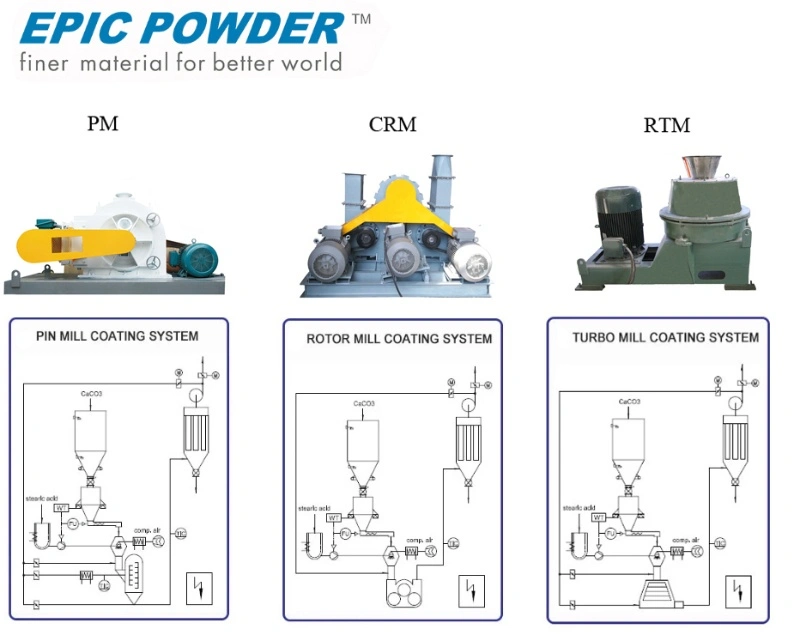
- Principle and Features: The powder is continuously sheared, pressed, and impacted between three rollers. This allows thorough mixing of the powder and modifier and uniform coating.
- Applicable Powders: Heavy/Light Calcium Carbonate, Talc, White Carbon Black, Nanopowders, etc.
- Modification Purposes:
- Improve powder surface uniformity
- Enhance compatibility with resins, rubber, and plastics
- Reduce oil absorption and improve flowability
- Typical Operation: Powders are mixed with liquid or semi-liquid modifiers and fed into the three-roller machine. Multiple cycles of pressing and shearing ensure a uniform coating on the powder surface.
Pinmolen Coating Machine (Pin Mill Coating Machine)
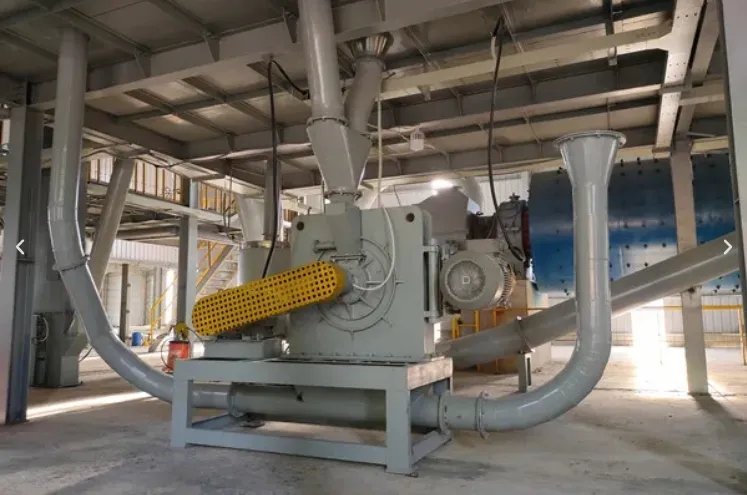
- Principle and Features: The powder is subjected to strong impact, shearing, and high-speed airflow between rotating pin plates. The powder particles are uniformly coated, and deeltjesgrootte classification and fineness control can also be achieved.
- Applicable Powders: Heavy/Light Calcium Carbonate, Talc, Silica Micropowder, Titanium Dioxide, Active Oxide Powders.
- Modification Purposes:
- Rapid surface coating
- Improve dispersibility and prevent agglomeration
- Enhance interface bonding with organic matrices
- Typical Operation: The powder and modifier are fed into the pin mill simultaneously. High-speed rotation and impact of the pin plates create uniform surface treatment, completing dispersing and modification in a single pass.
Turbo-molencoatingmachine (Turbo Mill Coating Machine)
- Principle and Features: Powders inside the turbo mill are subjected to collisions and shearing under high-speed airflow and impellers. Modifiers are applied via spraying or atomization. This method also allows dry ultra-fine grinding and particle classification.
- Applicable Powders: Nano Barium Sulfate, Silica Micropowder, Carbon Black, Titanium Dioxide, Zinc Oxide, Thermal Conductive Fillers, Metal Powders, and other high-end powders.
- Modification Purposes:
- Achieve fine surface coating to ensure dispersibility of nano-scale powders
- Improve thermal stability, flame retardancy, or thermal conductivity
- Enable high-precision, energy-efficient dry modification
- Typical Operation: Powders circulate in high-speed airflow while atomized modifier liquid is sprayed in. A uniform coating forms. Particle size can be adjusted via an luchtstroomclassificator.
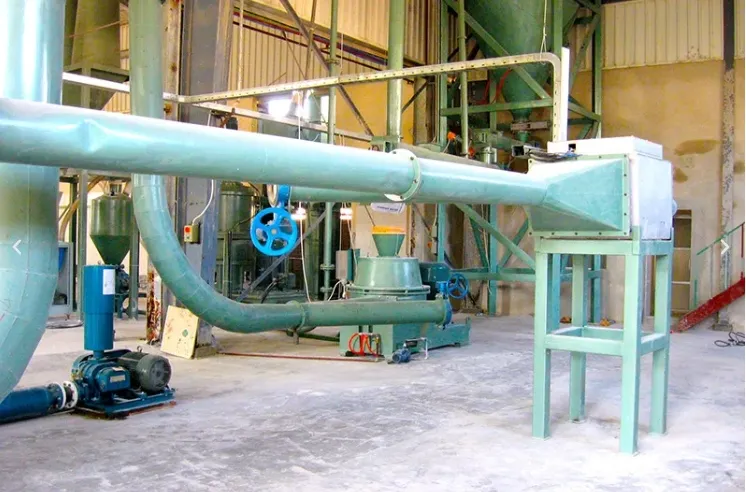
Guide for Selecting Modification Equipment
| Powder Type | Typical Coating Machine | Main Modification Targets |
|---|---|---|
| Calcium Carbonate, Talc, White Carbon Black | Three-Roller Coating Machine | Uniform surface coating, reduce oil absorption, improve dispersibility |
| Functional Powders, Titanium Dioxide | Pinmolen Coating Machine | Rapid coating, improve dispersibility, prevent agglomeration, enhance interface bonding |
| Nano Powders, Thermal Conductive Fillers, Metal Powders | Turbo-molencoatingmachine | Fine coating, functional performance improvement, efficient dry modification |
Conclusie
Using three-roller, pin mill, and turbo mill coating machines, powders can achieve high uniformity surface modification, improved dispersibility and compatibility with matrices, reduced oil absorption, and enhanced mechanical and functional performance. Different equipment is suitable for different powder sizes and modification requirements. In industry, equipment selection is based on powder type, application, and production capacity.

Bedankt voor het lezen. Ik hoop dat mijn artikel je helpt. Laat hieronder een reactie achter. Je kunt ook contact opnemen met de klantenservice van Zelda Online voor verdere vragen.
— Geplaatst door Emily Chen