
A rice husk powder grinding line works in two stages: coarse crushing first, then fine grinding with air classification. Rice husk arrives at 5 to 10 mm and low bulk density, and most buyers want it at 40 to 160 mesh for feed, fertilizer, or substrate production. The equipment choice follows from three facts about the material: it is fibrous, it carries sharp silica, and it gains four times in bulk density after size reduction.
This guide covers the material data, what each particle size range is used for, and how to configure a line that runs rice husk, bamboo powder, and other plant fibers on the same equipment.

Material Properties That Decide the Equipment
Rice husk consists of inner and outer glumes with a bulk density of 96 to 160 kg/m³. After crushing, bulk density rises to 384 to 400 kg/m³. That fourfold gain is the economic reason for grinding: finer powder means lower transport cost per ton and easier dosing in downstream mixing.
The husk is rich in cellulose, lignin, and silica, with low fat and protein content. The cell wall is 24 to 30 µm thick. Silica concentrates in the husk and makes it abrasive, so grinding contacts need wear-resistant surfaces. The angle of repose is 35° for raw husk, 43 to 45° after crushing through a 50 to 160 mesh screen, and 40° through 80 mesh. These values matter for silo design and pneumatic conveying.
Rice Husk Ash: The Silica Reservoir
Burning rice husk leaves ash equal to about 20% of the original mass. That ash is 87% to 97% silica, with a bulk density of 200 to 400 kg/m³ and a thermal conductivity coefficient of 0.062 W/(m·K). For comparison, crushed asbestos measures 0.041, mineral wool 0.030, and cork 0.028.
Rice husk ash has a specific surface area of 50 to 60 m²/g, sometimes up to 100 m²/g. This is why ground and classified rice husk ash sells into refractory materials, cement admixtures, and silica extraction. A line that can also grind the ash opens a second product stream from the same equipment.
Rice Husk Powder Uses by Particle Size
| 応用 | Typical fineness | What the powder does |
|---|---|---|
| Fertilizer carrier | Coarse, 20 to 60 mesh | Expanded husk mixed with 1% urea and lime water, fermented, adds porosity and holds water and fertilizer in soil |
| Edible fungus substrate | Medium, 30 to 60 mesh | Culture medium for shiitake and oyster mushrooms; helps nutrient absorption and speeds production |
| Animal feed | Medium, alkali or ammonia treated | Mixed with rice bran and broken rice for cattle; fermentation can raise crude protein content |
| Pesticide carrier | 大丈夫 | Silica abrades the wax layer on insect bodies and disrupts metabolism |
| Activated carbon and white carbon black feedstock | Fine, plus carbonization | Alkali leaching of ash yields water glass; acid precipitation yields precipitated silica |
| Boiler fuel | Whole or coarse | Low cost, high heat value, burns directly in biomass boilers |
| Chemical feedstock | Process dependent | Pyrolysis yields furfural, acetic acid, methanol, silicon carbide; hydrolysis yields ethanol |
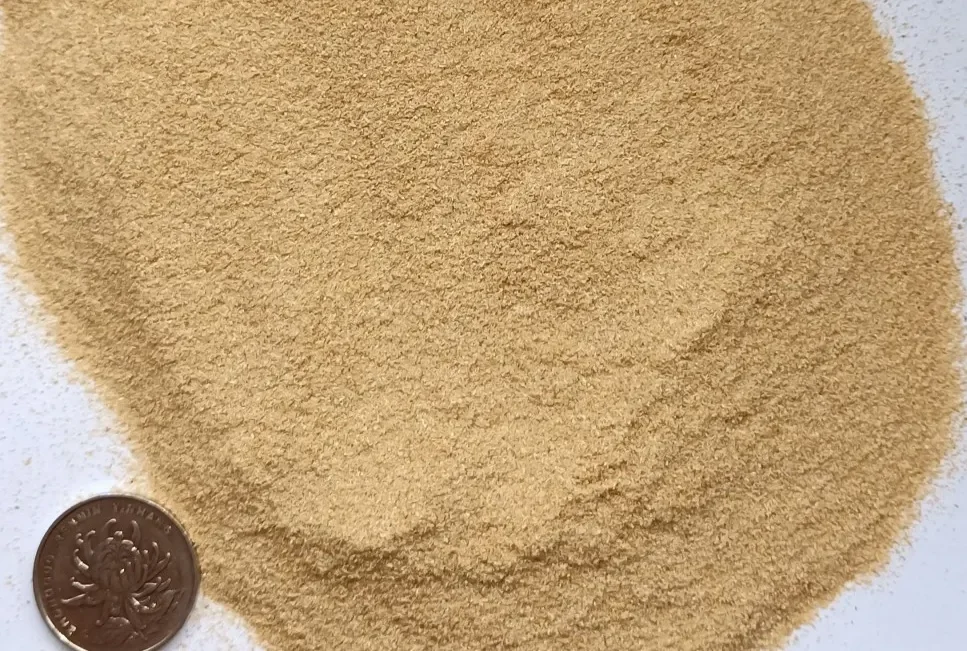
How to Crush Rice Husk: Line Configuration
Fibrous husk does not fragment the way brittle minerals do. The lignin-cellulose structure stretches under impact and needs combined impact and attrition forces. A single-pass fine grind on raw husk wastes power, so the line splits the work.
Stage 1: Coarse Crushing
A coarse crusher or hammer mill takes the 5 to 10 mm husk down to 1 to 3 mm. This step raises bulk density immediately and prepares a feed size that fine mills can handle without bridging. Fibrous material tends to weave and clog, so the coarse stage should run at moderate speed with a screen that lets properly sized particles escape.
Stage 2: Fine Grinding with Classification
An air classifier mill handles the 1 to 3 mm particles and produces the final mesh range. Integrated classification means oversized particles stay in the circuit until they reach spec, which protects a narrow distribution. Airflow through the mill carries away the heat that high-speed impact generates, and this matters for cellulose materials that scorch.
| 機械 | Role in the line | Why it fits rice husk |
|---|---|---|
| Impact mill | Stage 1: 1-3 mm | Moderate speed avoids clogging from fibrous husk |
| 空気分離ミル | Stage 2: Mid-fine grinding/ fine grinding | Integrated classifier holds top size; air sweep cools the cellulose |
| Multi-rotor mill | Mid-fine grinding alternative | Multiple rotors add attrition for stubborn fiber |
| ピンミル | Fine grinding for softer batches | Intermeshing pins give strong impact on low-abrasion feed |
Silica sets the wear policy. Husk ash runs 87% to 97% SiO₂, and the same mineral makes the raw husk abrasive. Grinding contacts should use hardened or replaceable surfaces, and wear parts should be inspectable without a full teardown. This is the difference between a line that runs a season and one that runs for years.
One Line, Several Biomass Materials
The same configuration processes bamboo powder, bagasse fiber, and other agricultural husks. All of them share the pattern: fibrous structure, low raw bulk density, and a use that pays for fineness. A line built for rice husk with an air classifier mill covers these materials by swapping screen size and classifier speed. Buyers planning several feedstocks should size the mill for the hardest one and set the classifier for the finest product they intend to sell.
Verify With Your Own Material
Published data narrows the choice; a test run settles it. Rice husk varies by variety and region, and moisture changes how the fiber breaks. Send a sample to EPIC Powder and we run it on the mill type matched to your target mesh, then report the particle size distribution. If a full line is needed, the laboratory mill series covers small-lot verification before production sizing.
エピックパウダー
Epic Powderは、鉱物、化学薬品、食品、医薬品向けの粉砕・分級システムを設計しています。20年以上にわたる粉体処理の経験に基づき、お客様の目標とする粒度と処理能力に最適な粉砕機をご提案いたします。お客様の材料についてお聞かせいただければ、実績のある最適なソリューションをご提案いたします。.

“お読みいただきありがとうございます。この記事がお役に立てば幸いです。ご意見・ご感想は下のコメント欄にお寄せください。また、EPIC Powderのオンラインカスタマーサービス担当者までお問い合わせいただくことも可能です。 モリー さらにご質問がある場合は、こちらまでご連絡ください。”
— ジェイソン・ワン, エンジニア