
Engineering calculators and reference charts for mineral, chemical and battery-material processors — built by the team that sizes jet mills, air classifiers and complete grinding lines every day. Convert a mesh specification into a real D50 / D97 target, shortlist the right mill, and prepare a specification your supplier can actually quote against.
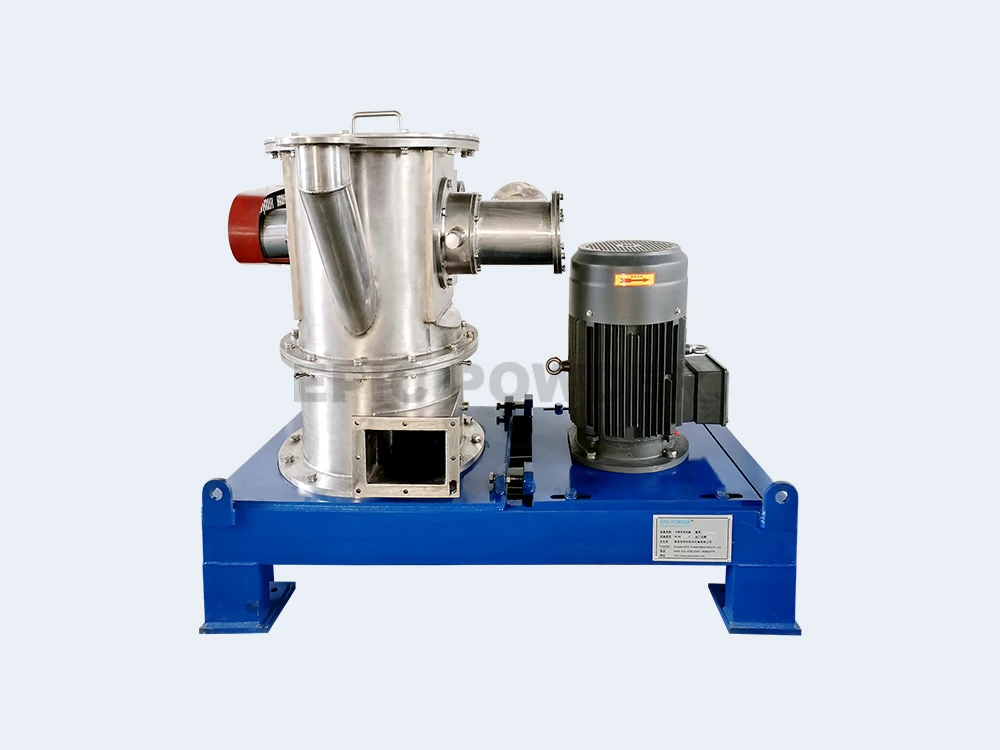

The most common question we get from a plant engineer is an old drawing that says “325 mesh” and nothing else. This tool converts that into microns — and then tells you what a mill can actually deliver at that size.
The values engineers look up most often. For the full table, non-standard mesh numbers and the other three sieve standards, use the mesh to micron calculator.
| Mesh | Micron (µm) | Millimetre | Inch | Typical application band |
|---|---|---|---|---|
| 20 | 850 | 0.850 | 0.0335 | Putty powder, dry-mix mortar, coarse chemicals |
| 40 | 425 | 0.425 | 0.0167 | Resin, fertiliser, food powder |
| 60 | 250 | 0.250 | 0.0098 | Fine chemicals, spices, feed additives |
| 80 | 180 | 0.180 | 0.0071 | Filler grade minerals |
| 100 | 150 | 0.150 | 0.0059 | Creatine monohydrate, coarse fillers |
| 140 | 106 | 0.106 | 0.0042 | Standard industrial fillers |
| 200 | 75 | 0.075 | 0.0030 | Cement additive, general fillers |
| 270 | 53 | 0.053 | 0.0021 | Fine coating grades |
| 325 | 45 | 0.045 | 0.0018 | Heavy calcium carbonate, kaolin, ceramic clay |
| 400 | 37 | 0.037 | 0.0015 | Graphite, fine talc |
| 500 | 25 | 0.025 | 0.0010 | Glass powder, electronic fillers |
| 635 | 20 | 0.020 | 0.0008 | Practical limit of routine sieving |
The shortlist EPIC process engineers start from during a feasibility review. Each row links to the equipment range that covers it.
| Band | Target size | Recommended EPIC equipment | Typical materials |
|---|---|---|---|
| Coarse | 800 – 4750 µm | ローラーミル, Vibration Mill ZM | Quartz, feldspar, refractory aggregate |
| Medium-fine | 100 – 800 µm | Turbo Mill RTM, マルチローターミル | Chemicals, resin, fertiliser, biomass |
| Fine | 45 – 150 µm | Pin Mill MJL, Pin Mill PM, ボールミル分類システム | Heavy calcium carbonate, limestone, putty powder |
| 超微粒子 | 10 – 45 µm | 空気分離ミル MJW-L, MJW-W, MJW-A | Kaolin, talc, bentonite, glass powder, creatine |
| Sub-micron to 10 µm | 3 – 10 µm (D97) | Spiral Jet Mill MQP, Fluidized Bed Jet Mill MQW, MQL | Graphite, cobalt hydroxide, alumina, silica, toner |
| Tightest cut | < 3 µm (D97) | Jet mill + Turbo Double Classifier TDC or CTC | Battery cathode and anode materials, high-purity ceramics |
Shortlist only. Final selection depends on hardness, friability, moisture, thermal sensitivity and required throughput — which is why EPIC confirms every recommendation with a trial on your material.
Six more calculators are being built. Each one solves a question that currently has to be answered by email. If one of them matters for a live project, tell us and we will prioritise it.
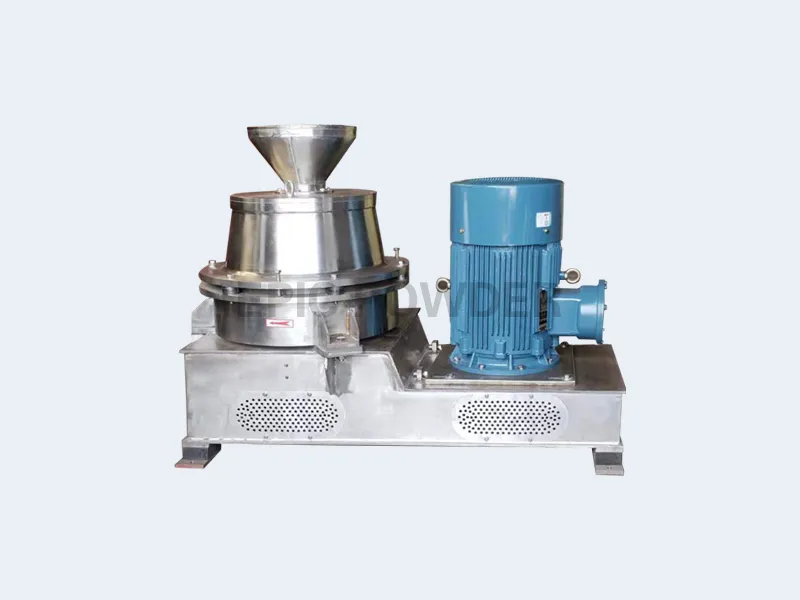
Estimate cost per ton from specific energy, compressed air or gas consumption, wear parts and labour. Compare mechanical milling against jet milling for the same target size.

Answer six questions about material, hardness, target D50 / D97, throughput, temperature limits and contamination limits, and receive a ranked equipment shortlist.
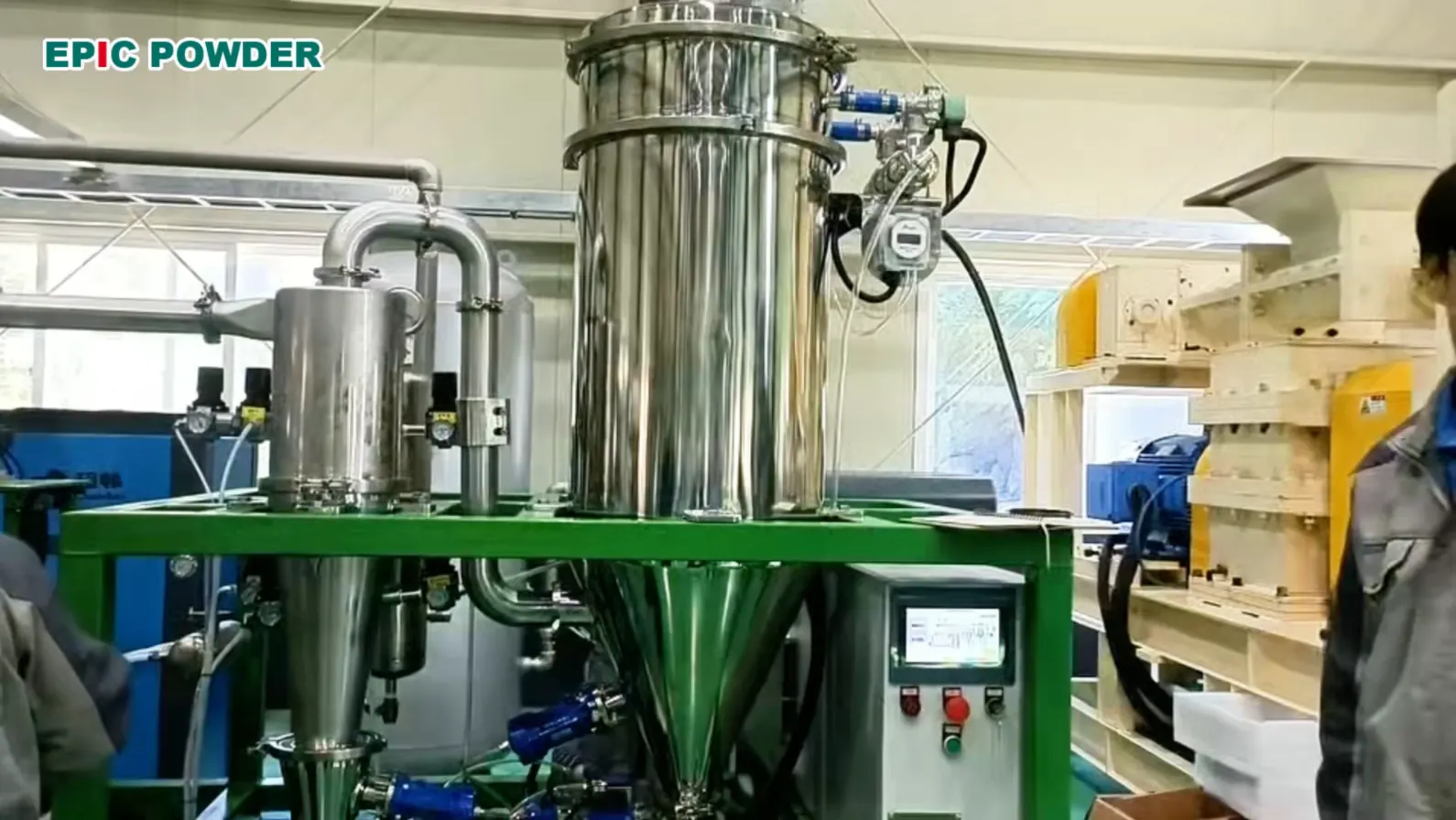
Paste your laser diffraction data and get D10, D50, D90, D97, span and an estimate of specific surface area, plus an overlay against a typical specification.

Convert a desired cut point into rotor speed, air volume and feed rate for the MBS, ITC, HTS, CTC and TDC classifier families.
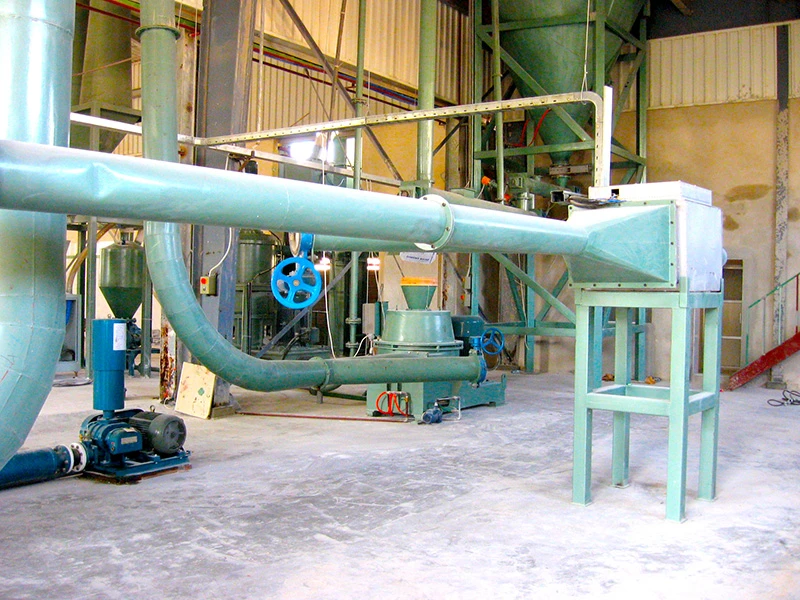
Work out stearic acid, silane or titanate addition rates from the target coating thickness and the measured specific surface area of your powder.
Model annual tonnage, installed power, operating hours and consumables to estimate simple payback on a complete grinding and classification line.
Because most grinding projects go wrong long before a machine is selected. They go wrong at the specification stage: a drawing that says “800 mesh”, a purchase order that says “D97 < 10 µm” with no measurement method, or a target copied from a competitor’s datasheet without checking the distribution behind it.
These tools are the same conversions and shortlists EPIC process engineers run internally during a feasibility review. Publishing them does two things: it lets a plant engineer sanity-check a specification before it reaches us, and it makes the conversation that follows far more productive.
What we cannot publish as a calculator is the part that actually decides the outcome — how your specific material behaves. Hardness, friability, moisture, agglomeration tendency and thermal sensitivity move the energy requirement by a factor of three between materials that look identical on a datasheet.
That is why every recommendation ends in a trial.

Trials run on laboratory spiral jet mills, fluidized bed jet mills, air classifier mills and classifiers, from 50 g samples up to pilot-scale campaigns.
Yes. Every calculator in this toolkit is free, runs in your browser and requires no registration or email address. EPIC publishes them because the same conversions are used daily during feasibility studies and equipment quotations.
Four: ASTM E11 (the US Standard used in most global mineral trade), the Tyler Equivalent (the legacy US system still written into many older plant specifications), ISO 565 / BS 410 (aperture-based, standard across Europe and the UK) and JIS Z 8801 (Japan). The calculator also reports the nearest mesh in the other three standards for any value you enter.
Use them for process design, feasibility work and internal quotation. For a contractual specification, verify against calibrated sieves or a laser diffraction analyser, because woven wire cloth carries a manufacturing tolerance and wears in service. Below 20 µm, drop mesh numbers entirely and specify D50 and D97 with the measurement method.
It reflects how EPIC process engineers shortlist equipment during a first feasibility review, and it is correct for the great majority of mineral, chemical and battery materials. Final selection still depends on hardness, friability, moisture, thermal sensitivity and required throughput, which is why EPIC confirms every recommendation with a laboratory or pilot trial on your actual material.
Yes. A grinding cost per ton calculator, a mill selection wizard, a particle size distribution analyser, an air classifier cut-point estimator, a surface modification dosage calculator and a production line payback calculator are all in development. If you need one of them for a live project, contact EPIC and it will be prioritised.
Yes. EPIC runs feasibility trials on laboratory spiral jet mills, fluidized bed jet mills, air classifier mills and classifiers. You send a sample, and you receive a measured particle size distribution, the achievable D50 and D97, the specific energy consumption and a scaled throughput estimate before any equipment decision is made.
The material name and purity, your target D50 and D97 in microns, the measurement method, the required throughput in kilograms per hour, and any constraints such as iron contamination limits, moisture, temperature sensitivity or dust explosion classification. Convert any mesh specification to microns first using the mesh to micron calculator.
A calculator tells you what a specification means. A trial tells you whether it is reachable, at what throughput and at what cost per ton. Send EPIC your material and target — we will run it on laboratory jet mills and classifiers and return a measured distribution.
Request a grinding test Open the mesh to micron calculatorTools on this page are provided for process design and quotation guidance. Sieve apertures are nominal standard values; verify contractual specifications against calibrated sieves or a laser diffraction analyser. Equipment shortlists are starting points and are confirmed by laboratory or pilot trials. Last reviewed October 2026 by EPIC Powder Equipment.