
Ultrafine powders refer to a class of materials with particle sizes ranging from the micrometer to the nanometer scale. At present, the extensive application of non-metallic mineral powders in modern high-tech new materials is based on their unique functional properties. The functional performance of most non-metallic minerals is highly dependent on particle size, particle size distribution, and particle morphology.
For example, reinforcement and strengthening effects in polymer-based composites, as well as the strength and toughness of ceramic materials, are strongly influenced by particle characteristics.
Similarly, hiding power and tinting strength in papermaking and coating pigments depend on particle size and morphology. In addition, the electrical, magnetic, and optical properties of powders, along with their microwave absorption and shielding performance, catalytic activity, adsorption behavior, rheological properties, antibacterial effects, decolorization ability, and bonding performance, are all closely related to particle size, size distribution, and particle shape.
Due to their large specific surface area and high surface activity, ultrafine powders exhibit fast chemical reaction rates. They also feature low sintering temperatures while maintaining high sintered body strength. In addition, their excellent filling and reinforcing performance and high hiding power contribute to their outstanding physical and chemical properties. As a result, many application fields require non-metallic mineral raw materials to be processed to fine, ultrafine, or submicron particle sizes.
According to current consensus in the mineral processing industry, ultrafine powders are defined as powders with 100% of particles smaller than 30 μm. Based on particle size, ultrafine powders can be classified into three categories: micron-scale (1–30 μm), submicron-scale (0.1–1 μm), and nano-scale (0.001–0.1 μm). Ultrafine non-metallic mineral powders exhibit remarkable advantages in optical, magnetic, acoustic, electrical, and mechanical properties. They are widely used in pharmaceuticals, chemicals, electronics, energy, and other industries.
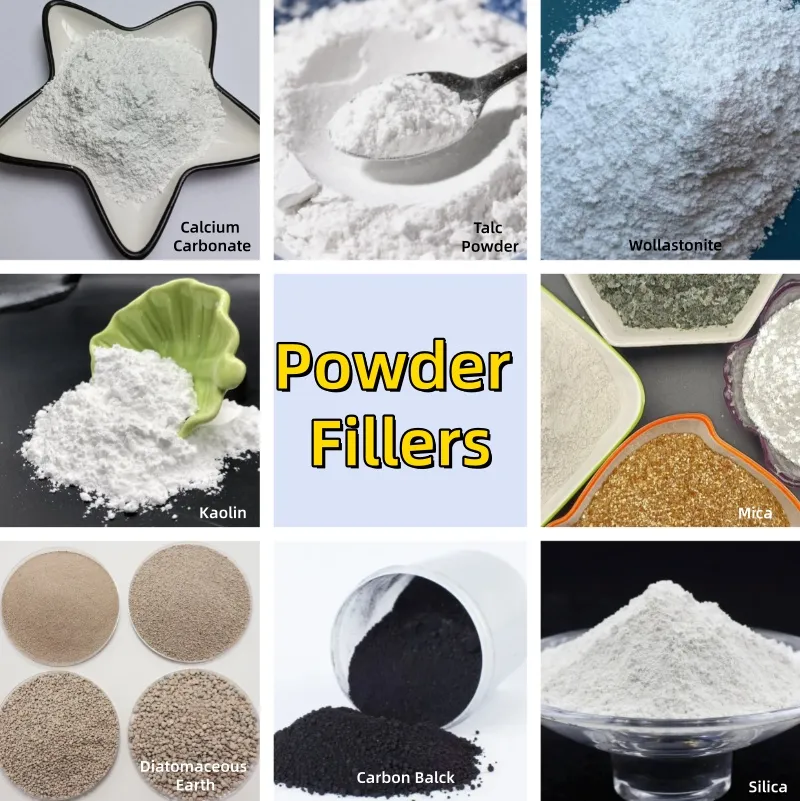
Processing of Ultrafine Non-Metallic Mineral Powders
There are many methods for preparing ultrafine powders. According to the formation medium, these methods can be divided into three categories: gas-phase, liquid-phase, and solid-phase methods. Gas-phase methods include high-frequency induction heating and plasma synthesis technologies, which are suitable for producing ultrafine powders with high purity, small particle size, narrow size distribution, and uniform morphology. Liquid-phase methods mainly include chemical reduction, sol–gel, ultrasonic atomization, and hydrothermal synthesis. Solid-phase methods primarily rely on mechanical grinding.
From the perspective of preparation principles, ultrafine powder production can be divided into chemical and physical methods. Chemical methods produce ultrafine powders through chemical reactions involving nucleation and growth from ions or atoms. Their advantages include high purity, small particle size, narrow size distribution, and good particle morphology; however, they suffer from low yield, high cost, and complex processes. Physical methods use mechanical forces to grind materials, offering advantages such as lower cost, simpler processes, large production capacity, and suitability for large-scale industrial production. Moreover, mechanical–chemical effects generated during grinding can enhance powder activity.
At present, physical methods dominate the industrial processing of ultrafine non-metallic mineral powders. In general, the preparation process consists of two main steps: grinding and classification. Raw materials are first fed into ultrafine grinding equipment. Due to differences in particle structure, the forces acting on particles during grinding are non-uniform. As a result, the produced fine particles vary in size and shape. Only part of the particles meet the target particle size requirements. In actual production, extending grinding time is often used to achieve the desired fineness. However, this approach increases energy consumption. It may also lead to over-grinding. Therefore, it is essential to separate qualified fine particles in time. This makes ultrafine classification technology a critical component of ultrafine powder preparation.
Current Status of Ultrafine Grinding Equipment Research
Impact Mills
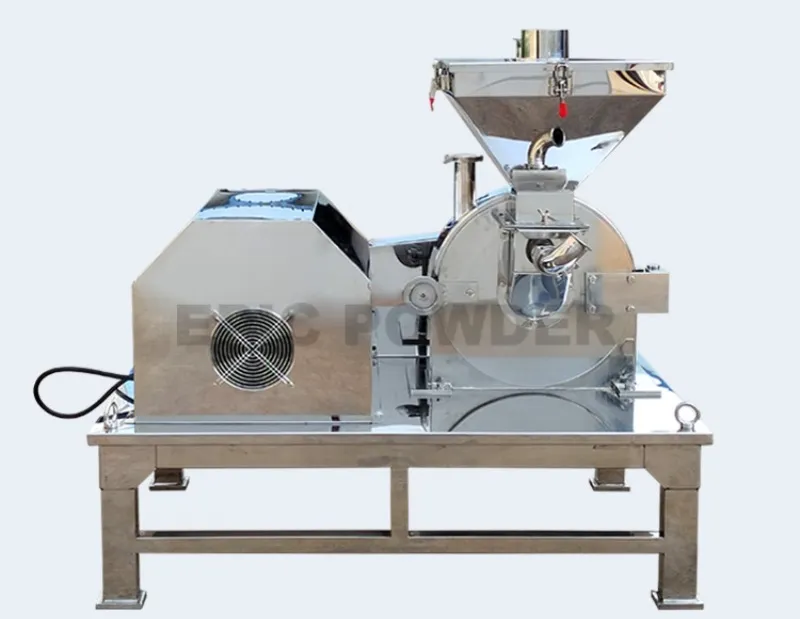
Impact mills use high-speed rotating elements (such as rods, hammers, or blades) around a horizontal or vertical axis to generate intense impact and shear forces on materials. Particles are crushed through collisions with the chamber wall, fixed components, and other particles. These mills are suitable for grinding medium-hard materials such as talc, marble, and calcite. The typical feed size is below 8 mm, and product particle sizes range from 3 to 74 μm.
Jet Mills
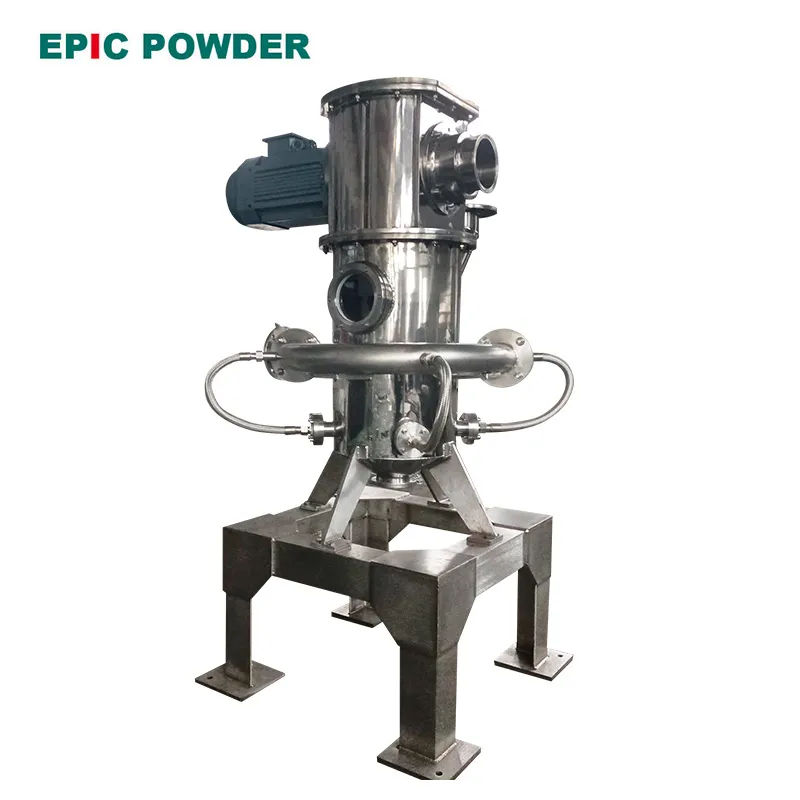
Jet mills operate by accelerating compressed air through nozzles. High-velocity jets entrain particles inside the grinding chamber. Particles collide, rub, and shear against each other to achieve size reduction. Jet mills are widely used for ultrafine grinding of non-metallic minerals with medium or lower hardness. Typical materials include marble, kaolin, and talc. They are also used in health foods, rare earth materials, and chemical raw materials. The feed size is generally below 1 mm. The finished particle size usually ranges from 1 to 30 μm. However, production capacity is relatively limited.
Jet mills feature a high degree of automation. They are capable of producing powders with good and stable quality. However, they also have several disadvantages. These include high equipment cost and a large footprint. Energy consumption is relatively high. The output of extremely fine products is limited. Component wear can be significant.
Some models also lack sufficient independent innovation. Jet mills are among the most researched ultrafine grinding devices in China. Their technology is relatively mature. As a result, they are widely accepted in the market. Based on structural and operational differences, jet mills can be classified into several types. These include flat (horizontal disc) jet mills and circulating tube jet mills. They also include opposed jet mills, target jet mills, and fluidized bed jet mills.
Ball Mills
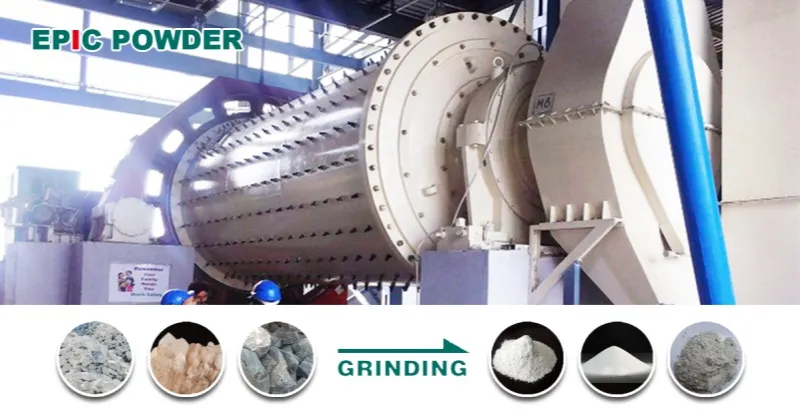
Ball mills mainly rely on the rotation of a stirring shaft to agitate grinding media (steel balls, zirconia balls, ceramic balls, corundum balls, or pebbles) and materials inside the mill chamber. They are widely used in deep processing of non-metallic minerals and pigment production. Feed size is usually below 3 mm, and product particle size ranges from 0.1 to 45 μm.
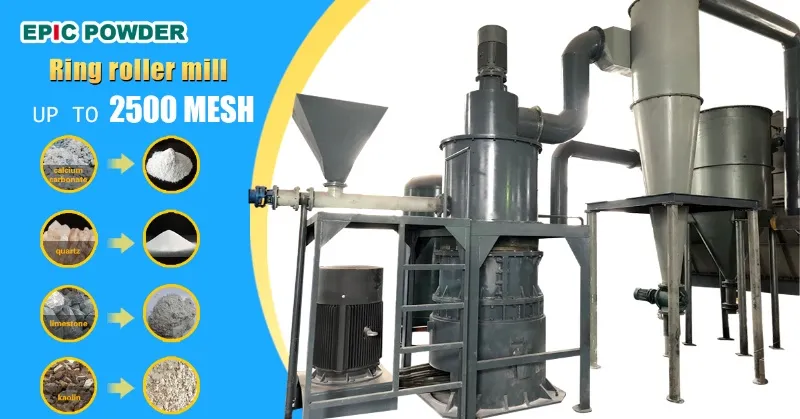
Ring Roller Mills
Ring roller mills are essentially small to medium-sized ultrafine grinding equipment. With continuous development, their application scope has expanded, and their advantages have become increasingly prominent. They feature relatively simple process operation, a large grinding ratio, and low unit energy consumption, meeting current energy-saving and environmental protection requirements. In non-metallic mineral powder processing, the feed size is typically below 20 mm, and internal classification devices allow flexible adjustment of product fineness according to standards.
Regardless of how the powder processing industry evolves, mechanical grinding remains the primary method for producing ultrafine non-metallic mineral powders. As the saying goes, “To do a good job, one must first sharpen one’s tools.” In the future, it is essential to strengthen fundamental theoretical research, increase technological investment, optimize process flows based on existing equipment, enhance innovation capabilities, and develop ultrafine grinding equipment characterized by high technological content, green economy, low energy consumption, low emissions, and high added value.
Current Status of Ultrafine Classification Equipment Research
Ultrafine powder classification separates particles of different sizes by utilizing differences in centrifugal force, gravity, inertia, and other forces acting on particles in a medium, causing them to follow different trajectories and be collected separately.
According to the medium used, ultrafine classification can be divided into dry and wet methods. Wet classification uses liquid as the dispersing medium and offers high classification accuracy and good uniformity. However, subsequent processes such as drying and wastewater treatment limit its development.
Based on classification principles, dry classification equipment can be divided into three types: inertial, jet, and centrifugal classifiers.
- Inertial classifiers separate particles based on differences in inertia under applied forces.
- Jet classifiers combine Coanda effect, inertial classification, and rapid classification principles.
- Centrifugal classifiers, which generate centrifugal force fields much stronger than gravity fields, are the most widely developed. They can be further divided into forced vortex and free (or quasi-free) vortex types according to flow field characteristics.
Although dry classification may cause air pollution and generally has lower classification efficiency, it uses air as the medium, has lower operating costs, eliminates the need for drying and redispersion, and offers a simpler, more energy-efficient process. Therefore, it is widely applied in powder preparation.
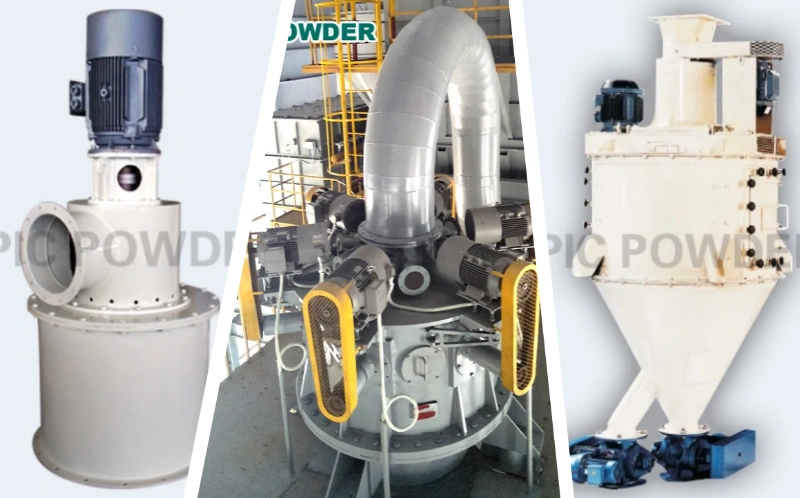
At present, turbine air classifiers are the most widely used in industrial production. According to the installation orientation of the classification wheel, they can be divided into vertical-wheel and horizontal-wheel types. Future research directions mainly focus on regulating classification flow fields, optimizing separation processes, and developing coupled classification based on mixed flow regimes.
Conclusion: Ultrafine Powder Processing Solutions by Epic Powder
Epic Powder is a professional manufacturer specializing in ultrafine powder processing. The company provides integrated solutions for ultrafine grinding, precision air classification, and powder surface modification. Its equipment portfolio includes jet mills and ball mill–classifier systems. Ring roller mills and high-efficiency turbine air classifiers are also available. These systems enable precise control of particle size distribution.
They ensure stable product quality. Energy consumption is effectively optimized. Through continuous innovation in grinding and air classification technologies, Epic Powder supports high-value mineral utilization. The company also promotes the development of advanced functional powder materials. These materials serve plastics, coatings, ceramics, electronics, and emerging high-tech industries.

“Thanks for reading. I hope my article helps. Please leave a comment down below. You may also contact Zelda online customer representative for any further inquiries.”
— Posted by Emily Chen