
Cyclone separators are widely used in industrial applications to separate solid particles from gas or liquid streams. They use centrifugal force generated by swirling airflow to separate particles based on size and density. This article provides a comprehensive overview of cyclone, including their working principles, advantages, and disadvantages.
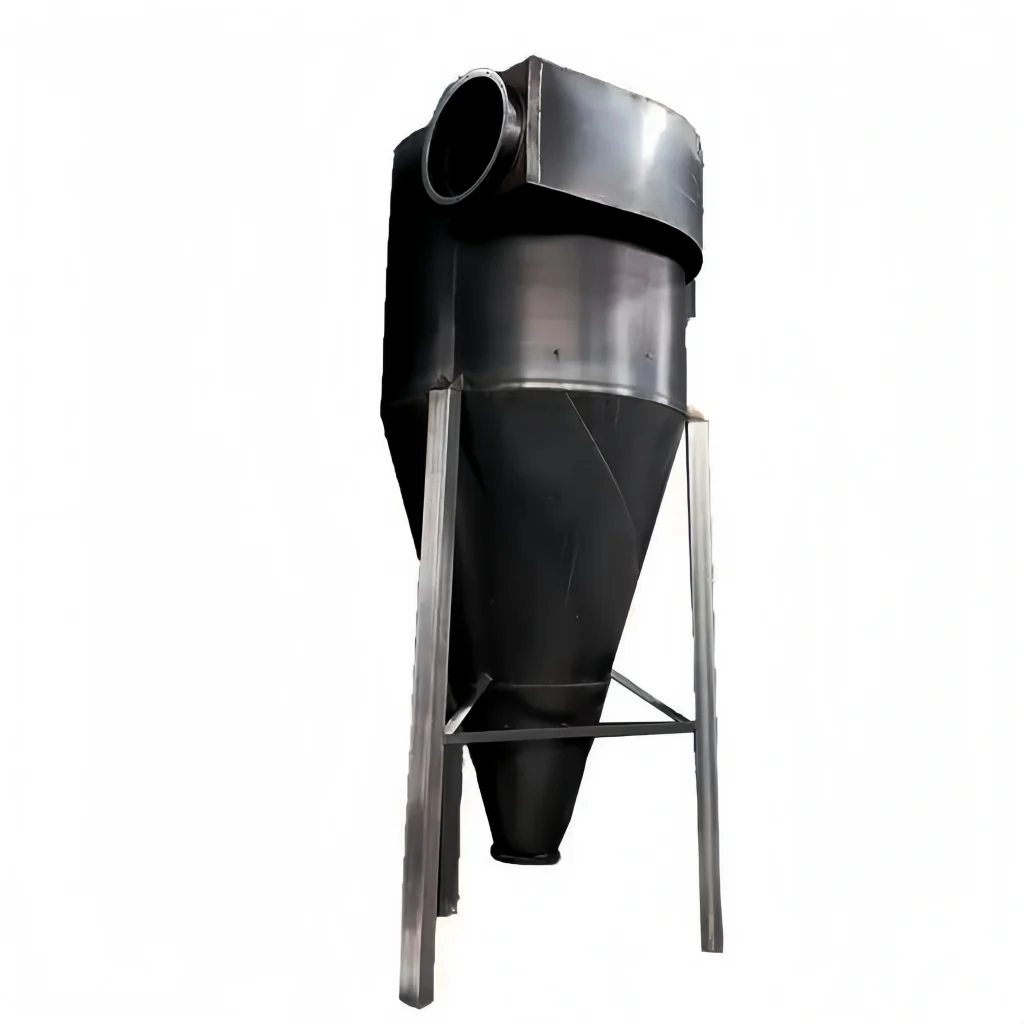
What is a Cyclone Separator?
A cyclone separator is a highly efficient, cost-effective industrial device designed to remove particulate matter from gas streams without the use of moving parts. Utilizing the principles of inertia and centrifugal force, it separates airborne dust and solid particles from air or gas flow. As a staple in modern dust collection and air pollution control, this robust process equipment provides an essential mechanical separation method for global industries seeking reliable, continuous operation.
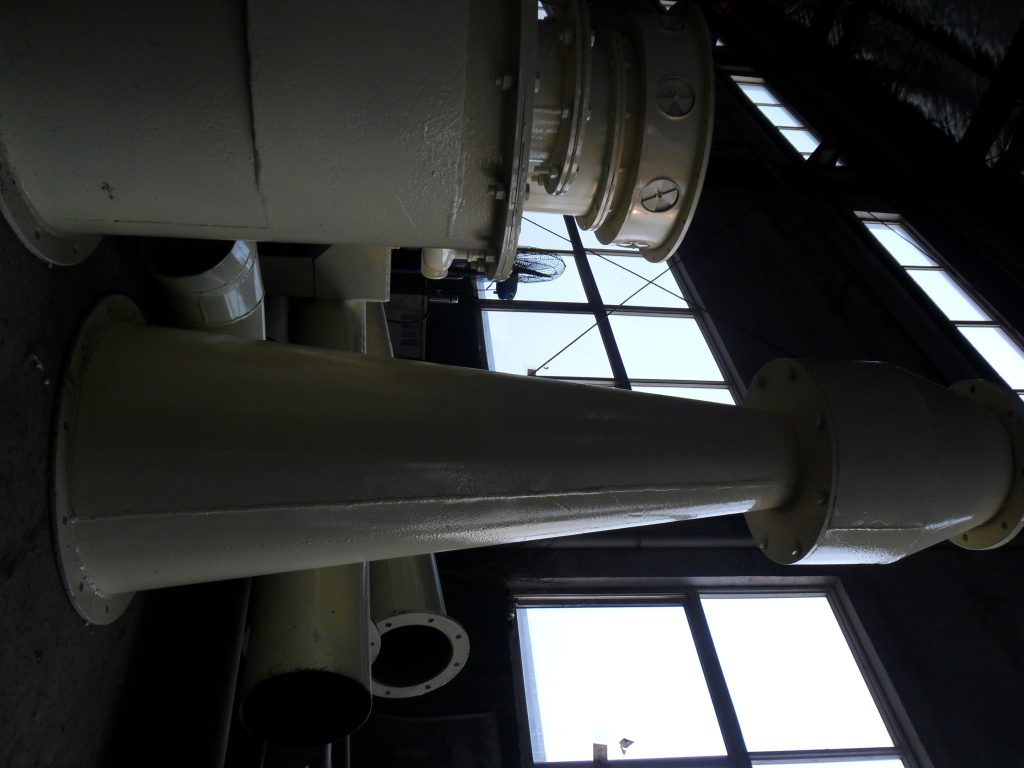
Key Components of Cyclonic Separation
To achieve maximum collection efficiency, our cyclone separators are engineered with distinct, high-precision components that manage the fluid dynamics within the system:
- Tangential Inlet: Dictates the initial velocity and forces the incoming gas stream into a rapid, vortex motion.
- Cylindrical Body: The upper chamber where the primary downward vortex is established.
- Conical Section: The tapering lower body that accelerates particle velocity, pushing solids toward the walls.
- Vortex Finder: An inner vertical tube that captures the clean, upward-spiraling gas stream and exits it from the top.
- Dust Discharge/Collection Hopper: The sealed bottom outlet where separated particulate matter is isolated from the airflow.
Common Industrial Applications
Cyclone separators serve as critical infrastructure across the global manufacturing and processing sectors. They are widely deployed in environments requiring heavy-duty material separation, including:
| Industry Sector | Primary Application |
|---|---|
| Woodworking & Forestry | Rapid collection of sawdust, wood shavings, and coarse debris. |
| Agricultural & Grain Handling | Separation of chaff, dust, and hulls during bulk material transfer. |
| Power Generation & Energy | Pre-cleaning flue gases before they enter dry scrubbers or industrial filters. |
| Chemical & Pharmaceutical | Product recovery from spray dryers and pneumatic conveying lines. |
| Cement & Mining | Primary dust collection to mitigate highly abrasive mineral dusts. |
How a Cyclone Separator Works
The Working Principle and Centrifugal Force
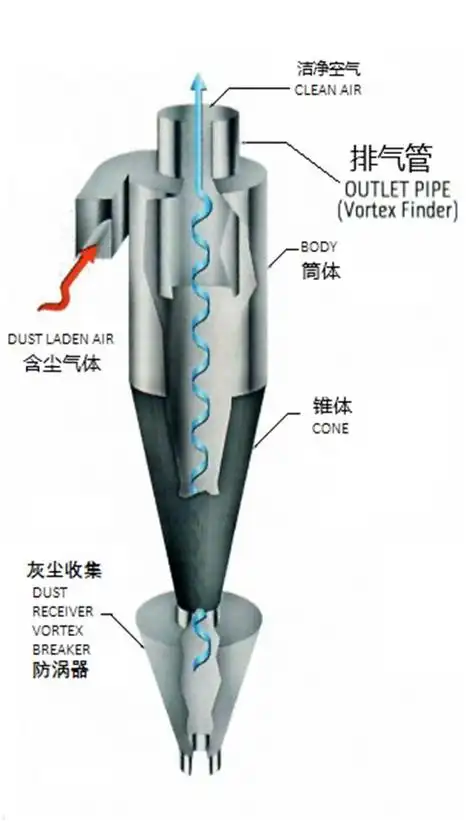
The underlying working principle of a cyclone separator relies heavily on inertia and centrifugal force to achieve effective particle separation without using any moving parts. When a particle-laden gas stream enters the cyclone, it is forced into a rapid, spiral motion. Because dust and solid particulate matter have a much higher mass than the surrounding gas, their inertia prevents them from changing direction quickly. The spinning motion generates a powerful centrifugal force that drives these heavier particles outward toward the inner wall of the cyclone, effectively separating them from the moving gas.
Tangential Inlet and Fluid Flow Mechanism
The design features of the cyclone play a vital role in how the fluid flows through the system.
- The Tangential Inlet: The gas stream enters near the top of the cyclone through a specialized tangential inlet. This specific entry angle forces the incoming gas to transform immediately into a swirling vortex.
- The Outer Vortex: This downward spiral moves along the inner walls of the cyclone toward the conical bottom.
- The Inner Vortex: As the narrowing cone restricts the airflow, a clean inner vortex forms. This clean gas reverses direction and travels upward through the center of the cyclone, exiting via the vortex finder at the top.
Particle Separation and Collection Process
As the outer vortex travels downward, the separated dust particles collide with the cyclone walls, lose their kinetic energy, and slide down into the collection hopper at the base. This continuous process ensures high collection efficiency for coarser dust and grit. Managing this system effectively requires a deep understanding of the pressure drop across the unit, as a proper pressure balance maintains vortex stability.
For industries handling aggressive materials that require precise size reduction before separation, integrating these systems with specialized process equipment ensures that the material size matches the optimal recovery capabilities of the dust collection setup. Once the particulate matter drops into the sealed hopper, the clean air stream is discharged safely out of the top, completing a highly reliable mechanical separation cycle.
Key Advantages of Cyclone Separators
High Separation Efficiency for Coarse Particles
Our cyclone separators excel at removing heavy particulate matter from gas streams using centrifugal force. By leveraging inertia, these systems effectively “spin out” larger dust and debris, achieving high collection efficiency for coarse materials. This makes them an ideal choice for pre-cleaning in systems like our Talc Jet Mill crushing projects, where removing bulk waste early protects the entire process.
Low Cost and Economic Investment
One of the biggest wins for any facility is the low capital cost associated with cyclonic technology. Because the design is straightforward and requires no complex filters or chemicals, the initial investment is significantly lower than that of dry scrubbers or specialized industrial filters. You get a rugged, high-performing piece of process equipment without breaking the bank.
Low Maintenance and High Durability
We design these units with no moving parts, which is a total game-changer for uptime. With nothing to clog, snap, or wear out mechanically, the maintenance requirements are practically zero. The simple, robust construction ensures the unit can handle continuous 24/7 operation in harsh industrial environments without the need for frequent shutdowns or expensive spare parts.
Versatility Across Operating Environments
Whether you are dealing with high-temperature flue gases or high-pressure manufacturing lines, cyclone separators are incredibly adaptable. They can be built from various alloys to resist heat and corrosion, making them reliable in diverse industrial applications.
| Feature | Benefit to Your Operation |
|---|---|
| No Moving Parts | Minimal wear and tear; higher reliability. |
| Simple Design | Easy to install and integrate into existing lines. |
| Dry Collection | Handles dust without water or chemical additives. |
| Compact Footprint | Efficient use of floor space compared to large baghouses. |
Disadvantages and Limitations of Cyclone Separators
While cyclonic separation is highly effective for many industrial applications, it is not a universal solution for every dust collection challenge. Understanding the limitations of a cyclone separator ensures proper system selection and prevents operational bottlenecks.
Low Efficiency with Fine and Sticky Particles
Cyclone separators rely on inertia and centrifugal force to fling particulate matter to the outer walls. Fine particles (typically those under 10 micrometers) lack the mass required to overcome the gas stream’s drag force, allowing them to escape through the top vortex. Additionally, sticky or cohesive materials tend to accumulate on the internal walls, leading to clogging, reduced separation efficiency, and frequent downtime for cleaning.
Pressure Drop and Energy Consumption Considerations
Achieving high collection efficiency in a cyclone often requires increasing the inlet velocity. However, faster airflow creates a higher pressure drop across the system. This resistance requires larger, more powerful fans to maintain the airflow, which directly increases energy consumption and operational costs.
Equipment Wear from Abrasive Materials
Handling abrasive dust streams at high velocities accelerates internal surface wear. The continuous impact of hard particles erodes the cyclone walls, particularly at the inlet and lower cone sections. Without specialized liners or heavy-duty materials of construction, this wear leads to structural failure and air leakage, which destroys the cyclonic vortex.
Space and Installation Requirements
To achieve optimal particulate separation, cyclones require specific geometric proportions, often resulting in tall vertical structures.
| Limitation Factor | Operational Impact | Mitigation Strategy |
|---|---|---|
| Fine Dust Escape | Low efficiency on particles < 10 microns | Use as a pre-filter before fabric filters or baghouses |
| High Pressure Drop | Increased energy consumption and utility costs | Optimize inlet velocity and geometric design |
| Wall Erosion | Equipment wear, air leaks, and performance drop | Install ceramic liners or use hardened steel alloys |
| Vertical Footprint | Difficult installation in tight indoor spaces | Outdoor installation or multi-cyclone split configurations |
Types and Classifications of Cyclone Separators
High-Efficiency vs. High-Throughput Cyclones
When designing a dust collection system, we generally categorize cyclones into two primary functional types: high-efficiency cyclones and high-throughput cyclones.
- High-Efficiency Cyclones: Built with narrower bodies and longer cones to maximize centrifugal force. These are engineered to capture smaller particulate matter from gas streams, though they require a higher pressure drop.
- High-Throughput Cyclones: Feature wider diameters to handle large volumes of gas and heavy dust loads. They prioritize massive airflow capacity over the collection efficiency of ultra-fine particles.
Single Cyclone vs. Multiclone Systems
Choosing between a single unit and a multi-cyclone setup depends entirely on the scale of your industrial applications and the target particle separation goals.
| System Type | Best For | Key Advantage | Limitation |
|---|---|---|---|
| Single Cyclone | Large particles, variable dust loads | Simple maintenance, lower initial cost | Lower efficiency on fine particles |
| Multiclone System | Large gas volumes, finer dust | High efficiency via parallel small cyclones | Higher risk of clogging if dust is sticky |
For advanced processing setups where materials must be strictly classified before collection, integrating these units with a ball mill and air classifier production system ensures that only the correctly sized particles proceed to final separation.
Materials of Construction and Custom Designs
We build our cyclone separators to survive harsh process equipment environments. Standard carbon steel works for basic dust collection, but specialized setups demand custom material selection:
- Stainless Steel (304/316): Essential for food-grade processing, pharmaceuticals, or handling corrosive flue gases.
- Hardened Alloys and Ceramic Linings: Deployed in heavy abrasive environments to protect the cyclone walls from premature equipment wear.
- Explosion Relief Vents & Spark Detection: Custom design features integrated directly into the housing for volatile or combustible dust handling.
Selection and Performance Optimization
Key Design Features and Specifications
Optimizing a cyclone separator requires balancing specific geometric dimensions. The relationships between the inlet area, cylinder diameter, and cone length directly dictate the centrifugal force applied to the gas streams.
| Design Feature | Impact on Performance |
|---|---|
| Barrel Diameter | Smaller diameters increase centrifugal force and collection efficiency for fine particles, but reduce throughput capacity. |
| Inlet Dimensions | Narrower tangential inlets increase velocity, which enhances particle separation but raises the pressure drop. |
| Vortex Finder Depth | Proper extension prevents incoming raw gas from bypassing directly into the clean gas exhaust. |
| Cone Length | A longer cone provides more residence time for particulate matter to separate from the spinning fluid stream. |
The Role of Pre-Engineering and Sizing Studies
Standard off-the-shelf equipment rarely delivers peak performance because dust collection needs vary wildly by industry. Conducting dedicated sizing studies ensures the cyclone matches the precise particle size distribution and density of your process material.
Through pre-engineering, the exact airflow dynamics are simulated to avoid high pressure drop scenarios that waste energy. For example, in advanced powder classification setups—similar to the material handling strategies utilized in the Norway lithium iron phosphate (LFP) ultrafine classification project—precise sizing ensures optimal separation before the material undergoes further milling or collection. This upstream calibration protects downstream industrial filters from overloading.
System Tuning for Maximum Performance
Achieving maximum collection efficiency requires fine-tuning the system under real operating conditions. Operators should focus on three critical adjustment areas:
- Inlet Velocity Control: Maintain the ideal velocity sweet spot (typically between 15–25 m/s). Going too low drops the inertia needed for separation, while going too high causes turbulence and rapid equipment wear.
- Air Leak Prevention: Ensure the dust discharge valve (such as a rotary airlock) is completely sealed. Any air leakage into the bottom of the cyclone disrupts the vortex, re-entraining collected particulate matter back into the exhaust.
- Pressure Drop Monitoring: Install differential pressure gauges to track resistance across the system. Steady pressure indicates stable operation, while sudden changes signal blockages or structural wear.
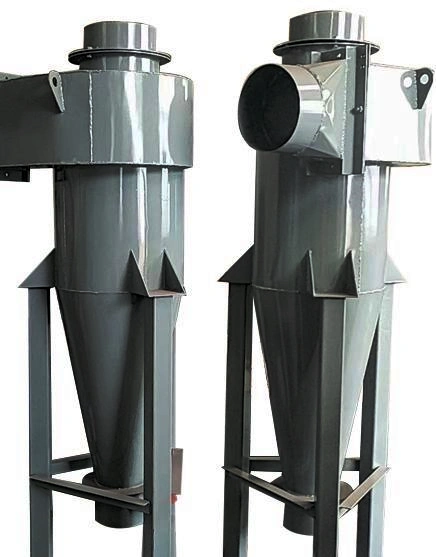
Integrating Cyclones with Other Dust Collection Systems
Combining Cyclones with Fabric Filters and Baghouses
In heavy-duty industrial applications, a single dust collection step rarely cuts it. While a cyclone separator handles the heavy lifting by knocking out coarse particulate matter, pairing it with secondary filtration units creates an unbeatable system. For fine dust and micro-particles, we route the air stream from the cyclone directly into secondary air classifier systems, fabric filters, or industrial baghouses. This two-stage setup ensures that the heavy grit is captured early, preventing finer filters from blinding or clogging prematurely.
Benefits of Using a Cyclone as a Pre-Filter
Using a cyclone separator as a primary pre-filter is one of the smartest design features you can implement for your process equipment. By pulling out the bulk of the dust before the air stream hits the expensive final filters, you protect the entire system from unnecessary wear.
- Extends Filter Life: Drastically reduces the dust load on downstream fabric filters and baghouses.
- Protects Against Sparks: In wood or metal grinding, the cyclone acts as a spark trap, catching glowing embers before they hit combustible filter bags.
- Low Capital Cost, High Payback: It saves thousands in replacement filter elements and reduces system downtime.
- Handles High Grain Loads: Keeps the secondary air classifier mill or dust collector running smoothly even during sudden process surges.
Maintenance and Troubleshooting Tips
Because cyclone separators have no moving parts, maintenance is incredibly straightforward. However, performance depends entirely on maintaining proper airflow and airtight seals. The table below outlines the core troubleshooting steps we use to keep systems running at peak collection efficiency:
| Symptom | Potential Root Cause | Fix / Action Item |
|---|---|---|
| Drop in Collection Efficiency | Air leak at the bottom discharge hopper. | Check and replace the rotary airlock valve seals immediately. |
| High Pressure Drop | Material buildup or plugging in the cyclone cone or inlet. | Clean out the dust collection bin and check for sticky material accumulation. |
| Excessive Body Wear | Highly abrasive materials scouring the walls. | Install ceramic or hardened steel liners in the high-wear tangential inlet zone. |
| Dust Escaping the Top Exhaust | Airflow velocity is too low, weakening the centrifugal force. | Tune the fan speed to maintain the recommended inlet velocity. |