
Aluminum hydroxide (ATH) possesses multiple functions, including flame retardancy, smoke suppression, and filling. It does not produce secondary pollution and can generate synergistic flame-retardant effects with various substances. Therefore, it is widely used as a flame-retardant additive in composite materials and has become the most widely consumed environmentally friendly inorganic flame retardant. When aluminum hydroxide is used as a flame-retardant additive, its content and particle size have a significant impact on the flame-retardant and mechanical properties of the composite material. To achieve a certain flame-retardant rating, a relatively high loading level of ATH is usually required. When the loading amount is fixed, the finer the particle size, the better the flame-retardant performance. Therefore, we want to better utilize the flame-retardant effect of ultrafine aluminum hydroxide powder. We also want to reduce the negative impact on mechanical properties. This impact becomes serious when the loading level increases. For these reasons, ultrafine and nano-sizing have become new development trends. These trends apply to ATH flame retardants.
However, ultrafine powders have very small particle sizes and high surface energy, making them prone to agglomeration and difficult to disperse uniformly in polymer matrices. Moreover, ultrafine aluminum hydroxide powder is a typical polar inorganic material with poor compatibility with organic polymers, especially non-polar polyolefins. Weak interfacial bonding leads to poor melt flow during compounding and molding. As a result, processing performance and mechanical properties deteriorate. Therefore, reducing agglomeration among ultrafine ATH particles is essential. It is also necessary to improve the interfacial compatibility between ATH powder and polymer matrices and enhance its dispersion within the matrix. These factors are critical for obtaining high-performance flame-retardant composites. Consequently, they have become key issues in the application of ultrafine ATH in flame-retardant filled materials.
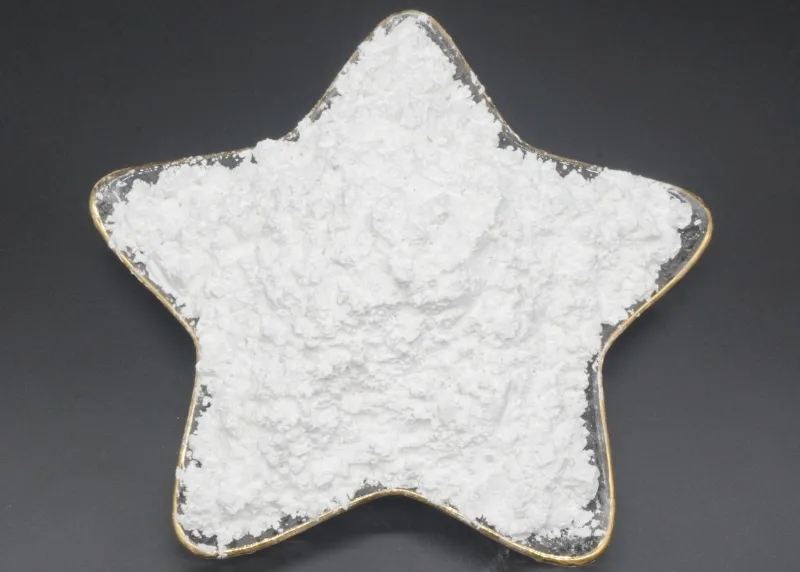
1. Preparation of Ultrafine Aluminum Hydroxide Powder
The preparation methods of ultrafine aluminum hydroxide include physical and chemical methods. The physical method generally refers to the mechanical method. Chemical methods include several techniques. These include the seed precipitation method, sol–gel method, and precipitation method. They also include the hydrothermal synthesis method, carbonation method, supergravity method, and others.
(1) Mechanical Method
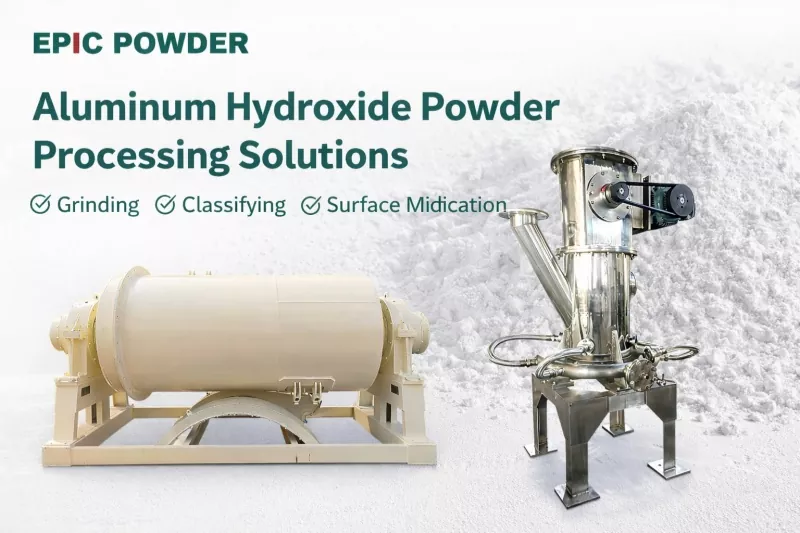
The mechanical method uses grinding equipment like jet mills and ball mills. These tools crush and grind washed and dried non-industrial-grade aluminum hydroxide. This process creates finer ATH powder. ATH powder from this method has irregular particle shapes. The particle size is relatively coarse. It also has a broad size distribution. This range is generally between 5 and 15 μm. As a result, the overall product performance is relatively poor.
When aluminum hydroxide produced by this method is used in wire and cable manufacturing, its processing performance, ductility, and flame-retardant performance are far inferior to those of aluminum hydroxide produced by chemical methods. Although the mechanical method features a simple preparation process and relatively low experimental cost, the product contains higher impurity levels. In addition, the particle size distribution is uneven, which limits its widespread application.
(2) Seed Precipitation Method
The core of the commonly used seed precipitation method is the addition of ultrafine aluminum hydroxide crystal seeds into a prepared sodium aluminate solution to produce purer and finer ATH powder. The quality of the crystal seeds is an important factor affecting the particle size of the ATH powder.
(3) Sol–Gel Method
This method involves hydrolyzing aluminum compounds under specific water bath temperature, stirring rate, and pH conditions to generate an aluminum hydroxide sol, which then transforms into a gel under certain conditions. The final ultrafine aluminum hydroxide powder is obtained through drying and grinding.
(4) Precipitation Method
The precipitation method can be divided into direct precipitation and homogeneous precipitation. Direct precipitation refers to adding a precipitating agent into an aluminate solution to prepare high-purity ultrafine aluminum hydroxide under certain conditions. During the precipitation process, the degree of mixing between the precipitating agent and the solution is a key factor influencing the final product properties. Homogeneous precipitation differs from direct precipitation in that the precipitation growth rate is relatively slower.
(5) Hydrothermal Synthesis Method
The hydrothermal method prepares ATH by heating a closed reaction vessel, allowing raw materials to react in an organic solvent medium under high temperature and high pressure conditions.
(6) Carbonation Method
The carbonation method involves introducing CO₂ into a sodium aluminate solution and controlling the reaction conditions to prepare aluminum hydroxide.
2. Surface Modification of Ultrafine Aluminum Hydroxide Powder
(1) Surface Modifiers
Currently, the main modifiers used for surface modification of ultrafine aluminum hydroxide include surfactants and coupling agents. Common surfactants include sodium dodecyl benzene sulfonate (SDBS), sodium stearate, and silicone oil. The modification mechanism involves one end of the surfactant molecule containing a polar group that chemically reacts with or physically adsorbs onto the inorganic material surface, forming a coating layer, while the other end consists of a long-chain alkyl group that has strong compatibility with polymers due to its similar structure.
Coupling agents work through a specific chemical mechanism. Part of the molecular functional groups bonds with the inorganic surface. Meanwhile, the remaining carbon chains bond with the polymer materials. This bond can be either physical or chemical. These connections tightly link the inorganic material to the organic polymers. Common coupling agents include silane coupling agents, titanate coupling agents, and aluminate coupling agents.
(2) Modification Methods
Currently, dry modification and wet modification are mainly used for the surface treatment of ATH.
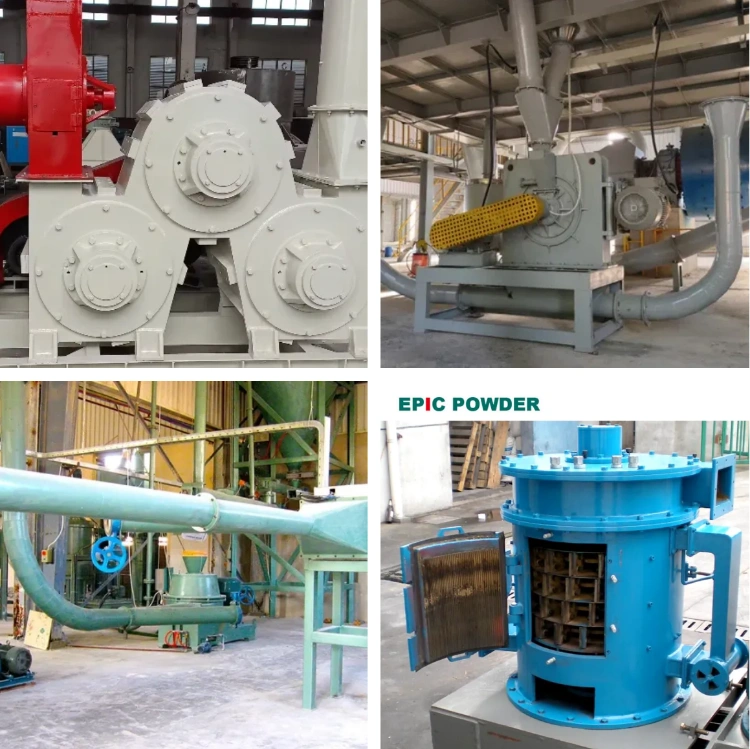
Dry modification involves placing the powder raw material and modifier or dispersant into specific equipment and adjusting the appropriate rotational speed for stirring and mixing, allowing the modifier to coat the surface of aluminum hydroxide powder. This method is suitable for large-scale production.
Wet modification refers to adding the modifier into a pre-prepared aluminum hydroxide slurry with a certain liquid–solid ratio and conducting modification under thorough stirring and dispersion at a certain temperature. Although this method is more complex in operation, it provides more uniform surface coating and better modification effects.
(3) Modification Mechanism
Surface modification of aluminum hydroxide refers to the adsorption or coating of one or more substances onto its surface to form a composite with a core–shell structure. The surface modification is mainly organic modification and can be divided into two categories.
The physical method involves surface coating treatment using surfactants such as higher fatty acids, alcohols, amines, and esters to increase the distance between particles, inhibit particle agglomeration, and improve the affinity between aluminum hydroxide and organic polymers. This enhances flame retardancy, improves processing performance, and further increases the impact resistance of organic polymers.
The chemical method refers to using coupling agents to modify the surface of aluminum hydroxide. Functional groups in the coupling agent molecules react with the powder surface to form chemical bonds, thereby achieving modification. Coupling agent molecules have a strong affinity for organic materials. They can react directly with organic polymers. This allows ATH to bond tightly with the polymer matrix. Consequently, this improves the overall properties of the composite materials. Several modifiers share a similar mechanism. These include silane, titanate, aluminate coupling agents, and stearic acid. Their molecular structures contain both inorganic-affinitive and organic-affinitive groups. These dual-functional groups act as a molecular bridge. They tightly connect the aluminum hydroxide to the organic materials.
(4) Evaluation of Modification Effects
Currently, two methods can be used to evaluate the modification effect of aluminum hydroxide powder.
The direct method evaluates the modification effect by measuring the flame-retardant and mechanical properties of composites filled with modified aluminum hydroxide. Although this method is relatively complex, the testing results are reliable.
The indirect method evaluates the modification effect by measuring changes in the physical and chemical properties of the aluminum hydroxide powder surface before and after modification.
Specific evaluation indicators include:
Activation Index. Aluminum hydroxide, as an inorganic polar material, naturally settles in water. After modification, the powder surface becomes non-polar and its hydrophobicity increases, preventing it from settling in water. Changes in the activation index reflect the degree of surface activation and characterize the effectiveness of the modification treatment.
Oil Absorption Value. The oil absorption value is an important indicator of the dispersion of aluminum hydroxide in polymers and reflects the porosity and specific surface area of the powder. Surface modification improves the dispersion of the powder in polymers and reduces voids formed by particle agglomeration, thus lowering the oil absorption value.
Dispersion Stability. This method characterizes the effect of surface modification by comparing the dispersion behavior of aluminum hydroxide powders modified with different modifiers in dispersion media. Scanning electron microscopy (SEM) can be used to observe morphology and dispersion characteristics.

“Thanks for reading. I hope my article helps. Please leave a comment down below. You may also contact Zelda online customer representative for any further inquiries.”
— Posted by Emily Chen