
Slurry is the core raw material in electrode manufacturing. Its quality directly determines the energy density, cycle life, and safety performance of batteries. Today, we break open the “technical black box” and explain in the simplest terms the five key indicators of lithium battery slurry—helping you instantly judge battery quality.
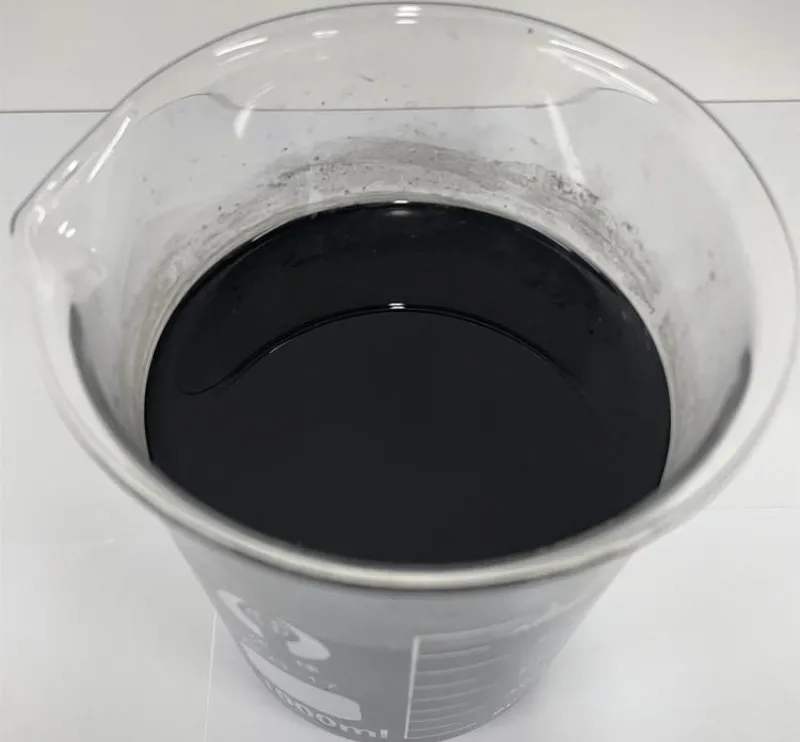
Solid Content: The “Invisible Switch” of Battery Capacity
정의: The percentage of solid active materials (such as lithium cobalt oxide for cathodes and graphite for anodes) in the total lithium battery slurry mass.
Industry Insights:
- Every 5% increase in solid content can boost energy density by 3%–8%, directly improving driving range;
- Too high → poor dispersion; too low → higher manufacturing costs;
- Leading companies have pushed solid content above 70%, while smaller firms hover around 60%.
User Value: Higher solid content = lighter battery packs + longer range, relieving EV owners of mileage anxiety!
Viscosity: The “Balancing Act” of Flow and Coating
정의: The slurry’s resistance to flow, measured in Pa·s (Pascal-seconds).
기술적 과제:
- Too low: slurry runs during coating, causing uneven electrode thickness;
- Too high: difficult to pump, increasing equipment wear;
- Optimal viscosity must be dynamically adjusted according to coating speed and drying temperature.
Case Example: A rising EV maker once saw yield rates plunge by 40% due to slurry viscosity issues!
입자 크기 Distribution: The “Energy Code” of the Micro World
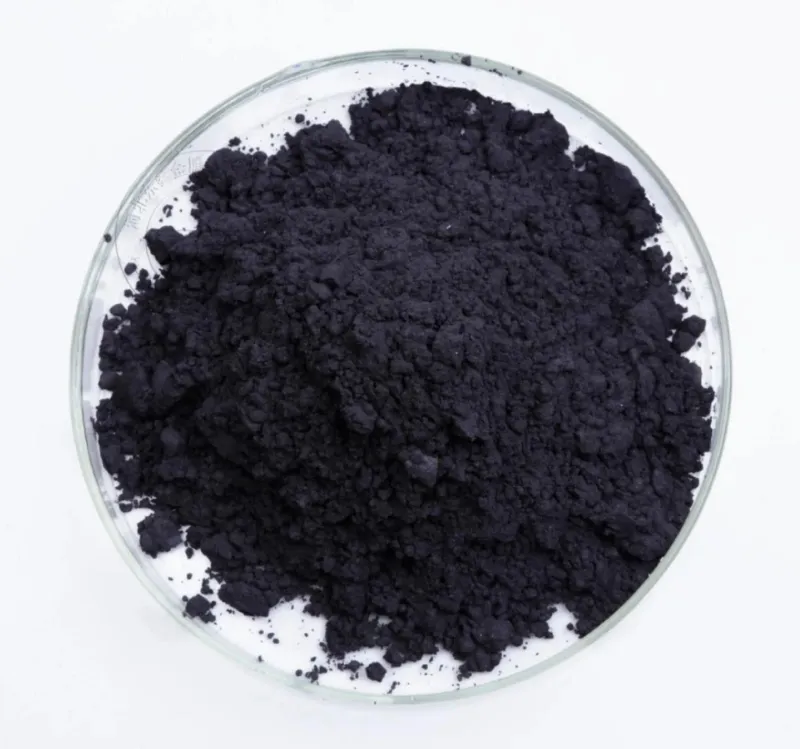
정의: The size and uniformity of active material particles, measured by D50 (median size) and Span (distribution width).
Key Insights:
- Nanoscale (<100nm): shorter lithium-ion paths but prone to agglomeration;
- Microscale (>1μm): more stable cycling but lower energy density;
- Industry trend: using core–shell structures to achieve gradient particle distributions.
Performance Impact: Optimized particle size distribution can extend battery cycle life by over 2,000 cycles!
pH Value: The “Lifeline” of Chemical Stability
정의: The slurry’s acidity or alkalinity, directly affecting the corrosion of current collectors (aluminum/copper foils).
Risks:
- Alkaline (pH >10): accelerates aluminum foil oxidation, raising internal resistance;
- Acidic (pH <5): corrodes copper foil, risking short circuits;
- Leading companies already control pH with ±0.1 precision.
User Warning: A battery with unstable pH may ignite or even “self-burn” while charging!
Impurity Content: The “Invisible Killer” of Safety
정의: Residual metallic ions (Fe, Cu, Ni, etc.) and moisture (H2O) in slurry.
Hard Lessons:
- Just 1ppm of iron impurities can double self-discharge rates;
- Excess moisture causes electrolyte decomposition, generating gas and swelling;
- Tesla’s 4680 cells adopt “ultra-dry electrode” technology, keeping moisture below 10ppm.
Industry Benchmark: CATL uses magnetic separation to reduce metal impurities to as low as 0.3ppm.
에픽 파우더
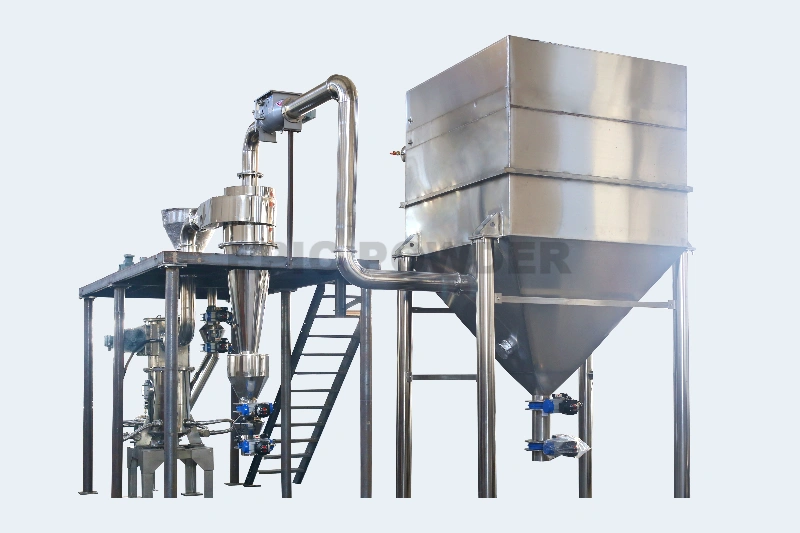
The five lithium battery slurry indicators define battery performance and safety. Behind them lies one core factor—powder grinding and classification technology.
20년 이상의 초미세 분말 가공 분야 전문성을 바탕으로, 에픽 파우더 provides advanced ball mills, jet mills, and classifiers to precisely control particle size distribution, improve dispersion, and minimize impurities and moisture. Through customized solutions, Epic Powder is helping battery material manufacturers achieve high solid content, low impurity levels, and stable pH slurries—accelerating the deployment of next-generation high-energy-density batteries.
오류: 문의 양식을 찾을 수 없습니다.