Are you struggling to solve irregular particle morphology で barite powder production? For one well-known mineral enterprise, the goal was clear: achieve D97: 3 μm at 1 ton per hour while delivering a better particle shape and more consistent product quality. That is exactly where エピックパウダー made the difference. In this case study, you’ll see how the right ultrafine shaping technology turned a difficult mineral processing challenge into a successful result.

The Challenge of Irregular Particle Morphology in Mineral Processing
In mineral processing, particle size is only part of the story. For many high-value powders, particle morphology is just as important as fineness, purity, and stability. When particles are too angular, too flat, or too mixed in shape, the powder may fail to deliver consistent performance in downstream applications.
Barite is a good example. As a functional mineral powder used in coatings, plastics, rubber, and drilling fluids, barite often needs more than simple size reduction. It needs controlled particle shape, stable grading, and reliable batch-to-batch consistency. That is why irregular particle morphology has become a major concern for producers targeting the global market.
Why Particle Shape Matters for Barite Powder Performance
Barite powder is widely valued for its density, chemical stability, and whiteness. But in many applications, the shape of the particles can affect the final result as much as the chemical composition.
A more uniform and rounded particle structure can help improve:
- Dispersibility in liquid and solid systems
- 流動性 during handling and processing
- Packing density in finished compounds
- Surface smoothness in coatings and filler systems
- Wear reduction in production and application equipment
By contrast, irregular particle morphology can lead to poor dispersion, unstable viscosity, uneven mixing, and reduced product appearance. For manufacturers serving demanding industries, this means lower product value and fewer opportunities in premium markets.
In today’s competitive mineral industry, customers are no longer asking only for ultrafine barite. They are asking for ultrafine barite with the right morphology.
Common Issues with Mechanical Crushing Equipment
Many producers still rely on traditional mechanical crushing or grinding systems to process barite. These machines can reduce particle size, but they often struggle to improve shape in a controlled way. In fact, they may create more irregular particles during the crushing process.
Typical problems include:
| 問題 | 結果 |
|---|---|
| Excessive impact force | Sharp, irregular particles |
| Unstable grinding conditions | 広い粒度分布 |
| Limited classification precision | Difficulty reaching D97:3um consistently |
| High wear on equipment | Higher maintenance and operating cost |
| Poor shape control | Weak performance in high-end applications |
Mechanical equipment is designed primarily for size reduction, not particle shaping. As a result, barite powders produced this way often contain angular fragments, fines, and uneven particle structures. These defects can limit product quality and make it difficult for suppliers to meet the requirements of premium customers.
For many enterprises, the challenge is clear: how to achieve ultrafine barite powder while also improving particle morphology. This is where traditional methods begin to show their limits.
Customer Background – A Well-Known Mineral Enterprise
The customer in this case is a well-known mineral enterprise with a strong focus on refining and upgrading its barite products for international markets. Like many high-end powder producers, the company was looking for a solution that could help it move beyond standard crushing and into value-added powder modification.
Their target was not simple production. They needed a process that could support:
- D97:3um ultrafine barite
- 1 ton per hour capacity
- Improved particle morphology
- Stable operation for continuous industrial use
- Better suitability for downstream applications
This combination of requirements made the project more complex than a standard grinding task. The customer needed a solution that could balance fineness, shape control, output, and consistency without sacrificing product quality.
EPIC Powder entered the project at this stage, when the customer was actively searching for a reliable way to solve the long-standing problem of irregular particle morphology in barite processing.
Understanding Barite Powder Requirements
What D97:3μm Means for Ultrafine Barite

D97:3μm indicates that 97% of the barite powder particles are smaller than 3 micrometers. This level of fineness is crucial for high-quality ultrafine barite, especially when particle shape impacts performance. Achieving this size uniformity ensures the powder meets strict industry standards and delivers consistent results in various applications.
Production Capacity Target – 1 Ton Per Hour
The goal is to produce 1 ton of ultrafine barite powder per hour at D97:3μm. This capacity aligns with the demands of large-scale industrial use, ensuring a steady supply for downstream processes. Maintaining both high throughput and particle quality is key to maximizing efficiency and profitability.
End-Use Applications Demanding Perfect Particle Morphology
Ultrafine barite powder with a controlled particle size and shape is essential in several industries:
| 応用 | Why Particle Morphology Matters |
|---|---|
| Coatings & Paints | Better coverage, gloss, and smooth finish |
| Plastics & Rubber | Improved filler distribution and flowability |
| Oil Drilling | Consistent viscosity and stability |
| High-end Industrial Products | Enhanced performance and durability |
In these applications, irregular particles can cause issues like poor dispersibility or inconsistent performance. Therefore, shaping and sizing the particles precisely is vital for optimal results.
Limitations of Traditional Mechanical Crushing for Barite Shaping
How Conventional Crushers Produce Irregular Particle Morphology
Traditional mechanical crushing equipment, such as jaw crushers, cone crushers, and hammer mills, typically break down barite through compression or impact forces. While effective at reducing particle size, these methods often result in irregular particle shapes. The crushing process tends to produce jagged, uneven particles with sharp edges, rather than smooth, rounded shapes. This irregular morphology is a common challenge in mineral processing, especially when ultrafine barite powder with D97:3μm is required.
Negative Impacts on Product Value and Downstream Performance
Irregular particle morphology can significantly affect the performance and value of barite powder. For example, jagged particles tend to have poor flowability and dispersibility, making them harder to process in applications like paints, coatings, and drilling fluids. Additionally, irregular shapes can cause increased wear on downstream equipment, such as pumps and mixers, leading to higher maintenance costs. From a market perspective, products with inconsistent particle shapes often fetch a lower price, limiting the profitability for enterprises aiming for high-end applications.
Why Mechanical Methods Fail to Achieve Consistent Shaping
Mechanical crushing methods are inherently limited in their ability to produce consistent, ultrafine particle shapes. The crushing process is largely random, and controlling the exact particle morphology is difficult. Achieving the desired spherical or rounded shape requires precise control over particle shaping, which conventional crushers cannot reliably provide. As a result, mineral enterprises often struggle to meet strict particle shape specifications, especially when targeting ultrafine grades like D97:3μm while maintaining high production capacity. This is where advanced solutions, such as EPIC Powder’s particle morphology modification technology, come into play to overcome these limitations.
The Search for a Reliable Particle Morphology Modification Solution
Customer’s Initial Requirements and Pain Points
The client, a well-known mineral enterprise, faced a key challenge: their existing mechanical crushing equipment produced barite powder with irregular particle morphology. This irregularity affected product quality, downstream processing, and market value. They needed a solution that could:
- Achieve D97:3μm at a high capacity of 1 ton per hour
- Ensure consistent, uniform particle shape
- Improve the overall performance of the ultrafine barite powder
Their main pain points were poor particle shape, low product consistency, and equipment wear issues that compromised efficiency.
How the Customer Learned About EPIC Powder’s Technology
The customer was actively searching for advanced solutions to improve particle shape. They discovered EPIC Powder through industry trade shows and online research, especially focusing on companies specializing in ultrafine mineral shaping. Their interest grew after reviewing EPIC’s proven track record in modifying particle morphology for various minerals, including heavy calcium and other industrial powders. The customer appreciated EPIC’s innovative approach to ultrafine shaping equipment and its ability to meet strict specifications.
Evaluating Multiple Equipment Suppliers – Why EPIC Stood Out
During the evaluation process, the customer compared several suppliers. They looked at:
| Criteria | エピックパウダー | Competitors |
|---|---|---|
| Particle shape control | 素晴らしい | Moderate to poor |
| Achieving D97:3μm | はい | 限定 |
| Capacity matching | 1t/h | Varies, often lower |
| エネルギー効率 | 高い | Usually lower |
| Proven industry success | Multiple case studies | Limited or no references |
EPIC’s technology stood out because it combined high-precision classification with advanced shaping features, ensuring consistent, rounded particles. Their equipment’s ability to meet the strict D97:3μm requirement at the specified capacity, along with energy savings and scalability, made EPIC the preferred choice. This comprehensive evaluation confirmed that EPIC Powder could reliably solve their particle morphology issues, paving the way for improved product quality and market competitiveness.
EPIC Powder’s Particle Morphology Modification Technology
Working Principle of EPIC’s Ultrafine Shaping Equipment
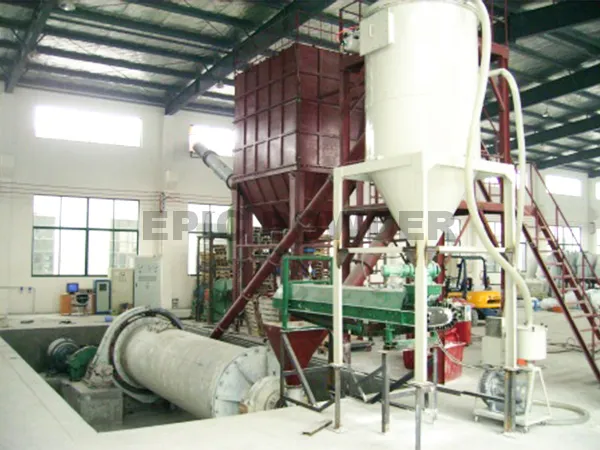
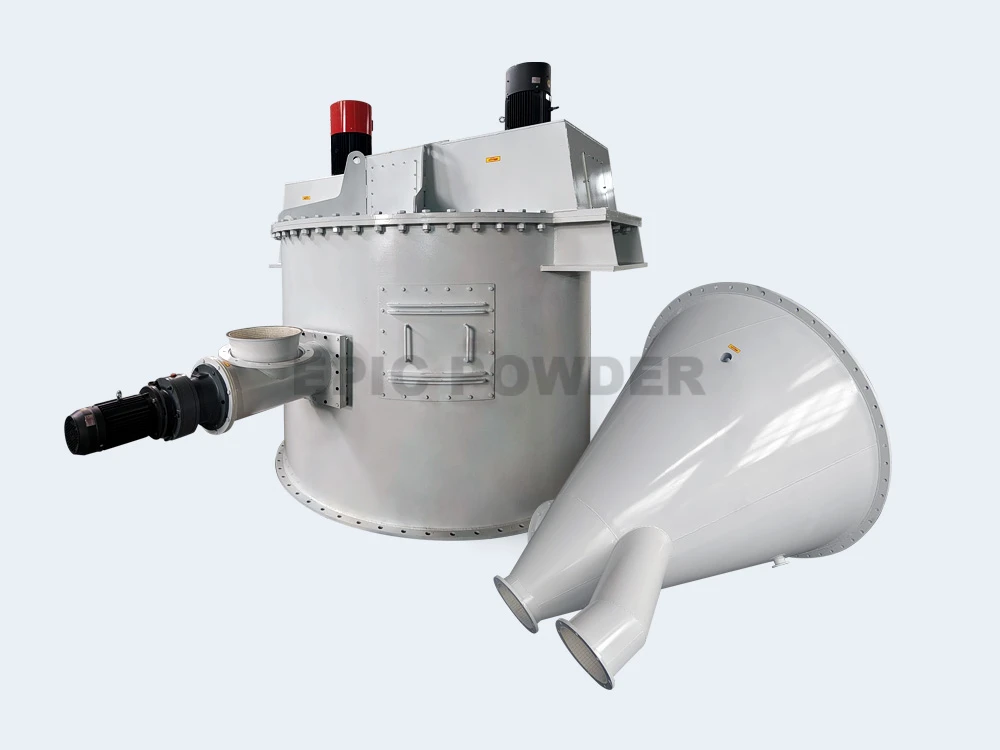
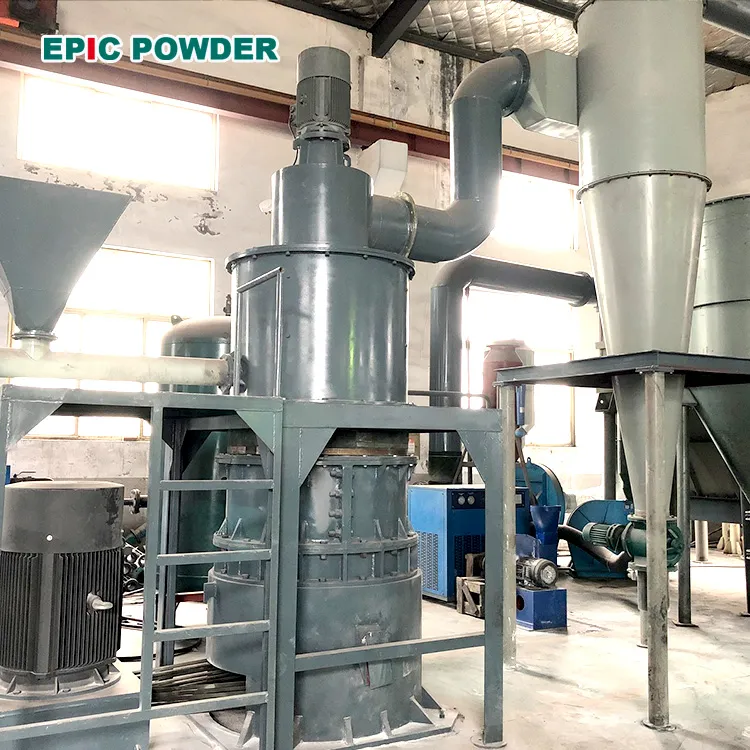
We use a dry, closed-loop process that combines impact, shear, and precise air classification. The goal is simple: reshape irregular barite particles while keeping the size curve tight.
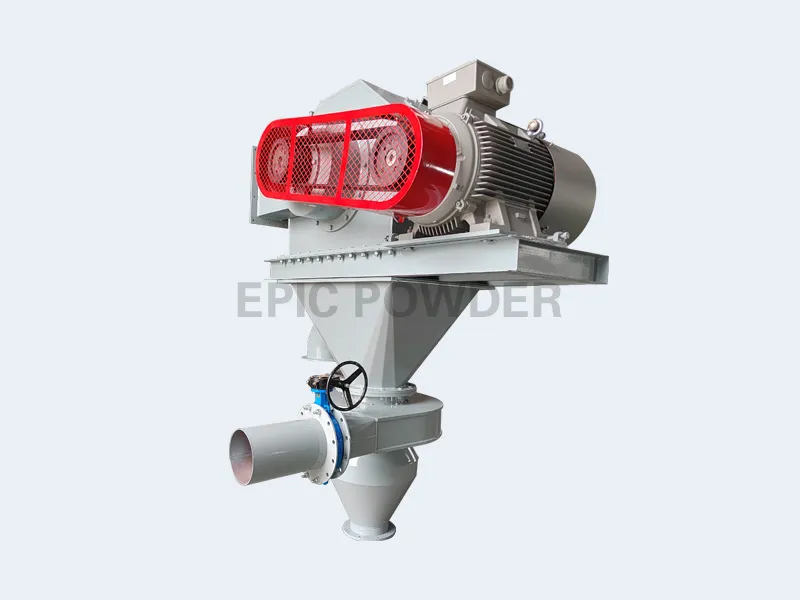
In our line, the multi-rotor mill handles the controlled shaping stage, and the turbo double classifier keeps the final powder in spec. This helps us make ultrafine barite powder with better particle morphology, not just smaller particles.

| ステップ | What we do | 結果 |
|---|---|---|
| Feed control | Keep the raw barite stable | Smooth operation |
| シェーピング | Use controlled impact and friction | Fewer sharp edges |
| 分類 | Separate fine and coarse particles | Tight D97 control |
| Recycling | Return coarse particles to the loop | Better yield |
Key Design Features for Barite Particle Rounding / Spheroidizing
Our equipment is built for barite particle rounding and spheroidizing, so the powder looks and performs more consistently.
- Adjustable rotor speed for shape control
- Stable airflow for a clean cut point
- Tight classification for uniform particle size distribution
- Closed system to reduce dust and contamination
- Low-wear design for hard mineral processing
- Steady operation for global production needs
This matters for customers who need more than basic crushing. They want a powder that flows better, disperses better, and works better in downstream use.
How EPIC Achieves D97:3μm While Improving Particle Shape
We keep two targets at the same time: D97:3μm and better particle shape.
Here is how we do it:
- We pre-adjust the feed so the mill runs evenly.
- We use staged shaping instead of one heavy crushing step.
- We separate fine powder quickly to avoid over-grinding.
- We send coarse particles back for another round.
- We fine-tune rotor speed, air volume, and classifier speed until the result is stable.
The result is a barite powder with a narrow size range, smoother morphology, and more stable batch quality. For many customers, that is the difference between a normal powder and a high-value ultrafine product.
Multiple Factory Trials Leading to Success
First Test – Identifying the Shaping Potential
The initial trial focused on assessing EPIC Powder’s ability to modify the irregular particle morphology of the barite. We tested a small batch to see if the equipment could produce particles close to D97:3μm with improved shape. Results showed promising rounding and spheroidizing effects, confirming the technology’s potential for ultrafine shaping.
Iterative Improvements Based on Test Results
Based on the first test, we adjusted parameters such as airflow, grinding speed, and classification settings. These tweaks helped optimize the particle shape and ensure consistent D97:3μm size. Multiple rounds of testing refined the process, progressively enhancing the uniformity and surface quality of the shaped barite particles.
Final Verification – Meeting All Specifications (D97:3μm, 1t/h, Desired Morphology)
The final trial confirmed that EPIC Powder’s equipment could reliably produce ultrafine barite powder with a D97:3μm particle size at a capacity of 1 ton per hour. The particles exhibited a smooth, rounded morphology, ideal for high-end applications. This verification demonstrated the technology’s ability to meet strict quality standards consistently.
Customer’s Feedback After Successful Trials
The customer was pleased with the results, noting significant improvements in particle shape and process stability. They highlighted the enhanced market value of their shaped barite powder and the reduction in downstream equipment wear. The successful trials proved EPIC Powder’s solution as a reliable choice for ultrafine particle shaping in mineral processing.
Technical Comparison: Before vs. After EPIC’s Modification Equipment
After the trial runs, the difference is clear. The customer was not just chasing finer barite powder. They needed stable particle morphology, good flowability, and a product that could perform well in real use. With EPIC’s powder surface modification solutions, the change was visible both under the microscope and in daily production.

Particle Morphology Under Microscope – Irregular vs. Shaped
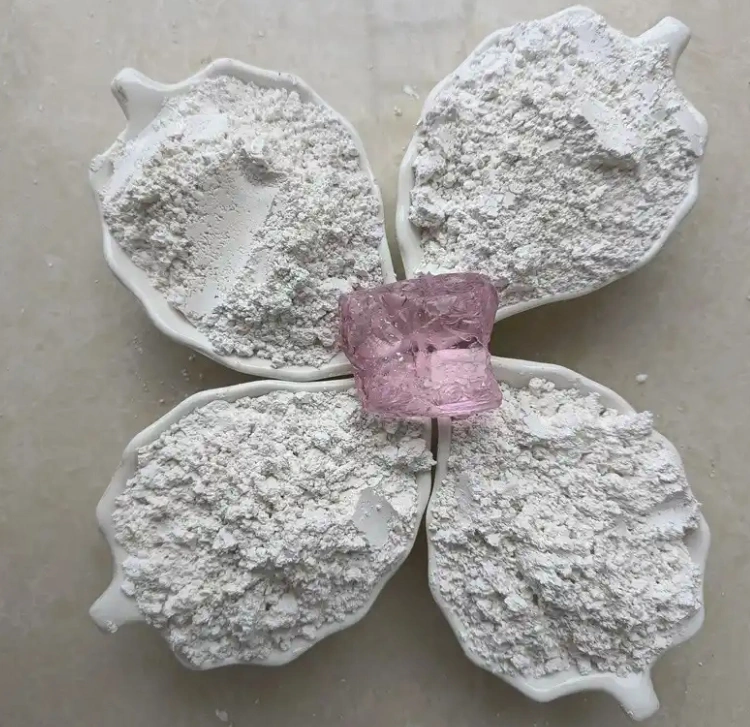
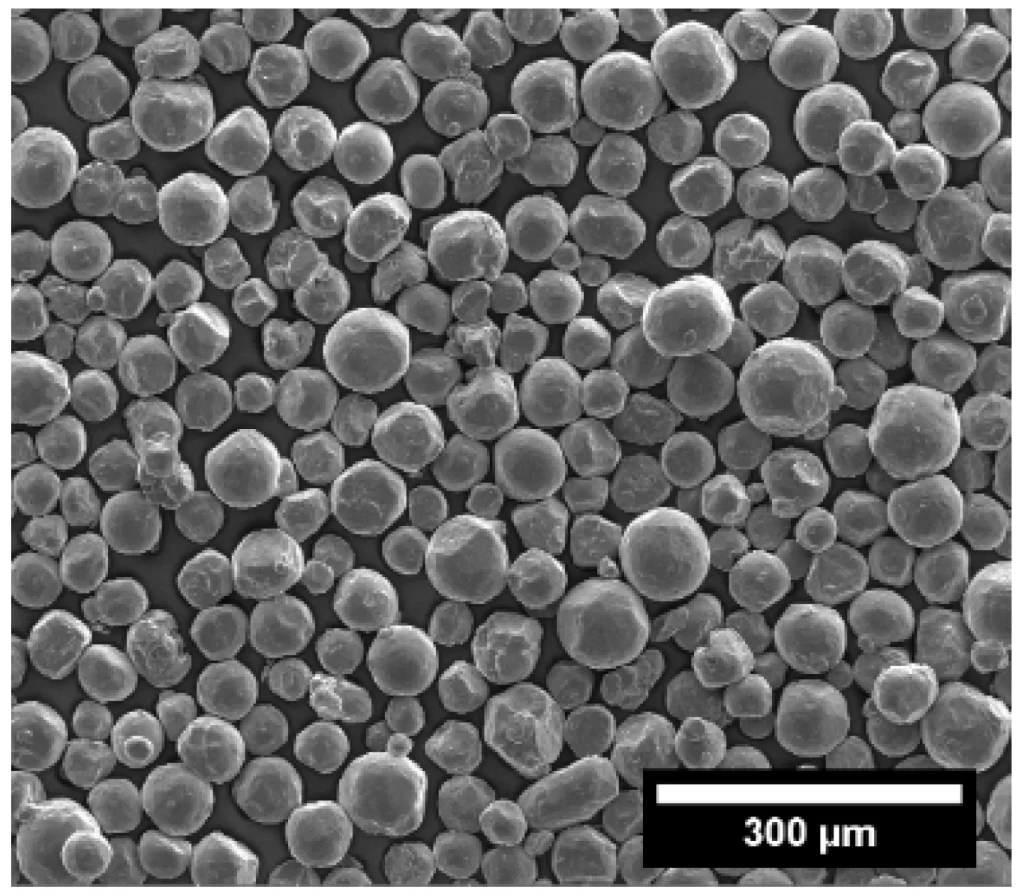
Before modification, the barite particles were sharp, uneven, and badly graded. Many particles had broken edges and mixed shapes, which made the powder harder to disperse.
After EPIC’s shaping process, the particles became more regular and smoother. The particle surface looked cleaner, and the overall shape was more uniform.
| アイテム | Before EPIC | After EPIC |
|---|---|---|
| 粒子の形状 | Irregular, angular | More rounded, more uniform |
| Surface condition | Rough, broken edges | Smoother, cleaner |
| Dispersion | 不均等 | Better and more stable |
| 流動性 | Weak | Improved |
| Batch consistency | 貧しい | Stable |
This is the main value of particle morphology modification: the powder does not just become smaller, it becomes more usable.
Performance Improvements in Real Applications
The customer tested the shaped barite powder in real downstream applications. The result was better than they expected.
- Better dispersibility in coatings and compounds
- More stable filler distribution in plastics and rubber
- Lower abrasion on processing equipment
- More controlled viscosity in slurry-based use
- Better gloss and surface finish in end products
In simple terms, the shaped powder worked more smoothly in the system. That helped the customer improve product quality and keep production more stable.
Production Efficiency and Yield Comparison
EPIC also helped the customer keep the target of D97:3 um while reaching 1 t/h. That mattered because many shaping systems can improve shape, but lose output or create too much fine dust.
| アイテム | Before Upgrade | After EPIC |
|---|---|---|
| Target size | Hard to hold | Stable at D97:3 um |
| 出力 | Unsteady | 1 t/h achieved |
| Yield | より低い | より高い |
| Waste | More rework | Less rework |
| Operation | Less stable | Easier to control |
So, the customer got two things at once: better particle morphology and reliable capacity. For global buyers, that is often the real decision point.
This comparison shows why EPIC’s ultrafine shaping and classification approach works well for barite. It solves the shape problem without giving up the production target.
Why EPIC Powder’s Solution is Ideal for Ultrafine Barite Shaping
High Precision Classification and Shaping Integration
EPIC Powder’s solution because it combines precise classification そして particle shaping in one process. For ultrafine barite, this matters a lot. If the cut point is unstable, the powder can drift out of spec and the particle morphology becomes uneven.
With EPIC’s 遠心分級機 technology, the customer can keep the D97 target close to 3 μm while improving the shape of the particles. That means better flowability, smoother dispersion, and a more consistent final product for global customers.

Energy Efficiency Compared to Traditional Methods
Traditional crushing and shaping methods usually need more passes, more wear parts, and more power. In my view, that makes them expensive and hard to control for fine barite powder.
- Lower energy waste from fewer repeated processing steps
- Less over-crushing, which helps protect particle morphology
- More stable output for long production runs
- Better wear control for smoother operation and lower maintenance
This is one reason EPIC Powder stands out in the ultrafine mineral processing market. It gives me a cleaner way to shape barite powder without pushing the system too hard.
Scalability From 1 t/h to Larger Capacities
Another strong point is scale. The same shaping idea that works at 1 ton per hour can also be adapted for larger production needs. That is important for customers who want to start with a trial line and then move into full-scale industrial output.
EPIC’s system design is flexible enough to support different plant layouts, and it can be matched with a ボールミル分類システム when the project needs a more complete grinding and classification setup. For me, that makes the solution practical for both current demand and future expansion.
In short: EPIC Powder gives me accurate D97 control, better particle morphology, lower energy use, and a clear path to scale up barite shaping production for the global market.
Key Benefits Achieved by the Customer After Cooperation
Consistent Particle Morphology Batch After Batch
Thanks to EPIC Powder’s ultrafine shaping technology, the customer now produces barite powder with highly consistent particle morphology. This means each batch has a uniform shape, reducing variability and ensuring predictable performance. Consistency is crucial for applications like oil drilling and coatings, where particle shape impacts viscosity and coverage.
Higher Market Value for Shaped Barite Powder
The improved particle shape—more spherical and uniform—significantly boosts the market value of the barite powder. Shaped particles offer better dispersibility and flowability, making the product more attractive to high-end industries. Customers can command higher prices for this premium-quality product.
Reduced Wear on Downstream Equipment
Irregular particles tend to cause more wear and tear on processing equipment. By shaping the particles into more regular forms, EPIC Powder’s solution reduces equipment maintenance costs and downtime. This leads to smoother operations and increased overall efficiency.
Improved Dispersibility and Flowability
The rounded, uniform particles flow more easily and disperse better in various applications, such as paints, plastics, and drilling fluids. This enhances product performance, reduces processing time, and minimizes issues like clogging or uneven mixing.
| 利点 | 説明 |
|---|---|
| Consistent particle shape | Batch-to-batch uniformity improves reliability |
| Higher product value | Better shape increases market competitiveness |
| 機器の摩耗が少ない | Smoother operation and lower maintenance costs |
| Better dispersibility | Enhanced flow and application performance |
By adopting EPIC Powder’s ultrafine shaping technology, the customer achieved a more stable, valuable, and efficient production process. This demonstrates how advanced particle shaping solutions can unlock new potential in mineral processing and ultrafine barite powder applications.
Applications of Shaped Ultrafine Barite Powder
When we finish particle morphology modification and keep barite at a tight size like D97:3 μm, the powder becomes much easier to use in real production. In our projects, a stable vertical fluidized bed jet mill helps keep the ultrafine barite powder consistent for global customers who need both fineness and better particle shape.
Coatings and Paints – Enhanced Coverage and Gloss
Shaped ultrafine barite works well in coatings because it disperses more evenly and packs better in the film.
- Improves hiding power and surface coverage
- Helps coatings look smoother and brighter
- Supports better gloss and a more uniform finish
- Reduces settling during storage and transport
For paint makers, this matters a lot. In hot and humid markets, stable dispersion and low sedimentation can save time and reduce complaints.
Plastics and Rubber – Better Filler Distribution
In plastics and rubber, particle morphology has a direct effect on how the filler moves through the compound.
- Helps the barite spread more evenly in the mix
- Reduces agglomeration and hard lumps
- Supports smoother extrusion and molding
- Can improve surface finish and batch stability
I usually see better results when the powder has a rounder shape and a narrow size distribution. That makes processing easier for both small plants and large factories.
Oil Drilling Fluids – Controlled Viscosity
Barite is also a key weighting agent in drilling fluids, and shaped ultrafine particles can help with flow control.
- Helps maintain predictable viscosity
- Supports stable suspension in the mud system
- Reduces unwanted clumping
- Improves consistency in field use
This is important for drilling teams that need reliable performance across changing site conditions. Stable powder behavior helps them control the fluid better and keep operations steady.
High-End Industrial Compounds
Shaped ultrafine barite is a good fit for high-value compounds where consistency matters more than anything else.
- Useful in adhesives, sealants, and masterbatches
- Supports better flowability during production
- Helps improve packing and formulation balance
- Works well in premium industrial materials with strict quality needs
For these products, particle morphology is not just a technical detail. It affects how the final product looks, feels, and performs.
Main Uses at a Glance
| 応用 | Main Benefit | Typical Result |
|---|---|---|
| Coatings and paints | Better dispersion and packing | Higher gloss and coverage |
| Plastics and rubber | Cleaner filler distribution | Easier processing and better finish |
| Oil drilling fluids | Controlled viscosity | More stable mud performance |
| High-end compounds | Consistent flow and balance | More reliable end product |
Shaped ultrafine barite powder gives us a practical way to improve product quality across several industries, especially when customers need stable performance, good dispersibility, and better particle morphology.
Frequently Asked Questions (FAQ)
What is particle morphology modification?
Particle morphology modification involves changing the shape and surface features of mineral particles, like barite, to improve their performance in various applications. Traditional crushing methods often produce irregular, jagged particles that can negatively impact product quality and downstream processes. EPIC Powder’s technology offers a way to shape particles more uniformly, achieving a smoother, rounded, or spheroidized form. This process enhances dispersibility, flowability, and overall value of the ultrafine barite powder, especially when targeting D97:3μm specifications.
Can any barite powder be shaped to D97:3μm?
While many types of barite powder can be processed to reach D97:3μm, achieving the desired particle shape and size depends on the initial material quality and the specific equipment used. EPIC Powder’s advanced shaping technology is particularly effective for ultrafine barite, providing consistent results even at very fine sizes. However, it’s important to perform tests to determine the feasibility for each batch, as factors like mineral purity and initial particle morphology can influence the outcome. For detailed guidance, it’s best to consult with EPIC’s experts through a trial process.
How many tests are typically needed before purchasing?
The number of tests varies depending on the initial quality of the barite powder and the specific requirements of the customer. Usually, a few trial runs are sufficient to evaluate the shaping potential and confirm whether the equipment can consistently produce particles with the desired morphology at D97:3μm. EPIC Powder offers sample testing and pilot trials to help customers understand the process and results before making a larger investment. This approach minimizes risks and ensures the final product meets all specifications.
What is the minimum order or trial quantity?
The minimum trial quantity can vary based on the customer’s needs and the scope of testing. EPIC Powder typically recommends starting with a small batch—often around a few hundred kilograms—to assess the shaping performance and particle morphology. For commercial production, the capacity can be scaled up to meet the target of 1 ton per hour or more. If you’re interested in exploring the technology, it’s best to contact EPIC directly to discuss trial options and volume requirements.
Your Trusted Partner for Barite Shaping Solutions
Customer Success Recap
Irregular particle morphology can be turned into a stable, market-ready barite powder when the right process is used. After repeated factory tests, EPIC Powder helped the customer reach the target of D97:3μm そして 1t/h while improving particle shape at the same time.
- Stable ultrafine output: D97:3μm met for barite powder production.
- Better particle morphology: smoother shape, less irregular material.
- Stronger end-use performance: better flowability, dispersibility, and consistency.
- Higher product value: more suitable for coatings, drilling fluids, and other fine powder uses.
For the customer, this was not just about grinding finer. It was about getting a reliable particle morphology modification result that matched real production needs in the global mineral market.
Visit and Test
If you are facing the same barite shaping problem, I recommend sending your samples to EPIC for a real test. I have found that sample trials are the fastest way to check particle morphology, throughput, and final powder quality before making a decision.
You can also review our roller mill solution if you want to compare equipment options for ultrafine powder processing. We welcome customers to visit our factory, run tests, and verify whether the process can meet your target size, capacity, and shaping requirements.

For me, the value is simple: EPIC Powder gives customers a practical way to solve barite irregular particle morphology with a process that is testable, stable, and ready for production.
EPIC powder
At エピックパウダー, we offer a wide range of equipment models and tailor solutions to meet your specific needs. Our team has more than 20 years experience in various powders processing. Epic Powder is specialized in fine powder processing technology for mineral industry, chemical industry, food industry, pharama industry, etc.
Contact us today for a free consultation and customized solutions!

“Thanks for reading. I hope my article helps. Please leave a comment down below. You may also contact EPIC Powder online customer representative ゼルダ for any further inquiries.”
— ジェイソン・ワン, エンジニア