
バッグフィルターのろ過速度の選択原理
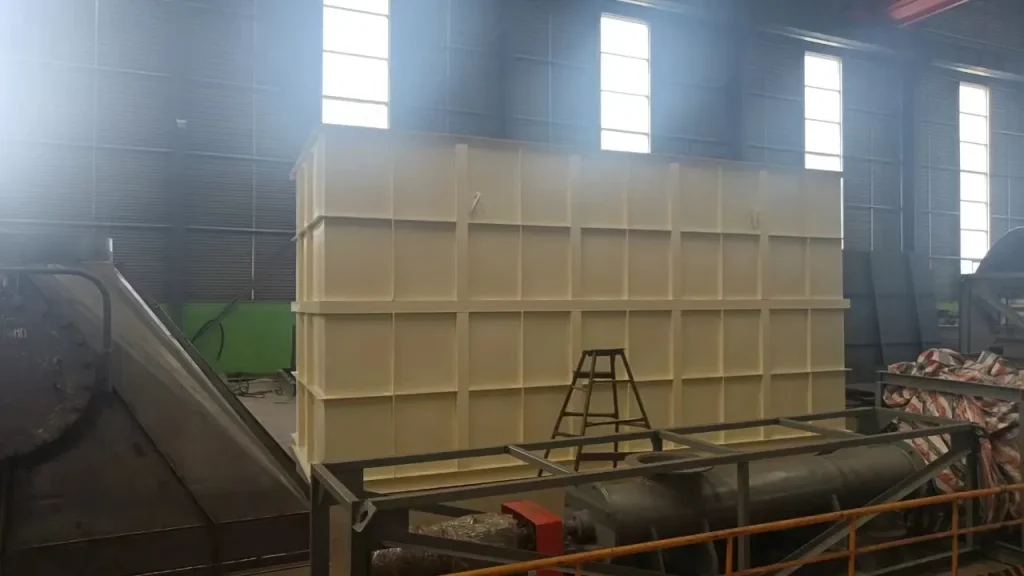
Selecting the filter speed of bag dust collector is key. It should be based on the type of smoke or dust. It should consider where it will be used. It should also consider dust size, thickness, and gas temperature. Also, it should consider moisture, dust levels, and filter materials. Select a low value when the dust particles are fine. Also, when the temperature and humidity are high. And when the concentration and viscosity are high. For example, ≤1m/min; otherwise, a high value can be selected, generally not exceeding 1.5m/min. For large dust particles, pick 1.5~2m/min. They’re at normal temperature, dry, and not sticky. They’re at extremely low concentration. When selecting […]
Common causes of bag filter failure
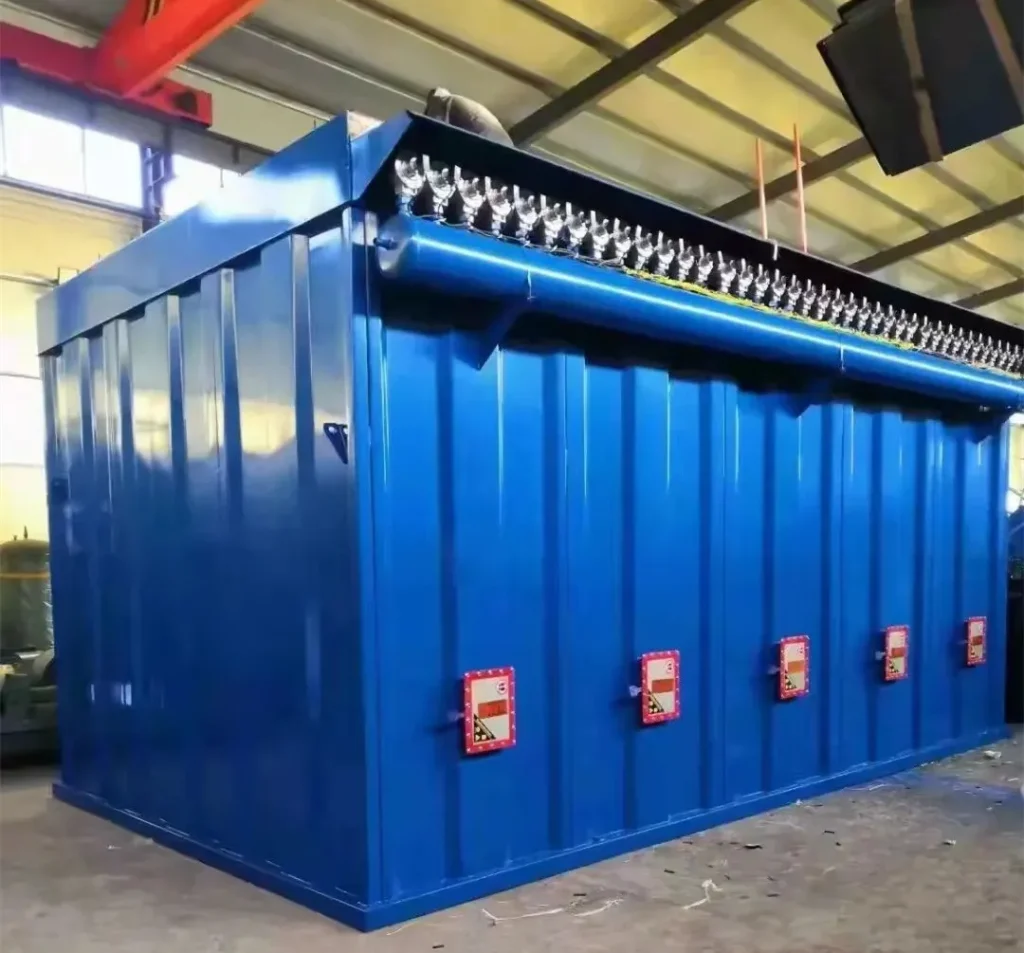
To prevent bag filter failure, you must size the filter right for the job. Also, you must inspect and maintain it often. And, you must ensure that it is installed correctly. If a bag filter fails, it’s key to quickly find the cause. Then, take action to stop more issues. The reasons for the bag-dust collector’s weak back-blowing ①Fan itself is faulty;②Fan speed cannot be reached;③The back-blowing air pipe is leaking;④The gap between the back-blowing port and the bag opening is too large or not aligned. What caused the failure of the dust discharge device in the bag dust collector? ① Failure of the transmission motor, reducer and transmission gear;② […]
Design of Structural Components of Pulse Bag Dust Collector
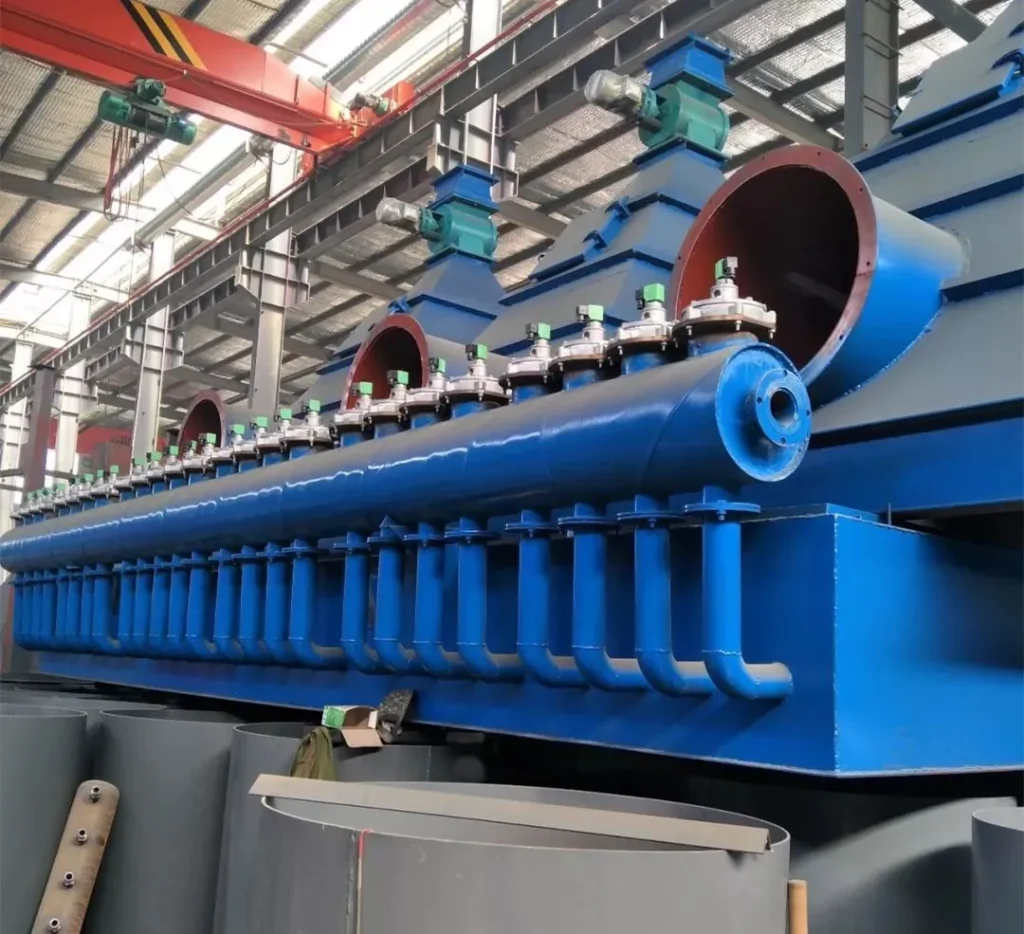
Bag filters work based on bag filter technology. It filters and captures dust through bags. Its main parts include filter bags. It also includes pulse controllers, pulse valves, air inlets, and air outlets. Structural design of the middle box The middle box body is made up of several wall panels connected by continuous welding. The wall panels in the middle box body are typically made of ordinary steel plates with a thickness of 5mm. The inclined partition assembly is located at the center of the box body. It separates the dust gas chamber from the clean air chamber. The middle box body primarily focuses on the ability of the wall […]
Application of jet mill in LFP batteries
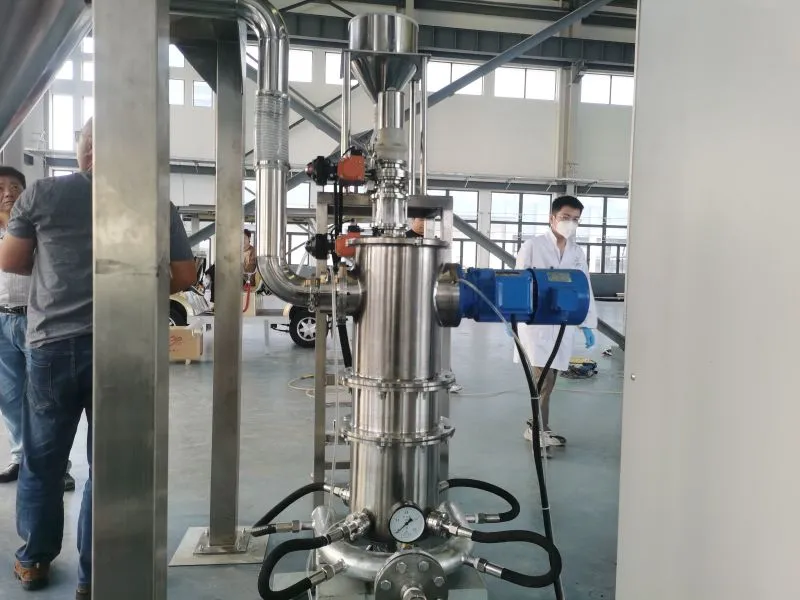
Lithium battery material needs Lithium iron phosphate special airflow crusher. It is an essential tool for battery material processing. It refines the battery raw materials. It breaks the large particles into very fine ones and increases their surface area. , greatly improving the utilization rate of raw materials. Lithium iron phosphate battery The Lithium Iron Phosphate (LFP) battery is a new type of lithium-ion battery. It is widely used in electric vehicles. It is also used in starting batteries, energy storage, and mobile devices. A lithium iron phosphate battery has a positive and negative electrode. It also has an electrolyte and separator. The positive electrode uses LiFePO4. The negative electrode […]
Lithium carbonate (Li2CO3)

Lithium carbonate is the provider of lithium ions in lithium batteries, and Li2CO3 occupies an important position in the industrial chain. As lithium carbonate futures products are about to be launched, this article will introduce the basic knowledge of lithium carbonate. Basic properties of Li2CO3 Lithium carbonate is an inorganic compound with the chemical formula Li2CO3 and a molecular weight of 73.89. It is a colorless monoclinic crystal, slightly soluble in water and dilute acid, and insoluble in ethanol and acetone. Carbonates with lower thermal stability than other elements of the same group in the periodic table do not deliquesce in the air and can be obtained by adding sodium […]
リン酸鉄リチウム(LFP)
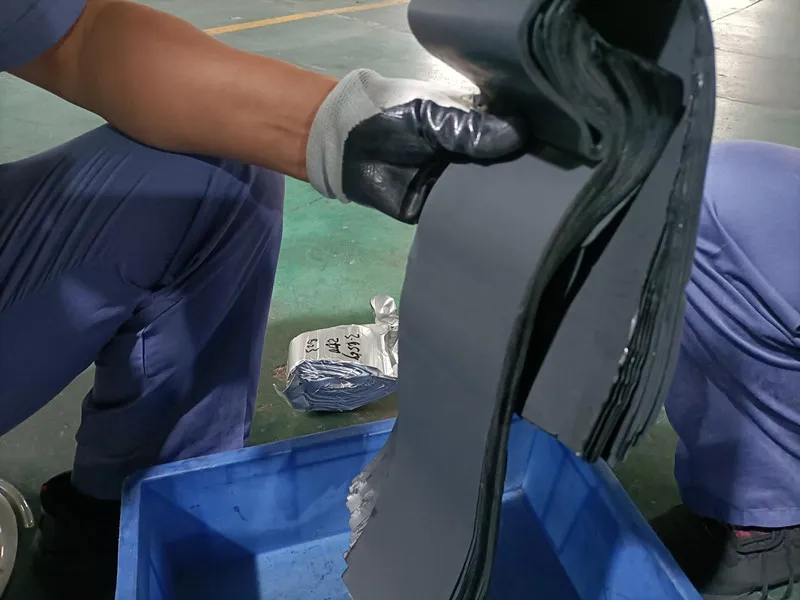
Lithium iron phosphate is a lithium-ion battery electrode material with the chemical formula LiFePO4 (LFP for short). It is mainly used in various lithium-ion batteries. Since Japan’s NTT first revealed the olivine structure lithium battery cathode material of AyMPO4 (A is an alkali metal, M is a combination of CoFe: LiFeCoPO4) in 1996, in 1997, John. B. Goodenough and others from the University of Texas at Austin in the United States studied The group also subsequently reported the reversible transfer of lithium into and out of LiFePO4. The United States and Japan coincidentally published the olivine structure (LiMPO4), which attracted great attention to this material and caused extensive research and […]
粉体空気分離機はどのように動作するのですか?

Powder air classifier is essential tools in various industries, including pharmaceuticals, chemicals, food processing, and mining. These devices are designed to separate particles based on their size, shape, and density, allowing for precise control over the quality and consistency of the final product. In this article, we will explore in detail how powder air classifiers work and their applications in different industries. Overview of powder air classifiers Powder air classifiers are mechanical devices that use air flow to separate particles based on their size and density. These devices are commonly used in industries where particle size distribution is crucial for product quality and performance. Powder air classifiers can be used […]
ジェットミルの性能を最適化するにはどうすればよいでしょうか?
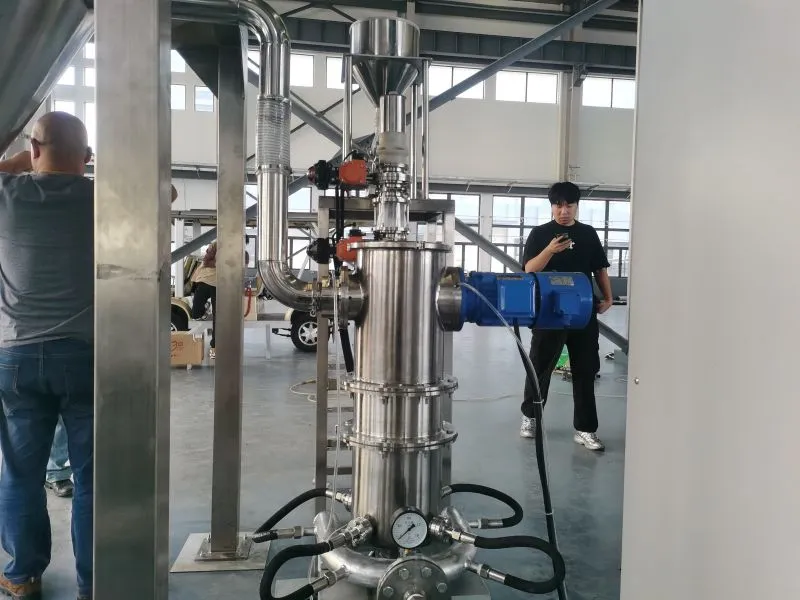
The performance of a jet mill can be evaluated based on several key parameters such as particle size reduction efficiency, energy consumption, and product quality. Airflow crushing is the use of high-speed airflow or superheated steam energy for ultrafine crushing of solid materials; it is one of the most commonly used ultrafine crushing methods, widely used in non-metallic minerals, pharmaceuticals, chemicals, metallurgy, new materials, ceramic materials, lithium materials, rare earth materials, rare metals, quartz, flame retardant materials, and other industries of ultrafine processing of materials.Different from ball mills, vibration mills, mechanical impact mills, and other ultrafine crushing equipment, airflow crushing equipment has its own unique structure and process parameters, such […]
エアジェットミルの作動原理

This article aims to describe the working principle of a jet mill. A jet mill, also called fluid energy mill, is used for solid material micronization. Micronization is a term used to describe size reduction where the resulting particle-size distribution is less than 10 microns. Jet mills are used for micronizing solids of chemicals, pharmaceuticals, pigments, minerals, and others like heat-sensitive, corrosive, and abrasive materials. The micronization process is often considered a black box that produces fine powder and coarse particles. Jet mills operate in compressed air, gas, or high-pressure superheated steam. Jet mills have no moving parts, eliminating contamination from contact with external grinding media. Grinding heat-sensitive and waxy […]