
Limestone, quicklime, slaked lime, lime milk and soda lime all carry “lime” in their names. Mixing them up costs buyers real money. Order calcium oxide when the kiln needs calcium carbonate, and the shipment behaves nothing like the specification. Each product is a different chemical with its own reaction, handling rules and price. This page separates the five and shows how one converts into the next. Each material is then mapped to the industries that consume it.
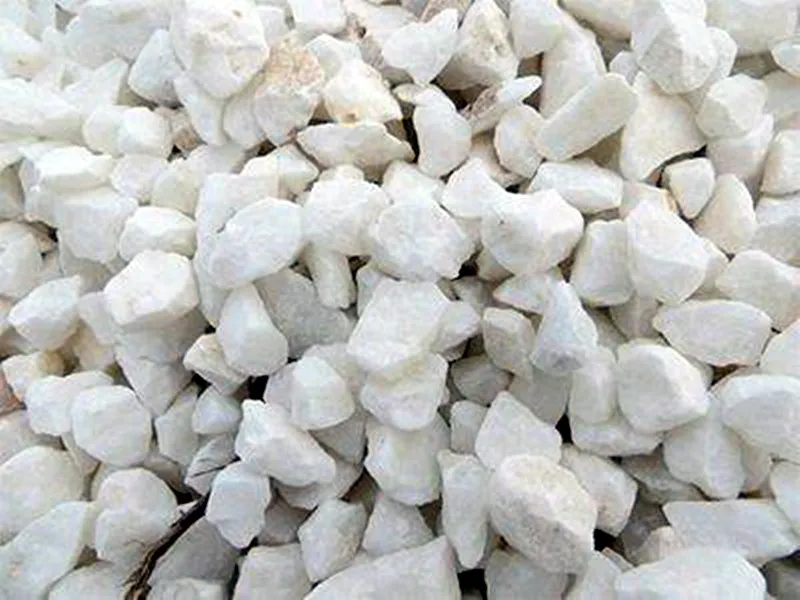
The Five Materials at a Glance
| Name | Chemical | How it is made | Form | Signature property |
|---|---|---|---|---|
| Limestone | Calcium carbonate, CaCO₃ | Mined directly from deposits | Hard white or gray rock | Fizzes on contact with acid, releasing CO₂ |
| Quicklime | Calcium oxide, CaO | Calcining limestone above ~900 °C, driving off CO₂ | White powdery or lumpy solid | Reacts violently with water, releasing heat |
| Slaked lime | Calcium hydroxide, Ca(OH)₂ | Adding water to quicklime, then drying and crushing | White dry powder | Strong base, low solubility, low toxicity |
| Lime milk | Ca(OH)₂ suspension | Mixing slaked lime with a small amount of water | White paste or fluid | Stays suspended; used wet |
| Soda lime | CaO + NaOH mixture | Combining quicklime with sodium hydroxide | Granules or blocks | Absorbs water and acidic gases far better than either component alone |
The short version of the distinction is a production chain, not a family of unrelated products. Limestone is the raw rock. Calcining turns it into quicklime. Water turns quicklime into slaked lime. More or less water turns slaked lime into lime milk or limewater. Soda lime is a blended product built on quicklime. Once you see the chain, the names stop being confusing. Each step is just one chemical reaction away from the last.
Limestone: The Starting Material
Limestone is the only one of the five that comes out of the ground. It is calcium carbonate in mineral form, hard enough to need blasting and crushing, and its chemistry defines everything downstream. Heated in a kiln it gives up carbon dioxide and becomes quicklime. Reacted with acid it releases the same gas, which is why the fizz test identifies it on site. A third route runs backward: reacting calcium hydroxide with carbon dioxide turns it back into calcium carbonate. Chemists call this closed loop the lime cycle.
As a traded product, limestone is mostly bought by the ton and ground into powder. Ground calcium carbonate feeds plastics, paints, paper, construction materials and desulfurization plants, and the fineness band decides the price. The main applications of limestone follow that logic. Coarser cuts go into construction and agriculture. Finer cuts go into polymers and coatings, where each grade step adds value.
Quicklime: The Reactive Intermediate
Quicklime is limestone with the carbon dioxide driven off, and it wants that CO₂ back. Calcium oxide absorbs water aggressively, which makes it useful as a desiccant in organic synthesis and a nuisance in storage. The hydration reaction releases enough heat to boil the unreacted water. That is why slaking a pit of quicklime looks “cooked”, and why the same reaction heats self-heating food cans. Add more quicklime than the water can consume, and the surplus sits as dry powder once the water is gone. That dry surplus is the sign of complete absorption.
Steel plants, paper mills and water treatment operators buy quicklime by the tonne, and they buy it fresh. Air exposure slowly re-carbonates it back toward limestone. Handling rules follow from the chemistry. Store it dry, transport it sealed, and keep bare skin away, because the heat released on damp skin burns.
Slaked Lime, Lime Milk and Limewater: One Chemical, Three Forms
Slaked lime, lime milk and limewater are the same calcium hydroxide at different water ratios. Dry and crushed, it is slaked lime powder. Mixed with a little water, it becomes lime milk, the paste painters and builders use for wall coatings. After application it slowly absorbs CO₂ from the air and hardens back into calcium carbonate. Mixed with a lot of water and filtered, it becomes clear limewater. This saturated solution turns cloudy in the presence of CO₂, which makes it the classic test reagent in laboratories.
Calcium hydroxide dissolves poorly in water. Most of what lime milk contains is suspended solid, with only a small share actually dissolved. Solubility is a poor guide to strength here. What does dissolve ionizes almost completely, which makes calcium hydroxide a strong base despite the low numbers. It is comparatively low in toxicity and gentle on the environment. It still irritates and corrodes human tissue, so protective equipment stays on.
Soda Lime: The Engineered Mixture
Soda lime is quicklime and sodium hydroxide combined because each fixes the other’s weakness. Pure sodium hydroxide pulls water vapor fast. The absorbed water then forms a saturated solution that coats the granule surface, and that film blocks further absorption. Quicklime has no such problem with water droplets, and the two together absorb far more total water than either alone. The mixture also scrubs acidic gases such as CO₂. That is why anesthesia circuits, diving rebreathers and gas drying systems all run on soda lime granules.
Where Grinding Fits Into the Lime Chain
| Product | Typical processing need | Common equipment |
|---|---|---|
| Limestone for GCC powder | Crush, then grind to 325 to 2500 mesh with tight top-size control | Ball mill + classifier, or air classifier mill for finer cuts |
| Quicklime | Crush kiln lumps to feed slakers evenly | Crusher plus sizing screen |
| Slaked lime | Break up slaked lumps into a free-flowing powder | Pin disc mill or classifier mill |
| Soda lime granules | Classify granules into narrow size bands for canister filling | Air classifier |
Most of the grinding value in this chain sits at the limestone stage. The limestone transformation chain explains how the same rock feeds cement, lime and precipitated carbonate production. Each of those outlets demands a different powder spec. A mill chosen for 400 mesh filler work rarely suits 1250 mesh paint grade. The classifier and the grinding kinetics both change once the target drops below roughly 20 µm.
The choice between milling routes narrows to three questions: feed top size, target D97, and hourly tonnage. Coarse to medium fills with high tonnage suit a ball mill with an air classifier. Ultra-fine, contamination-sensitive powders move to a jet mill. The comparison of jet mill and air classifier mill walks through that decision in detail.
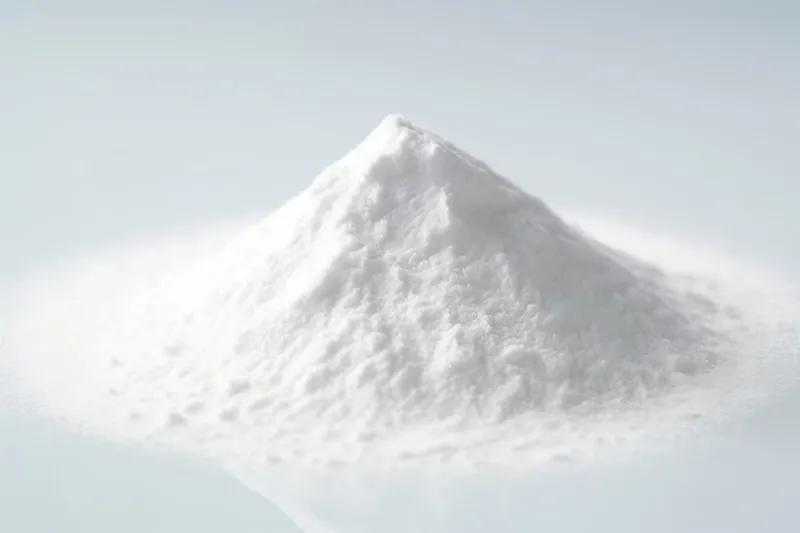
Send us your limestone analysis and target fineness through the contact page. We will run the material and propose a line sized to your spec. Real samples beat catalogue numbers, and the test report gives you a distribution curve to hold suppliers against.

“Thanks for reading. I hope my article helps. Please leave a comment down below. You may also contact EPIC Powder online customer representative Molly for any further inquiries.”
– Emily Chen, Engineer