
Powder spheroidization technology has become an indispensable part of modern industry and advanced technology. It improves the surface characteristics and physical properties of powders, optimizes material performance, and meets multifunctional requirements. At present, powder spheroidization technologies have penetrated numerous fields, including pharmaceuticals, food, chemicals, environmental protection, materials science, metallurgy, and 3D printing.
The preparation of spherical powders involves multiple disciplines, including chemistry, materials science, and engineering. Below is an overview of the major powder spheroidization technologies.
1. Mechanical Shaping Method
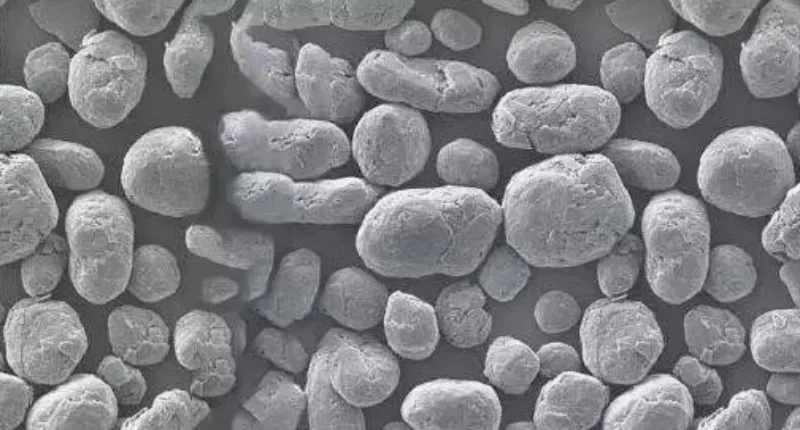
The mechanical shaping method mainly relies on mechanical forces such as collision, friction, and shear to induce plastic deformation and particle adhesion. After continuous processing, particles become denser. Their sharp edges are gradually polished smooth and rounded under repeated impact.
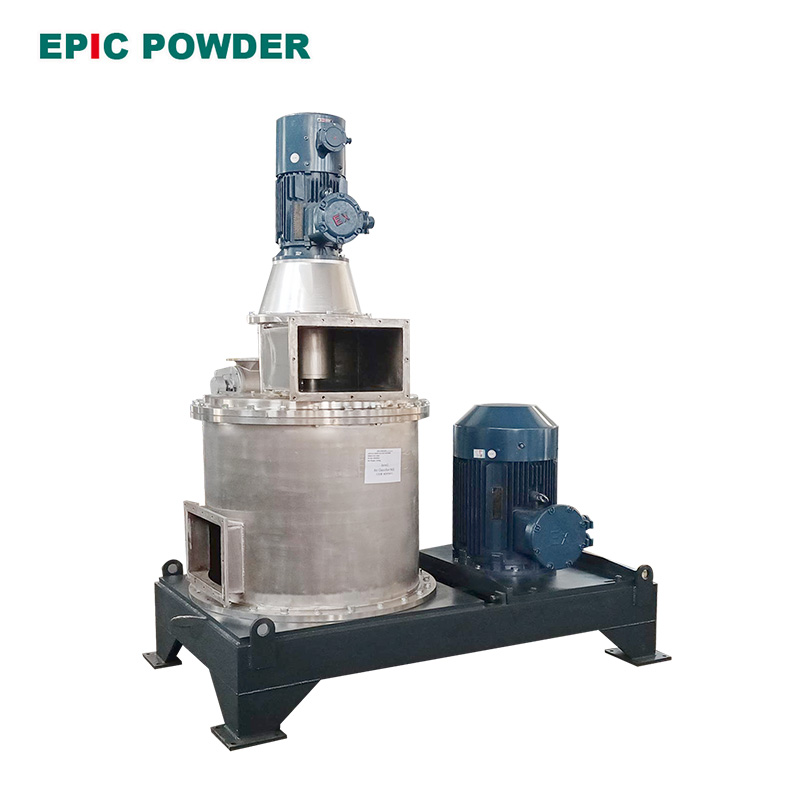
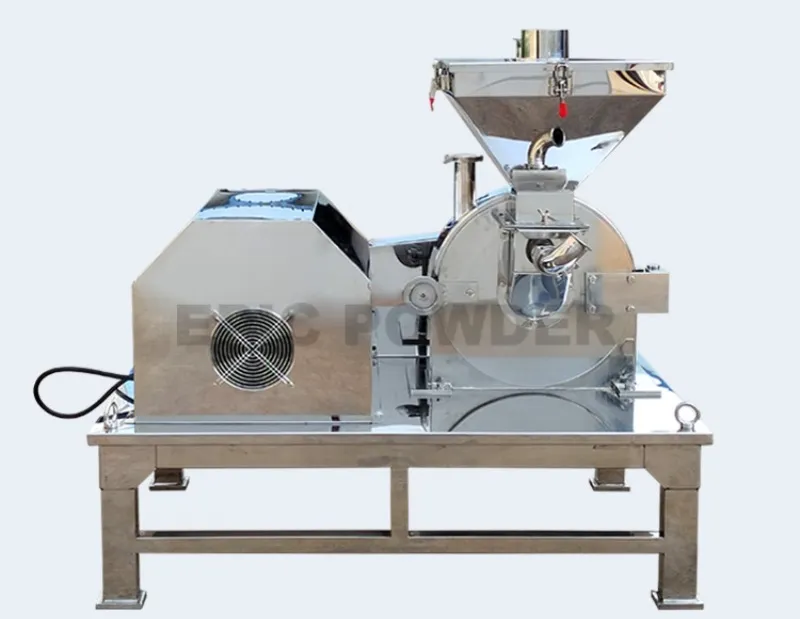
This method typically uses high-speed impact mills and stirred media mills to prepare fine powder materials. Combined with dry or wet grinding, it can produce powders with finer particle size, narrower size distribution, and a certain degree of spheroidization.
Mechanical shaping is widely applied in the spheroidization of natural graphite, artificial graphite, and cement particles. It is also suitable for crushing and powder production of brittle metals or alloy powders.
The raw materials used in this method are widely available and low-cost. Existing resources can be fully utilized. The process is simple, environmentally friendly, and suitable for industrial-scale production. However, the method has limited selectivity for materials. The sphericity, tap density, and yield after processing cannot always be well guaranteed. Therefore, it is mainly suitable for spherical powders with relatively low quality requirements.
2. Spray Drying Method
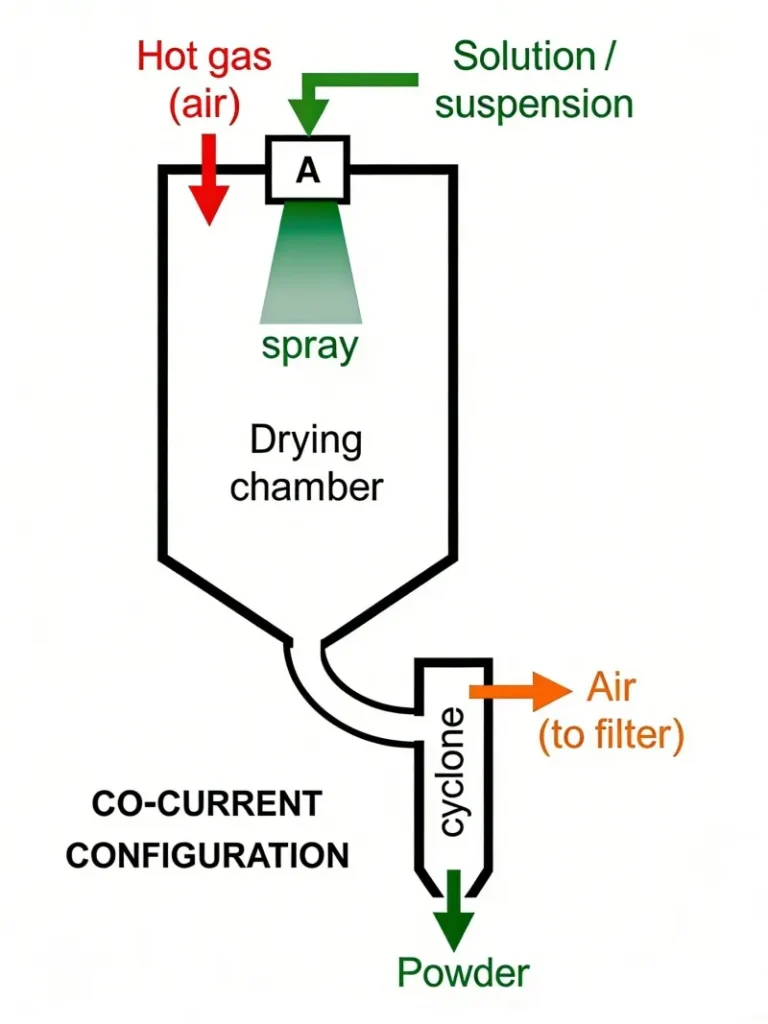
Spray drying involves atomizing a liquid material into fine droplets. The moisture rapidly evaporates in a hot airflow, causing the droplets to solidify into particles.
The advantages of spray drying include a simple process and easy control of product performance. This method is mainly applied in the fields of military explosives and battery materials.
3. Gas-Phase Chemical Reaction Method
This method uses gaseous raw materials, or solid materials evaporated into gas form. Chemical reactions generate the desired compounds, which are then rapidly condensed to produce ultrafine spherical powders.
The reaction temperature range is broad. It can be applied at high, low, or even ambient temperatures. The resulting products typically exhibit good crystal structure and uniform microstructure. Ultrafine (nano-scale) spherical powders can be produced.
4. Hydrothermal Method
The hydrothermal method uses a reactor under high-temperature and high-pressure conditions. Water or organic solvents serve as the reaction medium.
By adjusting parameters such as hydrothermal temperature, reaction time, pH, and solution concentration, particle size can be effectively controlled. Its advantages include adaptability to various reaction systems and controllable particle size, morphology, and crystallinity.
However, the reaction conditions are stringent. High temperature and pressure are required, and there is strong dependence on specialized equipment. It is mainly used for preparing oxides.
5. Precipitation Method
The precipitation method involves chemical reactions in solution. Metal ions combine with specific precipitants to form fine, semi-solid colloidal particles, which create a stable suspension system.
By further adjusting conditions such as aging, slow stirring, or modifying the solution environment, the colloidal particles gradually aggregate and grow. They tend toward spheroidization and form primary spherical precipitates. After drying or calcination, spherical powder materials are obtained.
This method allows control over crystal growth rate in the liquid phase. Thus, particle size and morphology can be regulated. It is suitable for preparing metal oxides and other materials. Strict control of reaction parameters such as temperature, pressure, and pH is required.
6. Sol-Gel Method
The sol-gel process generally includes three stages: sol preparation, gel formation, and spherical powder formation. Further heat treatment can improve structure and performance. Precise control over particle size and morphology can be achieved.
The powders prepared have high purity and good monodispersity. This method is widely used in laboratories for preparing ultrafine powders. However, it is not suitable for large-scale mass production. Industrial application remains limited.
7. Microemulsion Method
The microemulsion method is a liquid–liquid two-phase preparation technique. An organic solvent containing precursors is added into the aqueous phase to form an emulsion with tiny droplets.
Through nucleation, coalescence, aggregation, and heat treatment, spherical particles are formed. This method is widely used for preparing nanoparticles and organic–inorganic composite materials.
8. Plasma Powder Spheroidization Method
With the rapid development of high-tech industries and growing demand for nanomaterials and new preparation processes, plasma chemistry has gained increasing attention.
Plasma spheroidization features high temperature, high enthalpy, high chemical reactivity, and controllable reaction atmosphere and temperature. It is highly suitable for preparing high-purity and fine spherical powders. It is especially effective for high-melting-point metals.
The process includes plasma generation, chemical reaction, and rapid quenching stages. Based on plasma generation methods, it can be divided into DC arc thermal plasma spheroidization and RF induction plasma spheroidization.
The plasma powder processing systems developed by Tekna in Canada are globally leading. They have realized spheroidization of metal powders such as tungsten, molybdenum, nickel, and copper, as well as oxide ceramic powders such as silica and alumina.
9. Gas Atomization Method
Gas atomization involves heating the raw material to a molten state. A high-speed gas stream impacts the molten liquid flow. The kinetic energy of the liquid is instantly converted into surface energy, causing intense fragmentation into numerous small droplets.
These droplets rapidly cool and solidify upon contact with the surrounding environment, forming spherical powders with uniform particle size.
Initially, gases such as air and steam were used. With technological development, inert gas atomization solved the challenge of preparing spherical powders of reactive metals. Powders produced by inert gas atomization have low impurity content, smooth surfaces, good flowability, and high sphericity.
Common gas atomization methods include electrode induction melting gas atomization and vacuum melting inert gas atomization.
10. Centrifugal Atomization Method
Centrifugal atomization uses centrifugal force to disperse molten metal film into droplets. These droplets are rapidly solidified by forced convection cooling with protective gas.
It includes rotating disk atomization and plasma rotating electrode atomization. Among them, plasma rotating electrode atomization is the most widely applied.
In this method, an anode metal rod is mounted on a high-speed rotating shaft. Under plasma arc heating, the metal melts. The molten droplets disperse tangentially under centrifugal force. They then solidify into spherical powders. The entire process occurs under vacuum or inert gas protection.
11. Ultrasonic Atomization Method for Powder Spheroidization
Ultrasonic atomization utilizes ultrasonic vibration energy to disperse molten metal into fine droplets in the gas phase. These droplets then cool and solidify into spherical metal powders.
The resulting powders exhibit high sphericity and narrow particle size distribution. Compared with inert gas atomization, ultrasonic atomization does not require large amounts of inert gas for fragmentation. It produces fewer hollow particles and satellite particles. However, due to immature theoretical development, it is mainly used for low-melting-point metals or alloys.
12. Gas Combustion Flame Spheroidization
This method uses industrial fuel gases such as acetylene, hydrogen, or natural gas as heat sources. A clean, pollution-free flame of 1600–2000°C is generated through a high-temperature flame gun.
Pretreated qualified powder is fed into the spheroidization furnace. Oxygen–fuel gas jets heat and melt the powder at high temperature. After cooling, high-purity spherical powder is formed.
This method is mainly used for producing spherical silicon micropowder and spherical alumina powder.
13. Combustion (VMC) Method
The combustion method, also known as the Vaporized Metal Combustion (VMC) method, was first developed in Japan. It utilizes the explosive combustion of metal powder to produce spherical oxide microparticles.
For example, metallic silicon powder directly reacts with oxygen to produce high-purity, fine silica microspheres with relatively controllable particle size distribution.
14. Wire Cutting and Remelting Method
The process involves drawing solder alloy into wires and cutting them into uniform micro-segments. These segments are then placed into forming equipment with a temperature gradient. Through remelting and solidification, they form standard spheres.
This method offers good process controllability and low cost. However, the procedure is complex, leading to low production efficiency. High equipment precision is required. Wire diameter inconsistency may occur during drawing. The method is limited to low-temperature and ductile materials, restricting its application range.
15. Pulsed Micro-Orifice Ejection Method
The pulsed micro-orifice ejection method is a microdroplet generation technology used to prepare monodisperse micron-sized spherical particles. It belongs to piezoelectric-driven drop-on-demand injection.
Molten metals, alloys, or suspensions have been used as raw materials to produce monodisperse droplets.
The working principle is as follows. First, the metal raw material is melted in a stainless-steel crucible. The melt flows into the supply channel and fills the injection section. Inert gas is introduced into the crucible to create a positive pressure difference. A pulse signal is programmed. Under the pulse signal, the piezoelectric ceramic vibrates. The vibration drives the pressing plate to deform plastically. This applies extrusion pressure to the melt in the injection section.
A small volume of melt is squeezed out from the micro-orifice at the bottom of the crucible, forming droplets. Because each vibration amplitude is identical, the volume of each droplet is nearly the same. As a result, spherical powders with uniform size are obtained.

“Thanks for reading. I hope my article helps. Please leave a comment down below. You may also contact Zelda online customer representative for any further inquiries.”
— Posted by Emily Chen