
Broyage ultra-fin technology reduces particle size by overcoming internal cohesion through mechanical or fluid power. It achieves a particle size reduction to 10–25μm, increasing surface area and porosity. This technology is widely used in the pharmaceutical and food processing industries. It can be divided into dry and wet ultra-fine grinding, depending on the moisture content of the raw materials and during the process. Dry ultrafine grinding processes materials under dry conditions. Common methods include air jet mills, ball mills, and vibration mills. However, traditional vibration mills and ball mills generate heat, making them unsuitable for heat-sensitive materials. Air jet mills have high energy consumption. These issues limit their applications. A research institute has developed a dry ultrafine grinding device — the low-temperature impact mill. It offers excellent ultrafine processing performance. Specifically, it can grind whole grains to a fineness of 50–74 μm, seasonings to 60–150 μm, and traditional Chinese herbs to 50–150 μm.
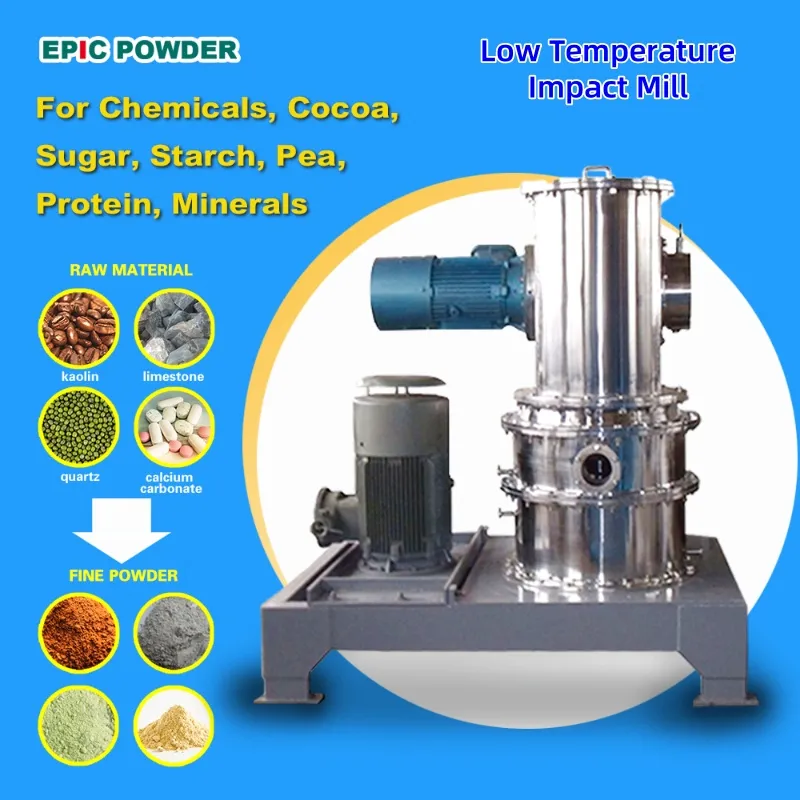
Working Principle of the Equipment
Principe de fonctionnement
Le matériau est acheminé uniformément dans la chambre de broyage par le système d'alimentation et subit un impact violent du disque de broyage rotatif à grande vitesse. Simultanément, la force centrifuge le projette contre la couronne de broyage, où il est soumis à diverses forces combinées telles que le cisaillement, le frottement et la collision. Le matériau est broyé, et les particules broyées sont transportées par un flux d'air vers la zone de classification. Les particules grossières et fines sont séparées par une roue de classification dont la fréquence est ajustée. Les produits répondant aux critères de finesse sont acheminés par le flux d'air vers le collecteur cyclone et le dépoussiéreur, tandis que les particules grossières retournent dans la zone de broyage pour y être à nouveau broyées.
During the entire grinding process, a cooling fan generates cold air, which is delivered into the grinding chamber via an induced draft fan. This keeps the processing temperature below 20 °C, minimizing the loss of heat-sensitive materials. Moreover, the grinding performance of the low-temperature impact mill can be adjusted by changing key parameters such as classifier frequency, grinding motor frequency, and fan frequency.
Caractéristiques du produit
- Conception à classification horizontale, plus adaptée à la production de poudres ultrafines, performances comparables à celles du broyeur à classification pneumatique allemand ZPS.
- La structure de broyage unique et la conception de la structure de classification permettent d'obtenir un effet de broyage unique.
- Conception spéciale du champ d'écoulement pour éviter l'accumulation de certains matériaux peu fluides.
- The classifying apex cutting is more precise and the taille des particules distribution of the product is narrower.
- Facile à nettoyer, adapté aux besoins de production nécessitant un remplacement fréquent des matériaux.
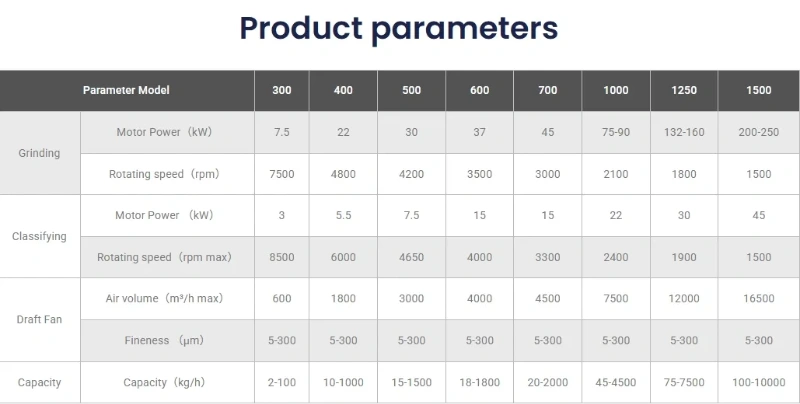
Cas d'application:
Grinding Brown Rice:
When the low-temperature impact mill was used to grind brown rice, the resulting powder had a uniform particle size distribution. It was found that the mill could better retain non-starch nutrients and effectively grind dietary fibers in the brown rice.
Grinding Bamboo Shoots:
The low-temperature impact mill was used to grind bamboo shoot tips. The results showed that the mill effectively crushed the bamboo shoot tips and promoted the conversion of insoluble dietary fibers to soluble ones, increasing the protein content. The particle size decreased, the specific surface area increased, and the bulk density decreased. The water retention and expansion capacity of the bamboo shoot powder significantly improved, but the oil retention decreased. Additionally, the mill effectively released bioactive components (such as total phenols and flavonoids) in the bamboo shoot powder, enhancing its antioxidant capacity, nitrite adsorption ability, and cholesterol absorption ability.
Grinding Purple Corn:
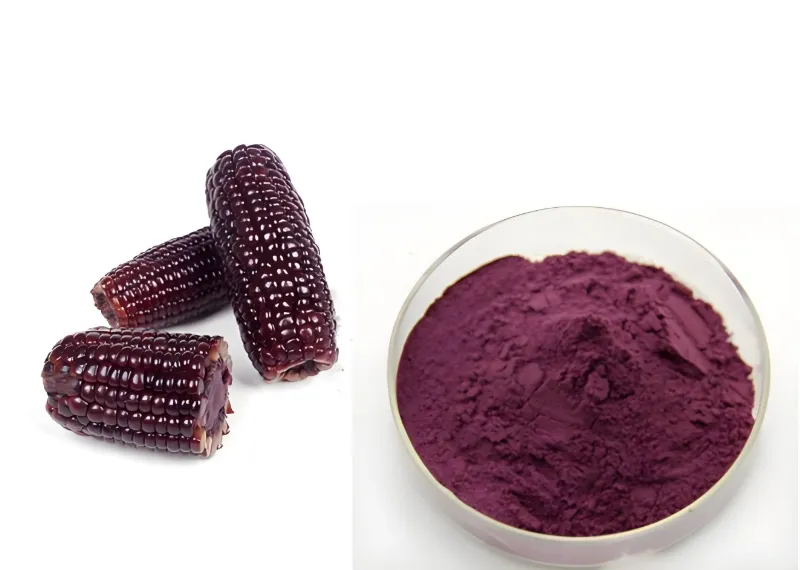
Low temperature impact milling can significantly change the particle size of purple corn powder.
It improves the dissolution rate and antioxidant capacity of purple corn. It also changes the gelatinization temperature, regeneration tendency and other characteristics of purple corn. At the same time, low temperature impact milling can well retain non-starch nutrients and increase the phenolic substances in purple corn.
Poudre épique
Epic Powder, plus de 20 ans d'expérience dans l'industrie des poudres ultrafines. Nous contribuons activement au développement futur des poudres ultrafines, en nous concentrant sur les procédés de concassage, de broyage, de classification et de modification. Contactez-nous pour une consultation gratuite et des solutions personnalisées ! Notre équipe d'experts s'engage à vous fournir des produits et services de haute qualité afin d'optimiser la valeur de votre traitement des poudres. Epic Powder : votre expert de confiance en traitement des poudres !