
Molienda ultrafina technology reduces particle size by overcoming internal cohesion through mechanical or fluid power. It achieves a particle size reduction to 10–25μm, increasing surface area and porosity. This technology is widely used in the pharmaceutical and food processing industries. It can be divided into dry and wet ultra-fine grinding, depending on the moisture content of the raw materials and during the process. Dry ultrafine grinding processes materials under dry conditions. Common methods include air jet mills, ball mills, and vibration mills. However, traditional vibration mills and ball mills generate heat, making them unsuitable for heat-sensitive materials. Air jet mills have high energy consumption. These issues limit their applications. A research institute has developed a dry ultrafine grinding device — the low-temperature impact mill. It offers excellent ultrafine processing performance. Specifically, it can grind whole grains to a fineness of 50–74 μm, seasonings to 60–150 μm, and traditional Chinese herbs to 50–150 μm.
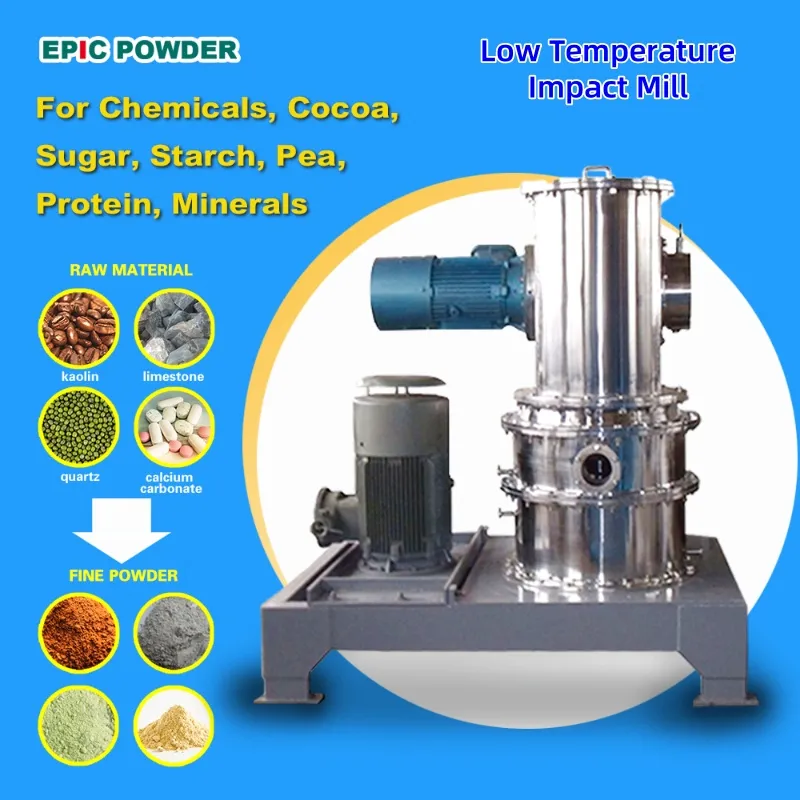
Working Principle of the Equipment
Principio de funcionamiento
El sistema de alimentación introduce el material de forma uniforme en la cámara de molienda, donde es impactado con fuerza por el disco de molienda giratorio de alta velocidad. Al mismo tiempo, la fuerza centrífuga lo somete a colisiones con el engranaje anular de trituración, donde experimenta diversas fuerzas, como cizallamiento, fricción y colisión. El material triturado se transporta a la zona de clasificación mediante un flujo de aire. Las partículas gruesas y finas se separan mediante una rueda de clasificación ajustada por frecuencia variable. Los productos que cumplen con los requisitos de finura entran en el colector ciclónico y el colector de polvo, donde se recogen con el flujo de aire. Las partículas gruesas regresan a la zona de molienda para continuar su trituración.
During the entire grinding process, a cooling fan generates cold air, which is delivered into the grinding chamber via an induced draft fan. This keeps the processing temperature below 20 °C, minimizing the loss of heat-sensitive materials. Moreover, the grinding performance of the low-temperature impact mill can be adjusted by changing key parameters such as classifier frequency, grinding motor frequency, and fan frequency.
Características del producto
- Diseño de clasificación horizontal, más adecuado para la producción de polvo ultrafino, con un rendimiento comparable al del molino de clasificación neumática ZPS alemán.
- La estructura de molienda única y el diseño de la estructura de clasificación logran un efecto de molienda único.
- Diseño especial del campo de flujo para evitar la acumulación de algunos materiales con poca fluidez.
- The classifying apex cutting is more precise and the tamaño de partícula distribution of the product is narrower.
- Fácil de limpiar, adecuado para las necesidades de producción que requieren la sustitución frecuente de materiales.
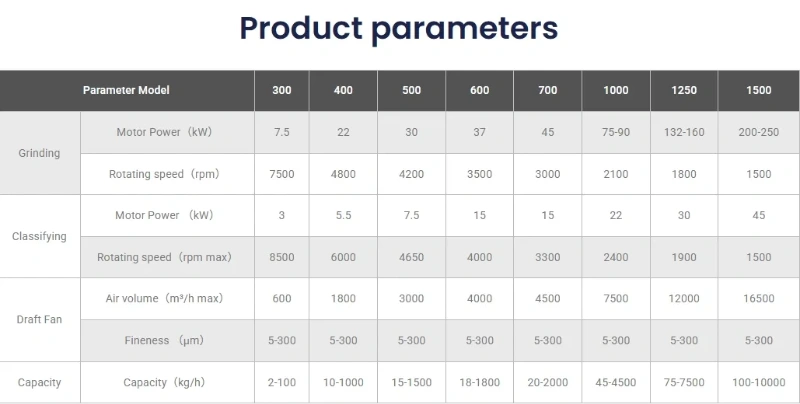
Application Cases:
Grinding Brown Rice:
When the low-temperature impact mill was used to grind brown rice, the resulting powder had a uniform particle size distribution. It was found that the mill could better retain non-starch nutrients and effectively grind dietary fibers in the brown rice.
Grinding Bamboo Shoots:
The low-temperature impact mill was used to grind bamboo shoot tips. The results showed that the mill effectively crushed the bamboo shoot tips and promoted the conversion of insoluble dietary fibers to soluble ones, increasing the protein content. The particle size decreased, the specific surface area increased, and the bulk density decreased. The water retention and expansion capacity of the bamboo shoot powder significantly improved, but the oil retention decreased. Additionally, the mill effectively released bioactive components (such as total phenols and flavonoids) in the bamboo shoot powder, enhancing its antioxidant capacity, nitrite adsorption ability, and cholesterol absorption ability.
Grinding Purple Corn:
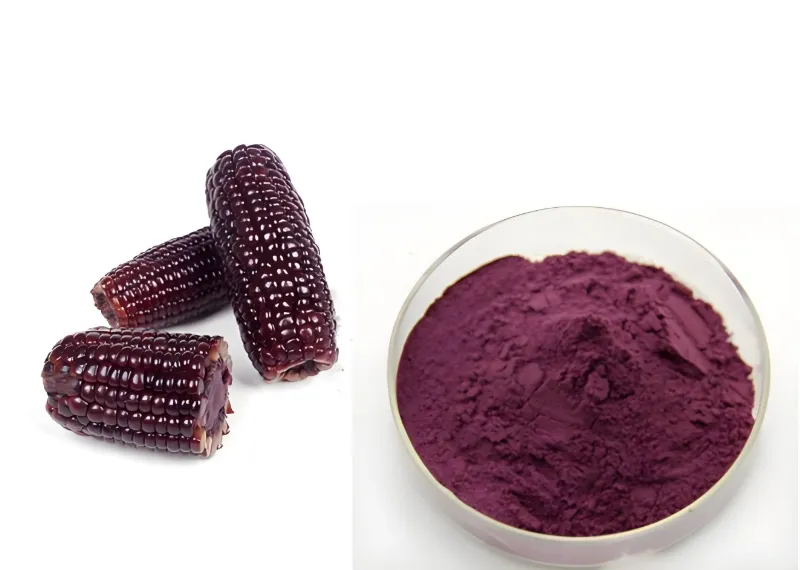
Low temperature impact milling can significantly change the particle size of purple corn powder.
It improves the dissolution rate and antioxidant capacity of purple corn. It also changes the gelatinization temperature, regeneration tendency and other characteristics of purple corn. At the same time, low temperature impact milling can well retain non-starch nutrients and increase the phenolic substances in purple corn.
Polvo épico
Epic Powder, con más de 20 años de experiencia en la industria de polvos ultrafinos, impulsa el desarrollo futuro de estos polvos, centrándose en su trituración, molienda, clasificación y modificación. ¡Contáctenos para una consulta gratuita y soluciones personalizadas! Nuestro equipo de expertos se dedica a brindar productos y servicios de alta calidad para maximizar el valor de su procesamiento de polvos. Epic Powder: ¡Su experto de confianza en procesamiento de polvos!