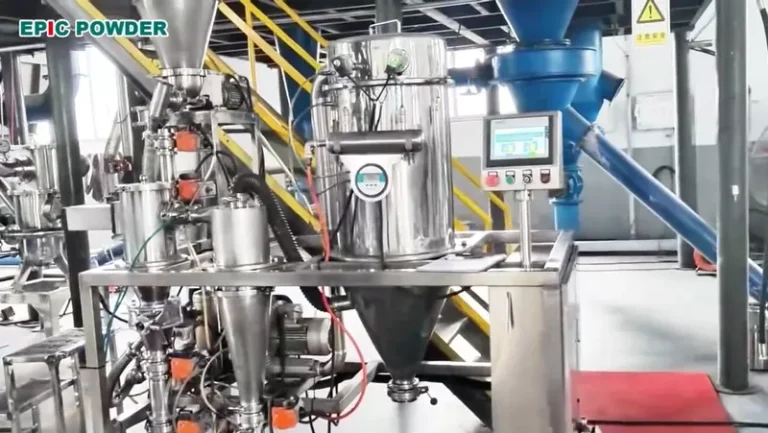
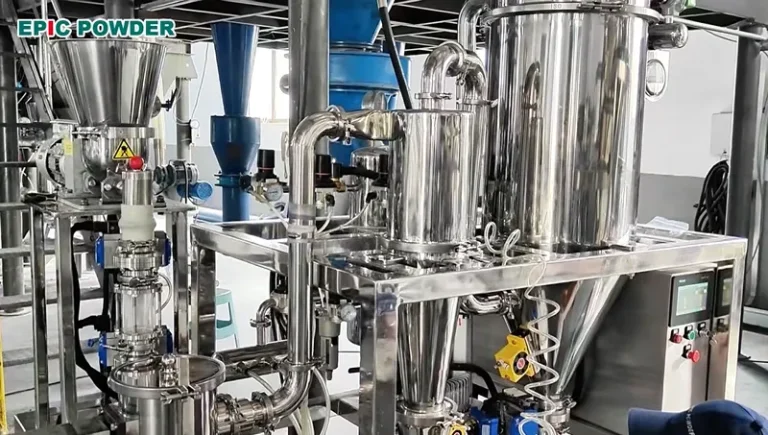
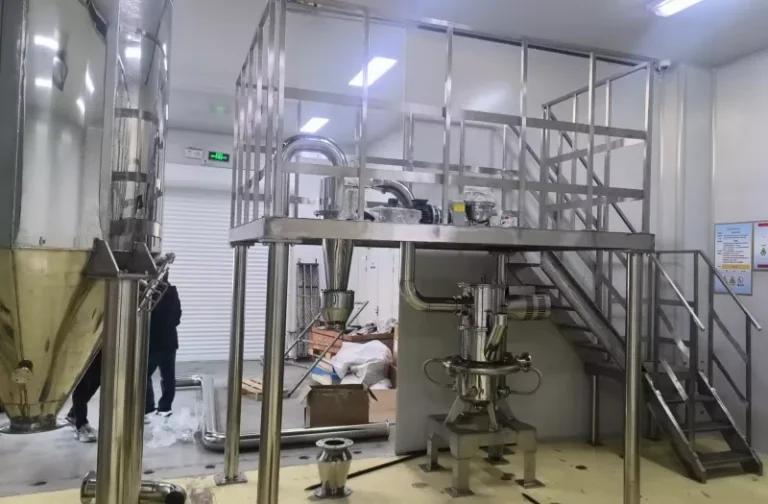
The ring roller mill uses the principles of impact, extrusion and grinding to crush materials. There are multiple layers of grinding rollers and grinding rings installed, and the material first falls between the uppermost grinding rollers and grinding rings. There is a large movable gap between the grinding roller installed on the grinding roller bracket and the pin shaft. When the material passes through the gap between the grinding roller and the grinding ring, the material will be crushed by the impact, extrusion and grinding of the grinding roller. When the material passes through the multi-layer grinding rollers and grinding rings from top to bottom, the material will be ground many times. Under the action of gravity, the crushed material falls to the bulk material tray at the bottom and is thrown to the airflow channel, and is brought into the classification area at the top by the airflow; the classifying wheel classifies the powder, and the qualified fine powder passes through the classifying wheel and enters the The dust collection system collects, and the coarse material is thrown to the inner wall of the diversion ring, and falls back into the crushing area for crushing.
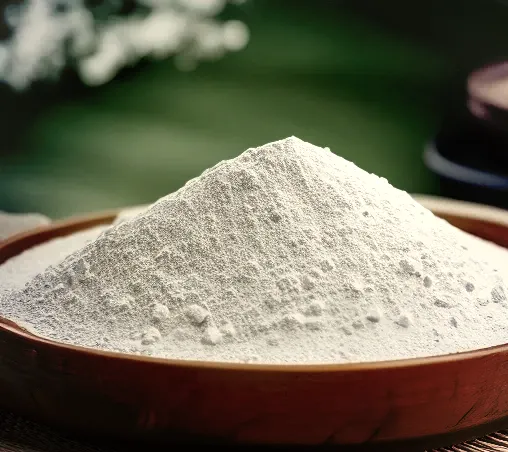
It can produce 325mesh-2500mesh product fineness at one time, from coarse powder to superfine powder, and the fineness of the finished product can reach D97≤5μm.
At the same fineness, compared with ball mill, impact mill, jet mill and stirring mill, ring roller mill has higher production efficiency, lower energy consumption and lower production cost.
At the same production capacity, compared with ball mill, impact mill, jet mill and stirring mill, ring roller mill requires less capital investment and shorter investment recovery period.
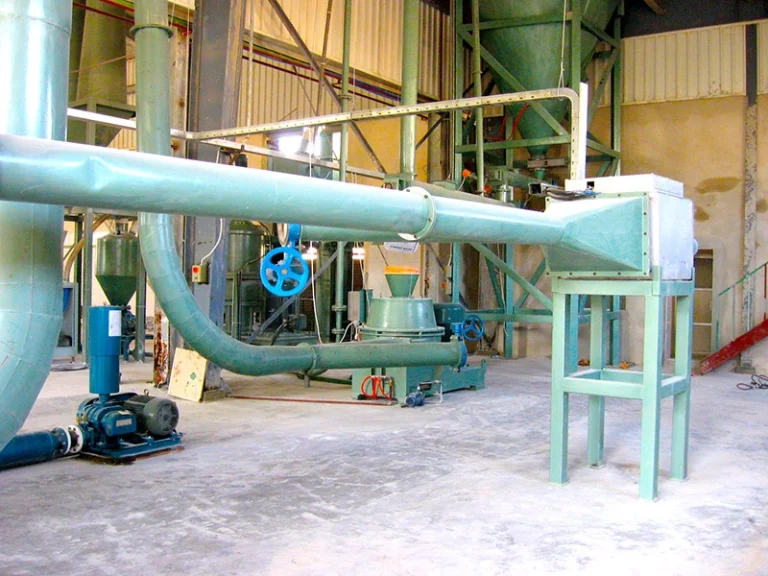
Equipment installation is simple and fast, no multi-layer steel structure platform required, no large-scale civil works are required, and the equipment can be put into production after installation.
Grinding rollers and grinding rings are made of high-hardness and wear-resistant materials, which have a long service life and ensure uninterrupted and reliable operation of the equipment.
The entire set of equipment operates under negative pressure, and the efficiency of the dust collector is as high as 99.9%, ensuring no dust pollution during operation.
El molino de rodillos ultrafinos hace girar el eje principal mediante un dispositivo de transmisión. El extremo superior del eje principal está conectado al bastidor del rotor. El bastidor está equipado con un eje auxiliar, sobre el cual se instala una muela abrasiva. Cuando el eje principal gira, el eje auxiliar también lo hace. La muela abrasiva del eje auxiliar no solo gira alrededor del eje principal, sino que también gira alrededor del propio eje auxiliar.
La muela abrasiva genera una fuerte fuerza centrífuga durante el proceso de revolución y rotación, y ejerce una intensa acción de molienda por rodillos sobre el estator. El material molido, impulsado por la fuerza centrífuga y el campo de fuerza rotacional de la muela, ingresa a la zona de molienda compuesta por la muela y el estator. El material se muele bajo la acción de la fuerza de compresión y la fuerza de molienda. El material molido cae sobre la placa deflectora, que gira con el eje principal. Esta placa proyecta el polvo hacia el anillo entre el estator y el cuerpo de la máquina, y asciende a lo largo del anillo de derivación hasta la cámara de clasificación superior bajo la presión negativa del sistema de clasificación. El polvo fino apto ingresa al sistema de recolección a través de la rueda de clasificación, y el material grueso cae a lo largo de la pared interior del anillo divisor hacia la cámara de trituración para ser molido nuevamente.
Parámetros del producto
Modelo
SRM800
SRM1000
SRM1250
SRM1680
Feed Size (mm)
< 10 - 20
< 10 - 20
< 10 - 20
< 10 - 20
Humedad (%)
< 5%
< 5%
< 5%
< 5%
Motor del molino (kW)
75
132
185
315
Classifier Motor (kw)
15 - 18.5
22 - 30
37 - 60
55 - 92.5
Motor del ventilador (kW)
37 - 45
55 - 75
75 - 110
132 - 180
Product Fineness (mesh)
325 - 2500
325 - 2500
325 - 2000
325 - 1500
Capacidad de producción (T)
0.5 - 4.0
1.0 - 8.0
2.0 - 12
3.0 - 20
Nota: La capacidad de producción está estrechamente relacionada con el tamaño de las partículas, la gravedad específica, la dureza, la humedad y otros indicadores de las materias primas. Lo anterior es sólo para referencia de selección.
Por favor, rellene el siguiente formulario. Nuestros expertos se comunicarán con usted dentro de las 6 horas para analizar sus necesidades de máquinas y procesos.
Error: No se encontró ningún formulario de contacto.