
Sodium-ion batteries (SIBs) have attracted significant attention in recent years due to abundant sodium resources, low cost, and advantages in low-temperature performance and safety. However, compared to mature lithium-ion batteries, SIBs still face a prominent shortcoming — poor rate capability. Rate capability refers to a battery’s ability to maintain capacity and enable fast charge/discharge at high current densities (high C-rates). There is a popular claim that ultra-fine pulverization of industrial sodium carbonate (Na₂CO₃, soda ash) — reducing particle size to submicron or even nanoscale via jet milling or planetary ball milling — and using it as an additive or precursor can significantly improve the rate performance of sodium batteries. This sounds attractive, but what is the reality? Let’s analyze it rationally.

True Role of Sodium Carbonate in Sodium-ion Batteries
Sodium carbonate plays a very important role in the SIB industry chain, but mainly as a sodium source precursor for synthesizing cathode materials:
- Layered oxide cathodes (e.g., NaₓTMO₂, TM = transition metals) are most commonly synthesized via: Na₂CO₃ + transition metal carbonates/hydroxides/oxides → mixing → high-temperature solid-state reaction
- Some polyanionic compounds (e.g., Na₃V₂(PO₄)₃, NaFePO₄) also use sodium carbonate as the sodium source
- Certain Prussian blue analogs may involve sodium carbonate in preparation
In most cases, Na₂CO₃ is completely consumed during the high-temperature solid-state reaction, and no free Na₂CO₃ crystals remain in the final product.
What Changes Does Ultra-fine Pulverization Bring?
Reducing ordinary sodium carbonate (D50 typically 10–50 μm) to 1–5 μm or even submicron scale results in:
- Significantly increased specific surface area (from ~1 m²/g to 10–30 m²/g or higher)
- Markedly enhanced reactivity (faster solid-state reaction kinetics)
- Improved mixing uniformity (easier to achieve near-atomic-level mixing with other precursors)
These changes can indeed bring process and performance benefits:
- Shorter sintering time and lower sintering temperature (energy saving)
- Reduced particle agglomeration, yielding smaller primary particles or more uniform secondary particles
- Helping form more complete layered structures and fewer impurity phases
- In some systems, slightly improving first-cycle Coulombic efficiency and cycling stability
However, these improvements mainly occur during the material synthesis process optimization stage. Their contribution to the final battery rate capability is indirect and limited.
Core Factors That Truly Determine Rate Capability of Sodium-ion Batteries
The root causes of poor rate performance in SIBs are:
- Larger Na⁺ ionic radius (1.02 Å vs. Li⁺ 0.76 Å), resulting in solid-state diffusion coefficients typically 1–2 orders of magnitude lower
- In most cathode materials (especially O3-type layered oxides), Na⁺ diffusion pathways are more tortuous with higher activation energy
- Larger interfacial charge transfer resistance (especially at high rates)
- The sodiation/desodiation kinetics of hard carbon anodes are inherently slower than lithium intercalation into graphite
Effective solutions include:
- Cathode structure design (P2-type > O3-type, expanding interlayer spacing, element doping)
- Surface coating (carbon, oxides, fluorides, etc.)
- Nanostructuring or porous architecture
- Electrolyte optimization (high concentration, low viscosity, weak solvation)
- Electrode engineering (optimizing electrode thickness and porosity)
Simply ultra-fine grinding Na₂CO₃, while allowing more uniform particles and fewer crystal defects in the synthesized cathode, cannot fundamentally change the intrinsic Na⁺ diffusion rate in the lattice, nor can it significantly reduce interfacial impedance at high rates.
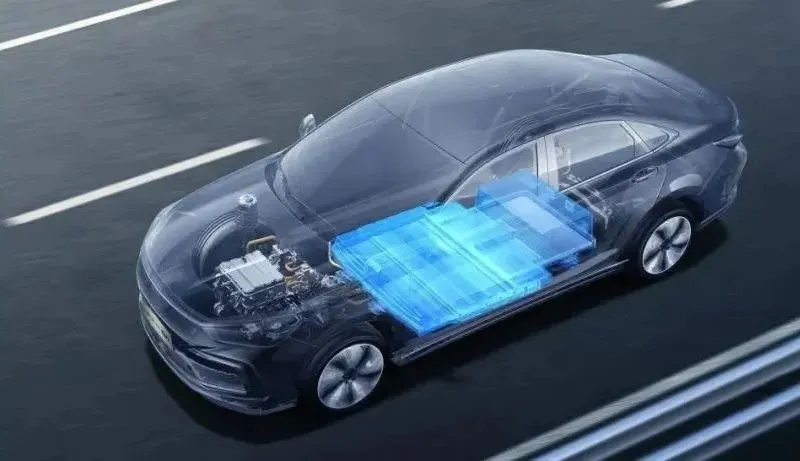
Evidence from Literature and Industry Practice
From published papers and industry reports:
- Outstanding rate performance cases (e.g., >80–90% capacity retention at 5C) mainly rely on P2-type layered oxides + surface modification + optimized electrolytes, rather than solely on sodium carbonate particle size
- Some patents or reports mention using ultra-fine Na₂CO₃ to improve material uniformity, but few directly claim that “ultra-fine pulverized sodium carbonate solves the poor rate performance issue”
- High-rate data released by industry players mainly attribute improvements to crystal structure design and electrode/electrolyte system optimization
Frequently Asked Questions and Their Rational Answers
Question 1: After ultra-fine pulverization of sodium carbonate, can it be directly added to the positive electrode slurry as an additive or conductive agent to significantly improve rate performance?
Answer: No, it cannot, and it will not significantly improve rate performance.
Na₂CO₃ is an insulator with virtually no electronic conductivity. Ultra-fine pulverization only increases specific surface area but does not endow it with electron conduction ability. Adding it directly may introduce impurities, increase interfacial impedance, or cause side reactions with the electrolyte.
In literature and industrial practice, Na₂CO₃ is used exclusively as a sodium source precursor during the high-temperature solid-state synthesis stage; it is completely consumed in the reaction and does not remain as independent particles in the final cathode material. Although ultra-fine Na₂CO₃ can improve mixing uniformity, its contribution to high-rate capacity retention (e.g., >80% at 5C or 10C) is extremely limited. Current high-rate sodium batteries (e.g., samples from CATL or Zhongke Haina achieving ~90% retention at 5C) rely mainly on P2-type layered structure design, surface coating, electrolyte optimization, and hard carbon anode modification — not on the particle size of Na₂CO₃.
Question 2: When using ultra-fine pulverized sodium carbonate to synthesize cathode materials, does finer particle size always lead to better rate performance in the final battery? Is there an “optimal particle size”?
Answer: Finer particles help the synthesis process, but the improvement in high-rate performance shows clear diminishing returns and can even be counterproductive in excess. There is no universal “optimal particle size” that directly determines rate capability.
Benefits (D50 reduced to below 1 μm):
- Better mixing uniformity with transition metal precursors, reducing local sodium concentration gradients
- Faster solid-state reaction kinetics, allowing lower sintering temperature or shorter holding time
- More uniform primary/secondary particle distribution after sintering, fewer defects, improved first-cycle Coulombic efficiency and mid-low rate cycling stability
Limitations:
The bottleneck for high rate performance primarily stems from slow Na^+ diffusion, high interfacial impedance, and structural constraints. Refining the precursor alone can only indirectly alleviate these issues, offering minimal contribution (typically < 5–10% relative improvement). Risks associated with excessive refinement (< 500nm): increased susceptibility to agglomeration, moisture and CO2 absorption, deteriorated air stability, and a sharp escalation in production costs.
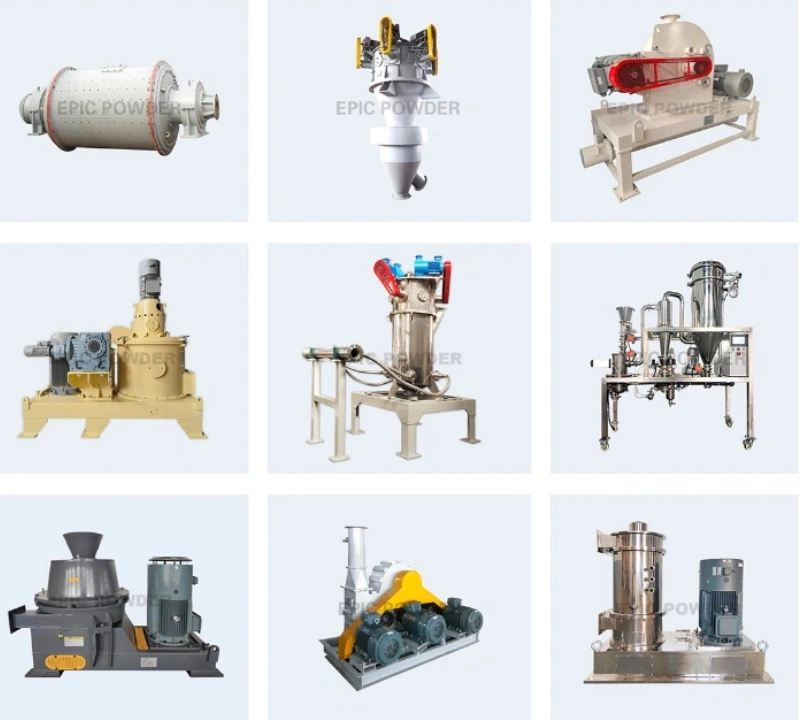
Conclusion
Ultra-fine pulverization of sodium carbonate does have value, but its effect has been greatly exaggerated.
It primarily optimizes synthesis process consistency and particle uniformity of cathode materials, helping improve first-cycle efficiency, cycling stability, and batch-to-batch consistency. Its contribution to rate capability improvement is auxiliary and marginal, far from sufficient to “solve” the fundamental issue of poor rate performance in sodium-ion batteries.
The directions that can truly and substantially enhance SIB rate capability remain:
- Developing cathode structures with higher Na⁺ diffusion coefficients (wide-spacing P2-type, defect engineering)
- Interface optimization (coatings, artificial SEI/CEI)
- Matched optimization of electrolyte and anode systems
In one sentence: Ultra-fine sodium carbonate is a “good helper”, but not a “savior”. Relying solely on it to make sodium battery rate performance comparable to lithium batteries is, at present, unrealistic.

“Thanks for reading. I hope my article helps. Please leave a comment down below. You may also contact Zelda online customer representative for any further inquiries.”
— Posted by Emily Chen