
In the field of cell culture medium production, grinding technology plays a crucial role, as it directly affects the quality and performance of the medium, which in turn impacts the final outcome of biopharmaceuticals. The dry powder grinding process is a key factor in determining medium stability. During this process, decisions regarding mixing, grinding, and cooling methods, as well as the setting of technical parameters, all have a significant impact on the performance of the dry powder. Milling involves the use of mechanical force to crush, compress, or grind raw materials to reduce particle size. In cell culture medium production, commonly used milling techniques include ball milling, hammer milling, pin milling, and jet milling. Each of these techniques achieves particle size reduction through different principles and methods, which we will explore in detail below.
The Four Main Grinding Techniques
Ball Milling
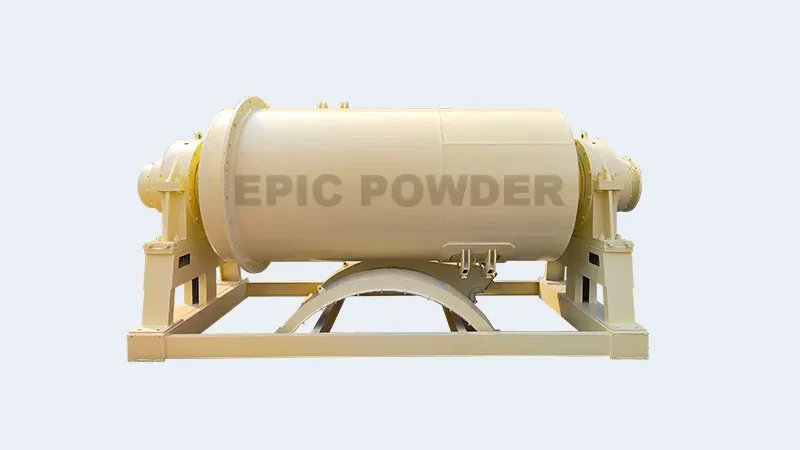
Ball mills are grinding equipment with a long history and wide use in the production of cell culture media. The most common type is the drum-type ball mill, which has a relatively simple structure consisting of a horizontal cylinder and grinding media (usually spherical) inside. As the cylinder rotates, the grinding media rolls along with it. The ball mill transfers mechanical energy to the material and media inside the drum, generating forces such as direct impact, lateral impact, and friction between them. These external forces act on the material, reducing its particle size to below 100 microns. However, ball mills suffer from high energy consumption and noise levels during operation, and the grinding media inevitably undergo impact wear, posing a risk of material contamination.
Hammer Mill
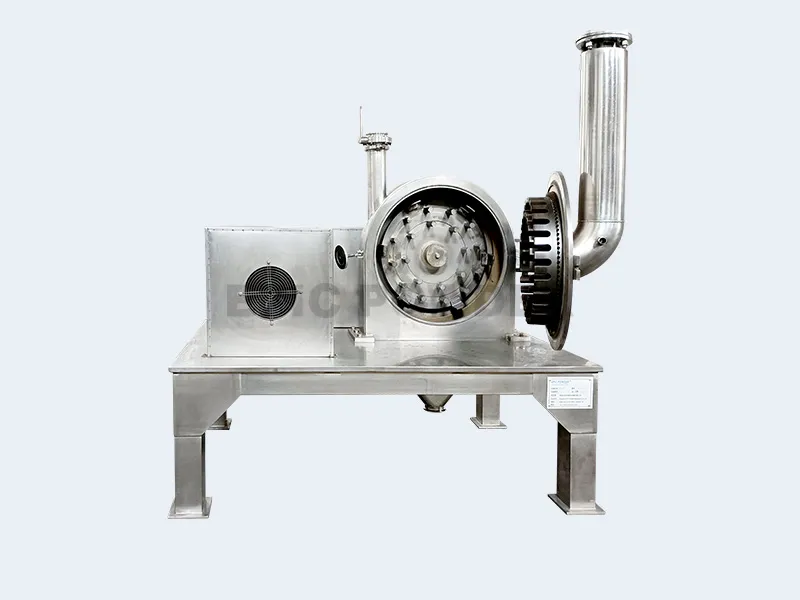
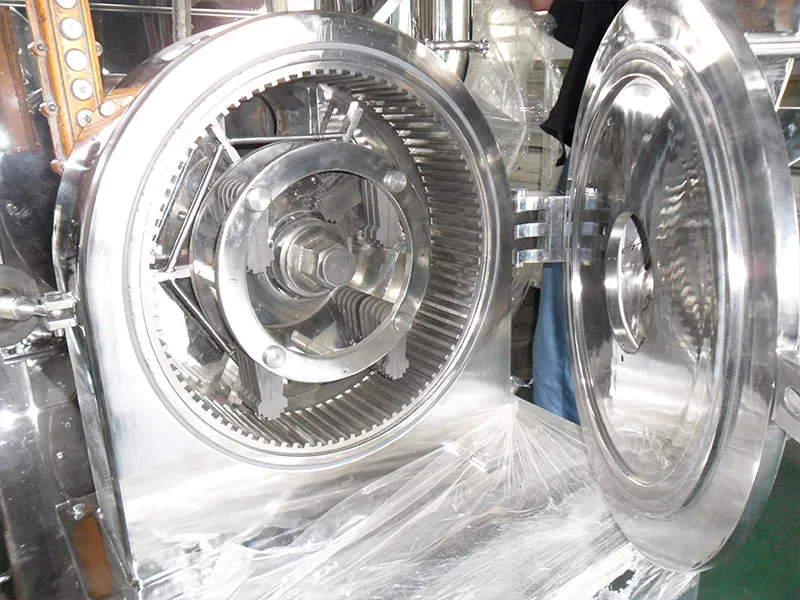
A hammer mill is a high-speed impact-type grinding machine consisting of a rotor assembly equipped with hammers, a perforated metal screen, and crushing/wear-resistant plates. When material enters the grinding chamber through the feed inlet, it is immediately struck by the high-speed rotating rotor. At the same time, the material rubs against the screen and wear-resistant plates, achieving particle crushing and refinement. In these machines, material particles are crushed through the following three mechanisms:
🔹 Impact between the material and the rotor
🔹 Friction between the material and the screen
🔹 Friction between the material and the crushing plates
As a commonly used grinding device, the hammer mill has distinct characteristics. During operation, the hammers and screen mesh inevitably experience wear and compression. This not only affects the equipment’s service life but may also lead to metal contamination, posing a potential threat to product quality. Additionally, hammer mills are sensitive to the particle-to-airflow ratio, which requires precise control. Hammer clearance is also a critical factor; if the clearance is improper, it will directly affect the grinding efficiency.
Pin Mill
🔹 Excellent temperature control, suitable for processing heat-sensitive materials
🔹 Produces a relatively uniform particle size distribution
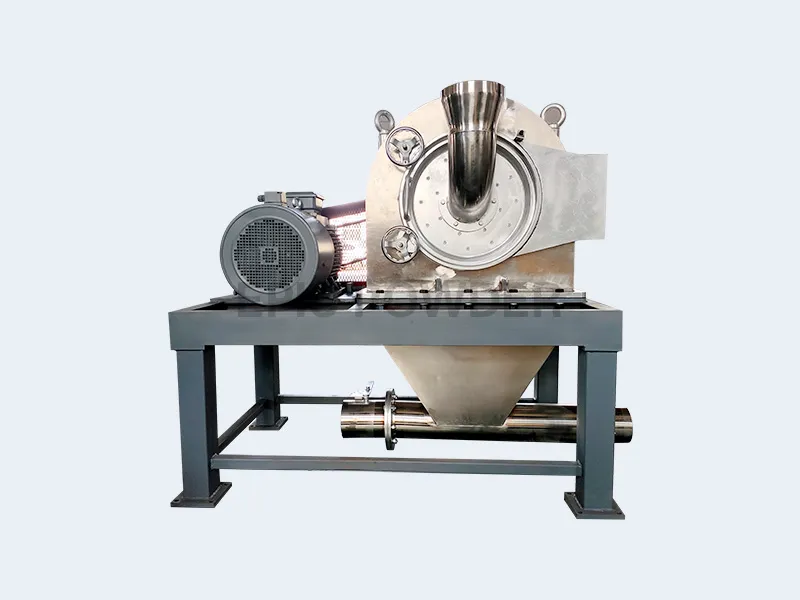
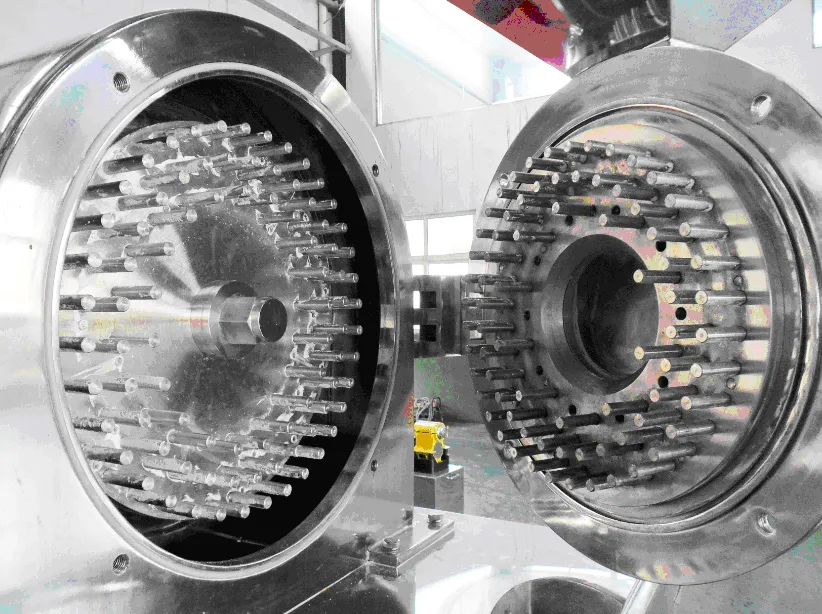
A pin mill is a high-speed impact mill consisting of a feed inlet, a set of needle discs, and a product outlet. After entering through the feed inlet, the material reaches the center of the needle discs and moves outward under centrifugal force, where the rotating, staggered pins crush the material. The stress generated by this crushing process occurs between the material and the pins.
Pin mills are typically used to process soft materials and can grind them to a size of 50 microns or even smaller. This mill offers several significant advantages:
🔹 Easy to clean
🔹 Excellent temperature control, suitable for processing heat-sensitive materials
🔹 Produces a relatively uniform particle size distribution
🔹 Capable of continuous operation, facilitating large-scale production and maintaining a stable workflow
🔹 Can process sticky or oily materials
Jet Mill
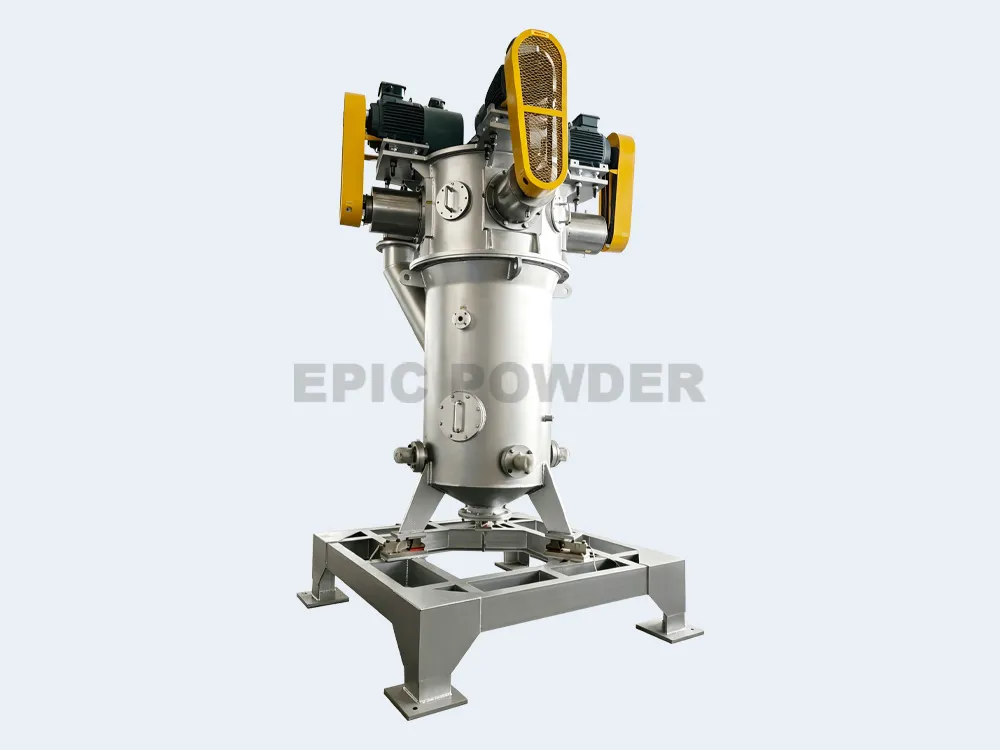
A jet mill is also known as a fluid-impact mill or a jet mill. There are two basic types of jet mills: spiral jet mills and fluidized-bed jet mills. Spiral jet mills do not have an internal classifier, whereas fluidized-bed jet mills are equipped with an air classifier. A jet mill utilizes high-speed gas streams to accelerate the particles to be ground. The grinding chamber is equipped with several nozzles that introduce gas and particles into the chamber. These nozzles are arranged at various angles to facilitate collisions between particles, thereby reducing their size. Material ground to the desired size is then discharged from the grinding chamber.
The two main disadvantages of jet mills are their inability to process hard materials, lack of control over particle size, and low production rates. They also consume a significant amount of energy.
Key Factors in Selecting the Right Grinding Machine
When selecting the right grinding machine, it is necessary to comprehensively consider several important factors. First is the characteristics of the feed material; different materials may require different types of grinding machines to achieve optimal results. The differences in the properties of the feed material are the primary basis for selecting a grinding machine. Materials vary greatly in terms of hardness, viscosity, and heat sensitivity, which determines the type of grinding machine required. For example, when processing soft and heat-sensitive materials, needle mills often achieve superior grinding results due to their unique operating principles and performance advantages.
Second is the degree of grinding and the required particle size distribution, which directly impact the quality of cell culture media. Selecting a grinder capable of precisely controlling the grinding degree and ensuring a uniform particle size distribution that meets product standards is a critical step in ensuring high-quality cell culture media production.
Furthermore, cleaning requirements are a critical consideration, particularly in the biopharmaceutical industry, where purity standards are extremely strict. As the biopharmaceutical industry continues to evolve, demands for cell culture medium quality and production efficiency will become increasingly strict. Grinding technology is also undergoing continuous innovation and improvement to meet these industry needs.
Epic Powder
EPIC Powder has develped various types of impact mills. They have been used for so many different materials in so many industries, and they’re also called Universal Mills. Depending on the application and product, the mill is equipped with different rotor and stator variations and can be operated as any of the following mill types: Pin Mill, Blast Mill and Hammer Mill.
MJL-P: Pin Mill
Pin type is ideal for grinding brittle materials and fibrous materials.
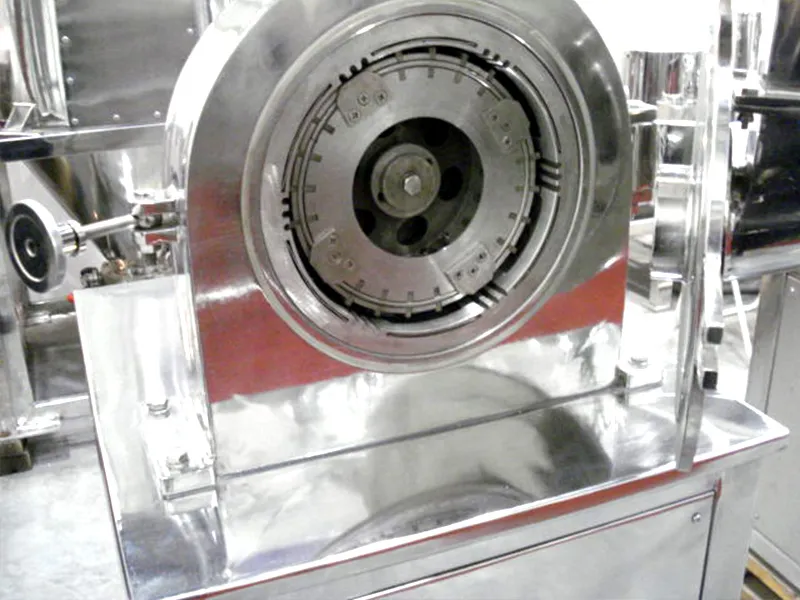
MJL-B: Blast Mill
Blast type is suitable for grinding brittle materials and fibrous materials.
MJL-H: Hammer Mill
Hammer type and blast type are usually equipped with built-in screens to control product fineness.
At Epic Powder, we offer a wide range of equipment models and tailor solutions to meet your specific needs. Our team has more than 20 years experience in various powders processing. Epic Powder is specialized in fine powder processing technology for mineral industry, chemical industry, food industry, pharama industry, etc.
Contact us today for a free consultation and customized solutions!
FAQ
Q1: What milling techniques are commonly used in cell culture medium production?
A: Cell culture medium manufacturing typically employs four main milling techniques: ball milling, hammer milling, pin milling, and jet milling. Ball milling uses rotating cylinders with grinding media (e.g., ceramic or steel balls) to crush particles through impact and attrition, making it suitable for coarse to fine grinding. Hammer milling utilizes high-speed rotating hammers to shatter particles upon impact, ideal for friable materials. Pin milling achieves size reduction via two opposing pin discs spinning at high speeds, creating intense shear and impact forces. Jet milling, the most advanced method, uses high-pressure compressed gas (air or nitrogen) to accelerate particles into each other, enabling ultrafine, narrow-distribution powders without mechanical wear. Each technique offers distinct advantages depending on the desired particle size, heat sensitivity, and contamination risk.
Q2: Why is dry powder grinding so important for cell culture medium stability?
A: Dry powder grinding directly determines the physical and chemical stability of cell culture media. First, particle size uniformity affects dissolution kinetics—smaller, consistent particles dissolve faster and more completely, preventing precipitation during bioprocessing. Second, grinding reduces segregation of different medium components (e.g., amino acids, vitamins, salts) by homogenizing particle size distribution, ensuring each aliquot has identical composition. Third, proper grinding parameters minimize thermal or mechanical degradation of heat-sensitive ingredients like glutamine or growth factors. Finally, stable particle size improves flowability and storage behavior, reducing caking or moisture absorption over time. Without optimized grinding, inconsistent particle sizes can lead to batch-to-batch variability, poor cell growth, and compromised biopharmaceutical yields.
Q3: How do cooling parameters affect the grinding process and final medium quality?
A: Cooling parameters play a critical role in preserving cell culture medium integrity during grinding. Many medium components—such as amino acids, vitamins, and recombinant proteins—are thermolabile and degrade rapidly above 40–50°C. Grinding generates frictional heat, especially in ball or hammer mills, which can raise local temperatures significantly. Active cooling (e.g., water-jacketed milling chambers, cryogenic cooling with liquid nitrogen, or chilled air feed) prevents this degradation. Proper cooling also reduces the risk of melting or softening of low-melting-point ingredients, which could cause agglomeration and clogging. Additionally, cooling maintains brittleness of materials, improving grinding efficiency and producing finer, more uniform particles. Conversely, inadequate cooling leads to sticky residues, reduced yield, loss of bioactivity, and unstable dry powder that cakes or changes color during storage. Therefore, controlling cooling parameters is as vital as the grinding method itself.

“Thanks for reading. I hope my article helps. Please leave a comment down below. You may also contact EPIC Powder online customer representative Zelda for any further inquiries.”
— Emily Chen, Engineer
报错: Contact form not found.