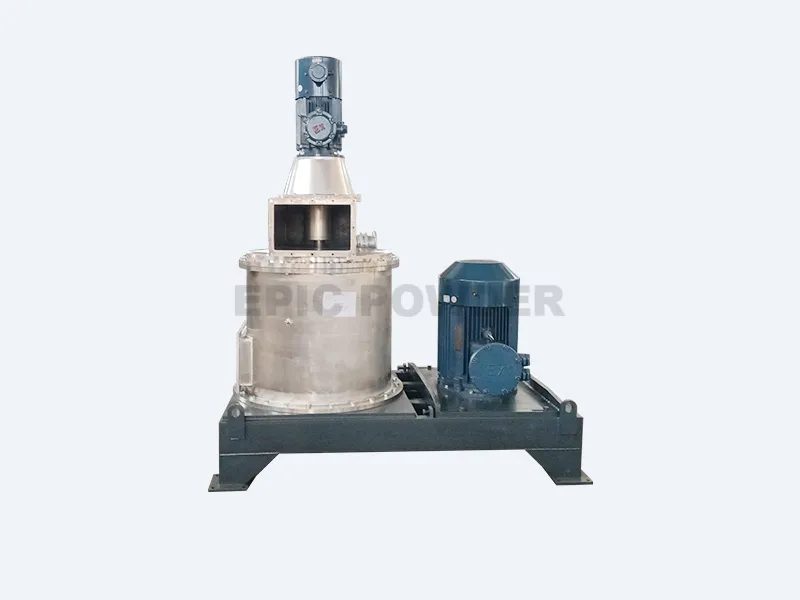
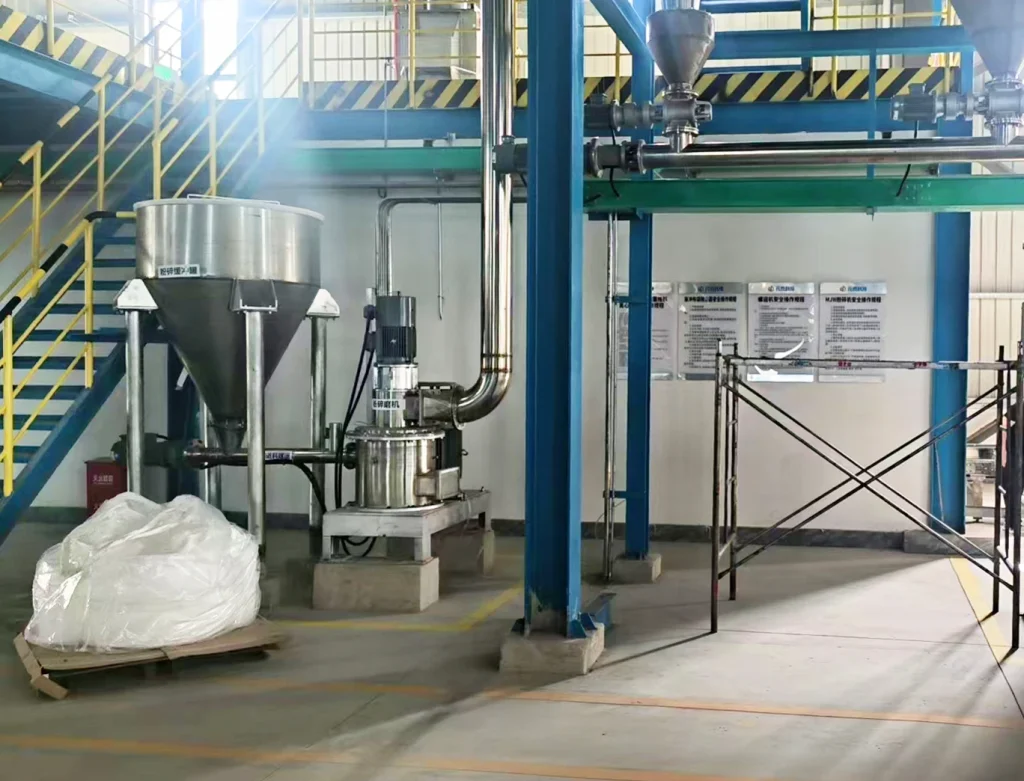
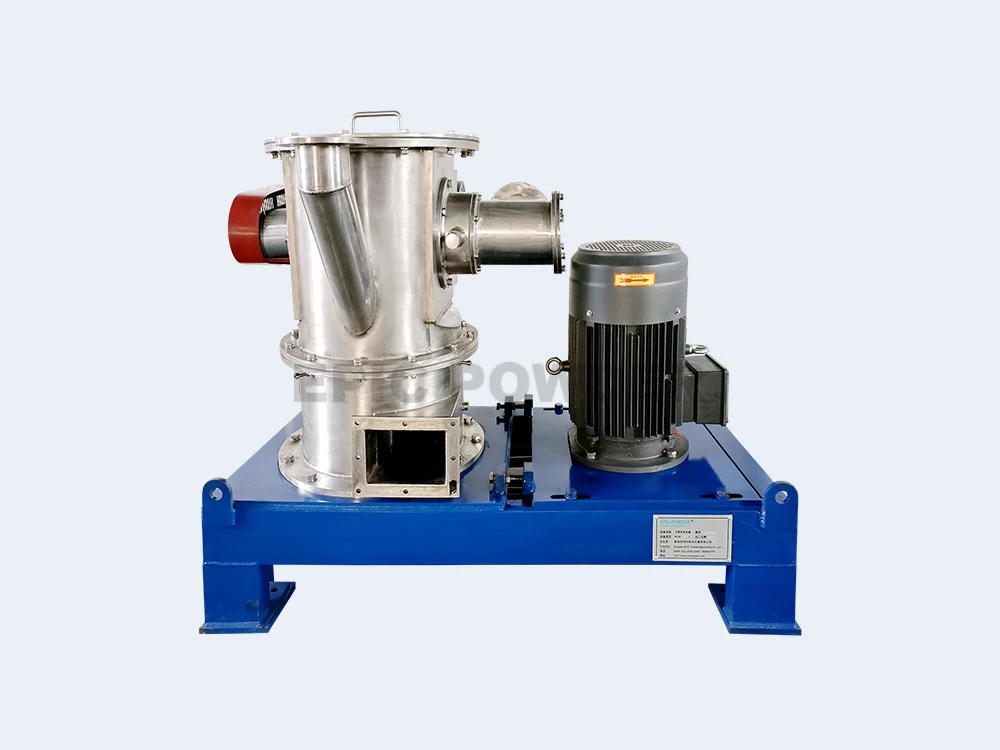
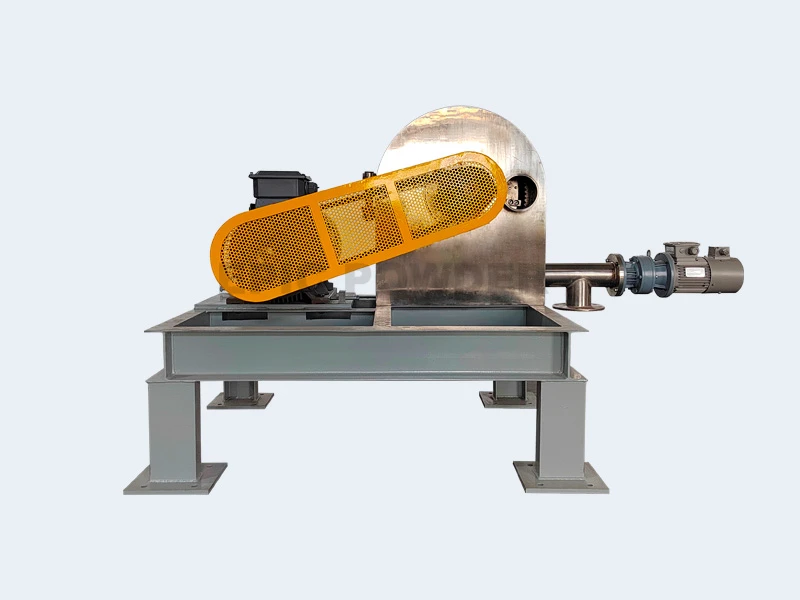
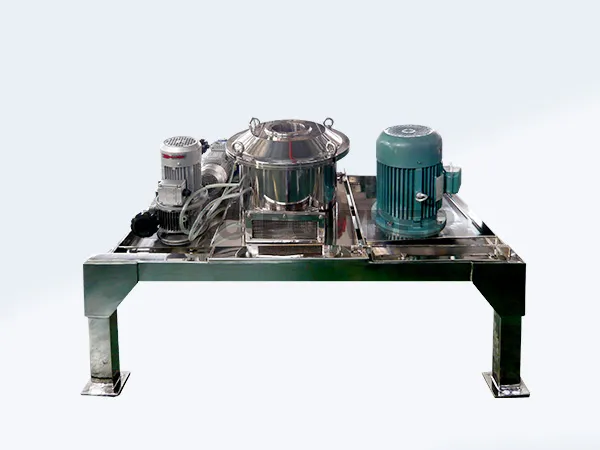
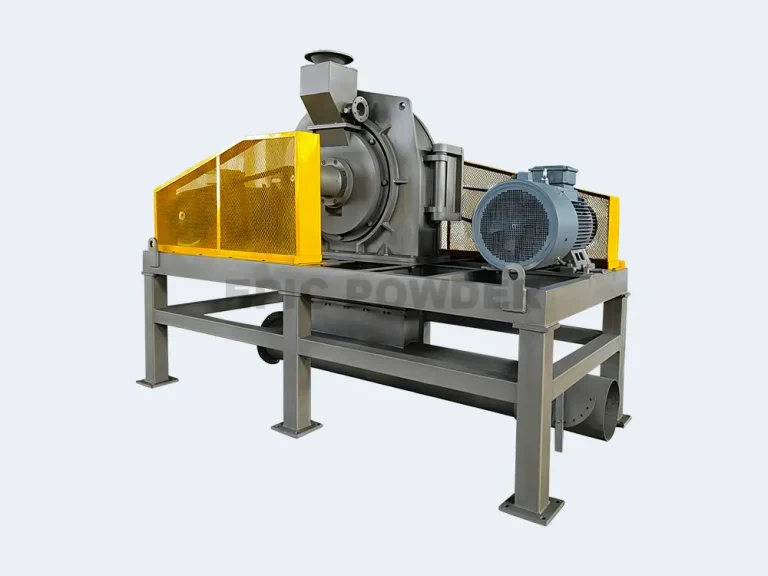
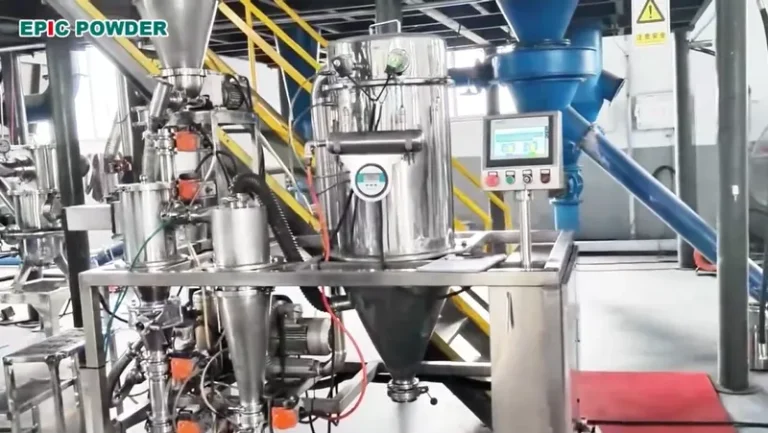
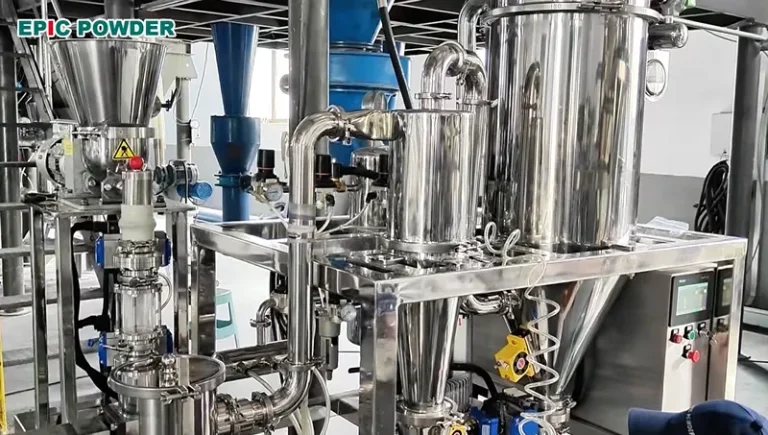
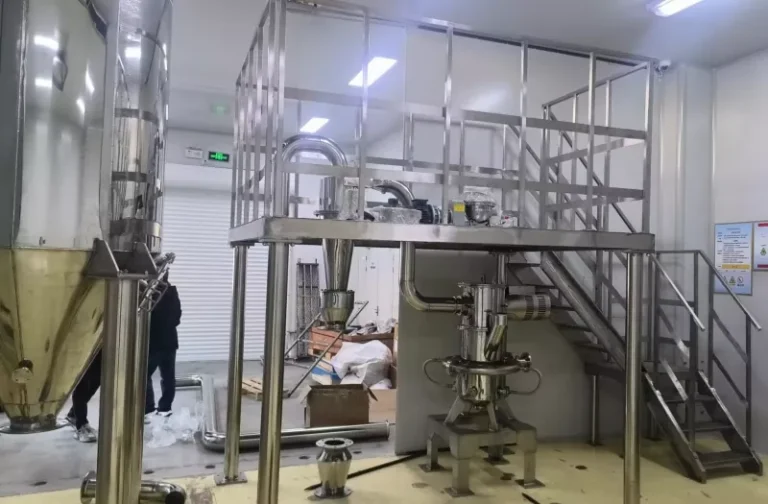
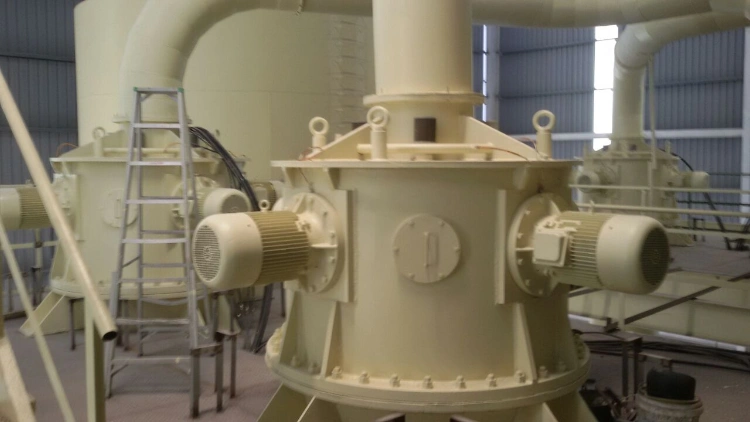
MJW-L air classifier mill is driven independently by the horizontal crushing disc and classifying wheel, and the classifying wheel is installed vertically. The material is evenly fed into the grinding chamber by the feeding system, and is strongly impacted by the high-speed rotating crushing disc, and at the same time, it is subjected to centrifugal force and collides with the crushing ring gear. The comprehensive effect of various forces such as impact, shear, friction, and collision to make the material into powder. The ground material moves to the classification area with the airflow, and the coarse and fine materials are separated by the frequency conversion regulated classifying wheel. The fine powder products that meet the fineness requirements are brought into the cyclone and dust collector by the airflow, and the coarse materials are returned to the grinding area for re-grinding.
The design of the internal area and flow field is more flexible, and the scope of application is wider than that of the traditional air classifier mill.
Classifying wheels with different structures are suitable for powder products with different characteristics.
Low temperature design, suitable for high-efficiency grinding of heat-sensitive materials.
High temperature design, suitable for high-efficiency drying, grinding and dispersing of high-humidity materials.
Inert gas closed circuit design/pressure shock design, specially used for crushing flammable and explosive materials.
The material is uniformly sent into the grinding chamber by the feeding system, and is strongly impacted by the high-speed rotating grinding disc. At the same time, it is subjected to the centrifugal force to collide with the crushing ring gear, and is subjected to various comprehensive forces such as shearing, friction, and collision. The material is ground, and the crushed material moves to the classification area with the airflow. The coarse and fine materials are separated through the classification wheel adjusted by the frequency conversion. The products that meet the fineness requirements enter the cyclone collector and the dust collector with the airflow for collection, and the coarse particles return to the grinding area to continue shattered.
Product Parameters
设备参数表 - 主驱动与分级机参数 | Elementor 风格表格
Model / Parameter
300
400
500
700
800
900
1000
1100
1250
1500
2000
Motor Power (kw)
7.5
22
30
45
55
75-90
90
110-132
160-200
250
355
Rotating speed (rpm)
7500
4800
4200
3000
2800
2350
2100
1920
1800
1500
1120
Motor Power (kw)
2.2
4
5.5
7.5
7.5-11
15
15-22
22-30
22-37
45-55
55-75
Rotating speed (rpm max)
4500
3250
3000
2920
2500
2200
2000
1800
1800
1500
1150
Fitness (μm)
5-300
5-300
5-300
5-300
5-500
5-300
5-300
5-300
5-530
5-300
5-300
Capacity (kg/h)
2-100
10-1000
15-1500
20-2000
25-2500
40-4000
45-4500
60-6000
75-75000
100-1000
15-15000
Note: The production capacity is closely related to the particle size, specific gravity, hardness, moisture and other indicators of the raw materials. The above is only for selection reference.