
De meeste mensen beoordelen een maalresultaat aan de hand van de D50-waarde. Voor poreus koolstof kan dat getal echter misleidend zijn. De waarde van poreus koolstof wordt bepaald door het poriënnetwerk in elk deeltje, niet door hoe fijn het deeltje wordt. Die poriën storten in als er te hard gemalen wordt, waardoor het specifieke oppervlak afneemt. Voordat je een maalmachine kiest, is het daarom de moeite waard om te vragen hoeveel van het oppervlak het proces heeft overleefd.
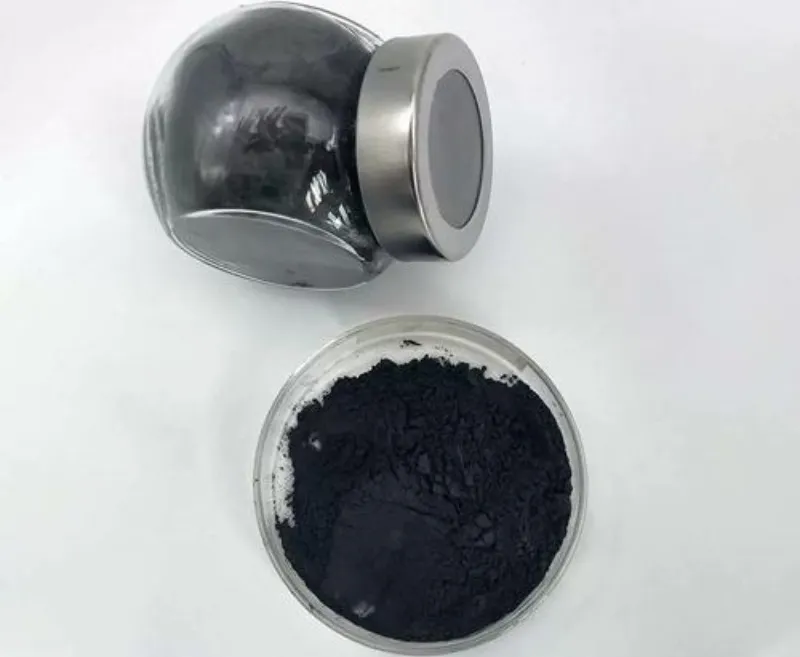
Waarom poreus koolstof niet zomaar een poeder is
Als gastmateriaal voor siliciumkoolstofanoden heeft poreus koolstof doorgaans een Gurvich-porievolume van 0,1 tot 0,3 cm³/g en een BET-oppervlakte van 50 tot 200 m²/g. Commerciële harsgebaseerde varianten gaan nog veel verder, met porievolumes van meer dan 1,5 cm³/g en oppervlakten van meer dan 2600 m²/g. Elke vierkante meter is een functionele troef in een supercondensator, een gaselektrode of een batterijanode.
Mechanische schade vormt de grootste bedreiging. Gepubliceerde studies naar harde koolstofanodes tonen aan dat kogelmalen de geordende grafietlagen verstoort, de kristalliniteit verlaagt, gesloten poriën opent en de defectconcentratie verhoogt. De efficiëntie van de eerste cyclus daalt en dit verlies neemt toe met de maaltijdduur. In één voorbeeld behield een hard koolstofmonster dat vijf uur was gemalen, na 100 cycli minder dan een tiende van zijn oorspronkelijke levensduur. Het patroon is consistent: meer maalenergie betekent minder materiaalwaarde.
Daarom is de te volgen parameter het behoud van het specifieke oppervlak, en niet D50. Als algemene industriële norm geldt dat een geleidelijke deagglomeratie van poreuze koolstofclusters doorgaans een bepaald oppervlak behoudt. 90 tot 95 procent van het oorspronkelijke specifieke oppervlak, terwijl fijn slijpen tot een nauwkeurigheid van enkele micrometers doorgaans behoudt. 70 tot 85 procent, afhankelijk van de grondstof, de gewenste grootte en het energieverbruik van de maalinstallatie. Deze bereiken vormen de standaard die in dit artikel wordt gehanteerd.
Wat gebeurt er binnen elke molen?
De drie machines hier verkleinen allemaal de deeltjesgrootte, maar ze oefenen op verschillende manieren kracht uit, en dat verschil bepaalt of je poriën intact blijven.
Een kogelmolen of mechanische impactmolen gebruikt maalkogels om het poeder te vermalen en te snijden. Botsingen met hoge snelheid tussen de deeltjes en de maalkogels veroorzaken plaatselijke koudlassen en slepen slijtagefragmenten mee in het product. Stalen maalkogels introduceren met name ijzerverontreiniging. Tests tonen aan dat ijzer afkomstig van stalen kogels de oppervlaktegenormaliseerde capaciteit aanzienlijk kan verminderen in vergelijking met keramische maalkogels.
Een straalmolen werkt precies andersom. Deze gebruikt helemaal geen maalkogels. Persgas versnelt de deeltjes totdat ze tegen elkaar botsen. Het uitzettende gas koelt de kamer af, waardoor de temperatuur onder de 45 °C kan worden gehouden. Een keramische voering van aluminiumoxide of zirkoniumoxide houdt de ijzerverontreiniging onder de 10 ppm, waardoor de straalmolen de schoonste optie is voor de uiteindelijke maling.
Een pinnenmolen bevindt zich ertussen. Snel draaiende pinnen zorgen voor een korte impact plus afschuiving, met geconcentreerde energie en een zeer korte contacttijd. Dankzij dit profiel kan de molen zachte agglomeraten breken zonder de primaire deeltjes of hun poriën te beschadigen.
In de praktijk zijn de pinmolen en de straalmolen twee verschillende taken, en geen twee manieren om hetzelfde werk te doen. De pinmolen deagglomereert, terwijl de straalmolen maalt. Weten welke taak je wilt uitvoeren is de eerste stap bij het kiezen van de juiste machine.
1: Pin Mill voor zachte deagglomeratie
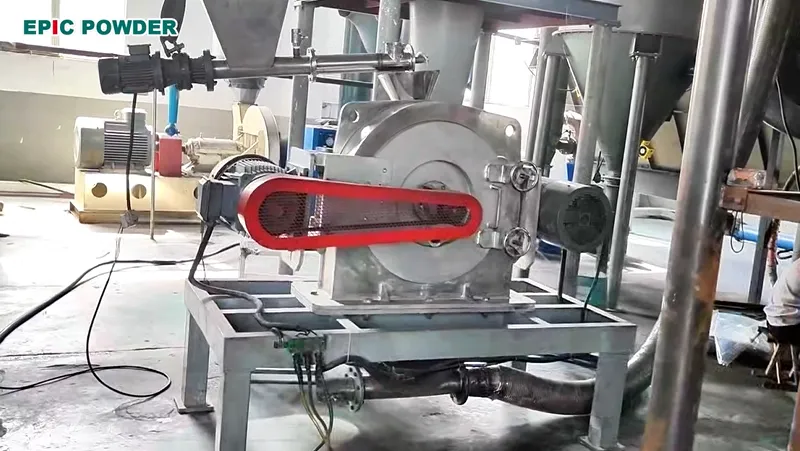
Poreus koolstof wordt tijdens de synthese gevormd als blokken of sterke agglomeraten. De hoge oppervlakte-energie als gevolg van dat grote oppervlak zorgt voor sterke van der Waals-krachten en elektrostatische aantrekkingskrachten tussen de deeltjes, waardoor ze gemakkelijk samenklonteren. Als deze clusters direct naar een fijnmaalproces gaan, resulteert dit in plaatselijke oververmaling en gedeeltelijke ineenstorting van de poriënstructuur.
Dit is waar de pin molen Het hoort erbij. De korte impactimpulsen verbreken de zwakke bindingen tussen de samengeklonterde deeltjes zonder de primaire deeltjes te beschadigen. De luchtstroom voert het losse poeder ook mee in een uniforme gas-vaste stofstroom, waardoor wordt voorkomen dat de clusters zich opnieuw vormen nadat ze zich hebben gescheiden.
De pinmolen is een voorbewerkingsstap, waarbij het sleutelwoord 'afbreken' is, niet 'vermalen'. In typische deagglomeratieproeven reduceert een pinmolen poreus koolstof met een D50 van ongeveer 25 μm tot ongeveer 10 μm, terwijl poreus koolstof behouden blijft. ongeveer 90 tot 95 procent van het specifieke oppervlak, afhankelijk van de grondstof en de operationele parameters. Voor een nadere beschouwing van hoe de pinmolen zich verhoudt tot de straalmolen voor deze specifieke taak, zie ons eerdere artikel over pinmolen-deagglomeratie voor koolstof- en batterijmaterialen.
2: Luchtclassificatiemolen voor het vermalen met snijpuntregeling

Een luchtclassificatiemolen Dit probleem wordt door het ontwerp voorkomen. Het maalt en sorteert in dezelfde kamer. Een roterend sorteerwiel laat fijn poeder vrij zodra het aan de specificaties voldoet, terwijl grof materiaal intern circuleert. Deeltjes die al aan de eisen voldoen, verlaten de machine direct in plaats van opnieuw te worden vermalen. Datzelfde mechanisme houdt ook het energieverbruik in toom: de molen maalt alleen wat nog vermalen moet worden, in plaats van herhaaldelijk materiaal te verwerken dat al aan de specificaties voldoet.
Voor poreus koolstof vereist de specificatie doorgaans een spreiding van minder dan 1,2 en een nauwkeurig gecontroleerde D90, omdat een brede of grove staart defecten in de elektrodecoating veroorzaakt. De relevante parameter is hier de spreiding, niet de D50. De classificatiemolen is de machine die u kiest wanneer u de verdeling wilt controleren, en het ingebouwde snijpunt zorgt voor die controle.
3: Straalmolen voor precisieslijpen met behoud van poriënintegriteit
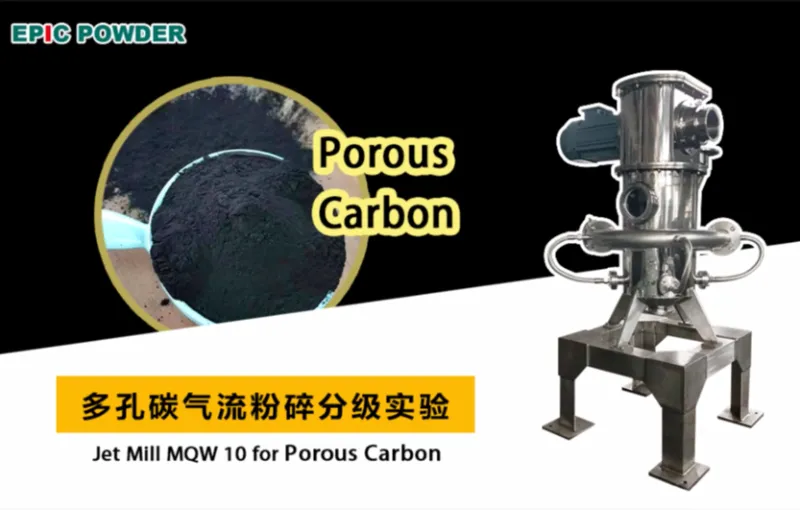
A straal molen bereikt een D50 van 0,5 tot 3 μm met een spreiding onder de 1,5 en een gecontroleerde D100. Op poreus koolstof levert wervelbedstraalfrezen doorgaans een D50 op in de 1 tot 5 μm bereik met een D100 eronder 10 μm, En uit gepubliceerde vergelijkingen blijkt dat door straalmolen bewerkt hard koolstof zijn eigenschappen kan behouden. hogere capaciteitsbehoud dan bij kogelgemalen materiaal, Hoewel de exacte afstand afhangt van de grondstof en het celontwerp. In industriële proeven is poreus koolstof, aangevoerd met een D50 van ongeveer 40 tot 50 μm, vermalen tot een D50 in de 5 tot 8 μm bereik met een spreiding onder 1,2 en een systeemrendement van meer dan 98 procent bij gebruik van secundaire luchtcycloonafvang. Jetmilling op laboratoriumschaal heeft ook stabiele D50-waarden aangetoond in de 2 tot 3 μm bereik, terwijl de poriënstructuur en het oppervlak grotendeels intact blijven.
Gebruik een straalmolen met een keramische voering en een gecontroleerde persluchttemperatuur, en het wordt de veiligste manier om poreus koolstof te verpulveren tot deeltjesgroottes van enkele microns. Dit is niet de goedkoopste optie. Het is de optie die je kiest wanneer zowel de porie-integriteit als de deeltjesprecisie gewaarborgd moeten blijven.
De realiteit met meerdere fasen: waarom één machine zelden genoeg is.
De grondstoffen voor poreus koolstof variëren meer dan de meeste ingenieurs verwachten. Koolstof op basis van biomassa, hars en petroleumcokes verschilt in deeltjessterkte, agglomeratie en poriewanddikte, waardoor geen enkele machine ze allemaal even goed kan verwerken.
Op biomassa gebaseerd poreus koolstof verbetert de maalbaarheid na carbonisatie, wanneer interne blaasjes openbreken en verkoolde microporiën vormen. De sterkte van de poriewanden is echter sterk afhankelijk van het gebruikte materiaal. Op hars gebaseerd koolstof is mechanisch toleranter en beter bestand tegen maalkrachten dan materiaal op biomassabasis.
Het verschil wordt in de praktijk duidelijk. Wanneer één machine wordt gebruikt voor drie verschillende poreuze koolstofgrondstoffen, is het behalen van de gewenste deeltjesgrootte bij elke bewerking eerder uitzondering dan regel. Een tweetrapsopstelling, een pinmolen voor de voorbewerking en een straalmolen voor het fijnmalen, is meestal de oplossing om alle drie de materialen aan de specificaties te laten voldoen.
Die tweetrapslogica is de praktische conclusie. Een pinmolen aan het begin breekt de agglomeraten. Een classificatormolen in het midden regelt de verdeling. Een straalmolen aan het einde beschermt de precisie en de poriën. De meeste projecten met poreus koolstof hebben minstens twee van de drie nodig, en de grondstof bepaalt welke twee dat zijn.
Vijf vragen om de juiste poreuze koolstofmolen te kiezen
Voordat u machines gaat vergelijken, beantwoord dan deze vijf vragen. De antwoorden wijzen u direct de weg naar de apparatuur die u nodig hebt.
1. Wat is de grondstofbasis?
Biomassa, hars en petroleumcokes verschillen in agglomeratie en poriewandsterkte, en dat bepaalt of je vooraf een pinmolen nodig hebt.
2. Welke overspanning heeft u nodig?
Een kleine overspanning duidt meestal op een classificatiemolen of een straalmolen met ingebouwde classificatie, en niet op een eenvoudige slagmolen.
3. Wat is uw limiet voor magnetische onzuiverheden?
Bij een waarde onder de 50 ppm of onder de 10 ppm bepaalt het antwoord of keramische voeringen en een maalinstallatie zonder maalkogels prioriteit hebben of zelfs noodzakelijk zijn.
4. Wat is uw minimale oppervlakte of poriënvolume dat behouden moet blijven?
Dit is dé test die bepaalt of een machine poreus koolstofvezelmateriaal wel of niet voldoet, en het zou elke machine die hier niet aan voldoet, moeten uitsluiten.
5. Welke doorvoersnelheid heeft u nodig?
Een laboratoriumproef met een capaciteit van 500 gram per uur, een proeflijn met een capaciteit van 10 tot 15 kg per uur en volledige productie wijzen elk op een andere machinegrootte.
Als u niet zeker weet welke van deze machines het meest geschikt is voor uw poreuze koolstof, stuur ons dan een monster en uw gewenste specificaties. Wij voeren een proef uit en sturen u de gegevens over de deeltjesgrootteverdeling en het behoud van het oppervlak terug, zodat u de apparatuur kunt kiezen op basis van de parameter die er voor uw poreuze koolstof echt toe doet.
Episch poeder
Bij Episch poeder, Wij bieden een breed scala aan apparatuurmodellen en oplossingen op maat die aan uw specifieke behoeften voldoen. Ons team heeft meer dan 20 jaar ervaring in de verwerking van diverse poeders. Epic Powder is gespecialiseerd in fijnpoederverwerkingstechnologie voor de mineralenindustrie, chemische industrie, voedingsmiddelenindustrie, farmaceutische industrie, enz. Neem vandaag nog contact met ons op voor een gratis adviesgesprek en oplossingen op maat!

“"Bedankt voor het lezen. Ik hoop dat mijn artikel nuttig is. Laat gerust een reactie achter. Je kunt ook contact opnemen met de online klantenservice van EPIC Powder." Zelda voor verdere vragen.”
— Jason Wang, Ingenieur