
I. Overview of Bamboo Powder
01 What Is Bamboo Powder?
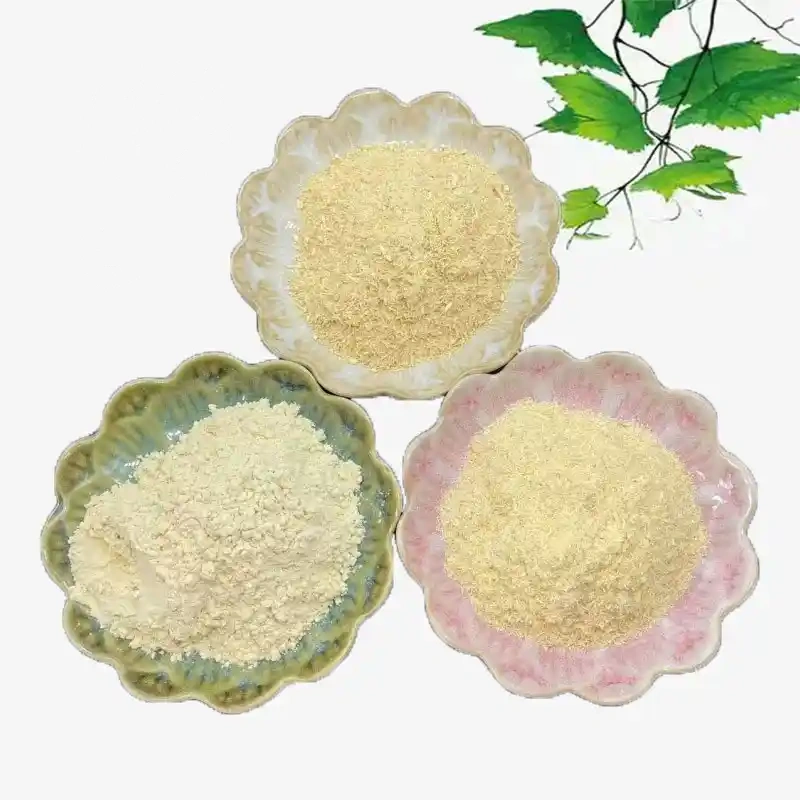
In modern industry, bamboo powder refers to a fine powder produced by mechanically crushing and grinding bamboo (including bamboo stalks, leaves, etc.). As an important biomass filler material, bamboo powder is characterized by its eco-friendliness, low carbon footprint, biodegradability, and low cost. It is widely used in the development and substitution of plastic products across various sectors, including daily consumer goods, construction, and agriculture.
02 Key Characteristics
Natural and Eco-Friendly: Derived from renewable bamboo, it features low carbon emissions and is biodegradable.
Physical Properties: Typically light yellow or white in color with a grassy scent; particle size is adjustable (commonly 20–200 mesh); highly hygroscopic, requiring dry storage to prevent caking.
Chemical Composition: Retains the natural components of bamboo, such as cellulose, hemicellulose, lignin, and trace elements. It is classified as a natural organic polymer material and can be categorized as a biomass material, eco-friendly filler, or functional additive depending on the application.
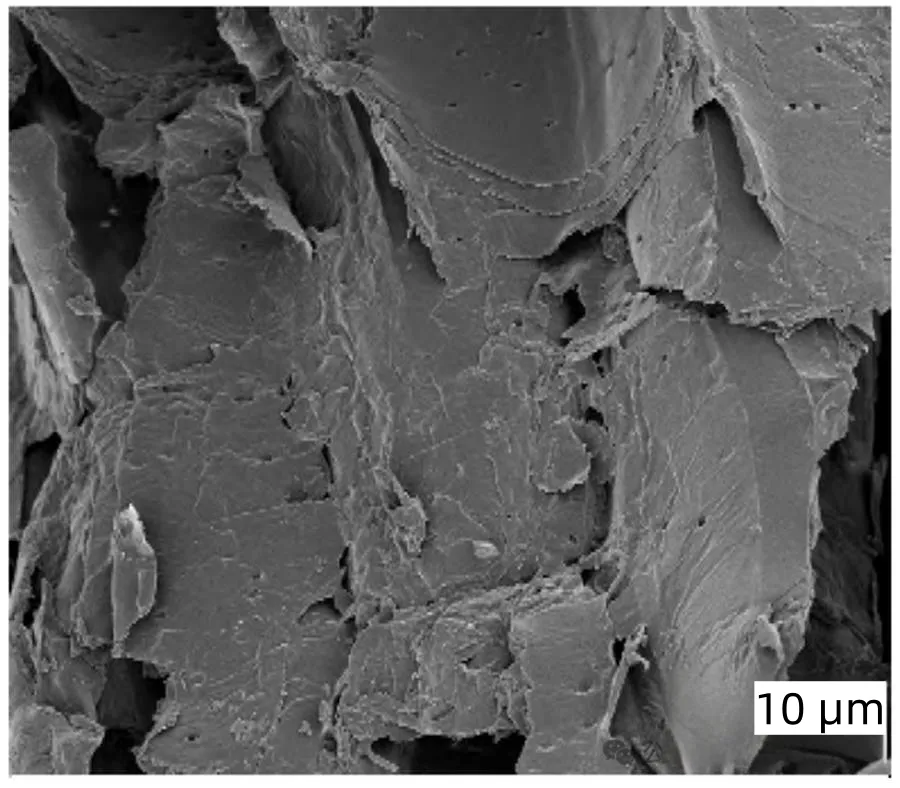
Structural Characteristics: Retains the bamboo fiber structure; at the microscopic level, it appears as irregular flakes or fibers; it has a large specific surface area (5–20 m²/g); its surface is rich in active functional groups such as hydroxyl and carboxyl groups, making it easy to bond with other materials.
II. Classification and Applications of Bamboo Powder
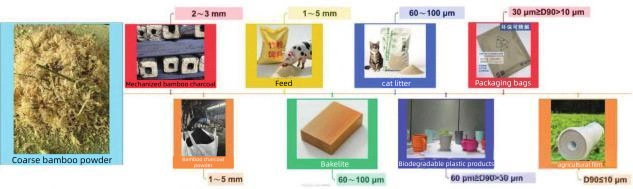
Based on particle size range and application areas, bamboo powder can be classified into four categories: coarse bamboo powder, fine bamboo powder, micro bamboo powder, and ultrafine bamboo powder:
The Four Major Categories of Bamboo Powder
| Category | Particle Size Range | Processing Method | Characteristics and Applications |
| Coarse Bamboo Powder | Millimeter level | Processing residues from bamboo strips during rough planing, fine planing, and filament drawing | Retains intact bamboo fibers, strong hygroscopicity, poor fluidity; used for sandblasting, animal feed, cement mortar, bakelite filler, etc. |
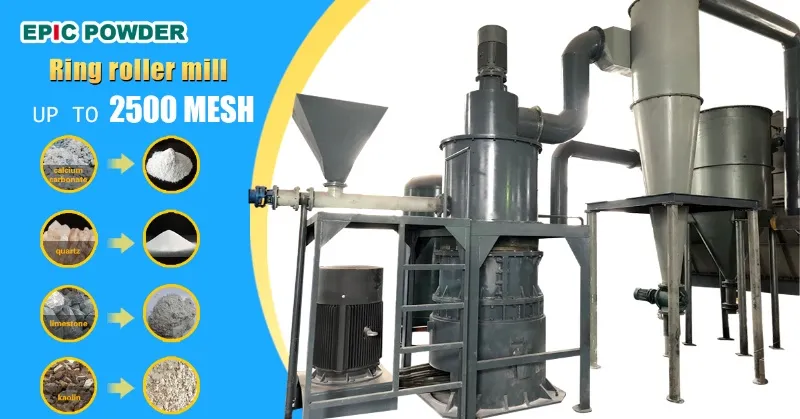
| Fine Bamboo Powder | 60 μm ≥ D90 > 30 μm | Ring roller mill high‑speed pulverizer | High surface activity, large specific surface area; can be used to produce biodegradable plastic products such as knives, forks, spoons, coffee cups, seedling trays, etc. |
| Micro Bamboo Powder | 30 μm ≥ D90 > 10 μm | Ring roller mill high‑speed pulverizer in series with air classifier | Significantly improved hydrophilicity and adsorption capacity; suitable for filling shopping bags, express delivery bags, garbage bags, seedling bags, etc. |
| Ultrafine Bamboo Powder | D90 ≤ 10 μm | 4‑stage series processing: ring roller mill → air classification → jet mill → air classification | High surface energy, exhibits nanomaterial characteristics; mainly used for high‑value‑added products such as biodegradable agricultural films. |
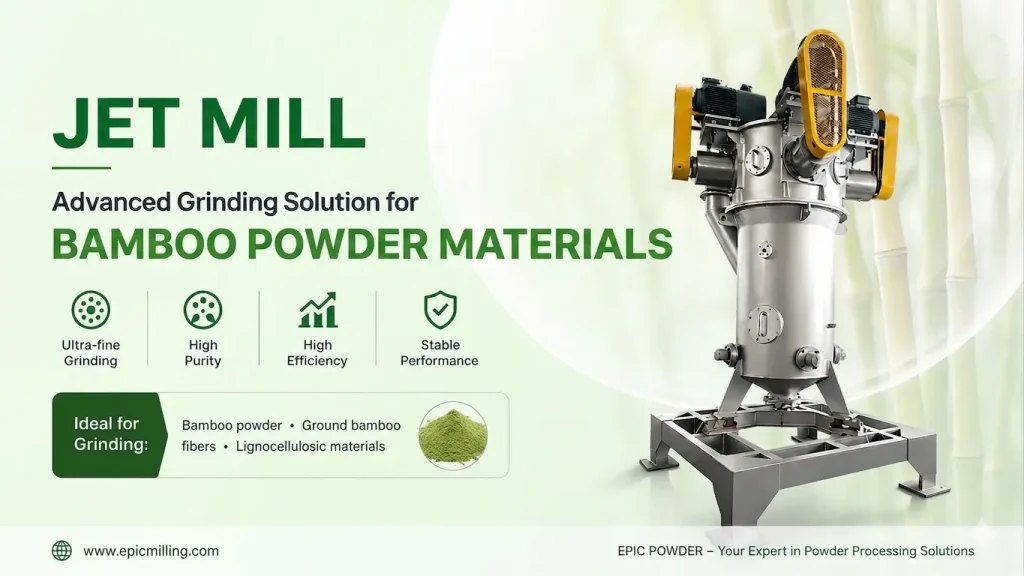
Bamboo powder fillers of different particle sizes are suited for different applications. The smaller the particle size of the bamboo powder, the more uniformly it disperses in the polymer matrix, which accelerates the overall biodegradation rate of the product and facilitates weight reduction; at the same time, it results in better mechanical properties (such as flexural strength and modulus).
Applications of Bamboo Powder Fillers with Different Particle Sizes
III. Performance Advantages of Bamboo Powder as a Filler
Compared to other organic and inorganic fillers, bamboo offers distinct advantages as a filler:
· Bamboo powder has a low tapped density [0.33, 0.26, 0.23, and 0.17 ρ/(g/cm³) for bamboo powders with particle sizes of 60, 30, 20, and 10 μm, respectively], which can effectively reduce logistics costs;
· It has a high polysaccharide content and low ash content, making it easy to cross-link with polyester and helping to improve the material’s mechanical properties;
· It has a high starch content and strong processability;
· It is highly porous and permeable, allowing it to form a stable interlocking structure with the polyester matrix;
· It has low processing costs and does not require high-end equipment or complex processes.
IV. Technical Challenges in Bamboo Powder Processing
Currently, bamboo powder processing is capable of producing different particle size grades, with micro-bamboo powder and ultra-fine bamboo powder primarily produced through multi-stage, serial fine-processing techniques. However, achieving consistent processing of bamboo powder to 800 mesh or finer still faces the following challenges:
1. High Tensile Strength of Bamboo Fibers: Bamboo possesses an intact fiber structure and exceptional tensile strength. When ground to the micron level, the fibers tend to entangle and agglomerate, causing a sharp decline in grinding efficiency and a dramatic increase in energy consumption.
2. High Hygroscopicity: Bamboo powder is highly hygroscopic; it readily absorbs moisture during processing, leading to agglomeration and caking, which adversely affects classification efficiency and subsequent grinding.
3. Poor flowability: During pipeline conveyance and classification, the powder tends to adhere and cause blockages, affecting production continuity and stability.
4. Complex process and high costs: Processing ultrafine bamboo powder requires multi-stage serial systems (such as air-jet milling). These systems are energy-intensive, require significant capital investment, and demand extremely precise process control. Costs increase non-linearly with each increase in fineness grade.
5. Heat sensitivity and degradation risks: High-speed grinding generates heat, which may cause thermal degradation or carbonization of the bamboo powder (especially components such as lignin), affecting the color and performance of the final product.
In summary, ultrafine bamboo powder holds great promise for future applications due to its excellent properties; however, given the physical characteristics of bamboo—namely its toughness and hygroscopicity—the process of grinding it into ultrafine particles faces multiple challenges related to efficiency, cost, and process stability.
V. Application Areas and Potential of “Replacing Plastic with Bamboo”
Currently, bamboo powder demonstrates tremendous potential for “replacing plastic with bamboo” in multiple fields:
01 Eco-friendly Packaging and Disposable Products
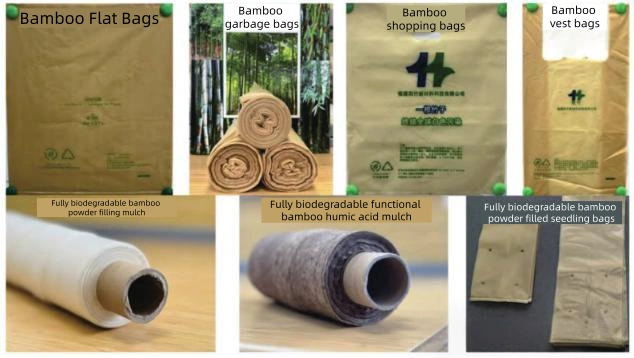

Commercially available bamboo powder-filled packaging bags, mulch film, and seedling bags
Eco-friendly bamboo fiber meal box series
02 Outdoor Building Materials

a) Outdoor flooring; b) Wall panels; c) Grating
Outdoor applications of bamboo-based composites
03 Home Furnishings

a) Public art and landscape installations; b) Pen holders; c) Ashtrays.
Applications of bamboo-based composites in landscape installations and home furnishings
04 Automotive Components
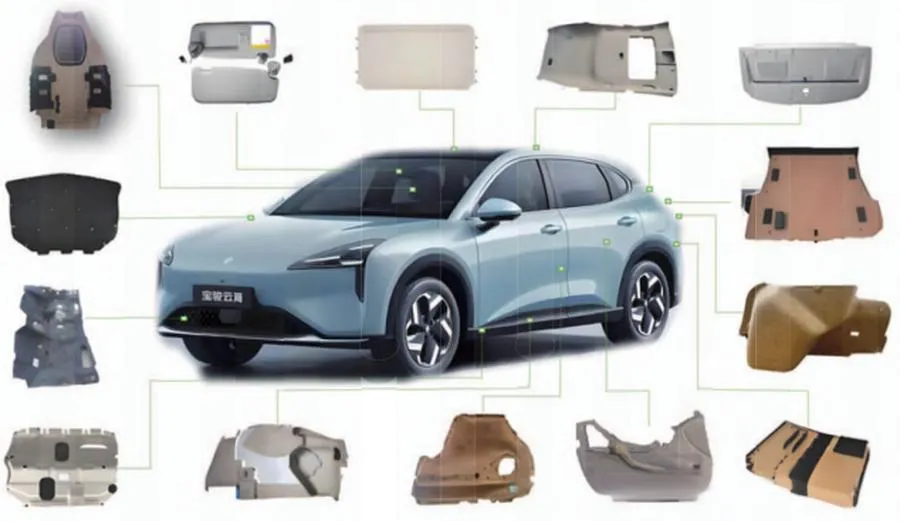
Bamboo Fiber Automotive Interior Components
In addition, bamboo powder is gradually being developed and applied in multiple high-value-added industries, including hard carbon anode materials for batteries, environmental remediation, cosmetics, and food.
VI. Conclusion
As a green, renewable biomass material, bamboo powder is poised to seize new development opportunities, driven by both the “bamboo-for-plastic” policy and growing public environmental awareness. Although the processing of ultrafine bamboo powder still faces technical challenges, its applications across diverse sectors have already demonstrated significant potential for sustainable development. This maks it a key driver of the “bamboo-for-plastic” initiative and the industry’s green transition.
Epic Powder
At Epic Powder, we offer a wide range of equipment models and tailor solutions to meet your specific needs. Our team has more than 20 years experience in various powders processing. Epic Powder is specialized in fine powder processing technology for mineral industry, chemical industry, food industry, pharama industry, etc.
Contact us today for a free consultation and customized solutions!

“Thanks for reading. I hope my article helps. Please leave a comment down below. You may also contact EPIC Powder online customer representative Zelda for any further inquiries.”
— Jason Wang, Engineer
报错: Contact form not found.