
Buyers judge a jet mill by the finest product it holds, and the question comes up in nearly every ultrafine inquiry. The topic is jet mill fineness, and the honest answer is a window with firm edges. A fluidized bed 제트 밀 works across that window on most industrial powders. This article sets out the realistic D97 range and explains the physics that closes each end. It then lists the operating levers that move the achievable fineness, so the buying decision starts from process capability.
The Workable Fineness Window
For most industrial powders, a fluidized bed jet mill holds a product between D97 2 µm and D97 45 µm. Economics close the upper end, because coarser cuts are cheaper in a ball mill circuit. Physics close the lower end, because impact energy, classifier resolution, and particle cohesion push back together. The 2 to 45 µm window is a capability statement, and each project lands somewhere inside it. The landing spot depends on three material properties: hardness, feed size, and the fineness the classifier can hold with stable yield.
Materials respond differently inside the same window. Quartz, alumina, and glass powder reach D97 3 to 5 µm with good yield, because they fracture cleanly under impact. Pharmaceuticals and resins grind finer, since low hardness lets the gas stream do more work per particle. Sticky or waxy feeds close the lower end early, because agglomeration starts before the target D97 is reached. The machine sets the window, and the material decides the address inside it.
What Sets the Lower Limit
Three effects close the fine end of the range. First, particles below about 5 µm stop breaking under impact. The stress a gas jet delivers falls with particle mass, while particle strength stays constant. Second, freshly ground fines carry surface charges and agglomerate. The classifier then sees clusters of several particles and returns them as one coarse grain. Third, the classifier wheel has a minimum stable cut. Wheel speed near its limit throws yield down and sends fines back into the mill in large volume. The fine limit is therefore a combination of impact physics and classification resolution.
Feed size and gas pressure decide how close a project gets to that limit. A feed pre-ground to under 100 µm reduces the work per pass. The mill then reaches D97 3 µm at moderate pressure and stable yield. A feed at 2 mm asks the nozzles for most of the fracture energy. The achievable D97 then drifts toward 8 to 10 µm at the same gas budget. Higher nozzle pressure moves the cut finer, and the energy bill climbs with it. Each additional µm of fineness therefore costs a larger share of gas per ton.
What Sets the Upper Limit
The coarse end of the window closes for a cost reason. A jet mill spends compressed gas on every ton, and that gas does its best work between 2 and 20 µm. When the target D97 rises toward 45 µm, a ball mill with a classifier delivers the same cut at lower energy cost per ton. Mechanical grinding handles coarse fracture with less expense. Above roughly 45 µm, the economics hand the job to the mechanical circuit. The jet mill keeps its place wherever purity, narrow distribution, or heat sensitivity justify the gas cost. The boundary between the regimes is a question of product value.
Heat-sensitive and high-purity materials stretch the upper end in practice. Resins, waxes, and some pharmaceuticals grind coarser than 45 µm in a jet mill anyway, because thermal tolerance excludes mechanical mills entirely. The same holds for abrasive ceramics, where a mechanical circuit would shed wear metal into the product. The window therefore describes pure economics. Each material can stretch it in one direction for a process reason.
Levers That Move the Achievable D97
Inside the window, four operating variables decide where a project lands. They interact, so the table lists each lever with its direction and its cost.
| Lever | 방향 | Effect on D97 | Cost to Watch |
|---|---|---|---|
| Nozzle pressure | Raise | Finer, down to the agglomeration floor | Gas consumption per ton rises sharply |
| 분류기 휠 속도 | Raise | Finer, until yield collapses | Recirculating load and wheel wear |
| 공급 속도 | 낮추다 | Finer, with more residence per particle | Hourly output falls |
| 사료 크기 | Pre-grind finer | Finer, at unchanged pressure | An upstream grinding stage |
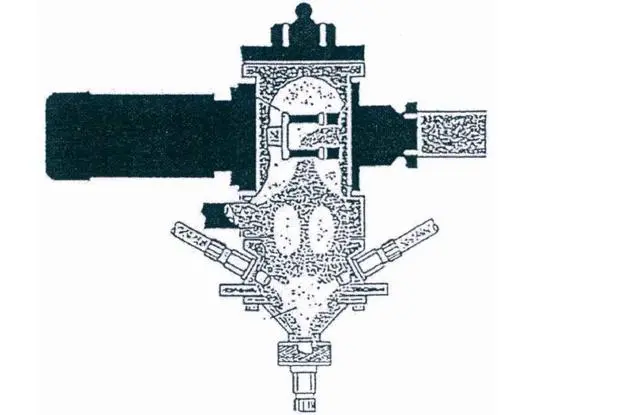
그만큼 fluidized bed jet mill MQL pairs a high-speed turbo classifier with variable nozzle pressure. Both main levers therefore adjust without a shutdown. In a running plant, operators walk pressure and wheel speed together, because each µm of target fineness has a cheapest path. The classifier setting matters as much as the nozzles. A stable cut at moderate wheel speed beats an aggressive cut at collapsing yield.
Where the Trial Machine Decides
Spec sheets describe the window, and the trial machine locates the material inside it. A useful trial runs three settings. One run sets moderate pressure for a baseline. One sets high pressure for the fine end, and one sets high wheel speed to find the yield ceiling. Each run reports a full particle size distribution, because D97 alone hides the agglomeration that starts near the limit. The trial answers two numbers a quotation cannot: the finest stable D97 and the gas cost per ton at that D97.
When those two numbers fall inside the project budget, the jet mill is the right purchase. When the material bottoms out above the target, the target needs a different technology route. That route choice deserves its own discussion before any budget is set. For many powders between 5 and 45 µm the answer comes quickly. Our work on choosing between pin mills, classifier mills, and jet mills shows it. The classifier quality that holds the fine end is described in detail on our HTS 공기 분류기 page.
자주 묻는 질문
Does a bigger jet mill grind finer?
Size adds throughput, and fineness comes from pressure and the classifier. A larger mill reaches the same D97 as a smaller one at similar gas pressure. The difference shows in tons per hour, and in the gas cost per ton at that fineness.
Can a jet mill reach D50 below 1 µm?
Sub-micron medians appear in soft materials at high pressure. D97 stays above 2 µm for most feeds, because the top cut reflects the agglomerates the classifier returns. Below the 2 µm floor, a different technology route is required.
How much does gas consumption rise at the fine end?
The rise is steep, because pressure and residence climb together, and the slope depends on the material. The trial machine turns that curve into a number for the actual material.

“읽어주셔서 감사합니다. 제 글이 도움이 되었으면 좋겠습니다. 아래에 댓글을 남겨주세요. EPIC Powder 온라인 고객센터로 문의하셔도 됩니다. 정부 추가 문의 사항이 있으시면 언제든지 연락 주십시오.”
— Written by 마크 다이