
Con il continuo aumento dei requisiti di densità energetica e di prestazioni tariffarie nel nuovo settore energetico, dimensione delle particelle distribuzione (PSD) di fosfato di ferro e litio (LFP) è diventato un fattore chiave determinante per la produzione di liquami rivestimento qualità e prestazioni elettrochimiche.
Per soddisfare queste esigenze, un importante produttore nazionale si è concentrato sulla macinazione dei materiali catodici per batterie al litio per ottenere percorsi di diffusione ionica più brevi e una maggiore attività del materiale. L'azienda richiedeva che il suo materiale LFP fosse macinato a D50 1,30 μm, controllando rigorosamente l'aumento di impurità metalliche (come l'usura dello zinco) e mantenendo una distribuzione granulometrica ristretta.
1. Selezione dell'attrezzatura principale per la macinazione dei materiali catodici delle batterie al litio
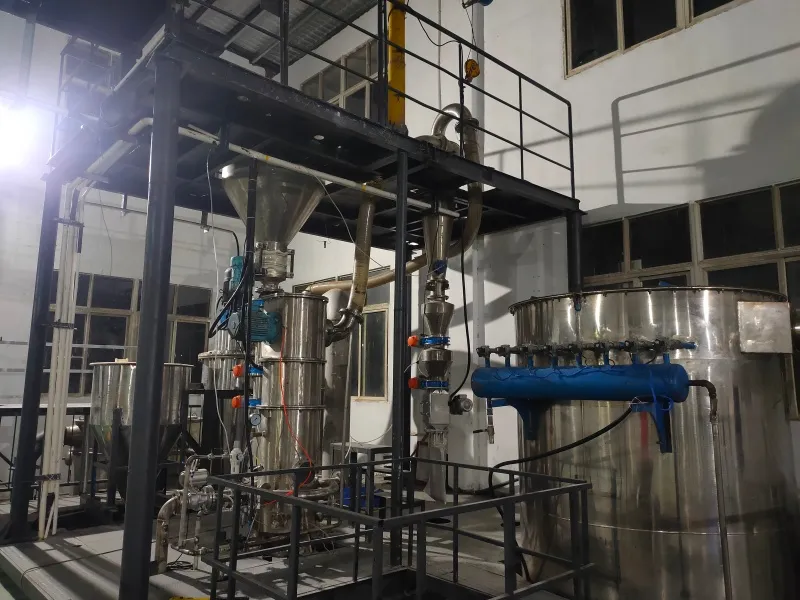
Attrezzatura: Polvere epica Serie MQW Mulino a getto a letto fluido
Caratteristiche tecniche:
- Design collaborativo multi-ugello:
La serie MQW adotta ugelli disposti in modo opposto attorno alla camera di macinazione. Il flusso d'aria supersonico favorisce la collisione tra particelle e l'automacinazione, riducendo notevolmente l'usura delle pareti dell'apparecchiatura. - Classificazione ad alta precisione:
Dotato di una ruota classificatrice orizzontale ad alta velocità. Regolando la velocità di rotazione (RPM), è possibile tagliare con precisione anche le particelle di grandi dimensioni. - Protezione ceramica completa:
Per i materiali di qualità per batterie, tutte le parti a contatto con il prodotto (ugelli, ruota di classificazione, rivestimenti) sono realizzate in piastrelle di ceramica di allumina o carburo di silicio, garantendo zero contaminazione da metalli.
2. Parametri di produzione e risultati misurati
Durante la messa in servizio in loco per l'obiettivo di 1,30 μm, sono stati registrati i seguenti dati:
| Articolo | Parametro di processo / Risultato del test |
|---|---|
| Dimensione delle particelle di alimentazione | D50 ≈ 15–20 μm |
| Pressione di macinazione | 0,7–0,8 MPa |
| Velocità della ruota del classificatore | 3.500–4.200 giri/min (regolati in base al modello) |
| Prodotto finale D50 | 1,30 μm |
| Caratteristica PSD | Curva di distribuzione stretta, con D100 efficacemente controllato |
3. Vantaggi principali
- Protezione morfologica:
Rispetto ai mulini meccanici, il MQW mulino a getto genera pochissimo calore durante la macinazione, prevenendo efficacemente il danneggiamento dello strato di rivestimento in carbonio sulle particelle LFP. - Dispersione ad alta efficienza:
IL fresatura a getto Il processo garantisce una forte deagglomerazione, risolvendo la tendenza all'agglomerazione delle polveri LFP ultrafini. - Elevato livello di automazione:
Il sistema integra la raccolta della pressione negativa e il controllo automatico, garantendo emissioni di polvere conformi e una qualità costante da lotto a lotto.
4. Conclusion
Adottando il Polvere epica Grazie al mulino a getto della serie MQW, il cliente ha ottenuto con successo una transizione stabile del fosfato di ferro e litio da particelle fini a ultrafini. Il controllo preciso a 1,30 μm non solo ha migliorato la velocità di scarico del materiale della batteria, ma ha anche fornito un forte supporto tecnico per la competitività dell'azienda nel mercato delle batterie ad alta potenza.