
No competitivo mundo da modificação de plásticos e da formulação com boa relação custo-benefício, o talco em pó se destaca como um material inorgânico versátil. enchimento. Os fabricantes buscam constantemente a carga ideal de talco em plásticos para equilibrar desempenho e custo. Este artigo explora os fatores que determinam a carga máxima de talco em plásticos, oferecendo informações práticas para formuladores e processadores. Também revela como os equipamentos de processamento adequados, como a moagem a jato, podem ampliar ainda mais esses limites.
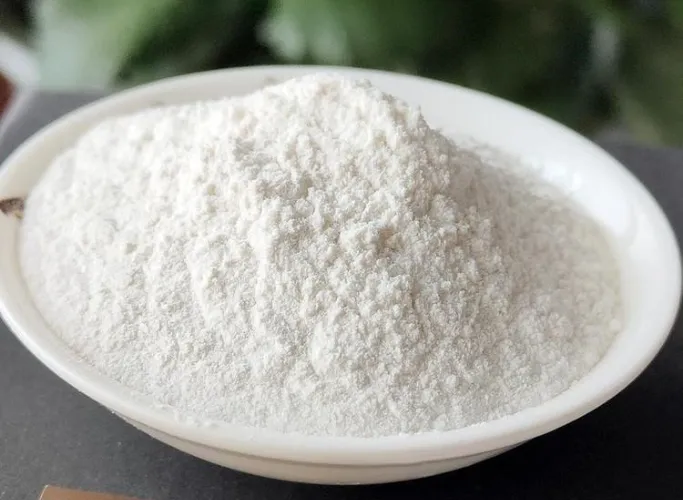
Qual é a carga máxima de talco?
A carga máxima de talco em plásticos refere-se à maior porcentagem em peso de talco que pode ser incorporada em uma matriz polimérica, mantendo os padrões mecânicos, de processamento e estéticos exigidos para o produto final. Esse valor varia de acordo com o tipo de plástico, as demandas de desempenho da aplicação e a qualidade do próprio talco.
Por exemplo, em polipropileno Em compostos de polipropileno (PP), as cargas máximas típicas variam de 20% a 40%. Em aplicações de moldagem por injeção e filmes de polietileno (PE), onde a resistência ao impacto é menos crítica, as cargas podem atingir de 30% a 50%. Em perfis e tubos de PVC, as cargas geralmente ficam entre 15% e 35%. Exceder esses limites frequentemente leva à redução da tenacidade, fluxo deficiente ou defeitos superficiais.
Principais fatores que influenciam a carga de talco
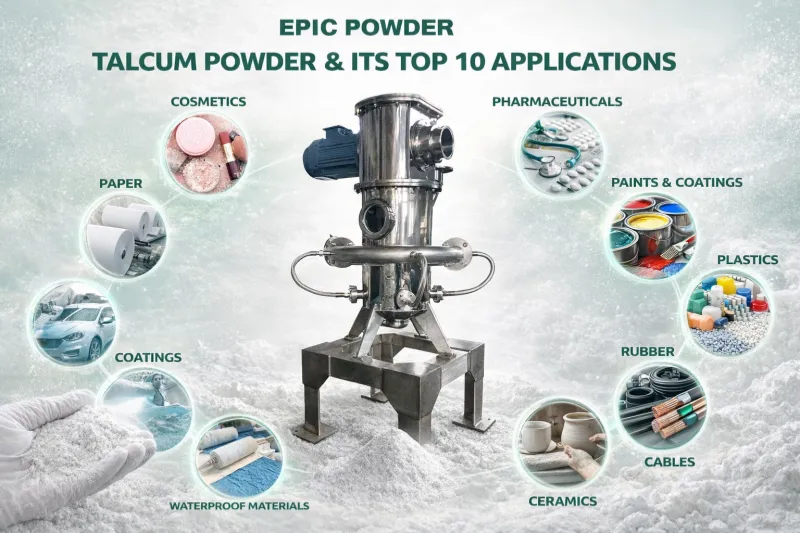
Diversos fatores determinam o limite máximo prático da quantidade de talco utilizada como carga em plásticos:
- Qualidade e tratamento de superfície do talco: Maior pureza, tamanho de partícula mais fino e distribuição de tamanho de partícula estreita melhoram a dispersão e reduzem a aglomeração, permitindo cargas mais elevadas. A modificação da superfície com silanos ou titanatos melhora a adesão interfacial, aumentando o limite de carga do material de enchimento em 10–15% em comparação com o talco não tratado.
- Tipo de polímero e requisitos de uso final: Para aplicações que exigem alta rigidez e estabilidade dimensional, mas resistência moderada ao impacto, cargas mais elevadas são aceitáveis. Por outro lado, peças estruturais que requerem alta resistência ao impacto necessitam de níveis de enchimento mais baixos para manter o desempenho.
- Equipamentos e condições de processamento: Extrusoras de rosca dupla com forte cisalhamento podem dispersar altas cargas de enchimento de forma eficaz, mas O teto real geralmente começa na fase de processamento do pó.. A uniformidade do próprio pó de talco determina a sua capacidade de dispersão a jusante.
Por que otimizar a carga de enchimento é importante
Encontrar a quantidade ideal de talco como carga em plásticos oferece duas vantagens principais:
- Redução de custos: O talco é significativamente mais barato que as resinas poliméricas. O aumento do teor de carga reduz os custos da matéria-prima, aumentando a competitividade.
- Aprimoramento de desempenho: O talco, quando aplicado corretamente, melhora a rigidez, a temperatura de deflexão térmica, a estabilidade dimensional e reduz a contração. Também contribui para a sustentabilidade, diminuindo o uso de resinas derivadas do petróleo.
Caso: Aumentando a carga de enchimento com talco moído com precisão
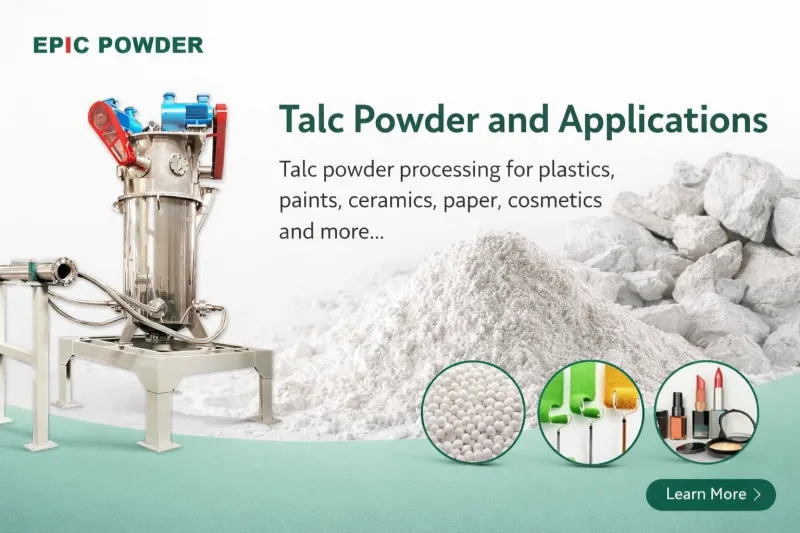
Uma empresa de médio porte do setor de compostos de PP enfrentou desafios com a qualidade inconsistente do talco, limitando sua carga de talco a cerca de 22%. A empresa apresentou baixa dispersão e resistência ao impacto variável, o que resultou em altas taxas de rejeição e custos de produção instáveis.
Ao modernizar sua linha de processamento de pó com A tecnologia avançada da Epic Powder Sistemas de fresagem a jato e Classificadores de ar, Eles obtiveram uma distribuição de tamanho de partículas consistentemente estável e eliminaram as frações grossas que anteriormente causavam aglomeração. Esse equipamento foi combinado com uma etapa de modificação de superfície, o que permitiu aumentar a carga de enchimento para 32% ao mesmo tempo que melhora o módulo de flexão e mantém uma resistência ao impacto aceitável.
O resultado foi um redução significativa nos custos de material por tonelada e um processo de produção muito mais estável, comprovando que o equipamento correto de moagem e classificação é tão crucial quanto a própria composição química do talco.
Epic Powder: Seu parceiro para alcançar o desempenho ideal do seu produto de enchimento.
Na Epic Powder, oferecemos soluções completas para processamento de pós, personalizadas para a indústria de cargas plásticas. Nosso portfólio de equipamentos inclui:
- Moinhos de jato – Para moagem ultrafina com controle preciso do tamanho das partículas.
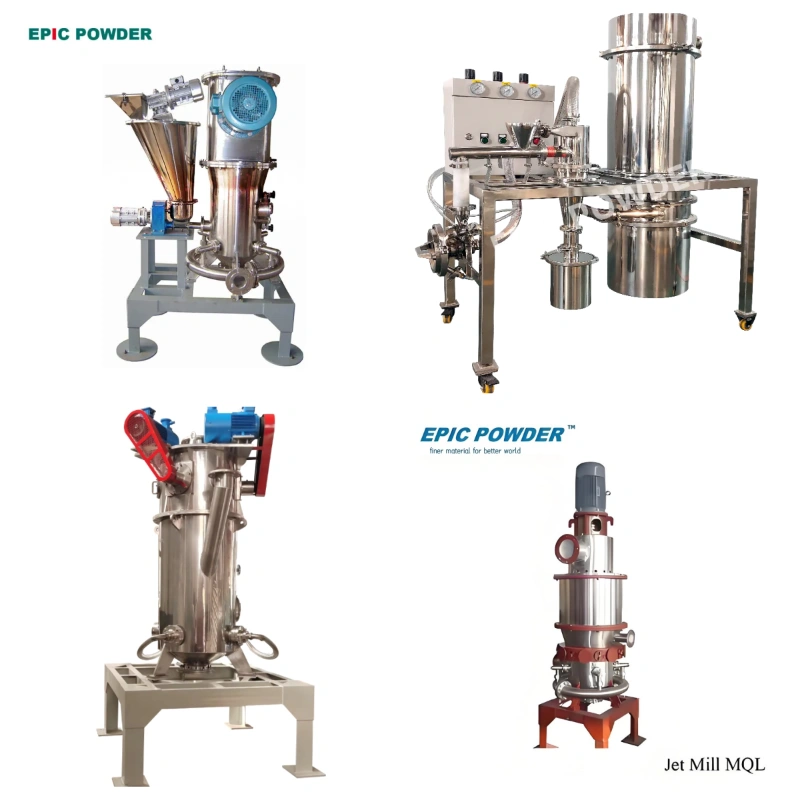
- Classificadores de ar – Para separar com precisão as frações finas e remover partículas de tamanho excessivo.
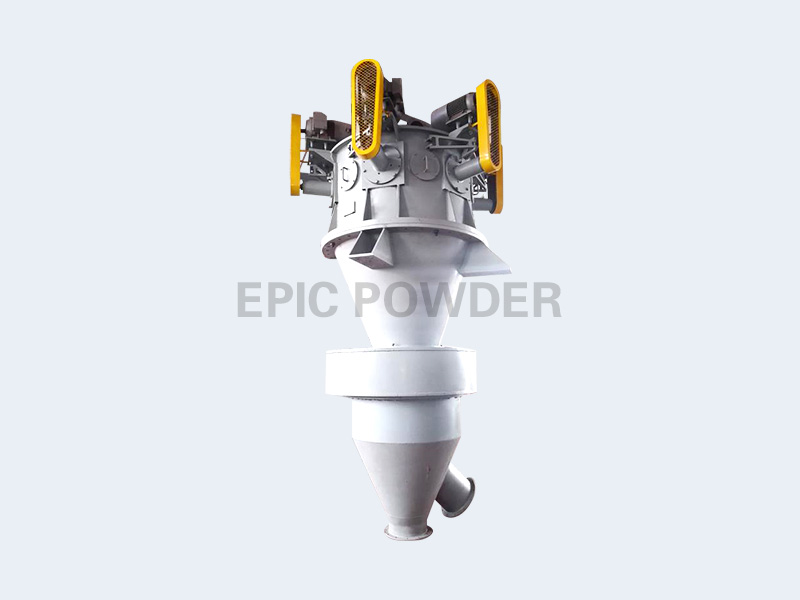
- Moinhos de bolas – Para moagem de alta capacidade, de grossa a média.
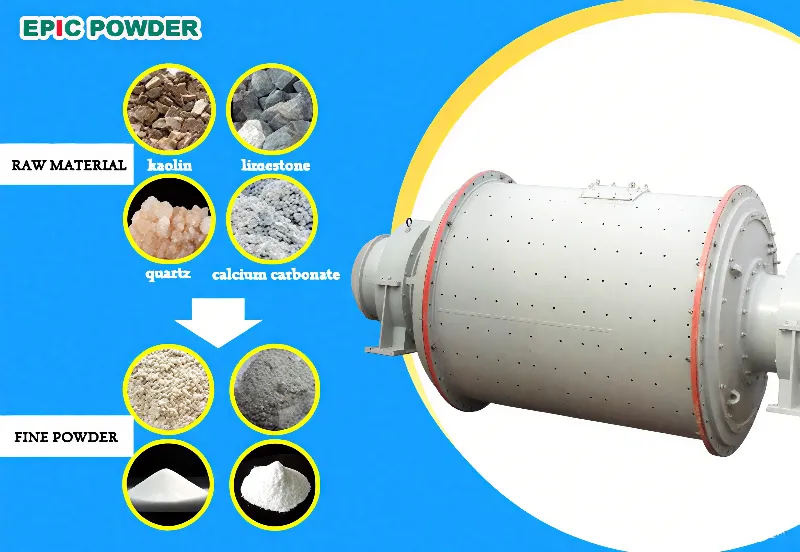
Com nossa tecnologia, você obtém a capacidade de produzir talcos em pó consistentes e de alta qualidade que se dispersam perfeitamente em sua linha de mistura, dando a você a confiança necessária para aumentar as concentrações de carga sem comprometer a integridade do produto.
Conclusão
Não existe uma resposta universal para a quantidade máxima de talco utilizada como carga em plásticos. Isso depende do tipo de polímero, dos requisitos de desempenho, da qualidade do talco e das condições de processamento. No entanto, investindo em equipamentos de moagem e classificação de alta precisão, os fabricantes podem aumentar com segurança a quantidade de talco utilizada como carga, reduzindo simultaneamente os custos com resina.
Pronto para otimizar sua produção de enchimento? Entre em contato com a Epic Powder Agende uma reunião hoje para discutir como nossos moinhos a jato e classificadores a ar podem transformar sua linha de processamento de talco.

“Obrigado pela leitura. Espero que meu artigo tenha ajudado. Deixe um comentário abaixo. Você também pode entrar em contato com o representante de atendimento ao cliente da EPIC Powder online. Zelda Para quaisquer outras dúvidas.”
- Jason Wang, Engenheiro