
Dengan peningkatan berterusan dalam keperluan untuk ketumpatan tenaga dan prestasi kadar dalam industri tenaga baharu, saiz Zarah pengedaran (PSD) bagi litium besi fosfat (LFP) telah menjadi faktor utama yang menentukan buburan salutan kualiti dan prestasi elektrokimia.
Bagi menangani permintaan ini, pengeluar domestik terkemuka memberi tumpuan kepada pengisaran bahan katod bateri litium untuk mencapai laluan resapan ion yang lebih pendek dan aktiviti bahan yang lebih tinggi. Syarikat itu mewajibkan bahan LFPnya dikisar kepada D50 1.30μm, sambil mengawal ketat peningkatan bendasing logam (seperti haus zink) dan mengekalkan taburan saiz zarah yang sempit.
1. Pemilihan Peralatan Teras untuk Pengisaran Bahan Katod Bateri Litium
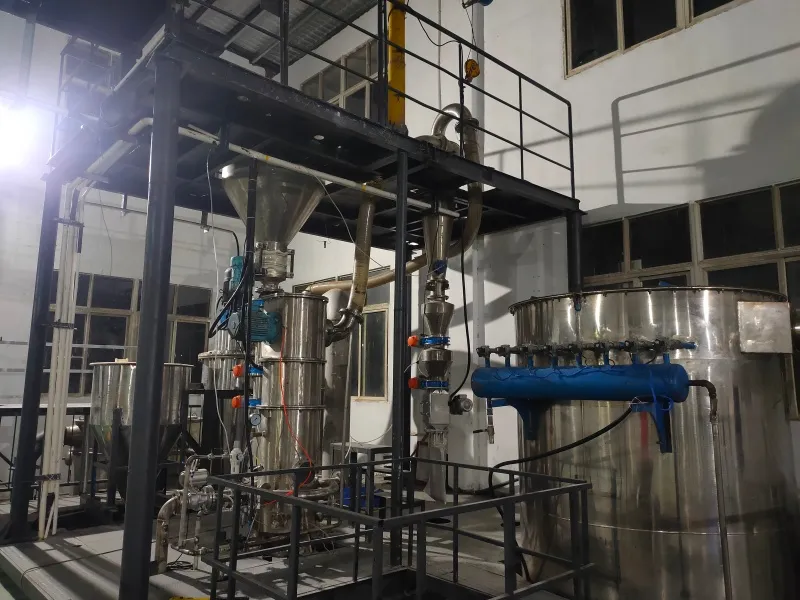
peralatan: Bedak Epik Siri MQW Kilang Jet Katil Berbendalir
Ciri-ciri Teknikal:
- Reka bentuk kolaboratif berbilang muncung:
Siri MQW menggunakan muncung yang disusun secara bertentangan di sekitar ruang pengisaran. Aliran udara supersonik memacu perlanggaran zarah-zarah dan pengisaran sendiri, sekali gus mengurangkan haus pada dinding peralatan dengan ketara. - Pengelasan ketepatan tinggi:
Dilengkapi dengan roda pengelas berkelajuan tinggi mendatar. Dengan melaraskan kelajuan putaran (RPM), zarah bersaiz besar boleh dipotong dengan tepat. - Perlindungan seramik penuh:
Untuk bahan gred bateri, semua bahagian yang bersentuhan dengan produk (muncung, roda pengelas, pelapik) diperbuat daripada jubin seramik alumina atau silikon karbida, bagi memastikan pencemaran logam sifar.
2. Parameter Pengeluaran dan Keputusan yang Diukur
Semasa pentauliahan di tapak untuk sasaran 1.30 μm, data berikut telah direkodkan:
| item | Parameter Proses / Keputusan Ujian |
|---|---|
| Saiz zarah suapan | D50 ≈ 15–20 μm |
| Tekanan pengisaran | 0.7–0.8 MPa |
| Kelajuan roda pengelas | 3,500–4,200 RPM (dilaraskan mengikut model) |
| Produk akhir D50 | 1.30 μm |
| ciri PSD | Lengkung taburan sempit, dengan D100 dikawal dengan berkesan |
3. Kelebihan Teras
- Perlindungan morfologi:
Berbanding dengan kilang mekanikal, MQW kilang jet menghasilkan haba yang sangat sedikit semasa pengisaran, berkesan mencegah kerosakan pada lapisan salutan karbon pada zarah LFP. - Penyebaran kecekapan tinggi:
The pengilangan jet Proses ini menyediakan penyahagglomerasian yang kuat, menyelesaikan kecenderungan aglomerasi serbuk LFP ultrahalus. - Tahap automasi yang tinggi:
Sistem ini mengintegrasikan pengumpulan tekanan negatif dan kawalan automatik, memastikan pelepasan habuk yang mematuhi piawaian dan kualiti kelompok demi kelompok yang konsisten.
4. Kesimpulan
Dengan menerima pakai Bedak Epik Kilang jet siri MQW, pelanggan berjaya mencapai peralihan stabil litium besi fosfat daripada saiz zarah halus kepada ultrahalus. Kawalan tepat pada 1.30 μm bukan sahaja meningkatkan prestasi kadar pelepasan bahan bateri, tetapi turut menyediakan sokongan teknikal yang kukuh untuk daya saing syarikat dalam pasaran bateri berkuasa tinggi.