
Dalam industri pengolahan bubuk seperti pasta elektronik, mesin penggiling bola pengaduk merupakan peralatan inti. Saat memilih media penggilingan dan material pelapis, banyak orang akan memilih zirkonia. Material ini tahan aus, stabil secara kimia, dan memiliki kepadatan yang seimbang. Pola pikir ini sangat umum dalam produksi dunia nyata, tetapi juga merupakan akar dari beberapa masalah tersembunyi. Zirkonia memang merupakan material dengan kinerja keseluruhan yang sangat baik, tetapi sama sekali bukan solusi universal untuk setiap proses. Mempercayai zirkonia secara membabi buta seringkali menyebabkan kontaminasi produk, efisiensi penggilingan yang buruk, dan terkadang bahkan membuang seluruh batch material. Dalam artikel ini, kita akan membahas mengapa zirkonia bukanlah solusi mujarab dan bagaimana cara memilih pelapis dan media penggilingan dengan benar.
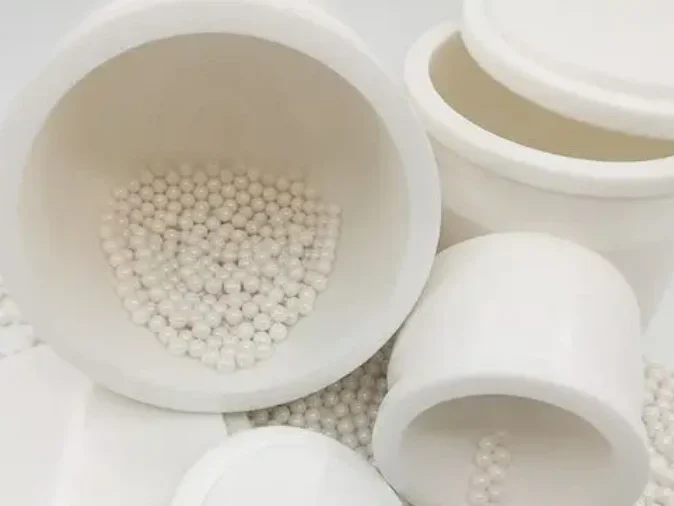
1. Mengapa Zirkonia Bukan Solusi Universal
Keterbatasan zirkonia terutama terlihat dalam tiga area: stabilitas kimia, kompatibilitas fisik, dan pengendalian pengotor dalam jumlah kecil. Banyak proses yang tampaknya berjalan normal sebenarnya mungkin menyimpan risiko tersembunyi yang serius.
1.1 Pelarutan dalam Lingkungan Basa Kuat
Zirkonia bekerja dengan baik dalam kondisi asam, tetapi dalam bubur dengan pH di atas 10, ia mengalami hidrolisis dan membentuk zirkonat yang larut. Hal ini tidak hanya mengkonsumsi butiran penggiling itu sendiri. Lebih kritis lagi, ion zirkonium yang dilepaskan ke dalam bubur mengubah potensial zeta sistem. Bubuk yang terdispersi dengan baik dapat tiba-tiba menggumpal kembali, menggumpal, atau bahkan mengubah seluruh bubur menjadi gel. Masalah semacam ini sangat umum terjadi dalam pemrosesan berbasis air untuk material katoda baterai litium dan dalam proses dispersi alkali tertentu untuk bubuk keramik. Seringkali, para insinyur menghabiskan waktu berjam-jam untuk memecahkan masalah dispersan dan menyesuaikan pH tanpa menemukan penyebabnya, hanya untuk akhirnya menemukan bahwa media penggiling itu sendiri adalah penyebabnya.
1.2 Kontaminasi Balik yang Disebabkan oleh Ketidaksesuaian Kesadahan
Zirkonia memiliki kekerasan Vickers sekitar 1200–1300 HV. Jika material yang Anda gerinda memiliki kekerasan mendekati atau melebihi nilai ini—misalnya silikon karbida, serbuk mikro intan, atau korundum—maka butiran zirkonia akan menjadi bagian yang aus. Dalam situasi ini, efisiensi penggilingan tidak hanya sangat rendah, tetapi laju keausan zirkonia juga meningkat secara eksponensial. Kontaminasi zirkonium dalam produk dapat mencapai beberapa ribu ppm, suatu tingkat yang sama sekali tidak dapat diterima untuk aplikasi kelas atas.
1.3 Reaksi Padat di Bawah Suhu dan Energi Tinggi
Selama penggilingan bola dengan pengadukan, suhu sesaat lokal di dalam ruang penggilingan dapat sangat tinggi. Dalam kondisi energi tinggi ini, stabilisator dalam zirkonia (seperti yttria) dapat mengalami reaksi padat dengan material yang digiling. Misalnya, saat menggiling material yang mengandung silikon, permukaan butiran zirkonia dapat bereaksi dengan silika membentuk lapisan zirkon (ZrSiO₄). Meskipun lapisan ini keras, ia juga rapuh dan akan terkelupas, menjadi sumber pengotor kaku yang sulit dihilangkan dan mudah terlewatkan oleh metode inspeksi konvensional.
1.4 Dampak Fatal dari Impuritas Jejak dalam Aplikasi Kelas Atas
Di banyak bidang presisi, standar untuk "kompatibilitas" bukan hanya ketiadaan keausan yang terlihat—tetapi juga berarti tingkat pengotor berada di bawah batas deteksi atau tidak memengaruhi kinerja akhir.
- Semikonduktor dan pasta elektronik: Residu zirkonium atau yttrium pada tingkat ppb dapat bertindak sebagai pengotor tingkat dalam yang menurunkan masa hidup pembawa muatan, atau membentuk inti kristal heterogen selama proses sintering yang menyebabkan kerusakan dielektrik.
- Produk biomedis: Partikel berukuran nano yang dihasilkan oleh keausan zirkonia, jika dimasukkan ke dalam formulasi injeksi, dapat memicu reaksi imun.
- Bahan optik: Jejak pengotor zirkonium, yang memiliki indeks bias berbeda dari bahan matriks, menyebabkan hamburan cahaya yang berlebihan, sehingga keramik transparan atau kaca optik menjadi tidak dapat digunakan.
2. Apa Saja Alternatif untuk Zirkonia?
Setelah Anda memahami keterbatasan zirkonia, saatnya untuk melihat material lain yang cocok. Tidak ada satu material terbaik—hanya material yang paling sesuai dengan kondisi proses spesifik Anda.
| Bahan | Skenario yang Berlaku | Keunggulan Inti | Risiko |
| Alumina (Al₂O₃) | Material dengan kekerasan sedang, proyek yang sensitif terhadap biaya. | Biaya rendah; pengotor aluminium adalah pengotor yang tidak berbahaya dalam beberapa sistem keramik. | Kepadatan rendah (~3,9 g/cm³); tingkat keausan lebih tinggi daripada alumina (kemungkinan maksudnya "zirkonia"?) — tidak cocok untuk penggilingan energi tinggi skala nano. |
| Silikon Karbida (SiC) | Material ultra-keras (misalnya, SiC, BCC); lingkungan ekstrem asam/basa kuat | Kekerasan sangat tinggi (HV 2800+); ketahanan korosi asam/basa yang sangat baik. | Mahal; serpihan aus adalah SiC itu sendiri — harus dipastikan apakah pengotor ini diperbolehkan dalam produk. |
| Silikon Nitrida (Si₃N₄) | Baja bantalan, paduan suhu tinggi, sistem yang sensitif terhadap oksida | Ketangguhan yang baik, tahan terhadap guncangan termal; tidak ada kontaminasi oksida. | Kepadatan relatif rendah (~3,2 g/cm³); tidak cocok untuk aplikasi yang membutuhkan energi benturan tinggi. |
| Media homogen (misalnya, zirkonia atau sejenisnya) | Proyek dengan persyaratan kemurnian yang sangat tinggi | Tidak ada kontaminasi asing sama sekali. |
Logika pemilihan liner mirip dengan pemilihan media penggilingan. Jika material Anda sangat sensitif terhadap ion logam, Anda dapat memilih liner poliuretan atau karet yang dikombinasikan dengan butiran zirkonia. Namun, liner ini hanya cocok untuk kondisi suhu rendah dan gesekan rendah, serta tidak tahan terhadap sebagian besar pelarut organik. Untuk lingkungan proses yang lebih menuntut, liner silikon karbida atau silikon nitrida adalah pilihan yang jauh lebih kuat. Meskipun investasi awalnya lebih tinggi, dalam jangka panjang, liner ini menghilangkan risiko penggantian liner yang sering dan kontaminasi produk.
Ringkasan
Zirkonia adalah material berkualitas tinggi untuk penggiling bola berpengaduk, tetapi sama sekali bukan solusi universal. Menyadari keterbatasan zirkonia adalah jalan sebenarnya menuju kualitas produk yang konsisten dan stabilitas produksi.
Pertanyaan yang Sering Diajukan
Q1: Bagaimana saya bisa mengetahui apakah bubur peleburan saya terlalu basa untuk butiran zirkonia standar?
Tanda bahaya pertama seringkali berupa peningkatan viskositas yang tidak dapat dijelaskan, flokulasi, atau pembentukan gel selama pemrosesan, bahkan ketika dosis dispersan Anda tampak tepat. Jika Anda mengukur pH bubur secara konsisten di atas 10 dan menemukan peningkatan kadar zirkonium terlarut melalui analisis ICP, butiran zirkonia Anda kemungkinan mengalami degradasi. Pendekatan yang paling andal adalah melakukan uji korosi skala kecil pada bubur Anda yang sebenarnya.
Q2: Lapisan pelindung apa yang harus saya pilih jika saya membutuhkan kontaminasi logam mendekati nol?
Jika produk Anda tidak dapat mentolerir logam sekecil apa pun, hindari pelapis berbahan logam atau alumina standar. Untuk aplikasi ultra murni, kami biasanya merekomendasikan pelapis silikon karbida atau silikon nitrida dengan kemurnian tinggi. Keramik ini memberikan kekerasan ekstrem, ketahanan kimia yang sangat baik, dan hampir tidak melepaskan kontaminan logam.
Q3: Bisakah saya mencampur berbagai bahan manik-manik di pabrik yang sama untuk menyeimbangkan biaya dan kinerja?
Kami sangat tidak menyarankan hal tersebut. Mencampur media dengan kepadatan atau nilai kekerasan yang berbeda akan menciptakan distribusi energi yang tidak merata, mempercepat keausan pada butiran yang lebih lunak atau berkepadatan rendah. Hal ini dapat menghasilkan campuran kontaminasi yang tidak dapat diprediksi. Jauh lebih baik untuk memilih satu jenis media yang sesuai dengan aplikasi.
Bubuk Epik
Bubuk Epik, Dengan pengalaman lebih dari 20 tahun di industri bubuk ultrahalus, kami secara aktif mempromosikan pengembangan bubuk ultrahalus di masa depan, dengan fokus pada proses penghancuran, penggilingan, pengklasifikasian, dan modifikasi bubuk ultrahalus. Hubungi kami untuk konsultasi gratis dan solusi yang disesuaikan! Tim ahli kami berdedikasi untuk menyediakan produk dan layanan berkualitas tinggi guna memaksimalkan nilai pengolahan bubuk Anda.

“Terima kasih telah membaca. Semoga artikel ini bermanfaat. Silakan tinggalkan komentar di bawah. Anda juga dapat menghubungi perwakilan layanan pelanggan EPIC Powder secara online. Zelda untuk pertanyaan lebih lanjut.”
— Jason WanG, Insinyur