Электронная почта: [email protected]
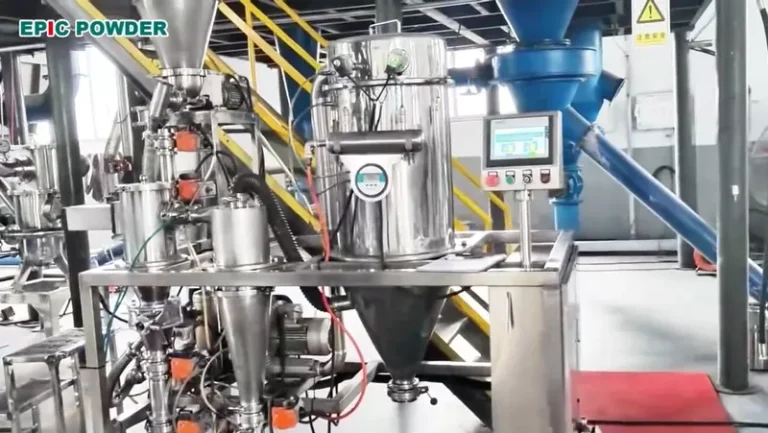
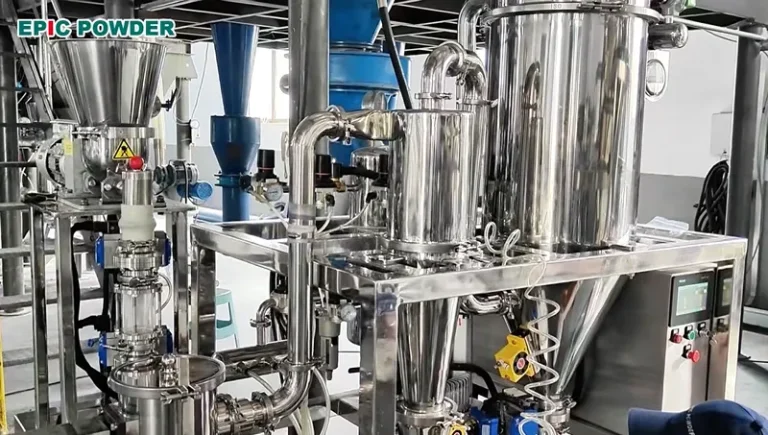
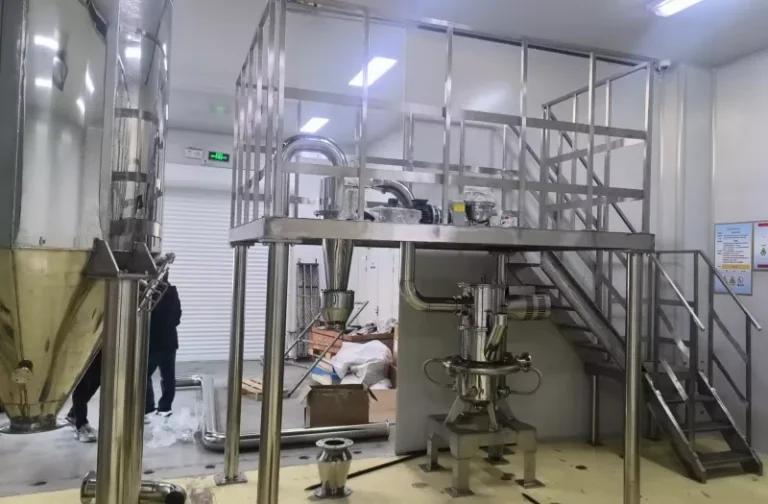
Струйная мельница MQW представляет собой оппозитную струйную мельницу с псевдоожиженным слоем и встроенными горизонтальными классифицирующими колесами (одноколесными или многоколесными). После того как сжатый воздух фильтруется и высушивается, он на высокой скорости распыляется в камеру измельчения через сопло Лаваля. На пересечении нескольких потоков воздуха под высоким давлением материалы неоднократно сталкиваются, растираются и срезаются для измельчения. Измельченный материал поднимается под действием всасывающей силы вентилятора. Воздушный поток перемещается в зону классификации, под действием сильной центробежной силы, создаваемой высокоскоростной вращающейся классифицирующей турбиной, крупные и мелкие материалы разделяются, мелкие частицы, соответствующие требованиям к размеру частиц, попадают в циклонный сепаратор и пылесборник через классификационный фильтр. колесо, и крупные частицы опускаются в зону шлифования, чтобы продолжить шлифование.
Струйная мельница с псевдоожиженным слоем и оппозитным слоем: после того, как сжатый воздух фильтруется и высушивается, он на высокой скорости распыляется в камеру измельчения через сопло Лаваля. На пересечении нескольких потоков воздуха под высоким давлением материалы неоднократно сталкиваются, растираются и срезаются для измельчения. Измельченные материалы поднимаются под действием всасывания вентилятора. Воздушный поток перемещается в зону классификации. Под действием сильной центробежной силы, создаваемой высокоскоростной вращающейся классификационной турбиной, крупные и мелкие материалы разделяются. Мелкие частицы, соответствующие требованиям по размеру частиц, поступают в циклонный сепаратор и пылесборник через сортировочное колесо для сбора, а крупные частицы опускаются в зону дробления и продолжают измельчаться.
| параметр/модель | MQW03 | MQW06 | MQW010 | MQW20 | MQW30 | MQW40 | MQW60 | MQW80 | MQW120 | MQW160 | MQW240 |
|---|---|---|---|---|---|---|---|---|---|---|---|
| Размер подачи (мм) | <1 | <2 | <2 | <3 | <3 | <3 | <3 | <3 | <1 | <3 | <3 |
| Производительность (кг/ч) | 0.3~10 | 10~150 | 20~300 | 40~600 | 100~900 | 200~1200 | 500~2000 | 800~3000 | 1500~6000 | 2000~8000 | 4000~12000 |
| Размер частиц (D97: мкм) | 3~45 | 3~45 | 3~45 | 3~45 | 3~45 | 3~45 | 3~45 | 3~25 | 15x4 | 15х6 | 15х6 |
| Двигатель классификатора (кВт) | 2.2 | 3 | 5.5/7.5 | 7.5/11 | 11/15 | 15/7,5x3 | 7,5x3 | 11x3 | 15x3 | 15x4 | 15х6 |
| Расход воздуха (м³/мин) | 3 | 6 | 10 | 20 | 30 | 40 | 60 | 80 | 120 | 160 | 240 |
| Давление воздуха (МПа) | 0.6~1 | 0.6~1 | 0.6~1 | 0.6~1 | 0.6~1 | 0.6~1 | 0.6~1 | 0.6~1 | 0.6~1 | 0.6~1 | 0.6~1 |
Примечание. Производственная мощность тесно связана с размером частиц, удельным весом, твердостью, влажностью и другими показателями сырья. Вышеупомянутое предназначено только для справки по выбору.
Among particle size reduction technologies, jet milling’s advantages include:
It can achieve very fine particles. It also creates tight size distributions. This is better than other milling methods.
No knives, blades, or hammers. Also, no milling media or screens. This means minimal risk of contamination from worn mill parts.
The simple chamber design is easy to clean, reducing risk of cross contamination
Grinding doesn’t cause temperature changes. This is unlike mechanical mills. Such changes are important for heat-sensitive materials.
Different materials act differently on the jet mill. The best materials are:
Abrasive
Brittle
Dense
Hard
Very friable (in other words, easy to crumble)
Jet mills also have their disadvantages, though they’re few. For one, they can be expensive to buy — which is why working with a toll processor is a smart business decision. A partnership can be a great way to get the benefits of jet milling technology and still manage costs. The process also needs high energy. It needs specialty gases and other special items to meet the specs.
Materials that may respond poorly to the jet milling process are often:
Elastic
Wet
Sticky
Light and fluffy
Easily deformed
Shock absorbent
Difficult to accelerate
Of course, a toll processor has years of experience. They have been meeting tough particle specs. They already have the gear and know-how. They can use it well to get the best results.
By working with a tolling partner’s technical team, you will gain efficiency. They will help choose the best mill type. They will also pick the right speed and feed rate. They will also cover any special project needs.
The team brings focused insights and extensive experience to the table. However, you should also expect to provide safety data sheets and answer a few questions, such as:
A jet mill is a type of ultrafine grinding equipment. It is a machine that uses a lot of energy. Therefore, the feed particle size of the air flow mill should be as fine as possible. It is recommended that the feed particle size be less than 80 mesh. Under normal circumstances, the feed particle size needs to be less than 1 mm.
Jet milling usually makes particles that are 1 to 10 microns in size. This is referred to as micronization.
Some product formulations require particles as small as 200 nanometers. The material's properties determine how small these sizes can be. You can make them smaller by increasing the mill's power. Additionally, by increasing the time the material spends in the milling chamber.
Some products require particles larger than 10 microns. This can be achieved by reducing the power to the mill or increasing the feed rate to the equipment.
In both circular and fluidized bed mills, jets of air or steam are made by gas. The gas is compressed to a gauge pressure of 50 to 120 psig. The most common gas used is commercially compressed air.
Superheated steam (392–980°F) is compressed to 100–220 psig. It can also be used on raw feed materials that are not heat-sensitive. Some of the other gases used include:
Nitrogen, which can protect materials from oxidation and/or fire
Argon, another inert option, though more expensive than nitrogen
Helium, used to achieve higher-velocity impact between particles
A great deal of energy is needed to create enough momentum to cause particles to break on impact. The compressor and nozzles turn high air pressure into energy. They do this within the mill. Large particles recirculate, and multiple high-velocity collisions progressively reduce their mass.
Напишите нам в WhatsApp
Пожалуйста, заполните форму ниже.
Наши специалисты свяжутся с вами в течение 6 часов, чтобы обсудить ваши потребности в оборудовании и процессах.
Ошибка: Контактная форма не найдена.