
Bagaimanakah Turbo Mill Menjadi "Alat Pengisaran" yang Cekap untuk Kitar Semula Bateri Litium Besi Fosfat (LFP)?
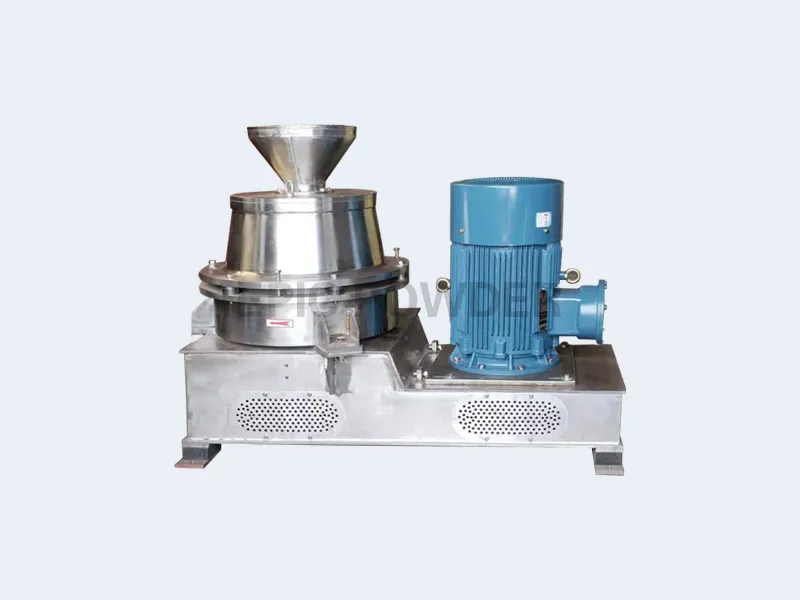
Jika anda terlibat dalam kitar semula bateri litium besi fosfat (LFP), anda tahu bahawa mencapai kadar pemulihan yang tinggi dan ketulenan jisim hitam sangat bergantung pada pengisaran yang berkesan. Tetapi tidak semua kilang dicipta sama—terutamanya apabila melibatkan pengurangan saiz zarah ultrahalus, kawalan pencemaran dan kecekapan tenaga. Di situlah kilang turbo menonjol sebagai […]
Bagaimana untuk Mencapai Pengisaran Ultra Halus Elektrolit Pepejal Tak Organik yang Cekap Menggunakan Pengisar Bebola Tradisional?
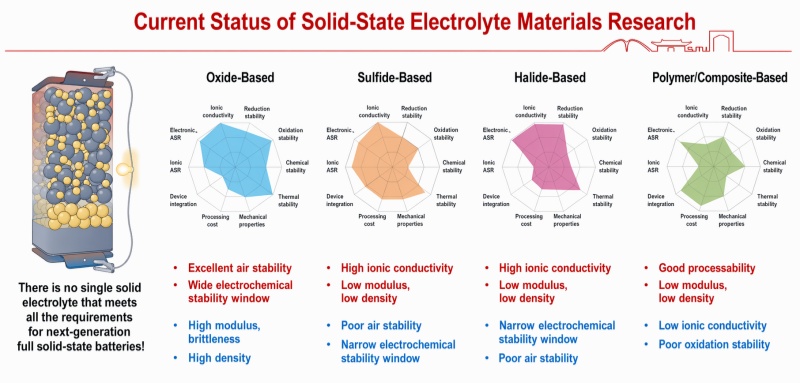
Dalam penyelidikan dan perindustrian Bateri Semua-Keadaan Pepejal (ASSB), Elektrolit Pepejal Tak Organik (ISE) dianggap sebagai bahan utama teras. Sama ada ia tergolong dalam sistem oksida (contohnya, LLZO), sistem sulfida (contohnya, Li3PS4、Li10GeP2S12), atau sistem halida, morfologi fizikal, taburan saiz zarah dan luas permukaan tertentunya secara langsung menentukan prestasi akhir […]
Adakah Penghancuran Ultra Halus Natrium Karbonat Benar-benar Menyelesaikan Masalah Prestasi Kadar Rendah Bateri Natrium-ion?

Sodium-ion batteries (SIBs) have attracted significant attention in recent years due to abundant sodium resources, low cost, and advantages in low-temperature performance and safety. However, compared to mature lithium-ion batteries, SIBs still face a prominent shortcoming — poor rate capability. Rate capability refers to a battery’s ability to maintain capacity and enable fast charge/discharge at […]
What Are The Working Principles, Advantages, and Challenges of a Turbo Air Classifier?
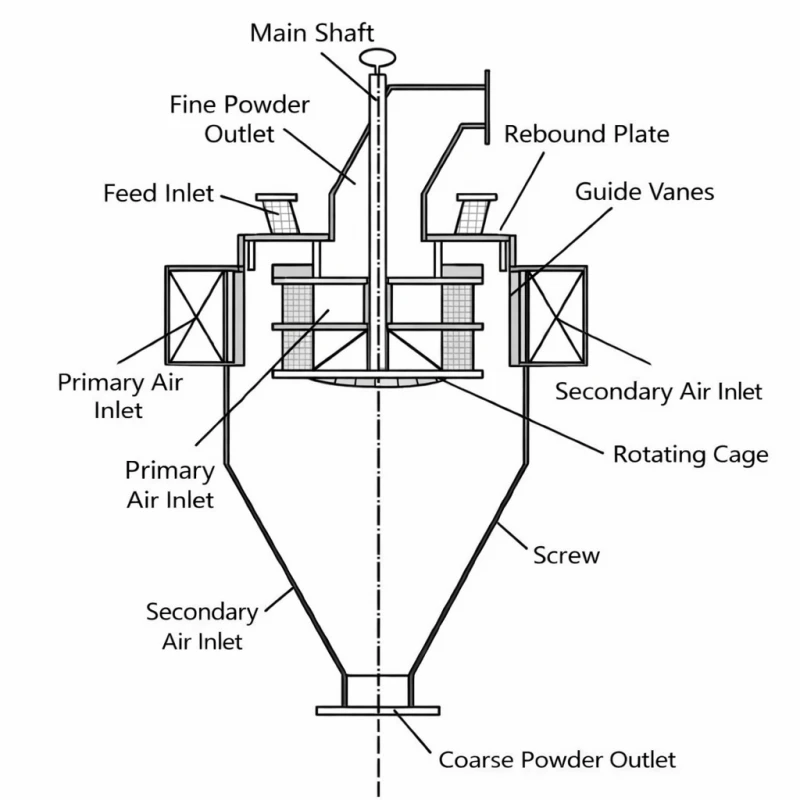
Particle classification refers to separating particles of the same material according to differences in physical properties such as particle size, shape, or density. In most cases, classification specifically means separating particles by size. The two core technical elements of classification are dispersion and separation. Dispersion requires that the material entering the classification chamber be as […]
Kilang Jet Katil Terbendalir vs. Kilang Jet Cakera: Apakah Perbezaan Prestasi Utama?
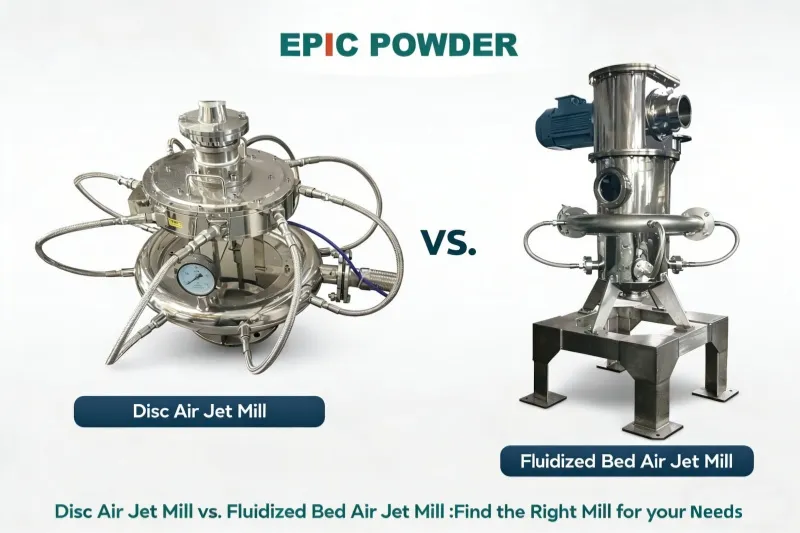
Conceptual Breakdown of Fluidized Bed Jet Mill vs. Disc Jet Mill In the realm of ultrafine powder processing, jet milling stands as a pivotal technology. It is widely used for achieving particle sizes in the micron and sub-micron range. Among the various configurations, the Fluidized Bed Air Jet Mill and the Disc Air Jet Mill […]
Apakah Proses Pembuatan Lengkap Magnet Kekal NdFeB?
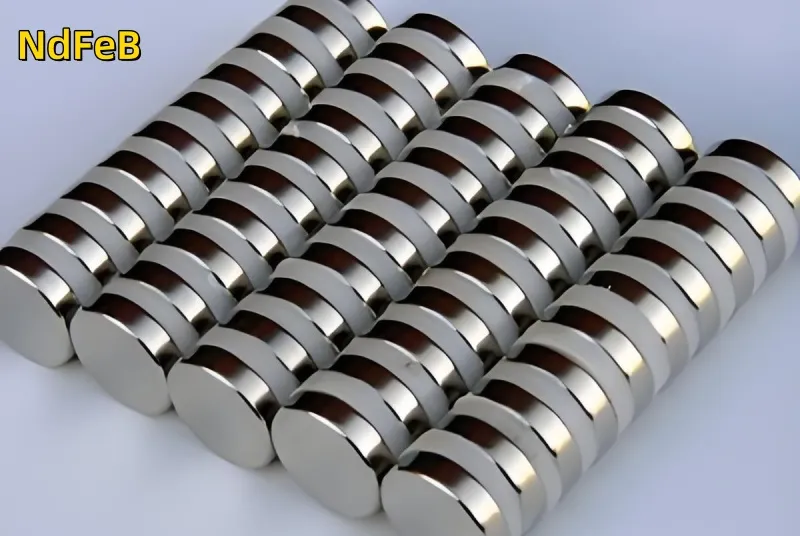
Neodymium–iron–boron (Nd-Fe-B) is the most representative rare-earth permanent magnetic material. Its main composition includes neodymium (Nd), iron (Fe), and boron (B), where rare-earth elements account for about 25–35%, iron 65–75%, and boron around 1%. NdFeB is currently the permanent magnetic material with the highest magnetic energy product in the world and is known as the […]
Mengapa NdFeB Mesti Dikisar Menggunakan Kilang Jet?
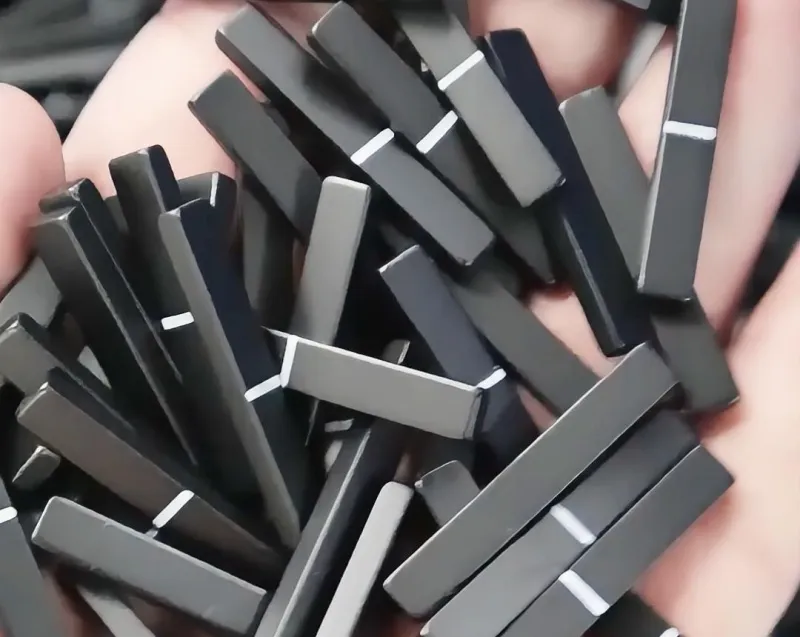
NdFeB (Neodymium-Iron-Boron) is the strongest permanent magnetic material available today. And It is widely used in EV traction motors, wind turbines, consumer electronics, and more. In its manufacturing process, the pulverization step is critical because it directly affects particle-size distribution, oxygen content, and the final magnetic performance. Traditional mechanical pulverization methods (such as ball mill […]
Apakah Pengelas Udara dan Bagaimanakah Ia Berfungsi?
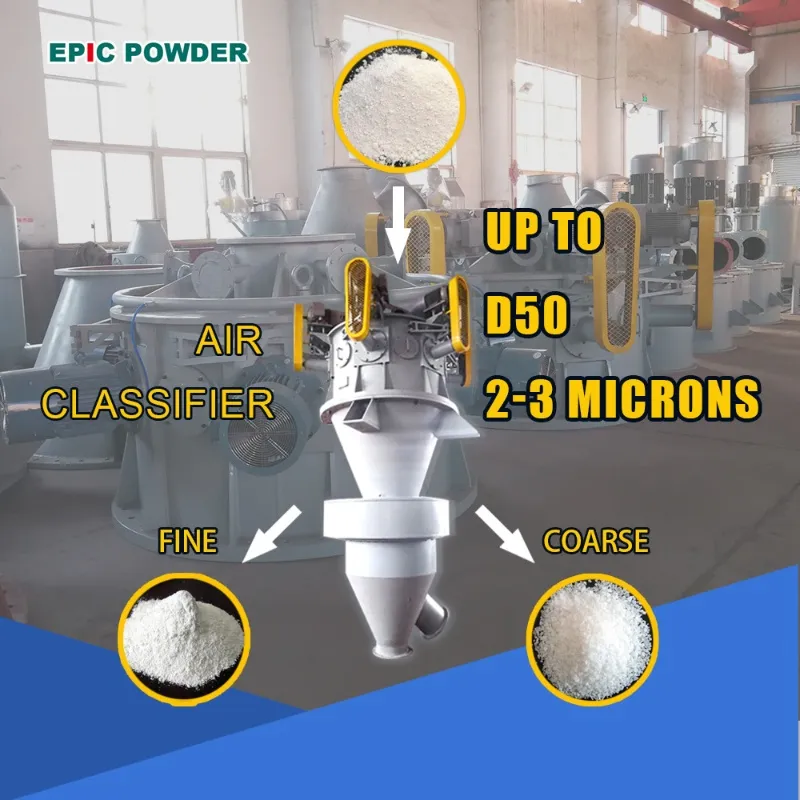
Uneven particle size distribution can lower product quality, cause customer complaints, and increase production costs. An air classifier provides an efficient solution for precise powder classification and particle size control. An air classifier is a device that separates fine particles from coarse ones in a dry powder system based on particle size, shape, and density. […]
Anod Silikon-Karbon: Kejayaan Utama untuk Era Ketumpatan Tenaga Tinggi
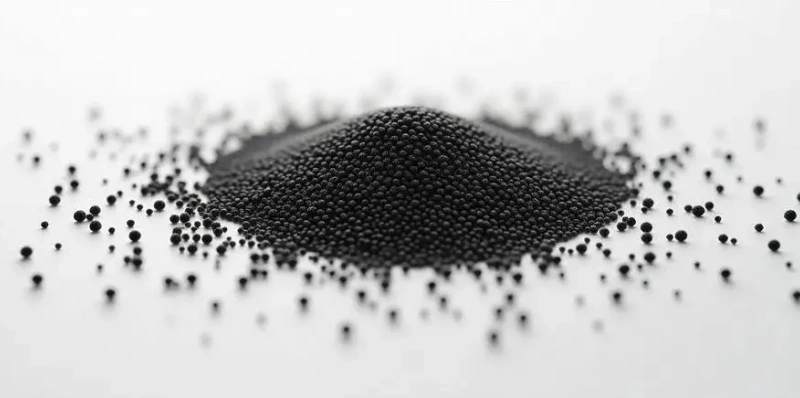
Overview of Silicon-Carbon Anode: The Inevitable Choice Beyond Graphite Limitations Graphite Anode Reaching Its Performance Limit Currently, graphite dominates lithium battery anode materials, accounting for over 80% of the market. Its theoretical capacity is 372 mAh/g, while practical performance has already reached around 360 mAh/g — nearly the theoretical limit.However, as electric vehicles, 3C electronics, […]