
Alumina powder is a common industrial raw material, widely used in petrochemicals, electronics, refractory materials, ceramics, abrasives, pharmaceuticals, and aerospace applications.
The morphology of alumina powder varies, and different morphologies suit different applications. Currently, the main morphologies of alumina include fibrous, granular, plate-like, spherical, rod-like, and porous membranes.
Among these shapes, spherical alumina particles have a regular morphology, relatively small specific surface area, higher bulk density, and better flowability. These properties can significantly improve the performance of final products. For example:
- Spherical fine powders have good pressing and sintering properties, which is very beneficial for producing high-quality ceramic products.
- As a grinding and polishing material, spherical alumina can prevent scratches.
- In the petrochemical industry, the pore size distribution and structure of alumina carriers are increasingly critical. Spherical alumina powders can adjust dimensione delle particelle distribution to control the pore structure of catalyst carrier particles.
- When used directly as a catalyst, spherical alumina can reduce wear, extend catalyst life, and reduce production costs.
Methods for Preparing Spherical Alumina
As early as the 20th century, researchers began studying the preparation of spherical alumina materials. Literature reports that the main methods for preparing ultra-fine spherical alumina include ball milling, homogeneous precipitation, sol–gel–emulsion method, droplet method, template method, aerosol decomposition, spraying method, and flame method. The particle size of spherical alumina produced by these methods ranges from nanometers to millimeters.
1. Molitura a sfere Metodo
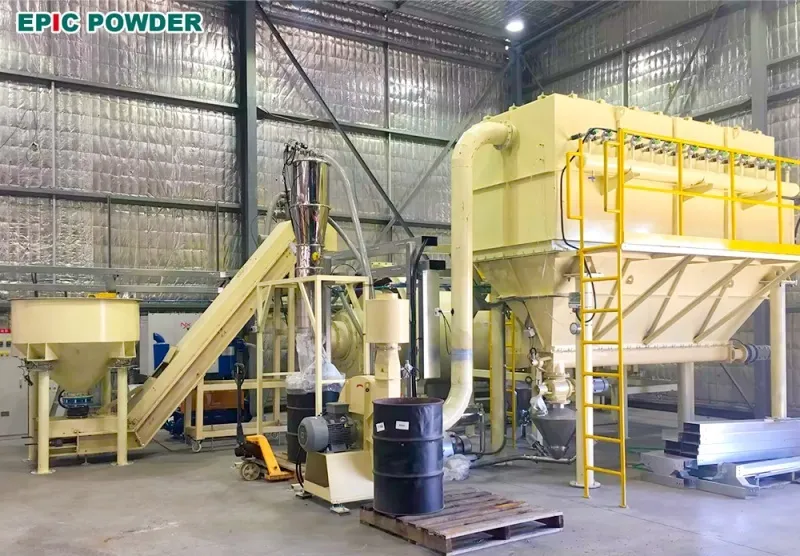
The ball milling method is a mechanical process that uses grinding media to crush raw alumina materials into smaller particles. By controlling the milling speed, time, and the type of grinding media, it is possible to obtain more uniform particle sizes. However, conventional ball milling alone usually cannot produce perfect spherical particles. To improve sphericity, ball milling is often combined with subsequent thermal treatment or spray drying. This method is simple, low-cost, and has high production capacity, making it suitable for large-scale production of alumina powders, but obtaining highly spherical powders requires further processing.
2. Homogeneous Precipitation Method
In homogeneous precipitation, nuclei form in a solution, then aggregate and grow, and finally precipitate from the solution. This process is usually non-equilibrium. However, if the concentration of precipitating agents in the homogeneous solution is reduced or slowly generated, a large number of uniform micro-nuclei can form. The resulting fine precipitate particles are evenly dispersed throughout the solution and can maintain a quasi-equilibrium state for a long time. This method is called the homogeneous precipitation method.
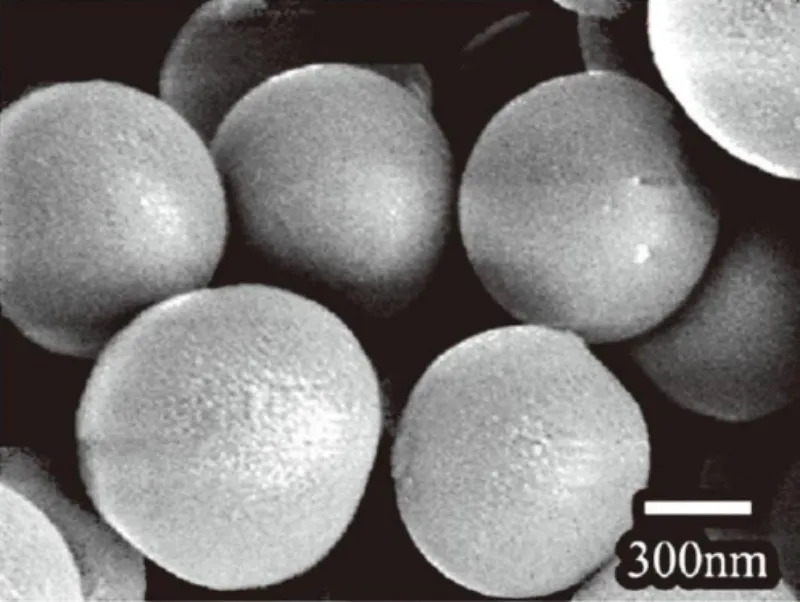
If the particle size of the precipitate falls within the colloidal range, the method is also called the sol–gel method. Except under conditions with the presence of SO₄²⁻, it is generally difficult to achieve a high sphericity of alumina powder by gelation of sol particles alone. Therefore, researchers introduced emulsification techniques, forming the sol–gel–emulsion method
3. Sol–Gel–Emulsion Method
This method is developed based on the sol–gel process. Early sol–gel methods were mostly used to prepare alumina sols and study the structure of the gels. Gradually, this method became a common approach for preparing ultra-fine powders. To obtain spherical powder particles, researchers use interfacial tension between oil and water phases to create tiny spherical droplets. The sol particle formation and gelation occur within these micro-droplets, eventually producing spherical precipitate particles.
4. Droplet Method
The droplet method involves dripping alumina sol into an oil layer (usually paraffin or minerale oil). Surface tension forms spherical sol droplets, which then gel in an ammonia solution. The gelled particles are dried and calcined to produce spherical alumina. This method is an improvement of the sol–gel–emulsion process, applying the emulsion technique to the sol aging stage while keeping the oil phase stationary. It avoids the separation process of powder from oil reagents. However, this method is typically used for larger particle sizes and mainly for adsorbents or catalyst carriers.
5. Template Method
In the template method, spherical colloidal particles act as the core template. Through assembly, adsorption, sol–gel action, or precipitation reactions, a core–shell microsphere forms around the template. The core template is then removed by solvent dissolution or high-temperature calcination, resulting in hollow microspheres. This method can precisely control morphology.
Depending on the template, it is divided into hard and soft template methods. Hard templates include monodisperse inorganic, resin (micro) nanoparticles, and polymer templates. Soft templates mainly involve emulsion droplets or (reverse) micelles in solution, where chimico reactions at the interface form the core–shell structure.
6. Aerosol Decomposition Method
Aerosol decomposition usually uses aluminum alkoxide as raw material. Due to its hydrolysis and high-temperature decomposition properties, it is vaporized and then hydrolyzed by contacting water vapor, followed by high-temperature drying or direct thermal decomposition. This process converts the aluminum alkoxide from gas to liquid to solid or directly from gas to solid, forming spherical alumina powders. Complex experimental equipment, including the atomization and reaction units, is key to this method.
7. Spraying Method
The spraying method rapidly achieves phase transformation and uses surface tension to produce spherical particles. It can be subdivided into spray pyrolysis, spray drying, and spray melting.
- Spray pyrolysis: The precursor solution is atomized into fine droplets, which undergo physical and chemical reactions in a high-temperature furnace, forming spherical particles.
- Spray drying: The fluid feed is sprayed into a hot air stream, drying a water-based suspension or slurry into solid particles. Rapid heat and mass transfer lead to hollow or solid spheres.
- Spray melting: Using RF or inductively coupled plasma, alumina rapidly melts and is then rapidly cooled by spraying to produce spherical alumina.
8. Hydrothermal Method
In the hydrothermal method, raw materials and precipitants are uniformly mixed and placed in a sealed container, usually with a PTFE liner, and then put in an oven. The high-temperature, high-pressure sealed environment slowly hydrolyzes the solution to precipitate alumina precursors. These precursors are then centrifuged, washed, and calcined to produce spherical alumina powders.
9. Flame Method
The flame method, also known as flame spheroidization or flame melting, uses a high-temperature flame to melt raw powder and cool it into spherical shapes. In this process, finely powdered alumina is fed into a high-temperature field generated by a gas–oxygen flame, melts, and solidifies into spheres due to surface tension. Advantages include controllable production, ease of industrial scale-up, high sphericity, and high purity.
Summary
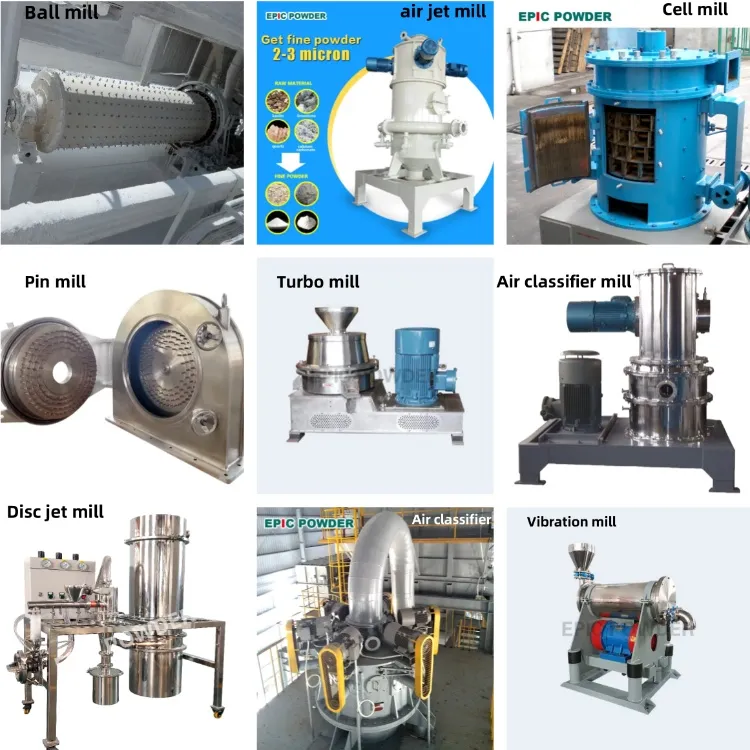
Each method for preparing spherical alumina has its characteristics:
- Ball milling is simple, low-cost, and high-output but cannot easily produce spherical powders.
- Homogeneous precipitation is mild, but producing spherical powders usually requires aluminum sulfate, which generates harmful sulfides during calcination.
- The sol–gel–emulsion method requires large amounts of organic solvents and surfactants, and separating the spherical powders from the emulsion is cumbersome. Maintaining sphericity during drying and calcination is difficult.
- The droplet method suits large, uniform particles but requires hot oil and long dripping times.
- The template method relies on strict template quality to control powder morphology.
- Aerosol decomposition and spraying methods can produce micron to nanoscale spherical powders and are easier to industrialize, though they require complex equipment.

Grazie per aver letto. Spero che il mio articolo ti sia utile. Lascia un commento qui sotto. Puoi anche contattare il rappresentante del servizio clienti online di Zelda per qualsiasi ulteriore domanda.
— Pubblicato da Emily Chen