
Solid-surface countertops and artificial marble sheets rely on aluminum hydroxide (ATH) as their main mineral filler. The grinding step fixes the particle size distribution, and that distribution controls the cured slab’s translucency, color depth, resin demand, and surface texture. This article explains the target size ranges for solid-surface ATH and the equipment choices that hit them.
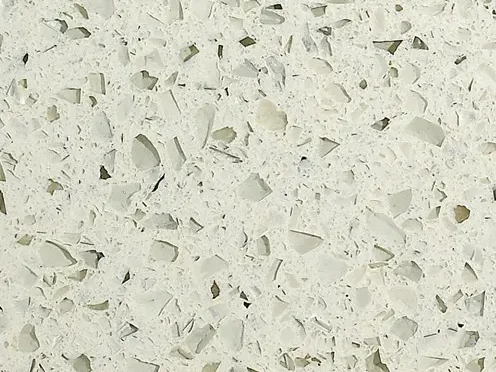
Engineered Stone Has Different Filler Families
Engineered stone is not a single material. Quartz stone uses quartz powder as its main filler; solid surface, also called artificial marble, uses ATH; and some lower-cost organic artificial stone uses calcium carbonate. Each filler gives the slab different optics, hardness, and processing behavior. We have covered quartz powder modification for artificial quartz stone in a separate article: https://www.epicmilling.com/influence-of-surface-modified-quartz-powder-on-artificial-quartz-stone-performance/
This article focuses only on ATH grinding for solid surface and artificial marble, where the resin is usually acrylic or ISO-NPG polyester and the filler loading is high.
Why ATH Is the Standard Filler for Solid Surface
ATH accounts for roughly 60% to 75% of a typical solid-surface formulation by weight, with resin making up most of the remainder. The filler does three jobs at once: it gives the slab its stone-like body, it keeps the material white and bright, and it adds flame retardancy through endothermic water release when heated.
The optical match between ATH and resin is the main reason it dominates this market. ATH has a refractive index of about 1.57, while acrylic and ISO-NPG polyester resins sit near 1.49. That close match lets light pass through the filler-resin mix instead of scattering at every particle boundary, producing the translucent, natural-stone look that solid-surface brands advertise. Coarser or mismatched fillers turn the sheet chalky or opaque.
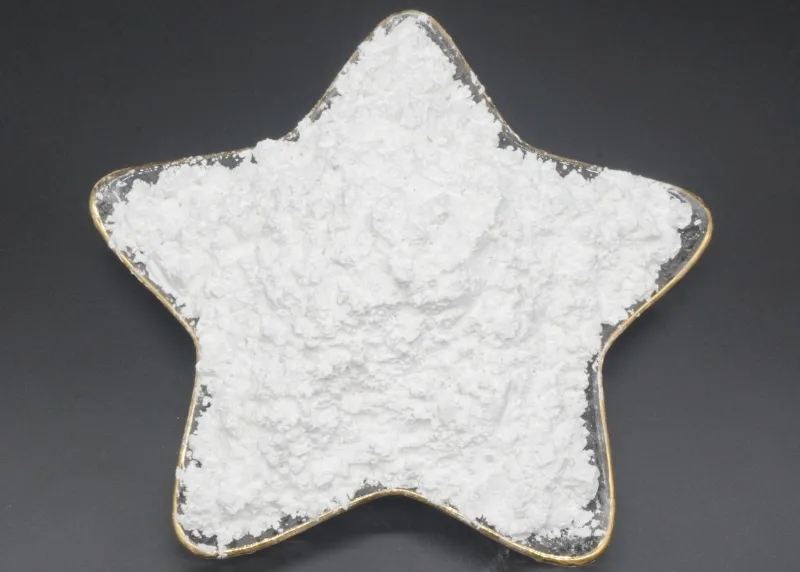
Target Particle Size Ranges
Solid-surface recipes do not all use the same ATH fineness. A standard opaque or solid-color slab usually runs at a D50 of 18 to 30 μm and a D97 top cut of 60 to 100 μm. The coarser particles scatter less light per gram and stack in the cured resin to create a mild, stone-like texture without visible speckles.
Fine-veined, translucent, or high-gloss products need smaller ATH. D50 values between 5 and 15 μm are common for those grades. Suppliers often label their products by nominal D50—ATH-08, ATH-15, ATH-25, ATH-50—so the number itself tells the buyer the median particle size in micrometers. The right choice depends on the resin system, the pigment loading, and the visual effect the customer wants.
Matching Equipment to the Target Size
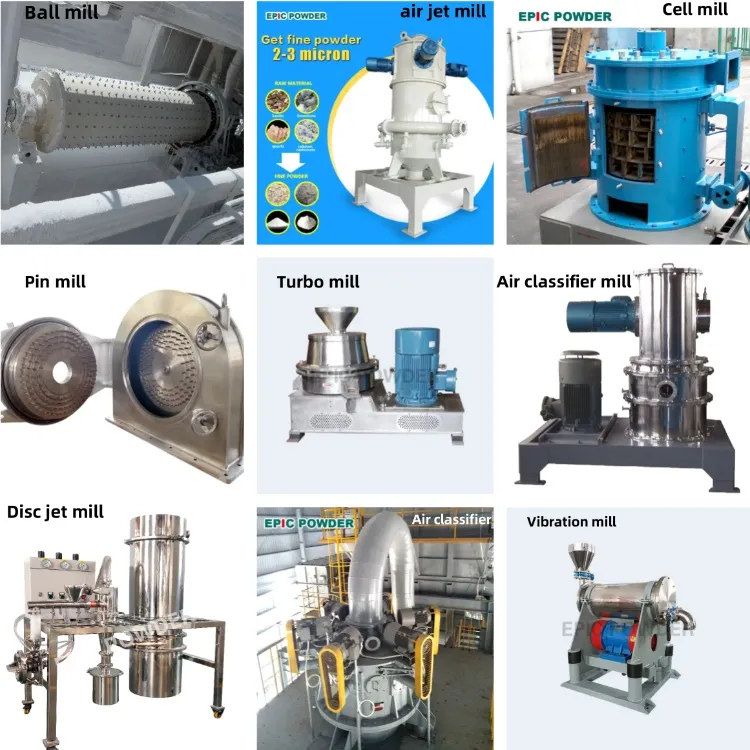
Four mill types are normally considered for ATH in this industry. Each one occupies a different part of the particle-size map, and the best choice is the one that reaches the target D50 and D97 without over-grinding.
Air classifier mills and pin mills cover the most common solid-surface range. They typically produce D50 values from 10 to 50 μm with a D97 below 100 μm, which aligns with the 18–30 μm solid-surface window. These mills use mechanical impact and an internal air classifier, so they offer high throughput and lower energy use than jet mills. For a production line making standard solid-surface sheet, this is usually the most cost-effective route.
Ball mills paired with an external air classifier can also serve solid-surface ATH. A ball-mill-plus-classifier line can hold D97 in the 3–45 μm range and works well when annual volume is high and the top cut must stay tight. The trade-off is higher capital cost and floor space, but the unit energy cost drops on large tonnages.
Jet mills sit at the fine end. They deliver D50 values of 3–10 μm and a D97 around 20 μm or below through particle-to-particle collisions in high-velocity gas streams. Jet milling makes sense when the formula calls for sub-15 μm ATH, when the material must stay free of metal contamination, or when heat-sensitive additives are present. For ordinary solid-surface grades, jet milling is usually more than the application needs.
Epic Powder Equipment for ATH Grinding
Epic Powder supplies grinding and classifying systems that cover the full solid-surface ATH range. The Mulino classificatore ad aria MJW-W handles the 5–300 μm production window with internal classification and high throughput.
For large-volume continuous lines, the Ball Mill–Classifier System keeps the top cut tight while returning oversize particles for regrinding. When 2-45 μm and contamination-free powder is required, the MQW Horizontal Fluidized Bed Jet Mill uses compressed-air particle collision and ceramic options to protect whiteness.
Process Controls That Affect Final Quality
Whiteness is the first quality checkpoint. ATH is valued because it is bright white. Any iron, copper, or rust pickup during grinding shows up as gray or yellow streaks in the cured sheet. Mills with stainless-steel or ceramic contact parts are preferred for premium white grades.
The top cut, D97, is the second checkpoint. A small fraction of oversized particles will not dissolve into the resin during casting. Instead it leaves visible specks or streaks on the slab surface. An inline classifier, or a mill with a built-in classifying rotor, removes these particles before they reach the mixer.
Moisture and agglomeration form the third checkpoint. ATH is hygroscopic and tends to cake if stored or ground in humid air. Dry feed, controlled mill airflow, and prompt packaging keep the powder free-flowing and protect the resin cure reaction.
Polvere epica
Polvere epica designs grinding and classifying systems for minerals, chemicals, food, and pharmaceuticals. We supply both single machines and integrated grinding-classification systems, with engineering support for layout, commissioning, and after-sales service.
Get a Tailored Grinding Solution
With more than 20 years of powder processing experience, we match the right mill to your target particle size and capacity. Tell us about your material and we will recommend a tested solution.

“"Grazie per aver letto l'articolo. Spero vi sia stato utile. Lasciate un commento qui sotto. Potete anche contattare il servizio clienti online di EPIC Powder." Zelda per qualsiasi ulteriore richiesta.”
— Emily Chen, Ingegnere