
Perkenalan
Pencampuran bubuk merupakan operasi unit yang sangat penting di berbagai industri. Ini termasuk pengolahan makanan, pupuk pertanian, keramik, farmasi, dan bahan kimia khusus. Di setiap sektor ini, berbagai material harus dicampur dalam proporsi yang tepat untuk mencapai distribusi yang seragam sebelum diproses lebih lanjut. Homogenitas campuran bubuk secara langsung memengaruhi kinerja produk akhir, baik itu laju pelarutan tablet farmasi, konsistensi campuran bahan makanan, atau integritas struktural komponen keramik.
Bagi para profesional pengadaan dan insinyur pabrik, memahami mekanisme dasar pencampuran bubuk sangat penting untuk membuat keputusan investasi modal yang tepat. Artikel ini memberikan tinjauan komprehensif tentang mekanisme pencampuran bubuk, proses pencampuran tiga tahap, dan pilihan peralatan yang tersedia, dengan fokus pada bagaimana solusi pemrosesan modern mengatasi tantangan lingkungan produksi dunia nyata.
Tiga Mekanisme Pencampuran Fundamental
Pencampuran bubuk adalah proses di mana dua atau lebih jenis partikel mengalami perubahan posisi dan kecepatan di bawah pengaruh gaya eksternal (mekanis atau gravitasi), yang menyebabkan pergerakan relatif dan penetrasi timbal balik antar partikel. Meskipun keseluruhan proses tampak kompleks dan kacau karena sifat diskrit dari sistem partikel, proses ini mengikuti pola yang dapat dikenali yang diatur oleh tiga mekanisme utama: pencampuran konvektif, pencampuran geser, Dan pencampuran difusif. Dalam praktiknya, mekanisme-mekanisme ini beroperasi secara simultan dan saling bergantung, bukan secara terpisah.
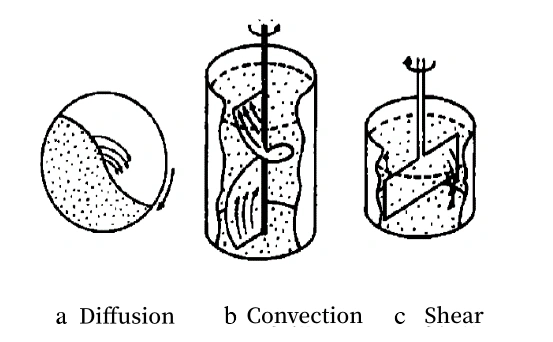
Pencampuran Konvektif
Pencampuran konvektif melibatkan pergerakan massal atau perpindahan besar-besaran kelompok partikel dari satu lokasi ke lokasi lain dalam campuran. Di bawah pengaruh gaya eksternal, sejumlah besar partikel diangkut melintasi ruang pencampuran, menciptakan redistribusi skala besar. Mekanisme ini dicirikan oleh intensitas dan kecepatannya. Pencampuran konvektif biasanya cepat tetapi berumur pendek, dan efek utamanya adalah memindahkan partikel menuju distribusi spasial yang lebih seragam pada tingkat makro.
Pencampuran Geser
Pencampuran geser terjadi ketika lapisan partikel yang berurutan bergeser satu sama lain dengan kecepatan yang berbeda. Gerakan relatif ini menciptakan bidang geser di dalam massa bubuk, dan aksi pencampuran terjadi pada permukaan kontak antara lapisan-lapisan yang bergerak ini. Pencampuran geser sangat penting dalam operasi pengadukan dan dispersi intensitas tinggi, di mana gaya mekanis perlu memecah aglomerat dan mendistribusikan partikel pada skala yang lebih halus.
Pencampuran Difusif
Pencampuran difusif mengacu pada pencampuran lokal yang terjadi pada tingkat mikroskopis antara partikel-partikel yang berdekatan. Saat partikel-partikel individual bergeser posisi relatif terhadap tetangganya, mereka saling menembus dan bercampur. Mekanisme ini sering dianggap sebagai tahap akhir pencampuran, di mana sistem mendekati keadaan homogenitas sempurna. Dalam praktiknya, ketika suatu campuran mencapai tahap pencampuran difusif, umumnya dianggap telah mencapai tingkat keseragaman yang diinginkan.
Proses Pencampuran Tiga Tahap
Dalam operasi industri, pencampuran bahan bubuk biasanya berlangsung melalui tiga fase yang berbeda:
Tahap 1 – Fase Pencampuran Konvektif: Tahap awal ini didominasi oleh pencampuran konvektif. Pergerakan partikel secara massal terjadi dengan cepat, dan campuran mencapai tingkat homogenitas kasar dalam waktu yang relatif singkat. Ini adalah fase tercepat dari seluruh proses pencampuran.
Tahap 2 – Fase Ko-aksi Konveksi dan Geser: Selama tahap menengah ini, mekanisme konveksi dan geser beroperasi bersamaan. Laju pencampuran melambat dibandingkan dengan tahap pertama, dan prosesnya membutuhkan lebih banyak waktu karena gaya geser bekerja untuk memecah ketidaksesuaian lokal dan mendistribusikan partikel secara lebih halus.
Tahap 3 – Fase Pencampuran Difusif: Pada tahap akhir, campuran memasuki rezim pencampuran difusif. Pada titik ini, campuran berosilasi di sekitar keadaan keseimbangan—pencampuran dan pemisahan terjadi secara bersamaan, dan tingkat homogenitas berfluktuasi dalam rentang sempit di sekitar nilai tetap.
Memahami tahapan-tahapan ini sangat penting untuk optimasi proses. Pencampuran yang berlebihan dapat menyebabkan pengikisan partikel, pembangkitan panas, atau segregasi, sedangkan pencampuran yang kurang menghasilkan distribusi yang tidak merata dan masalah kualitas produk.
Faktor-faktor yang Mempengaruhi Kinerja Pencampuran
Untuk mencapai pencampuran bubuk yang seragam diperlukan gaya eksternal—baik mekanis maupun berbasis fluida—untuk mengatasi karakteristik inheren dari material partikulat. Perilaku partikel bubuk dapat diringkas oleh dua atribut utama: "dispersi" (variasi sifat, ukuran, dan bentuk partikel) dan "dinamika" (sifat sementara dan berfluktuasi dari gerakan dan tumbukan partikel).
Banyak faktor yang memengaruhi efektivitas pencampuran bubuk:
- Sifat Material: Distribusi ukuran partikel, bentuk, densitas, kadar air, dan kemampuan mengalir semuanya berdampak signifikan pada perilaku pencampuran. Bubuk dengan ukuran partikel dan densitas yang serupa akan tercampur lebih seragam dan kurang rentan terhadap segregasi.
- Desain Peralatan: Geometri mixer, konfigurasi impeller, dan jarak antara bagian yang bergerak dan dinding wadah menentukan intensitas dan pola pencampuran.
- Parameter Proses: Waktu pencampuran, kecepatan putaran, dan tingkat pengisian harus dioptimalkan dengan cermat untuk setiap material dan aplikasi.
- Kondisi Lingkungan: Suhu, kelembapan, dan komposisi atmosfer dapat memengaruhi perilaku material, terutama untuk bubuk higroskopis atau yang sensitif terhadap panas.
Klasifikasi Peralatan Pencampur Bubuk
Peralatan pencampur bubuk dapat dikategorikan dalam beberapa cara: berdasarkan ada atau tidaknya poros pengaduk, berdasarkan orientasi (horizontal vs. vertikal), atau berdasarkan mode operasi (wadah stasioner vs. wadah berputar). Dalam praktiknya, pemilihan peralatan pencampur bergantung pada karakteristik material spesifik dan persyaratan produksi.
Secara umum, peralatan pencampur bubuk terbagi menjadi dua kategori utama: mixer putar (tanpa pengadukan) Dan mixer yang diaduk.
Pengaduk Berputar (misalnya, blender V, blender kerucut ganda, mixer drum) mengandalkan rotasi wadah itu sendiri untuk menginduksi gerakan partikel. Mixer ini sangat cocok untuk bubuk yang mudah mengalir dengan koefisien gesekan rendah. Namun, biasanya menawarkan efisiensi pencampuran yang lebih rendah, waktu pemrosesan yang lebih lama, dan aksi yang kurang agresif dibandingkan dengan desain yang diaduk.
Pengaduk Berputar Mesin ini menggabungkan elemen pengaduk internal—seperti pita, dayung, pin, atau impeler—yang secara aktif memaksa pergerakan partikel. Mesin-mesin ini memberikan aksi pencampuran yang lebih intensif dan dapat menangani berbagai macam sifat material, termasuk bubuk yang kohesif, adhesif, atau mudah menggumpal.
Solusi EPIC Powder untuk Pencampuran dan Pemrosesan Terintegrasi
Di EPIC Powder, kami menyadari bahwa pemrosesan bubuk modern semakin membutuhkan solusi terintegrasi. Pencampuran, penggilingan, pendispersian, dan modifikasi permukaan terjadi dalam satu proses berkelanjutan, bukan sebagai operasi unit terpisah. Portofolio peralatan kami dirancang untuk memenuhi kebutuhan yang terus berkembang ini, menggabungkan mekanisme pencampuran mendasar dengan klasifikasi presisi dan kemampuan rekayasa partikel.
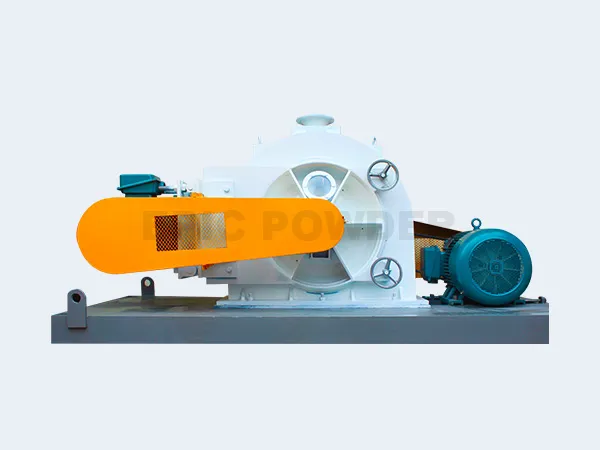
Penggiling Pin – Seri MJL-P
Yang EPIC Penggiling Pin (seri MJL-P) Dirancang di bawah bimbingan para ahli Jerman kami, mesin ini merupakan contoh penerapan praktis mekanisme pencampuran geser dan benturan. Tersedia dalam konfigurasi daya tunggal (cakram bergerak + cakram statis) dan daya ganda (cakram bergerak + cakram bergerak), seri MJL-P mencapai kecepatan lini hingga 240 m/detik, menghasilkan gaya benturan dan geser yang intens.
Kemampuan utama terkait pencampuran:
- Cocok untuk mendispersikan dan mendeglomerasi bahan bubuk
- Memungkinkan pencampuran kecepatan tinggi terus menerus untuk sistem bubuk dan cairan ultrahalus
- Memfasilitasi modifikasi lapisan permukaan partikel
- Cakram penghancur tipe pin dengan tidak ada struktur layar Memastikan kapasitas tinggi dan pembangkitan panas rendah.
- Integrasi pengklasifikasi udara opsional untuk kontrol kehalusan produk yang presisi.
Cara kerjanya: Material dimasukkan secara merata ke dalam ruang penggilingan dan dikenai gaya komprehensif—gesekan, geser, dan tumbukan antara cakram pin berputar berkecepatan tinggi—sehingga menghasilkan dispersi dan deagglomerasi dalam satu kali proses.
Mesin Penggiling Jet Unggun Terfluidisasi – Seri MQW dan MQL
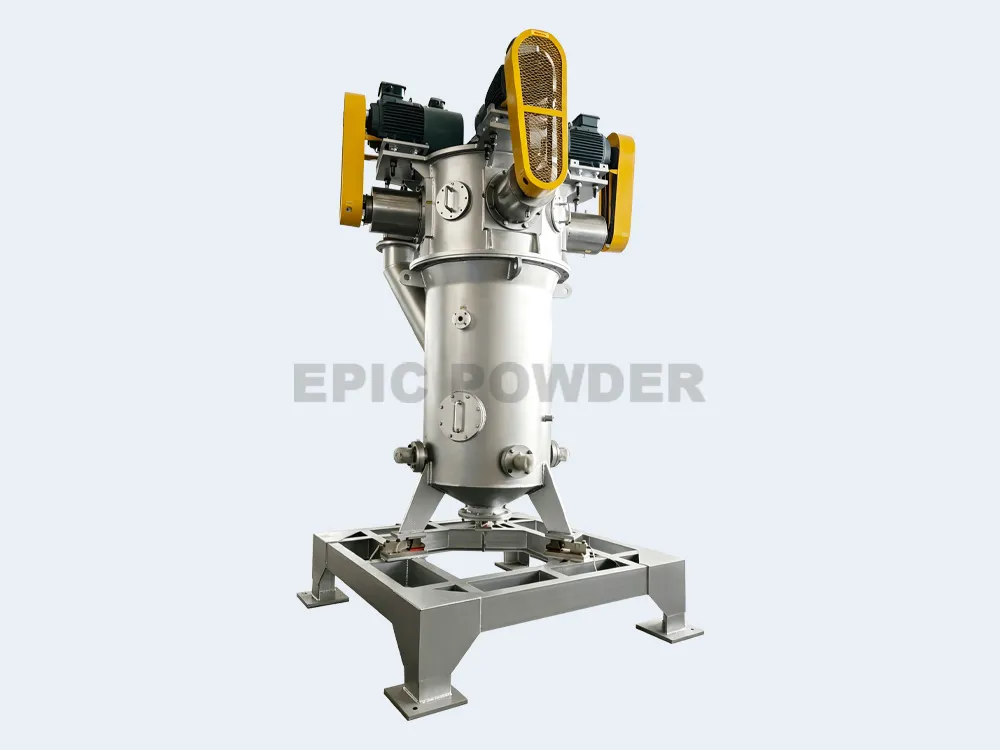
Untuk aplikasi di mana pencampuran harus dikombinasikan dengan penggilingan ultra-halus dan klasifikasi yang tepat, EPIC's Mesin Penggiling Jet Berlawanan dengan Tempat Tidur Terfluidisasi Menawarkan solusi unik. Sistem ini memanfaatkan tumbukan antar partikel—suatu bentuk penggilingan mandiri—untuk mencapai pencampuran, pengurangan ukuran, dan klasifikasi secara simultan.
Seri MQW (Mesin Penggiling Jet Unggun Terfluidisasi Horizontal): Dilengkapi dengan roda pemisah horizontal terintegrasi (roda tunggal atau ganda). Model yang tersedia berkisar dari MQW03 hingga MQW240, dengan kapasitas produksi mulai dari 0,3–10 kg/jam hingga 4.000–12.000 kg/jam dan pengendalian ukuran partikel hingga D97: 3–45 μm.
Seri MQL (Mesin Penggiling Jet Unggun Terfluidisasi Vertikal)): Dilengkapi dengan roda klasifikasi vertikal terintegrasi. Model yang tersedia berkisar dari MQL03 hingga MQL240, dengan kapasitas produksi mulai dari 1–10 kg/jam hingga 4.000–12.000 kg/jam dan pengendalian ukuran partikel dari D97: 6–150 μm.
Kemampuan utama terkait pencampuran:
- Penggilingan suhu rendah tanpa media.—ideal untuk bahan yang sensitif terhadap panas, titik leleh rendah, mengandung gula, dan mudah menguap.
- Desain sirkuit tertutup/tahan ledakan untuk gas inert untuk bahan yang mudah terbakar, meledak, atau mudah teroksidasi
- Pilihan material tahan aus (alumina, zirkonia, silikon karbida) untuk menghindari kontaminasi logam dan menghasilkan produk dengan kemurnian tinggi.
- Beberapa aliran umpan dapat dimasukkan secara bersamaan, sehingga memungkinkan pencampuran di tempat dari berbagai bahan selama penggilingan
Cara kerjanya: Udara terkompresi yang telah disaring dan dikeringkan dipercepat melalui nosel Laval hingga kecepatan supersonik. Pada persimpangan beberapa aliran udara bertekanan tinggi, partikel-partikel bertabrakan, bergesekan, dan saling bergeser. Material tanah naik bersama aliran udara ke zona klasifikasi, di mana partikel kasar dan halus dipisahkan oleh roda klasifikasi yang berputar dengan kecepatan tinggi.
Pengklasifikasi Udara Mills – Seri MJW
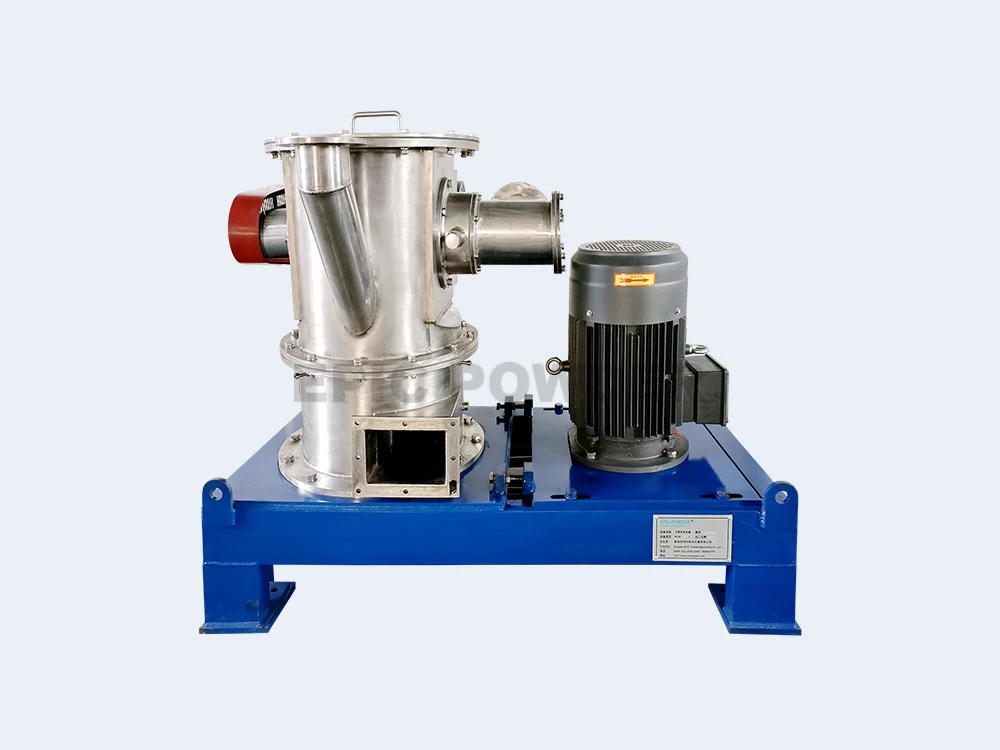
Untuk operasi yang memerlukan penggilingan berbasis benturan dengan klasifikasi terintegrasi, EPIC's Penggiling Pengklasifikasi Udara (seri MJW)) Menggabungkan cakram penghancur berputar kecepatan tinggi dengan roda pengklasifikasi yang dikontrol frekuensi. Tersedia dalam berbagai konfigurasi:
- MJW-A: Desain poros koaksial (konsentris) dengan cakram penghancur horizontal dan roda pengklasifikasi.
- MJW-L: Penggerak independen dengan roda pengklasifikasi yang dipasang secara vertikal.
- MJW-W: Penggerak independen dengan roda pengklasifikasi yang dipasang secara horizontal.
Fitur utama:
- Desain area internal dan medan aliran yang fleksibel untuk cakupan aplikasi yang luas.
- Desain suhu rendah untuk material yang sensitif terhadap panas.
- Desain suhu tinggi untuk pengeringan, penggilingan, dan pendispersian material dengan kadar air tinggi.
- Desain sirkuit tertutup/kejutan tekanan gas inert untuk bahan yang mudah terbakar dan meledak.
- Kapasitas produksi dari 2–100 kg/jam hingga 100–100.000 kg/jam dengan kontrol kehalusan dari 5–300 μm
Peralatan Tambahan dengan Fungsi Pencampuran
EPIC Powder juga menawarkan peralatan lain yang menggabungkan fungsi pencampuran, pendispersian, dan depolimerisasi:
- Mesin Penggiling Multi-Rotor (Mesin Pengering dan Pendispersi): Dirancang bersama oleh para ahli teknik Jerman dan Inggris, mesin ini mencapai penggilingan efisiensi tinggi sekaligus kemampuan pengeringan, pendispersian, dan depolimerisasi yang sangat baik.
- Pabrik Dampak (Seri MJL): Tersedia dalam konfigurasi tipe palu, tipe pin, tipe turbin, dan tipe cakram gerinda. Tipe pin secara khusus cocok untuk material yang rapuh, kental, dan sensitif terhadap panas.
- Mesin Pelapis Penggilingan Sarang Lebah: Menganjurkan proses praktis yang dimulai dengan depolimerisasi, kemudian pengeringan, dengan perlakuan permukaan secara simultan.
Kesimpulan
Pencampuran bubuk merupakan proses yang sangat penting di berbagai sektor industri. Kualitas produk akhir secara langsung terkait dengan efektivitas operasi pencampuran, dan seiring dengan meningkatnya tuntutan industri akan presisi dan konsistensi, pentingnya memilih peralatan pencampuran yang tepat tidak dapat diremehkan.
Tiga mekanisme fundamental (pencampuran konvektif, geser, dan difusif) beroperasi secara bersamaan sepanjang proses pencampuran tiga tahap. Memahami prinsip-prinsip ini memungkinkan para insinyur dan profesional pengadaan untuk membuat keputusan yang tepat mengenai pemilihan peralatan dan optimasi proses.
Bubuk Epik
Pada Bubuk EPIC, Kami menawarkan solusi pemrosesan bubuk yang mengintegrasikan kemampuan pencampuran, penggilingan, klasifikasi, dan modifikasi permukaan. Tim kami dapat membantu Anda menemukan solusi yang tepat untuk kebutuhan material dan produksi spesifik Anda.
Untuk pengujian material atau untuk membahas aplikasi spesifik Anda, silakan hubungi tim teknik kami..

“Terima kasih telah membaca. Semoga artikel ini bermanfaat. Silakan tinggalkan komentar di bawah. Anda juga dapat menghubungi perwakilan layanan pelanggan EPIC Powder secara online. Zelda untuk pertanyaan lebih lanjut.”
— Jason Wang, Insinyur