
Vous passez des semaines à optimiser le processus de broyage. Le D50 est parfait sur l'analyseur. Une semaine plus tard, votre client lance un lot et vous signale des résultats incohérents. L'agglomération de la poudre en est généralement la cause. Pour les poudres inférieures à 30 µm, les particules ne se comportent pas comme des matériaux en vrac. Elles s'agglutinent, forment des grumeaux et perdent les propriétés que vous leur aviez conférés. Cela impacte votre rendement, les spécifications de votre produit et votre rentabilité.
Voici ce qui en est réellement la cause, et quelles méthodes de dispersion fonctionnent en pratique.
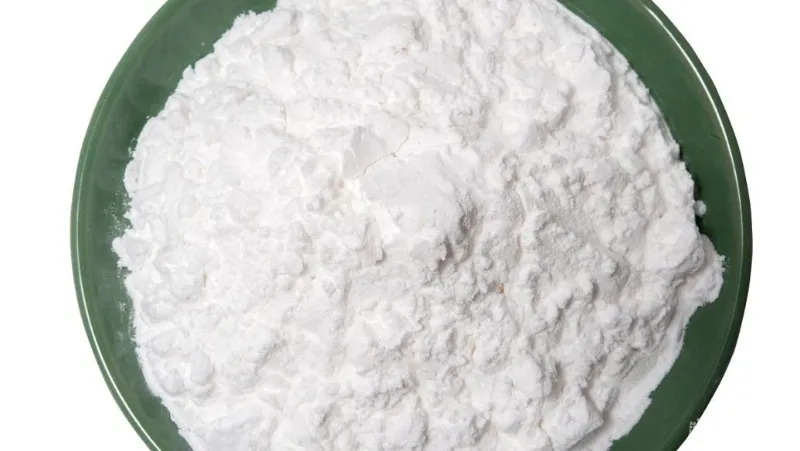
Trois forces physiques à l'origine de l'agglomération des poudres
1. Forces de Van der Waals
Réduisez un matériau à l'échelle du micron ou du nanomètre, et la distance entre les particules diminue considérablement. À cette échelle, les forces de van der Waals, faibles à l'échelle macroscopique, deviennent supérieures à la gravité. Les particules s'attirent et se rejoignent.
De plus, les liaisons hydrogène de surface et l'eau adsorbée agissent comme une colle moléculaire. Une fois formées, il ne s'agit plus de simples particules libres, mais d'agrégats liés.
2. Charge électrostatique
Le meulage génère du frottement. Le frottement génère des charges électriques. Les surfaces de fracture récentes portent des charges positives ou négatives, et ces charges ne restent pas équilibrées.
Les particules chargées instables recherchent la stabilité. Elles rencontrent des charges opposées, entrent en contact au niveau des arêtes vives et s'agglutinent. Dans de nombreux circuits de broyage à sec, l'électricité statique à elle seule peut réduire le rendement effectif de façon significative.
3. Humidité dans l'air
Surveillez l'humidité relative. Une fois qu'elle dépasse un certain seuil 65%, La vapeur d'eau se condense entre les particules. Ces ponts liquides microscopiques attirent les particules les unes contre les autres grâce à une force capillaire plus importante qu'on ne le pense.
C’est pourquoi la plupart des usines de poudre effectuent un séchage en prétraitement. Si vous l’omettez, vous devrez lutter contre l’humidité tout au long du processus.
Méthodes de dispersion
Il n'existe pas de solution unique. La méthode appropriée dépend entièrement de l'état de votre poudre : pâteuse ou sèche.
Dispersion en phase liquide
| Méthode | Mécanisme | Avantages | Cons | Utilisation typique |
|---|---|---|---|---|
| Mécanique (broyage, mélange à cisaillement élevé) | La force physique brise les amas. | Simple, l'équipement est standard | Les particules se regroupent à nouveau une fois le cisaillement arrêté ; peuvent fracturer les matériaux fragiles | Décomposition initiale des grands agglomérats |
| Produits chimiques (tensioactifs, polymères, électrolytes) | Modifie la charge de surface ou crée un encombrement stérique | Stabilité à long terme — les particules restent séparées | Des tests sont nécessaires pour adapter le dispersant à la chimie de la poudre. | Barbotines céramiques, encres pour cathodes de batteries, revêtements |
| Ultrasonique | La cavitation génère des ondes de choc et des microjets. | Agit sur les agglomérats à l'échelle nanométrique sans additifs | Difficile à généraliser au-delà de la R&D ; la surchauffe peut avoir des conséquences néfastes. | Travaux de laboratoire, petits lots à haute valeur ajoutée |
Points pratiques à retenir : Dans la plupart des systèmes industriels de liquides, la force mécanique seule n'est que temporaire. Les agglomérats se désagrègent dans le mélangeur, mais se reforment dans la cuve. L'ajout d'un dispersant chimique approprié permet une séparation durable. C'est cette combinaison – mécanique et chimique – que nous recommandons le plus souvent.
Dispersion en phase gazeuse (sèche)
| Méthode | Mécanisme | Avantages | Cons | Utilisation typique |
|---|---|---|---|---|
| séchage thermique | Élimine les ponts liquides par évaporation de l'humidité | Simple ; nécessaire pour la plupart des procédés à sec | Ne corrige que l'agglomération due à l'humidité ; n'a aucun effet sur l'électricité statique. | Prétraitement des poudres sèches |
| Mécanique (broyeur à jet d'air, classificateur) | Les gaz à grande vitesse ou les pièces rotatives appliquent un cisaillement et un impact | Fonctionne en ligne pendant le broyage/classification | Les particules se réagglomèrent immédiatement après leur sortie de la machine. | lignes de production continues |
| Charge électrostatique (décharge corona) | Donne à toutes les particules la même charge, de sorte qu'elles se repoussent. | Très efficace pour les nuages monodisperses | Nécessite un équipement spécialisé ; plus difficile à contrôler | Revêtement en poudre, classification électrostatique |
Pour les procédés à sec, ne négligez pas votre classificateur. Un classificateur à air bien réglé élimine activement les agglomérats de votre flux de produit final. C'est souvent une solution plus simple que d'essayer de les disperser a posteriori.
Quel itinéraire devez-vous emprunter ?
Répondez d'abord à ces quatre questions :
- Humide ou sec ? Pour la fabrication d'une suspension, optez pour une combinaison de procédés chimiques et mécaniques. Si vous avez besoin d'une poudre sèche, concentrez-vous sur le séchage et les performances du classificateur.
- Quelle est la taille de vos particules ? En dessous d'un micron, les méthodes ultrasoniques ou électrostatiques deviennent plus pertinentes. Au-delà, les méthodes mécaniques et chimiques sont généralement suffisantes.
- Quel est votre débit ? Les procédés mécaniques et chimiques atteignent des tonnes par heure. Les procédés à ultrasons, non – pas encore.
- Pouvez-vous tolérer les additifs ? Si la pureté est importante (pharmaceutique, électronique), vous éviterez les dispersants chimiques et vous vous fierez plutôt à des méthodes physiques.
Choisissez celui qui correspond aux contraintes de votre processus.
Poudre épique
Poudre épique,Forts de plus de 20 ans d'expérience dans l'industrie des poudres ultrafines, nous contribuons activement à son développement futur, en nous concentrant sur les procédés de concassage, de broyage, de classification et de modification. Contactez-nous pour une consultation gratuite et des solutions personnalisées ! Notre équipe d'experts s'engage à vous fournir des produits et services de haute qualité afin d'optimiser la valeur de votre transformation des poudres.
Si vous rencontrez des problèmes d'agglomération et que vous hésitez sur la méthode la plus adaptée à votre matériau, nous pouvons vous aider. Envoyez-nous un échantillon de poudre. Nous l'analyserons avec notre équipement de laboratoire (broyeurs à jet, classificateurs, modificateurs de surface), mesurerons l'efficacité de dispersion et vous fournirons une recommandation de procédé étayée par des données. C'est gratuit et sans engagement. Des résultats concrets, tout simplement.
Contactez-nous pour un essai de matériau : https://www.epicmilling.com/contact-us/
Ou parcourez notre gamme d'équipements : https://www.epicmilling.com/powder-machinery/

“Merci de votre lecture. J'espère que cet article vous sera utile. N'hésitez pas à laisser un commentaire ci-dessous. Vous pouvez également contacter le service client en ligne d'EPIC Powder. Zelda pour toute autre question.”
— Jason Wang, Ingénieur