
Introduction
Chaque fois que vous appliquez du dentifrice sur votre brosse à dents, vous manipulez l'une des poudres les plus précisément conçues dans l'industrie moderne : silice hydratée. Pour les fabricants de dentifrice, cependant, l'enjeu est crucial. Un seul lot de silice hydratée contenant des particules trop grosses (D100 supérieur à 20 µm) peut entraîner le rejet d'une livraison, nuire à la réputation de la marque, voire provoquer des poursuites judiciaires de la part de consommateurs souffrant de sensibilité dentaire. La différence entre un dentifrice blanchissant leader sur le marché et une formule défaillante tient souvent à… microns.
Chez Epic Powder, nous savons qu'obtenir une granulométrie idéale relève de l'ingénierie de précision. Ce guide détaille les paramètres critiques de traitement des poudres qui garantissent que votre silice blanchissante répond aux normes internationales de sécurité et d'efficacité.
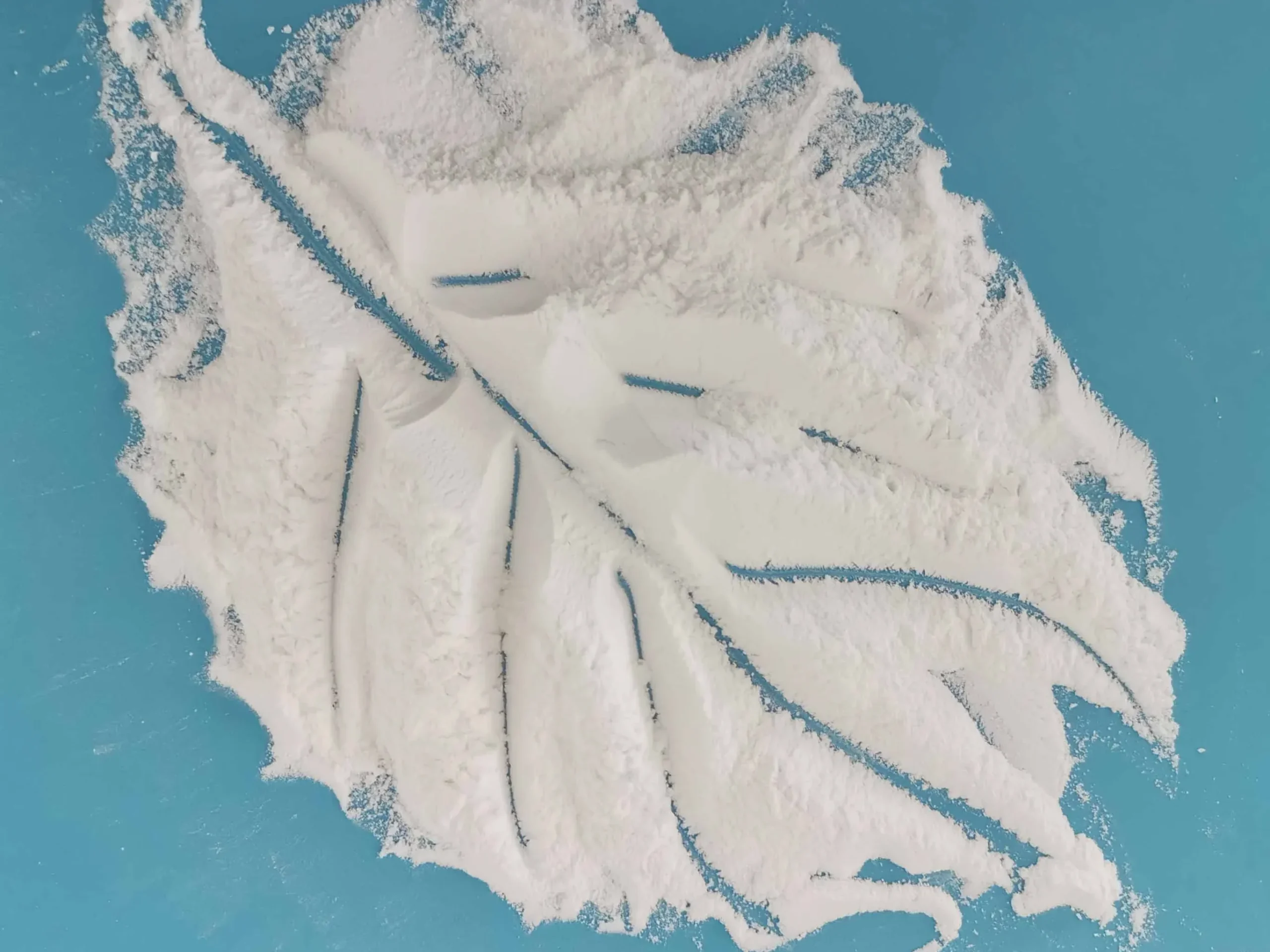
Le défi crucial
La silice hydratée (SiO₂·nH₂O) est le principal abrasif de la plupart des dentifrices haut de gamme grâce à son pouvoir nettoyant et son innocuité exceptionnels. Cependant, son efficacité et son innocuité dépendent entièrement de la taille de ses particules.
Comprendre le RDA : l’indicateur de sécurité essentiel
Le pouvoir abrasif d'un dentifrice est mesuré par Abrasivité relative de la dentine (RDA) . Cette mesure standardisée quantifie la quantité de dentine (le tissu situé sous l'émail) qu'un dentifrice userait dans des conditions de test contrôlées.
Le seuil de sécurité non négociable de l'industrie: Selon la norme ISO 11609 et le programme d'acceptation de l'ADA, tous les dentifrices à usage quotidien doivent maintenir une valeur RDA ≤ 250.
Mais voici l'information essentielle pour les transformateurs de poudres : le RDA n'est pas seulement déterminé par la chimie, mais aussi par la distribution granulométrique.
Effet de la variation de la taille des particules sur la surface spécifique
| Taille des particules | 13.61 | 7.24 | 6.19 | 5.79 | 4.75 |
| Surface spécifique (m2/g) | 167.3765 | 167.5867 | 167.9469 | 168.1236 | 168.9732 |
Effet de la variation de la taille des particules sur la viscosité et la consistance du dentifrice
| Taille des particules | 13.61 | 7.24 | 6.19 | 5.79 | 4.75 | 4.36 | 4.31 |
| Viscosité (centipoise) | 84000 | 97400 | 98600 | 103400 | 106200 | 107000 | 107800 |
| Cohérence | 9 | 9 | 9 | 9 | 9 | 9 | 9 |
Lien entre la taille des particules et l'apport journalier recommandé (AJR)
Des recherches ont montré que lorsque les particules abrasives dépassent 15 μm En termes de diamètre, les valeurs RDA peuvent dépasser 250, entraînant des rayures irréversibles sur l'émail. C'est pourquoi les fabricants de dentifrices haut de gamme exigent un contrôle extrêmement strict de la limite supérieure de taille :
- D100 (taille maximale des particules) : Doit être strictement plafonné en dessous de 20 μm, et de préférence en dessous 15 μm
- Les particules dépassant cette limite agissent comme des contaminants irréguliers, rayant de façon permanente les surfaces émaillées.
- Même un faible pourcentage de particules surdimensionnées peut rendre un lot entier impropre à la consommation.
Conception d'une distribution bimodale pour une efficacité de blanchiment optimale

Les dentifrices blanchissants haut de gamme utilisent rarement une seule taille de particules. Ils s'appuient plutôt sur une formule scientifiquement élaborée. distribution granulométrique bimodale ou multimodale qui permet d'atteindre simultanément deux objectifs : une élimination efficace des taches et une protection douce de l'émail.
Conception à double action
| Fraction | Taille cible | Fonction |
|---|---|---|
| Fraction grossière | D90 : 10–15 μm | Le frottement physique primaire élimine les taches tenaces en surface (thé, café, tabac) et la plaque dentaire. |
| Fraction fine | D10 : 1–3 μm | Le polissage et le remplissage lissent les imperfections microscopiques de l'émail, améliorent la brillance, réduisent l'adhérence bactérienne et atténuent le frottement des particules grossières afin de minimiser l'usure de la dentine. |
Pourquoi le bimodal fonctionne
Cette double action confère aux dentifrices blanchissants modernes leur réputation de “ douceur et d’efficacité ”. Les particules grossières assurent le pouvoir nettoyant attendu d’un produit blanchissant, tandis que les particules fines :
- Combler les irrégularités microscopiques de la surface de l'émail
- Créez une finition plus lisse et plus brillante
- Réduire les sites d'adhésion bactérienne
- Fournir une lubrification qui amortit les frottements importants
L'impératif de traitement
L'obtention de cette distribution bimodale précise est impossible avec un équipement de broyage conventionnel. Cela nécessite :
- Synthèse contrôlée pour produire la silice hydratée de base avec la morphologie appropriée
- fraisage de précision pour générer les tailles de particules cibles
- Classification précise séparer et contrôler chaque fraction
- Mélange homogène pour maintenir le profil bimodal lot après lot
Équipements essentiels pour le traitement des poudres de silice hydratée
La silice hydratée a une dureté Mohs d'environ 6–7, Ce procédé impose des exigences importantes aux équipements de transformation. Voici la liste des équipements qui permettent de produire de la silice de qualité supérieure pour les dentifrices.
1. Jet Mill
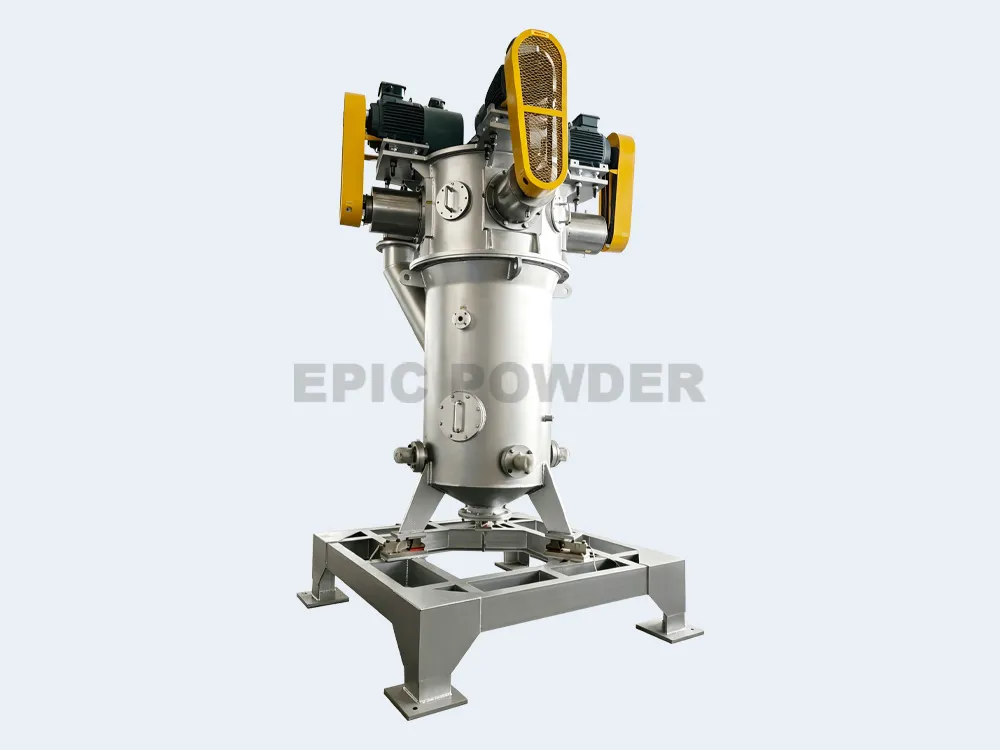
Le broyeur à jet d'air Il s'agit de l'équipement le plus utilisé pour la production de silice blanchissante de haute qualité. C'est la référence absolue car il répond à l'exigence la plus critique de l'industrie du dentifrice : Distribution granulométrique extrêmement étroite, sans particules surdimensionnées..
Comment ça marche:
Un flux d'air à grande vitesse (air comprimé ou vapeur surchauffée) accélère les particules de poudre à des vitesses supersoniques, provoquant des collisions entre elles (impact particule sur particule) plutôt qu'avec des surfaces mécaniques. Ce broyage “ doux ” préserve la morphologie des particules tout en assurant une réduction granulométrique précise.
Principaux avantages de la silice dans le dentifrice:
- Classification intégréeLe broyage et le classement ont lieu dans la même unité. Les particules surdimensionnées sont automatiquement rejetées et recirculées pour un broyage ultérieur.
- broyage à froid: L'absence de génération de chaleur signifie l'absence de risque de frittage ou de modifications de la structure cristalline, ce qui est essentiel pour maintenir la structure amorphe (non cristalline) qui rend la silice hydratée sûre.
- PSD étroit: Produit des poudres avec des distributions granulométriques extrêmement serrées, typiquement D97 de 3 μm à 45 μm, ajustables en modifiant la pression de broyage et la vitesse du classificateur.
- Aucune contaminationL'impact particule sur particule évite toute contamination par les métaux d'usure provenant des surfaces de meulage.
Le résultat: Une poudre finie où 100% de particules tomber en dessous de la limite cible D100, garantissant la conformité à la norme ISO 11609.
2. Broyeur à percussion mécanique
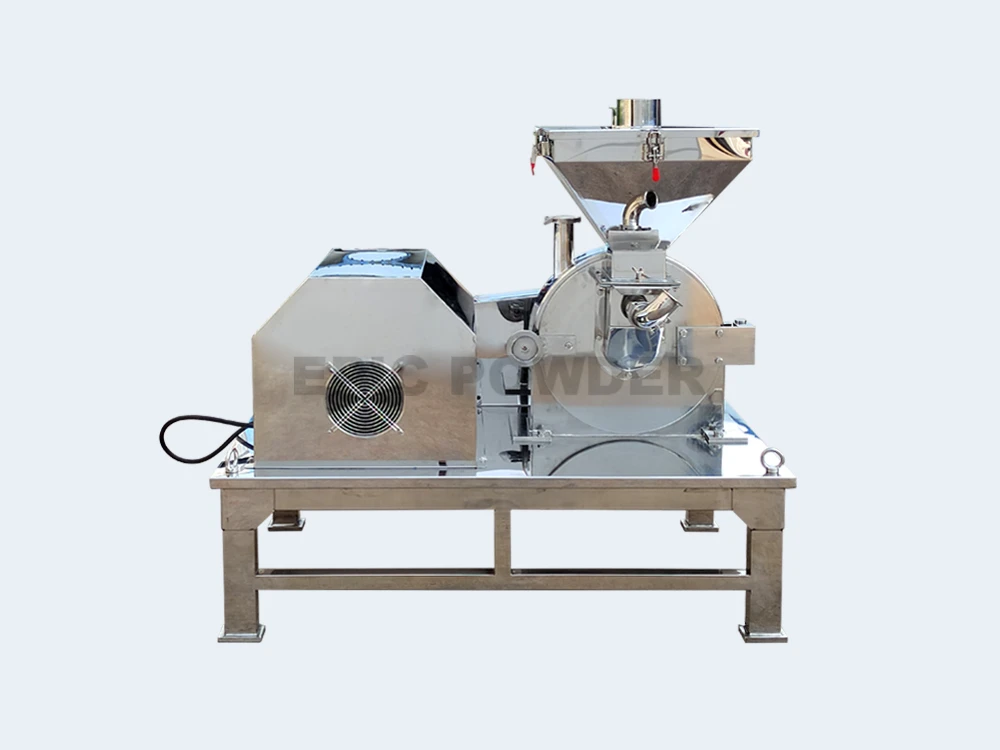
Application: Broyage grossier ou intermédiaire de la silice hydratée, généralement en tant que prétraitement avant broyage par jet.
Comment ça marche:
Les rotors rotatifs à grande vitesse génèrent des forces d'impact et de cisaillement intenses qui décomposent les gâteaux de filtration séchés ou les agglomérats en poudre de base.
Pourquoi c'est essentiel:
- Débit élevé avec une consommation d'énergie relativement faible
- Décompose les gros agglomérats issus des phases de précipitation et de séchage.
- Prépare le matériau pour un broyage fin efficace dans le broyeur à jet.
- Réduit la charge sur le broyeur à jet, prolongeant ainsi sa durée de vie.
3. Classificateur d'air de précision
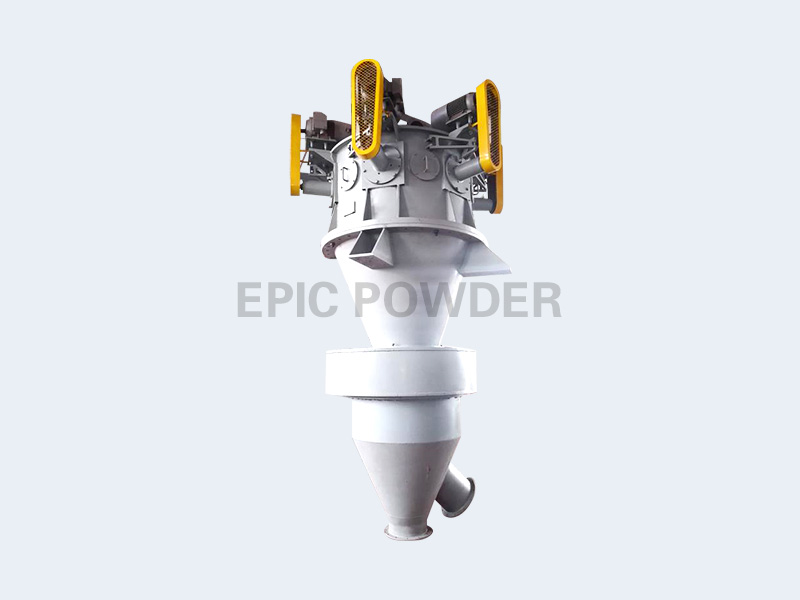
ApplicationLorsque la distribution granulométrique issue du broyeur n'est pas suffisamment serrée, un classificateur à air turbo externe de haute précision est ajouté au circuit.
Comment ça marche:
En ajustant la vitesse de rotation de la roue de classification, la limite supérieure de taille de la poudre peut être précisément définie. Les particules dont la taille dépasse cette limite sont rejetées et renvoyées pour un broyage ultérieur.
La fonction critique:
Voici le porte de sécurité finale qui garantit :
- Suppression de 99,9% de particules au-dessus de la cible D100
- Qualité constante d'un lot à l'autre
- Conformité totale à la norme ISO 11609
Pour les fabricants de dentifrice, c'est la différence entre un produit conforme et un risque.
4. Équipement de désagglomération et de dispersion
La silice hydratée possède une surface spécifique élevée et est naturellement sujette à agglomération (particules agglomérées). Si des agglomérats se retrouvent dans la formulation du dentifrice, ils se comportent comme des particules surdimensionnées : ils rayent l’émail et font grimper les valeurs RDA.
SolutionDes broyeurs à broches ou des désagglomérateurs sont utilisés avant et après le broyage pour briser mécaniquement les agglomérats, garantissant ainsi que la poudre se présente sous forme de poudre. particules primaires plutôt que des agglomérats. Cela garantit :
- Dispersion uniforme dans toute la formulation du dentifrice
- Performances de nettoyage et de polissage constantes
- Aucune texture “ granuleuse ” que les consommateurs rejettent
Comment Poudre épique Optimise votre ligne de broyage de silice
Chez Epic Powder, nous concevons Solutions complètes de traitement des poudres adapté à votre teneur spécifique en silice et à vos objectifs de production.
Nos capacités
| Équipement | Fonction | Principal avantage du dentifrice à base de silice |
|---|---|---|
| Broyeur à jet à lit fluidisé série MQW | Broyage ultrafin avec classification intégrée | Produit du D97 de 2 à 45 μm avec une PSD étroite et une limite supérieure de taille précise |
| Classificateur d'air | Classification de précision externe | Élimine 100% de particules au-dessus de la cible D100 |
| Broyeur à percussion | Pré-broyage et désagglomération | Prépare les matières premières pour un broyage par jet d'air efficace |
| Moulin à broches / Désagglomérateur | Dispersion mécanique | Brise les agglomérats en particules primaires |
Résultats prouvés
Notre broyeur à jet d'air de la série MQW a été déployé avec succès dans des applications de traitement de la silice à travers le monde, offrant :
- D97 de 3 μm à 45 μm avec un simple réglage de la pression de broyage et de la vitesse du classificateur
- Impact particule sur particule pour un broyage sans contamination
- broyage à froid qui préserve la structure de silice amorphe essentielle à la sécurité
- Distribution granulométrique étroite qui répond aux spécifications les plus exigeantes en matière de dentifrice
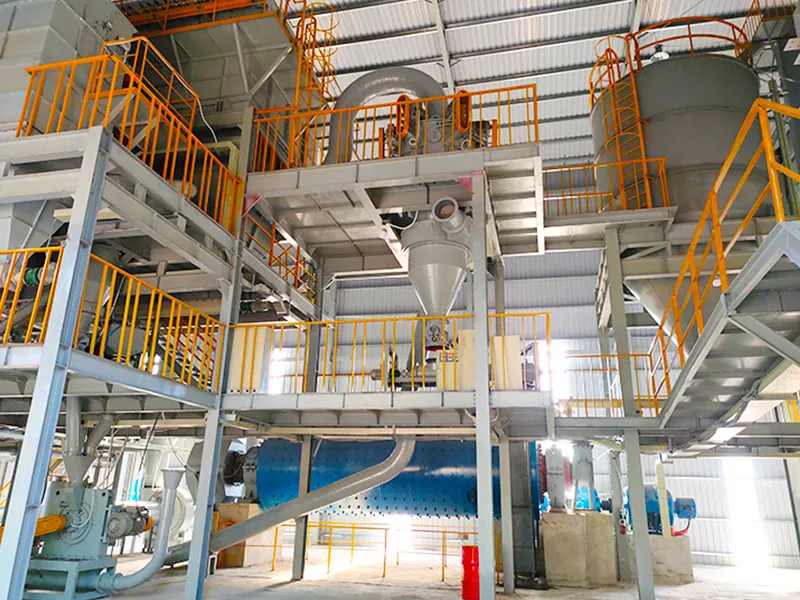
Pourquoi choisir Epic Powder ?
- Expertise sectorielleDes décennies d'expérience dans le traitement des poudres ultrafines
- Solutions complètesDes machines individuelles aux lignes de production clés en main
- Ingénierie de précision: Équipement conçu pour les tolérances les plus strictes
- Soutien mondialInstallation, formation et service après-vente dans le monde entier
FAQ :
Q : Quel est le RDA idéal pour un dentifrice blanchissant ?
A: La plupart des dentifrices blanchissants haut de gamme ciblent un RDA entre 70 et 100—élimination efficace des taches tout en restant bien en dessous du seuil de sécurité ISO 11609 de 250. La silice hydratée avec des tailles de particules médianes d'environ 7 à 12 μm fournit généralement des valeurs RDA dans cette plage.
Q : Les broyeurs à jet d'air peuvent-ils traiter des matériaux durs comme la silice ?
R : Oui. Les broyeurs à jet d'air peuvent traiter efficacement des matériaux jusqu'à une dureté Mohs de 10. La silice hydratée d'une dureté Mohs de 6 à 7 est tout à fait dans leurs capacités.
Q : Quelle distribution granulométrique dois-je viser pour la silice de qualité dentifrice ?
A: Les formulations de dentifrice de qualité supérieure nécessitent généralement une distribution bimodale avec D90 autour de 10 à 15 μm et D10 autour de 1 à 3 μm, avec D100 strictement en dessous de 15 μm pour garantir la sécurité.
Q : Comment empêcher les particules surdimensionnées de pénétrer dans le produit final ?
A : Grâce à un système de classification pneumatique intégré ou externe qui élimine en continu les particules dépassant le seuil défini et les renvoie pour un broyage ultérieur. Ceci garantit que le produit final répond aux spécifications cibles.
Q : Le broyage par jet d'air affecte-t-il les propriétés chimiques de la silice hydratée ?
R : Non. Le broyage par jet d'air ne générant aucune chaleur, il ne modifie ni la structure chimique ni la nature amorphe de la silice hydratée. La poudre reste chimiquement inerte et sans danger pour les applications de soins bucco-dentaires.
Conclusion
La silice blanchissante présente dans les dentifrices haut de gamme est bien plus qu'un simple ingrédient. Elle résulte d'une ingénierie sophistiquée des poudres qui allie efficacité nettoyante et protection de l'émail.
Grâce à des équipements de pointe comme broyeurs à jet, classificateurs de précision, et désagglomérateurs, Les processeurs de poudre transforment la silice hydratée en particules ayant une structure spécifique distribution bimodale et un limite supérieure strictement contrôlée—généralement D100 inférieur à 15 μm pour garantir la conformité à la norme ISO 11609.
Prêt à optimiser votre ligne de broyage de silice ? Contactez Epic Powder pour discuter de vos besoins spécifiques, ou explorer notre solutions de broyeurs à jet d'air pour la production de silice de qualité dentifrice.
Poudre EPIC
Poudre épique, Forts de plus de 20 ans d'expérience dans l'industrie des poudres ultrafines, nous contribuons activement à son développement futur, en nous concentrant sur les procédés de concassage, de broyage, de classification et de modification. Contactez-nous pour une consultation gratuite et des solutions personnalisées ! Notre équipe d'experts s'engage à vous fournir des produits et services de haute qualité afin d'optimiser la valeur de votre transformation des poudres.

“Merci de votre lecture. J'espère que cet article vous sera utile. N'hésitez pas à laisser un commentaire ci-dessous. Vous pouvez également contacter le service client en ligne d'EPIC Powder. Zelda pour toute autre question.”
— Jason Wang, Ingénieur