
Si vous travaillez dans le recyclage des batteries lithium-fer-phosphate (LFP), vous savez que l'obtention de taux de récupération élevés et d'une masse noire d'une grande pureté dépend fortement d'un broyage efficace. Or, tous les broyeurs ne se valent pas, notamment en matière de réduction de la taille des particules ultrafines, de contrôle de la contamination et d'efficacité énergétique. C'est là que le broyeur turbo se distingue comme une solution révolutionnaire. Grâce à un broyage précis et uniforme, il optimise la séparation des feuilles, améliore la libération des matériaux et garantit une distribution granulométrique homogène, autant d'éléments essentiels pour maximiser la rentabilité du recyclage et favoriser une économie circulaire et durable des batteries. Poursuivez votre lecture pour découvrir pourquoi le broyeur turbo transforme la technologie de recyclage des batteries LFP.
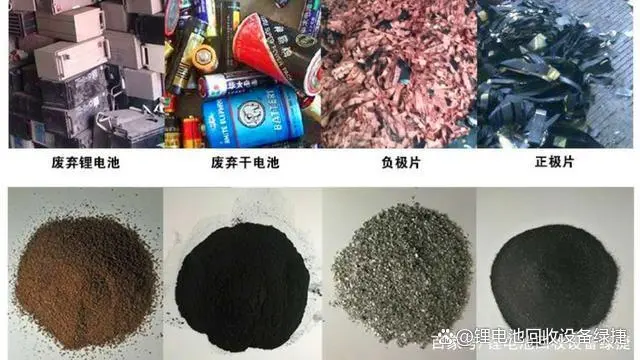
Le processus de recyclage des batteries LFP : quel est le rôle du broyage ?
Le recyclage des batteries lithium-fer-phosphate (LFP) revêt une importance croissante avec le développement des véhicules électriques et des systèmes de stockage d'énergie. Mais comment transformer ces batteries usagées en matériaux réutilisables ? Le processus comprend plusieurs étapes : le démantèlement, le tri, le broyage et le raffinage. Parmi celles-ci, affûtage Il s'agit d'une étape cruciale qui transforme les déchets volumineux en poudre fine, facilitant ainsi la récupération de matériaux précieux comme la mâchefere et le papier aluminium.
C’est là que le broyeur turbo pour le recyclage des batteries LFP révèle tout son potentiel. Il décompose efficacement les composants complexes des batteries en particules ultrafines et uniformes, condition essentielle à la production d’une masse noire de haute qualité. Un broyage optimal permet de maximiser la récupération des matériaux, de réduire la contamination et d’améliorer l’efficacité globale du cycle de recyclage.
Comprendre les défis du broyage dans le recyclage des LFP
Le broyage des batteries LFP n'est pas une mince affaire. Le processus doit surmonter plusieurs obstacles :
- Travailler avec des matériaux divers : Les batteries contiennent des cathodes, des anodes, des électrolytes, une feuille d'aluminium, etc. Obtenir la granulométrie adéquate pour chaque composant exige un broyage à la fois puissant et délicat.
- Prévenir la contamination : L'utilisation de moulins de qualité inférieure peut introduire des impuretés, compromettant la pureté de la masse noire.
- Obtention d'une taille de particules uniforme : Une granulométrie homogène améliore l'efficacité de la séparation et de la récupération des matériaux.
- Manipulation de matériaux résistants : Les matériaux de cathode LFP sont souvent durs et résistants, ce qui rend leur broyage fin difficile sans surcharger les machines.
- Consommation d'énergie : Un broyage efficace ne doit pas se faire au prix d'une forte consommation d'énergie, ce qui rend les solutions économes en énergie essentielles.
Ces difficultés soulignent l'importance du choix d'un outil de broyage adapté, comme une fraiseuse turbo, pour le recyclage des batteries LFP. Il permet de surmonter les obstacles et garantit un processus fluide et efficace du début à la fin.
Comment la fraiseuse turbo offre une efficacité supérieure en tant qu'outil de meulage
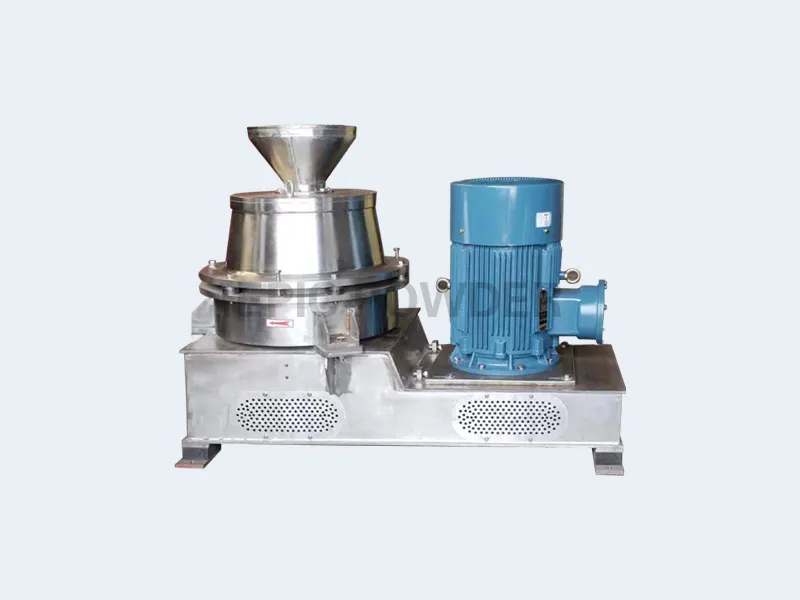
Principe de fonctionnement de base
Le Turbo Mill utilise un système de désagglomération mécanique à grande vitesse, associé à une conception unique du flux d'air. Cette configuration permet un broyage puissant. broyage ultrafin de la masse noire LFP, décomposant rapidement les batteries tout en minimisant l'accumulation de chaleur. Le procédé améliore distribution granulométrique des particules dans le recyclage du LFP en libérant efficacement les matériaux de cathode de la feuille et des liants.
Principales caractéristiques de conception
- Broches de désagglomération : Ces dispositifs créent des forces mécaniques intenses pour briser les particules grossières.
- Flux d'air spécialisé : Refroidit les matériaux en continu, réduisant ainsi les risques de contamination.
- Chambres de broyage personnalisables : Adaptable à différentes tailles d'alimentation et aux besoins spécifiques des produits.
- Surfaces à faible contamination : Garantit une production de masse noire de haute pureté.
Broyage ultrafin uniforme
Grâce à sa conception précise, le Turbo Mill atteint une homogénéité de fabrication remarquable. broyage ultrafin des cathodes LFP. Le résultat est un Poudre LFP recyclée de taille de particules uniforme, idéal pour la réutilisation de batteries haute performance ou leur traitement ultérieur.
Contrôle de la contamination
Les pièces en contact avec les matériaux sont conçues en acier inoxydable et dotées de revêtements résistants à l'usure. Cela contribue à prévenir la contamination pendant Séparation de feuilles de phosphate de fer lithié. L'environnement de broyage fermé garantit une introduction minimale d'impuretés, rendant le broyeur adapté à production de masse de noir de haute pureté.
Avantages en matière d'énergie et de débit
Comparé aux moulins traditionnels, le Turbo Mill offre :
| Fonctionnalité | Avantage du broyeur turbo |
|---|---|
| consommation d'énergie | 30-50% consommation d'énergie réduite |
| débit | Traitement en plus grande quantité par heure |
| Entretien | Temps d'arrêt réduit grâce à une conception résistante à l'usure |
Cela a pour résultat recyclage de batteries écoénergétique, permettant de réduire les coûts opérationnels tout en augmentant la production. Sa capacité de traitement élevée la rend idéale pour intensification du recyclage des ampoules LFP opérations.
En combinant ces aspects fondamentaux, la Turbo Mill se distingue clairement comme le meilleur outil pour broyage efficace des batteries LFP, pour un service plus propre, plus rapide et plus sûr masse noire de haute pureté convenant à une réutilisation ultérieure ou à la récupération des matériaux.
Avantages techniques du broyeur turbo dans les applications LFP
Le broyeur turbo offre des avantages indéniables pour le recyclage des batteries lithium-fer-phosphate (LFP), notamment pour le broyage des résidus et le traitement des matériaux de cathode. Voici ses principaux atouts :
Libération et séparation renforcées
Le système de désagglomération à broches puissant du broyeur turbocompressé décompose efficacement les matériaux de cathode LFP et les feuilles d'aluminium, permettant une meilleure libération des matières actives. Ceci améliore le processus de séparation, conduisant à une masse noire de plus grande pureté et à une récupération plus efficace du lithium et d'autres métaux précieux. Broyage de masse noire LFP, une libération précise des particules est cruciale pour obtenir un résultat de haute qualité.
Précision et uniformité de la taille des particules
Le broyeur turbo-alternatif produit des particules ultrafines et uniformes (souvent inférieures à 10 microns), garantissant une distribution granulométrique homogène. Ce niveau de contrôle optimise les procédés ultérieurs, comme la lixiviation chimique, et réduit les risques de contamination, permettant ainsi d'obtenir une poudre de LFP recyclée de haute pureté. L'obtention de cette uniformité est essentielle pour un recyclage efficace des cathodes de phosphate de fer lithié (LFP).
Avantages en matière de sécurité et d'environnement
Comparé aux broyeurs traditionnels, le broyeur turbo fonctionne avec moins d'émissions de poussières et un niveau sonore réduit. Sa conception fermée minimise les risques de contamination et d'explosion de poussières, créant ainsi un environnement de travail plus sûr. De plus, son fonctionnement écoénergétique réduit la consommation d'énergie globale, favorisant des pratiques de recyclage durables.
Évolutivité et intégration
Grâce à sa conception modulaire, le broyeur turbo s'intègre facilement aux lignes de recyclage existantes. Il s'adapte aussi bien aux petits laboratoires qu'aux installations industrielles complètes, offrant ainsi une solution flexible pour les usines de toutes tailles. Cette modularité permet un débit élevé tout en garantissant des performances constantes.
Comparaison avec d'autres types de moulins
| Fonctionnalité | Turbobroyeur | Broyeur à billes | Broyeur à jet |
|---|---|---|---|
| Contrôle de la taille des particules | Très précis | Moins de contrôle | Très bien, mais plus difficile à contrôler |
| efficacité énergétique | Haut | Modéré | Inférieur |
| Risque de contamination | Faible | Modéré | Plus élevé en raison de la poussière |
| Adapté aux applications à grande échelle | Oui | Oui | Limité |
Dans ce domaine, le broyeur turbo surpasse les autres options de broyage en offrant une libération supérieure, un broyage ultrafin et uniforme, et un fonctionnement plus sûr et plus économe en énergie – autant d’éléments essentiels pour un recyclage de haute qualité des batteries LFP.
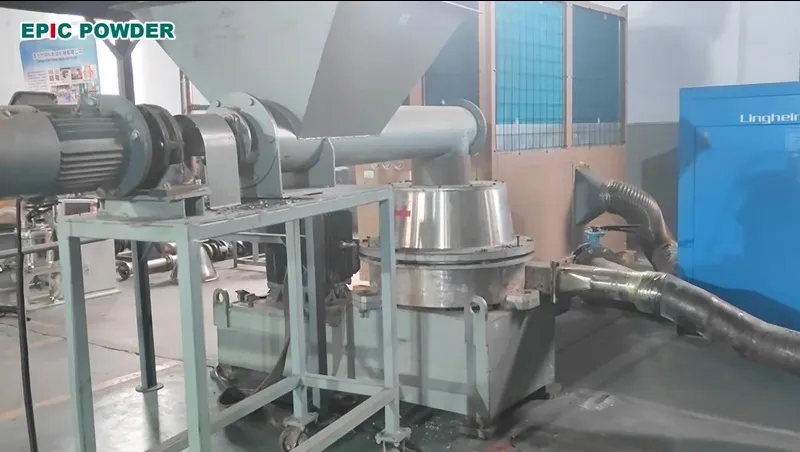
Études de cas et performances réelles du broyeur à poudre Epic Powder Turbo Mill
Exemple 1 : Améliorer la pureté de la masse noire
Une usine de recyclage a utilisé le broyeur turbo Epic Powder pour le broyage de la masse noire de phosphate de fer lithié (LFP). Elle a ainsi obtenu une granulométrie ultrafine d'environ 2 à 3 microns, améliorant la pureté de la cathode de LFP. La distribution granulométrique uniforme a facilité la séparation des feuilles métalliques comme l'aluminium et le cuivre, conduisant à des taux de récupération plus élevés.
Exemple 2 : Amélioration du débit et de la sécurité
Une autre installation était confrontée à des niveaux élevés de contamination de sa masse noire recyclée. En optant pour le broyeur Turbo pour le recyclage des batteries LFP, elle a constaté une réduction significative de la contamination et une augmentation du débit, jusqu'à 301 000 tonnes de matériaux supplémentaires traitées quotidiennement. La conception a également permis de minimiser les émissions de poussière, améliorant ainsi la sécurité au travail et la conformité environnementale.
Avantages quantifiables
| Avantage | Résultat |
|---|---|
| homogénéité de la taille des particules | Obtention d'une épaisseur inférieure à 3 microns avec une variation inférieure à 5% |
| Économies d'énergie | Réduction de la consommation d'énergie jusqu'à 20% |
| efficacité de récupération | Amélioration de la récupération du papier aluminium par 15% |
| débit | Capacité de traitement accrue de 25 à 30% |
Points saillants des commentaires des clients
Les clients témoignent que le broyage efficace de la masse noire LFP grâce au broyeur turbo Epic Powder réduit considérablement le temps de traitement. Ils soulignent également le faible risque de contamination et la capacité à produire une masse noire de haute pureté, essentielle pour les cathodes LFP recyclées de nouvelle génération. Nombre d'entre eux sont impressionnés par l'adaptabilité du broyeur, qui s'intègre parfaitement à leurs lignes de production existantes et répond aux normes de durabilité les plus strictes.
Ces résultats concrets montrent que le broyeur Turbo pour le recyclage des batteries LFP ne se limite pas au broyage ; il s'agit d'améliorer l'efficacité globale, la sécurité et la qualité des matériaux de batteries recyclés.
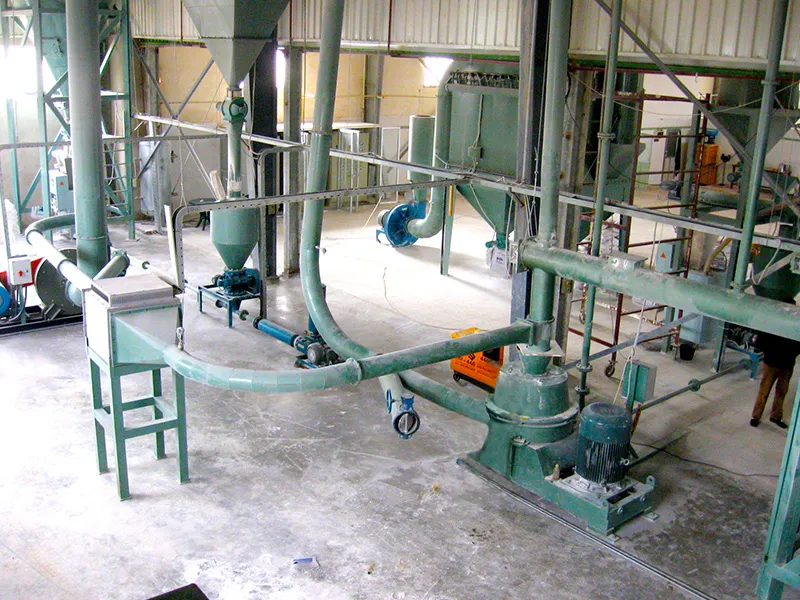
Considérations relatives à la mise en œuvre des usines de recyclage
Lors de l'adoption d'un broyeur turbo pour le recyclage des batteries LFP, une planification rigoureuse garantit une intégration harmonieuse et des résultats optimaux. Voici les points clés à prendre en compte :
Meilleures pratiques d'intégration
- Adapter les lignes existantes au broyage ultrafin de la masse noire, en particulier pour cibler les matériaux de cathode LFP.
- Utilisez une configuration modulaire pour intégrer facilement le broyeur turbo aux flux de production de recyclage existants.
- Veillez à assurer une préparation homogène des matières premières afin d'optimiser l'efficacité du broyage et d'éviter le colmatage ou une granulométrie irrégulière.
Paramètres opérationnels
- Maintenir des débits d'alimentation optimisés pour équilibrer le débit et la qualité du broyage.
- Contrôler la température et l'humidité pour minimiser les risques de contamination et prévenir l'usure du matériel.
- Surveillez régulièrement la distribution granulométrique afin de maintenir des niveaux de broyage ultrafin uniformes, essentiels pour une séparation efficace du lithium et des feuilles.
Facteurs de retour sur investissement
- Une efficacité énergétique élevée signifie des coûts d'exploitation inférieurs sur le long terme.
- Un traitement plus rapide améliore la productivité, ce qui se traduit par un retour sur investissement plus rapide.
- L'amélioration du traitement des matières noires permet d'obtenir des matériaux recyclés d'une plus grande pureté, augmentant ainsi leur valeur marchande.
Alignement réglementaire et durabilité
- Veiller au respect des réglementations environnementales locales concernant la poussière, les émissions et les déchets dangereux.
- Utilisez des broyeurs à faible contamination pour respecter les normes de recyclage durable.
- La précision du broyeur turbo réduit les déchets et soutient les objectifs de l'économie circulaire.
Perspectives d'avenir
- Face à la demande croissante de recyclage durable des batteries lithium-fer-phosphate (LFP), la mise en œuvre de solutions de broyage avancées comme le broyeur turbo sera essentielle.
- L'innovation continue permettra de réduire les coûts, d'automatiser les processus et d'accroître l'évolutivité.
- Le respect des réglementations garantit la viabilité à long terme et un avantage concurrentiel sur le marché mondial du recyclage.
Pour une intégration efficace, il est crucial que votre équipe se familiarise avec les réglages et les besoins d'entretien du turbobroyeur. De plus, il est important d'explorer des options comme lignes de production de broyage ultrafin peut contribuer à optimiser l'ensemble du processus.
« Merci de votre lecture. J’espère que cet article vous sera utile. N’hésitez pas à laisser un commentaire ci-dessous. Pour toute question, vous pouvez également contacter le service client en ligne de Zelda. »
— Publié par Emily Chen
Erreur : Formulaire de contact non trouvé !