
The dispersibility of polvo directly affects its stability, flowability, wettability, and uniformity in solvents. Ultimately, it determines the product quality. In other words, the powder dispersion directly impacts the application value of powder materials.
Powder Dispersion and Dispersants
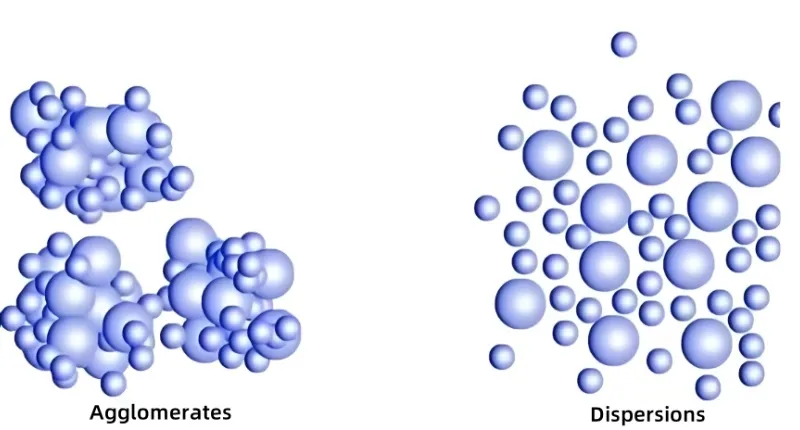
Due to the large specific surface area and surface energy of ultrafine powders, particles are prone to aggregation and agglomeration during preparation and post-processing. This forms secondary particles that lose the original excellent properties of ultrafine particles.
In powder materials, there are van der Waals forces between particles. There are also repulsive forces generated by the double electric layer. When the repulsive forces between particles exceed the attractive forces, the particles repel each other. This causes the powder to disperse. When the attractive forces are stronger than the repulsive forces, the particles approach each other and agglomerate. Dispersing agents are substances that adsorb on the surface of dispersed particles in a directional manner. They prevent aggregation of the dispersion medium and maintain surface activity for a certain period. Some of the dispersing agent adsorbs on the powder surface. The long-chain segments extend in the dispersion medium, effectively promoting powder dispersion.
Physical Dispersion Methods for Powders
Mechanical Dispersion Method
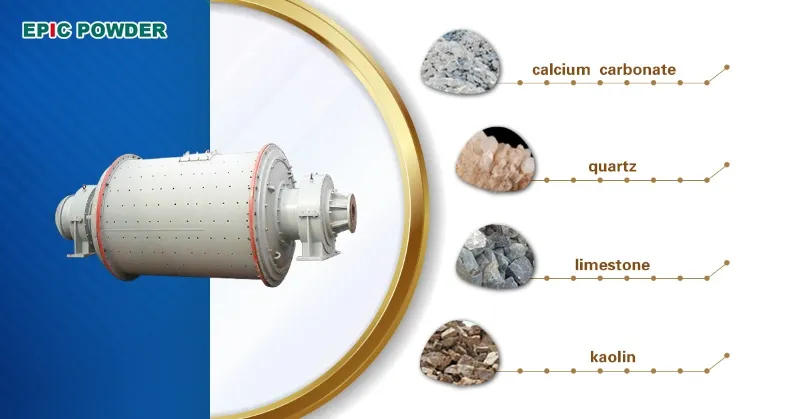
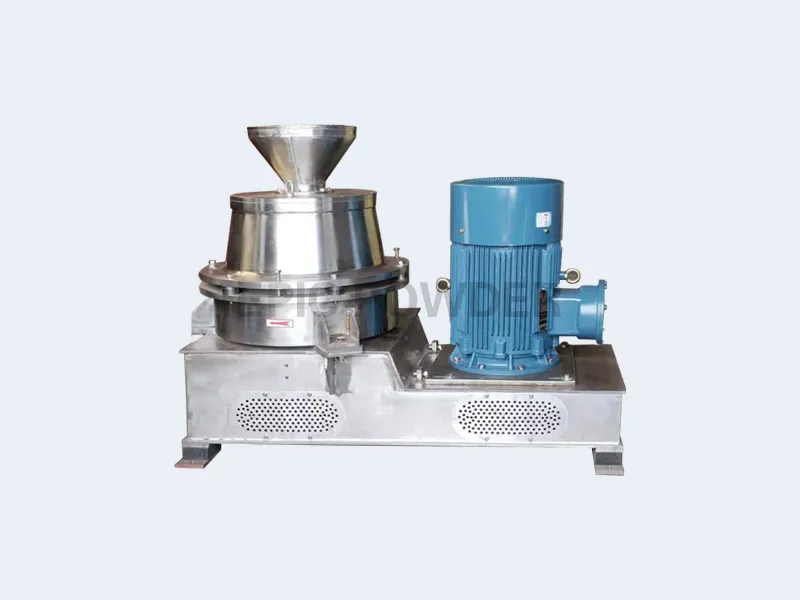
Mechanical dispersion is a physical dispersion method. It uses external shear force or impact force to disperse nanoparticles in a medium. This method generally uses ordinary molinos de bolas, pin mills, turbo mills, or shear-type high-speed stirrers. The ideal state is microscopic homogeneity. The ordinary ball mill has low grinding efficiency. It is used for secondary dispersion of previously dispersed slurries after settling. Stirred mills and planetary mills are more efficient. Stirring is a process of homogenizing materials. Besides physical effects, it may involve chemical reactions, achieving microscopic homogeneity.
However, all ball milling methods have some drawbacks. During the grinding process, wear particles may enter the powder. These particles become contaminants. This affects the purity of the powder and the performance of the final product.
Ultrasonic Dispersion Method
The ultrasonic dispersion mechanism is that ultrasound propagates in the dispersion system as standing waves. This causes powder particles to undergo periodic stretching and compression. Ultrasound may also generate cavitation in the liquid. This aids particle dispersion. The localized high temperatures, high pressures, shock waves, and microjets produced by ultrasonic cavitation weaken inter-particle forces. This effectively prevents particle agglomeration. The dispersion effect of ultrasound depends on the frequency and power of the ultrasound.
Electromagnetic Dispersion Method
The electromagnetic dispersion method uses ferromagnetic stirring rods. These rods move in the magnetic field generated by alternating voltage. This method is less effective for dispersing ultrafine powders.
Impact Flow Method
This method uses high-pressure, high-speed turbulent flows and ultrasonic effects generated during the impact collision process. This helps disperse powder particles. The impact flow technique is suitable for dispersing submicron-level powders.
Inorganic Dispersing Agents
The most commonly used inorganic dispersing agents are polyphosphates (such as sodium hexametaphosphate), silicates, and carbonates. The dispersing stability mechanism of inorganic dispersing agents is electrostatic stabilization. This involves physical adsorption, characteristic adsorption, or ion-specific adsorption. These methods give particles positive or negative charges. This increases electrostatic repulsion on the particle surface. It raises the energy barrier on the potential energy curve. As a result, particles are less likely to agglomerate during thermal or Brownian motion.
Conclusión
In ultrafine powder dispersion, selecting an appropriate dispersing medium is crucial. The medium should be based on the surface properties of the ultrafine particles. The basic principle is that non-polar particles disperse in non-polar liquids, while polar particles disperse in polar liquids. The pH value and temperature of the dispersing medium also impact dispersibility. These factors form the foundation for studying powder dispersibility and solving related problems.
Polvo épico
In the dispersion of ultrafine powders, Epic Powder’s advanced grinding equipment plays a critical role in achieving optimal particle dispersion. By combining high-efficiency ball mills, pin mills, turbo mills and other specialized milling technologies, Epic Powder ensures that particles are finely ground and well-dispersed. The choice of dispersing medium, along with precise milling processes, directly impacts the quality and performance of the final product. With over 20 years of expertise in powder processing, Epic Powder continues to innovate, providing tailored solutions for industries requiring high-quality, uniform powder dispersion.
Error: No se encontró ningún formulario de contacto.