
With the rapid development of new energy vehicles and energy storage batteries, Litium Besi Fosfat (LiFePO₄, or LFP) has become a preferred cathode material. This is primarily due to its high safety, long cycle life, environmental friendliness, and cost advantages. However, LFP performance is not solely determined by bahan kimia composition; it is also closely linked to particle morphology. These factors—including ukuran partikel, distribution, shape, and surface structure—directly affect the battery’s charge-discharge rate, cycle life, conductivity, and energy density.
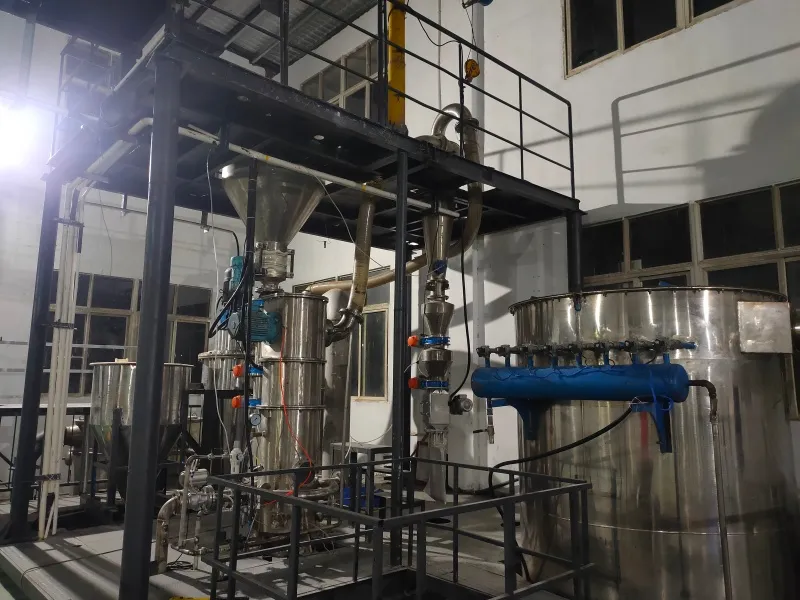
The Relationship Between LFP Particle Morphology and Performance
The particle morphology of lithium iron phosphate mainly manifests in the following aspects:
- Ukuran dan distribusi partikel
Particle size significantly impacts the kinetic performance of LFP. Generally, smaller particles help shorten the diffusion path of lithium ions within the particles, thereby improving the charge-discharge rate. However, overly small particles may increase the specific surface area, which can lead to side reactions and affect cycle life. Uniform particle size distribution ensures the density and consistency of the electrode structure, reducing the risk of excessive local current density. - Bentuk partikel
Common LFP particle shapes include spherical, quasi-spherical, plate-like, and needle-like. Spherical particles are widely used in commercial production due to their good flowability and high packing density. Plate-like and needle-like particles have higher specific surface areas, increasing contact with the electrolyte and enhancing kinetic performance, but they may reduce packing density and thus lower energy density. Irregular shapes may also hinder slurry flow during lapisan, causing uneven electrode thickness. - Surface structure and porosity
LFP particles with rough or porous surfaces facilitate electrolyte penetration, improving the interfacial reaction rate. However, excessive porosity can lead to irreversible capacity loss. Smooth and dense particle surfaces maintain cycle stability but may limit rapid charge-discharge capability.
The Role of Peralatan Penggilingan in Controlling Particle Morphology
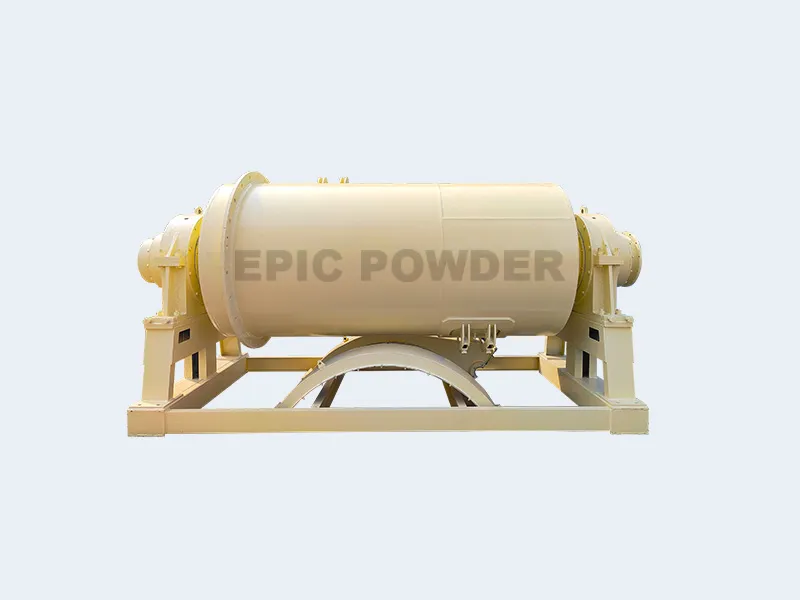
The morphology of lithium iron phosphate particles is not only influenced by synthesis methods, such as hydrothermal, sol-gel, or solid-state reactions. It can also be significantly optimized through post-synthesis grinding processes. In this context, grinding equipment plays a crucial role in enhancing LFP particle performance.
- Pabrik bola
Itu pabrik bola uses grinding media to apply impact and friction forces to the material, thereby achieving particle size reduction. While traditional ball mills are suitable for large-scale production, they can grind LFP particles from the micrometer scale down to the nanometer scale. However, prolonged milling may damage particle surfaces or introduce lattice defects. Modern ball mills, when combined with wet milling, can reduce particle size while controlling shape. This results in more spherical particles and improved packing density. - Pabrik getaran
Vibration mills use high-speed vibration to generate shear and impact forces, suitable for ultrafine grinding of medium-hard materials. For LFP, vibration mills provide a way to quickly control particle size distribution while maintaining surface integrity. This approach reduces the formation of defects and irregular shapes compared to traditional methods. - Pabrik jet
Jet mills are high-energy grinding devices. They use high-speed airflow to cause particle collisions and fragmentation, often applied to produce ultrafine powders. LFP can achieve a precise D50 particle size of 1–5 μm in a pabrik jet, while maintaining spherical shape and smooth surface. This low-temperature grinding process is particularly suitable for heat-sensitive materials, minimizing structural damage and enhancing electrochemical performance. - Wet and dry classification equipment
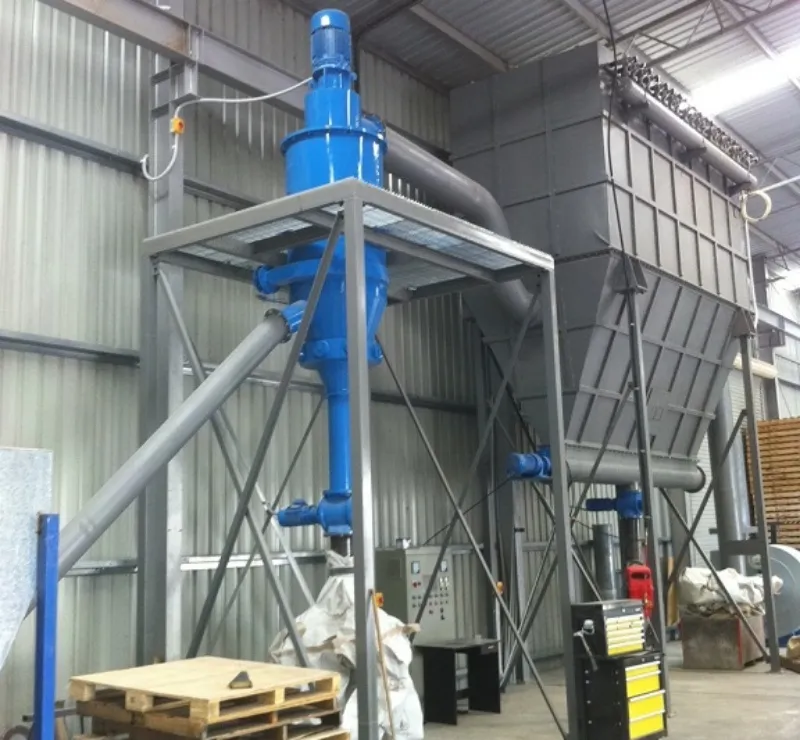
During the grinding process, combining the mill with classification equipment—such as cyclone or air classifiers—allows for better quality control. Particles that do not meet specific size or morphology requirements can be recovered and re-ground. Precision classification ensures a narrow size distribution and uniform morphology. Ultimately, this improves both battery consistency and performance stability.
Grinding Optimization Strategies to Improve LFP Performance
Proper grinding strategies can significantly enhance the overall performance of lithium iron phosphate, mainly in the following aspects:
- Improving rate capability
By controlling particle size and morphology through grinding, the lithium-ion diffusion path is significantly shortened. This process also reduces interfacial impedance, which directly improves the charge-discharge rate. Furthermore, spherical micrometer-scale particles form highly uniform electrode structures during the coating process. This uniformity facilitates rapid lithium-ion migration across the battery. - Enhancing cycle life
Particles with a uniform size distribution and smooth surfaces minimize the risk of structural damage. Specifically, they prevent the issues caused by excessive local current density. These optimized particles also lower the probability of side reactions, thereby extending the battery’s overall cycle life. Additionally, low-temperature grinding in a jet mill is highly effective at avoiding lattice damage, which significantly enhances long-term cycle stability. - Improving slurry flowability and coating performance
Spherical or quasi-spherical particles exhibit excellent flowability. This characteristic improves the uniformity of the slurry and the consistency of the electrode thickness. By reducing coating defects, this morphology enhances both the energy density and the uniformity of the final electrode. - Increasing conductivity and interfacial reaction
For nano- or micrometer-scale particles, moderate grinding can effectively increase the specific surface area. This increase improves electrolyte penetration and accelerates the interfacial reaction rate. Ultimately, these factors enhance the battery’s low-temperature performance and overall power output.
Case Study
In one battery enterprise, a combined grinding process using a jet mill and vibration mill was introduced for secondary grinding and classification of hydrothermally prepared LFP precursors. The process achieved particles with a D50 of about 2 μm and a sphericity greater than 0.85. Batteries made with these materials showed an improvement in capacity retention from 82% to 93% at 5C rate. After 1000 cycles, capacity decay was less than 8%. This case fully demonstrates the importance of controlling particle morphology and grinding processes for LFP performance.
Kesimpulan and Outlook
Lithium iron phosphate particle morphology is a key factor affecting electrochemical performance. Proper control of particle size, size distribution, particle shape, and surface structure can significantly enhance rate capability, cycle life, and electrode consistency. Grinding equipment, as an important tool for particle morphology control, plays an irreplaceable role in LFP industrial production.
As the demand for high-performance lithium iron phosphate continues to grow, precision grinding equipment and morphology optimization will become essential competitive tools. Through precise grinding and advanced classification, enterprises can do more than just improve LFP particle shape. They can achieve truly controllable material performance and maintain strict batch consistency across large-scale production. This provides more efficient, safer, and longer-lasting power solutions for new energy vehicles and energy storage batteries.

Terima kasih sudah membaca. Semoga artikel saya bermanfaat. Silakan tinggalkan komentar di bawah. Anda juga bisa menghubungi perwakilan pelanggan Zelda online untuk pertanyaan lebih lanjut.
— Diposting oleh Emily Chen