
Poudre de silice sphérique is a spherical silicon dioxide material. It has excellent properties and important applications. The particles are regular spheres. Compared to irregular silica, poudre de silice sphérique perform better. It usually has high purity and narrow particle size distribution. It also shows good whiteness. Its flowability is excellent, and dispersion is good. These properties help it disperse evenly in various materials. This promotes its functional performance effectively.
The preparation methods of spherical silica can be roughly divided into two categories: physical method and chemical method. This depends on whether chemical changes occur during preparation.
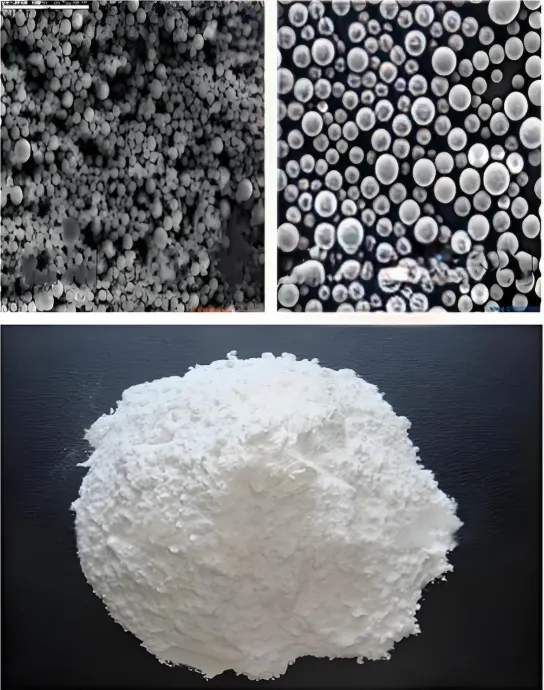
méthode physique
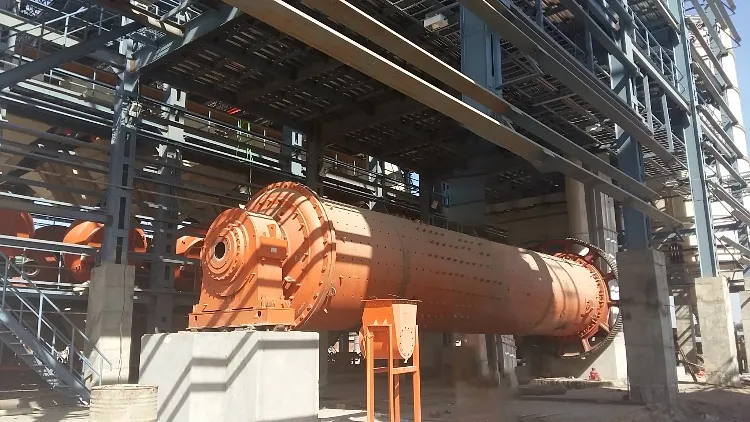
broyage à billes
Uses grinding and classifying equipment to produce ultrafine powder.
Based on material state, it includes dry and wet methods. Wet milling uses water as a carrier medium. Particles are ground by a stirred mill. This produces ultrafine products with good dispersion. The particle size is also relatively uniform.
Méthode de pulvérisation
This method is to quickly dry the liquid raw material through a spray dryer to obtain the sample. Specifically, the liquid raw material will first pass through the atomizer to form extremely fine droplets, and then the droplets will come into contact with hot air, the moisture inside will begin to migrate outward, and the raw material particles will agglomerate, and the desired product can be obtained after drying.
Flame spheronization method
Under high temperature environment (temperature between 1600-2000℃), the edges and corners of the powder surface will gradually melt after being heated. Then, spheres will gradually form under the action of surface tension. If ordinary quartz powder is used as raw material, spherical silicon powder can be prepared by oxygen-acetylene flame method. It can ensure that the surface of the product is smooth and the spheronization rate can reach 95%.
Flame melting method
First, angular silicon micropowder is used as raw material, and pre-treatment operations such as crushing, screening, and purification are carried out on it. That is, the angular silicon micropowder is first crushed by a jet crusher. After multi-stage pretreatment, the material with a suitable particle size is screened out. Then, acetylene, natural gas and other gases are used as the heat source for the molten powder. The flame generated by the combustion of such gases is clean and pollution-free. Then, the angular silicon micropowder with a suitable particle size is melted instantly at high temperature by the high-temperature flame melting method. After that, it is quickly cooled to form a spheroidization, and finally a spherical silicon micropowder with high purity and uniform particle size can be obtained.
Plasma method
Uses high temperatures from arc plasma. Silica or quartz powder melts into droplets. Surface tension helps the droplets form spheres. After cooling, spherical silica particles are formed.
High-temperature calcination
High-temperature calcination starts with natural quartz powder. The powder is aged under alkaline conditions. It is then filtered to remove impurities. Filtered material is dehydrated and dried. A binder is added to form block samples. Blocks are calcined in a high-temperature furnace. After cooling, the product is dispersed. Then it goes through milling and spheronization. Magnetic separation and air classification follow. The final product is high-purity spherical silica. It has high spheronization rate and good whiteness. The powder also flows and disperses well. However, this method is still in lab research stage.
Direct combustion method
Direct combustion method uses natural mineral powder for flame fusion.
This limits both purity and particle size distribution.
High-temperature melt spraying method
This method is to melt high-purity quartz into liquid at a high temperature of 2100-2500℃, and then go through processes such as spraying and cooling to finally obtain spherical silicon powder. The surface of the product is smooth, and the spheroidization rate and amorphous rate can reach 100%.
Chemical method
Gas phase method
Gas phase method starts with distillation of silicon halides. They are then vaporized at high temperatures. Hydrogen and oxygen are added in set proportions. Under pressure and heat, gas-phase hydrolysis occurs. Products are collected using a cyclone separator. This yields high-purity nanosilica particles. The reaction process is well-controlled. However, the cost of this method is high. Organic by-products are also hard to handle.
Méthode de précipitation
Precipitation method uses water glass and acid agents as raw materials. A suitable surfactant is also added. Temperature control is crucial during preparation. When pH exceeds 8, a stabilizer is added. After washing, drying, and calcination, spheres form. This method yields uniform spherical silica powder. It has low cost and simple, controllable process. It is suitable for industrial production. However, the product tends to agglomerate easily.
Hydrothermal synthesis
Hydrothermal synthesis is widely used for nanoparticle preparation in liquid phase.
It occurs at high temperatures of 150–350℃ and high pressure. Inorganic and organic compounds react with water. Strong convection drives ions and molecules to growth zones. Seed crystals are placed in these zones. Supersaturated solutions and crystals are formed. Inorganics are filtered, washed, and dried. This forms ultrafine, high-purity particles. It avoids oxide conversion needed in other liquid methods. This reduces the chance of hard agglomeration.
méthode sol-gel
Sol-gel method starts by mixing raw materials with a liquid phase. Under certain conditions, hydrolysis takes place. Chemical condensation forms a silica sol. Over time, a 3D silica gel network forms. The gel is then filtered and washed. Next, it is dried and sintered. This produces nanosilica or nanoquartz particles.
Méthode de microémulsion
Microemulsion method forms a uniform emulsion using surfactants. It blends two originally immiscible phases. Nucleation and growth occur in confined interfacial spaces. Silicon source guides particle formation. After heat treatment, spherical silica or quartz forms. Limited space leads to small particle size. Agglomeration is also less likely to occur.
Conclusion
In conclusion, spherical silica powder is a highly refined material with a uniform particle size and excellent dispersion properties. Its spherical structure enhances flowability and stability, making it ideal for various industrial applications, including electronics, coatings, and pharmaceuticals. With its superior performance, spherical silica continues to be an essential component in numerous high-tech industries.
Poudre épique
Poudre épique,Plus de 20 ans d'expérience dans l'industrie des poudres ultrafines. Nous contribuons activement à l'avenir de ce secteur, en nous concentrant sur les procédés de concassage, de broyage, de classification et de modification des poudres ultrafines. Contactez-nous pour une consultation gratuite et des solutions personnalisées ! Notre équipe d'experts s'engage à vous fournir des produits et services de haute qualité afin d'optimiser la valeur de votre traitement des poudres. Epic Powder : votre expert de confiance en traitement des poudres !
Erreur : Formulaire de contact non trouvé !