
Phân loại hạt Thuật ngữ này đề cập đến việc tách các hạt cùng loại vật liệu dựa trên sự khác biệt về tính chất vật lý, chẳng hạn như... kích thước hạt, Phân loại dựa trên hình dạng, mật độ hoặc kích thước. Trong hầu hết các trường hợp, phân loại cụ thể có nghĩa là tách các hạt theo kích thước. Hai yếu tố kỹ thuật cốt lõi của phân loại là sự phân tán và sự tách biệt.
Phân tán đòi hỏi vật liệu đi vào buồng phân loại phải được phân tán càng nhiều càng tốt. Tách biệt có nghĩa là các hạt mịn đạt tiêu chuẩn phải được loại bỏ ngay lập tức khỏi khu vực phân loại.
Với sự phát triển nhanh chóng và ứng dụng ngày càng mở rộng của bột siêu mịn trong nhiều ngành công nghiệp, công nghệ phân loại cũng đã có những tiến bộ đáng kể. Trong số các giải pháp khác nhau, cái bộ phân loại khí turbo đã trở thành sự lựa chọn phổ biến. Điều này là do hiệu quả cao, độ chính xác cao và tính linh hoạt trong vận hành rộng rãi của nó.
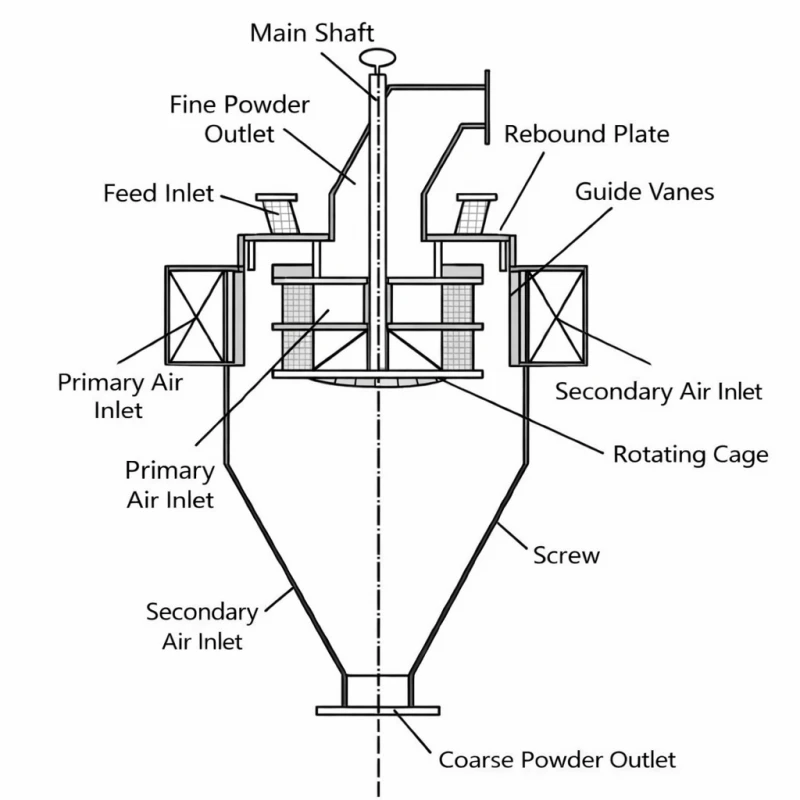
Nguyên lý hoạt động của máy phân loại khí turbo
Vật liệu cần phân loại rơi từ cửa nạp xuống tấm phân phối.
Nó quay cùng với tấm chắn. Vật liệu sau đó được văng ra ngoài theo hướng tiếp tuyến. Sau khi va chạm với tấm chắn, các hạt đi vào vùng giữa mép ngoài của lồng rôto và các cánh dẫn hướng. Không khí sơ cấp và không khí thứ cấp đi vào bộ phân loại theo hướng tiếp tuyến. Chúng đi qua các cánh dẫn hướng và tạo thành luồng không khí xoáy. Luồng không khí quay cùng chiều với lồng rôto.
Bên trong vùng phân loại hình vòng, các hạt chủ yếu chịu tác động của ba lực:
- Lực ly tâm hướng về phía thành máy phân loại
- lực cản chất lỏng hướng tâm
- lực chênh lệch áp suất hướng về trung tâm
Các hạt mịn chịu lực ly tâm tương đối nhỏ, do đó lực tổng hợp hướng chúng về phía tâm của lồng rôto. Chúng được luồng không khí cuốn vào rôto và thải ra ngoài qua cửa thoát bột mịn theo hướng trục. Các hạt thô chịu lực ly tâm mạnh hơn nhiều. Lực tổng hợp của chúng hướng về phía thành của bộ phân loại. Sau khi va chạm với thành, chúng di chuyển xuống dưới. Chúng được thải ra ngoài qua cửa thoát bột thô.
Sơ đồ cấu tạo của turbo máy phân loại không khí
Ưu điểm của bộ phân loại khí tuabin
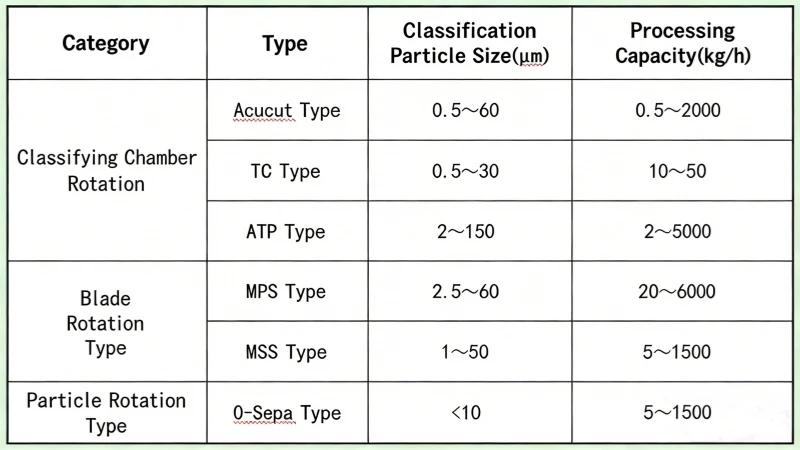
Theo cấu trúc lồng rôto, máy phân loại khí tuabin nói chung có thể được chia thành ba loại chính với sáu dạng cấu trúc. Mặc dù có những khác biệt về cấu trúc, chúng đều có một số ưu điểm chung:
Máy phân loại không khí tuabin được phân loại theo hình dạng của trống quay.
- Khả năng xử lý cao hơn
So với các thế hệ máy phân loại khí trước đây, máy phân loại khí turbo mang lại lưu lượng lớn hơn. Thiết kế lồng rôto đặc biệt của chúng đảm bảo phân bố dòng khí đồng đều hơn, trộn khí và chất rắn tốt hơn và hoàn thành quá trình phân loại nhanh hơn trong khu vực phân loại. - Hiệu suất cao hơn và tiêu thụ năng lượng thấp hơn trong hệ thống mài tuần hoàn kín
Khi kết hợp với máy nghiền, máy phân loại khí nén turbo giúp giảm đáng kể hiện tượng nghiền quá mức và nghiền thứ cấp, từ đó tiết kiệm năng lượng, giảm chi phí và nâng cao hiệu quả kinh tế tổng thể. - Phạm vi điều chỉnh kích thước hạt rộng và thao tác dễ dàng
Bằng cách điều chỉnh tốc độ quay của rôto và lưu lượng khí, độ nhạy của trường dòng chảy đối với kích thước hạt có thể được kiểm soát, cho phép điều chỉnh linh hoạt kích thước cắt và phân bố kích thước hạt sản phẩm. - Dễ bảo trì và chi phí phụ tùng thấp
Với cấu trúc tương đối đơn giản và chủ yếu là các bộ phận lồng rôto phức tạp, máy phân loại không khí kiểu tuabin có ưu điểm là khả năng thay thế linh kiện tốt và chi phí bảo trì thấp.
Những thách thức của máy phân loại khí nén Turbo
Mặc dù có nhiều ưu điểm, nhưng một số thách thức trở nên rõ ràng khi máy phân loại khí nén được áp dụng cho nhiều loại vật liệu hơn:
- Sự kết tụ hạt
Sau quá trình nghiền siêu mịn, bột có diện tích bề mặt riêng và năng lượng bề mặt tăng lên, dẫn đến hoạt tính bề mặt cao hơn. Lực hút giữa các hạt tăng lên, và độ ẩm hoặc tạp chất có thể thúc đẩy quá trình kết tụ hơn nữa. Hiệu ứng này đặc biệt nghiêm trọng đối với các hạt nhỏ hơn 1 μm, khiến việc phân loại trở nên khó khăn hơn. Do đó, việc phân tán hiệu quả thành trạng thái hạt đơn là rất cần thiết để cải thiện khả năng chảy và hiệu suất phân loại. - Phân bố luồng không khí không đồng đều
Cấu trúc xoắn ốc, hình dạng cánh quạt và góc lắp đặt ống dẫn có thể gây ra sự phân bố luồng không khí không đồng đều trong buồng phân loại. Điều này có thể làm tăng cường nhiễu loạn hoặc tạo ra các xoáy cục bộ, làm giảm đáng kể độ chính xác và hiệu quả phân loại. - Độ chính xác hạn chế đối với các hạt siêu nhỏ
Các hệ thống phân loại hiện có gặp khó khăn trong việc duy trì độ chính xác và hiệu quả cao đối với các hạt có kích thước dưới 1 μm, khiến việc đáp ứng các yêu cầu khắt khe của các ngành công nghiệp công nghệ cao hiện đại về phân bố kích thước hạt "mịn và hẹp" trở nên khó khăn. - Sự đánh đổi giữa hiệu quả và độ chính xác
Khả năng phân loại và độ chính xác phân loại có mối quan hệ ràng buộc lẫn nhau. Việc tăng thông lượng hoặc nồng độ hạt thường làm giảm độ chính xác. Ngược lại, việc duy trì độ chính xác cao thường dẫn đến hiệu quả thấp hơn. Cân bằng hai yếu tố này vẫn là một thách thức kỹ thuật lớn.
Do đó, việc cải thiện hiệu suất của các thiết bị phân loại bột siêu mịn và khắc phục những hạn chế kỹ thuật này đã trở thành trọng tâm chính của các nhà nghiên cứu và nhà sản xuất thiết bị trên toàn thế giới.

Cảm ơn bạn đã đọc. Tôi hy vọng bài viết của tôi hữu ích. Vui lòng để lại bình luận bên dưới. Bạn cũng có thể liên hệ với bộ phận chăm sóc khách hàng trực tuyến của Zelda nếu có bất kỳ thắc mắc nào khác.
— Đăng bởi Emily Chen