
A mill that delivered 800 kg/h in February can fall to 600 kg/h in July. No setpoint has changed, and the feed still comes from the same stockpile. The only variable left is the water that stockpile carries. Surface moisture reaches the circuit by three routes: the raw material, the conveying gas, and the heat input the design never included. Each route leaves a different signature on throughput, on the size report and on the filter. In this article, let’s find out the secrects of feed moisture in grinding.
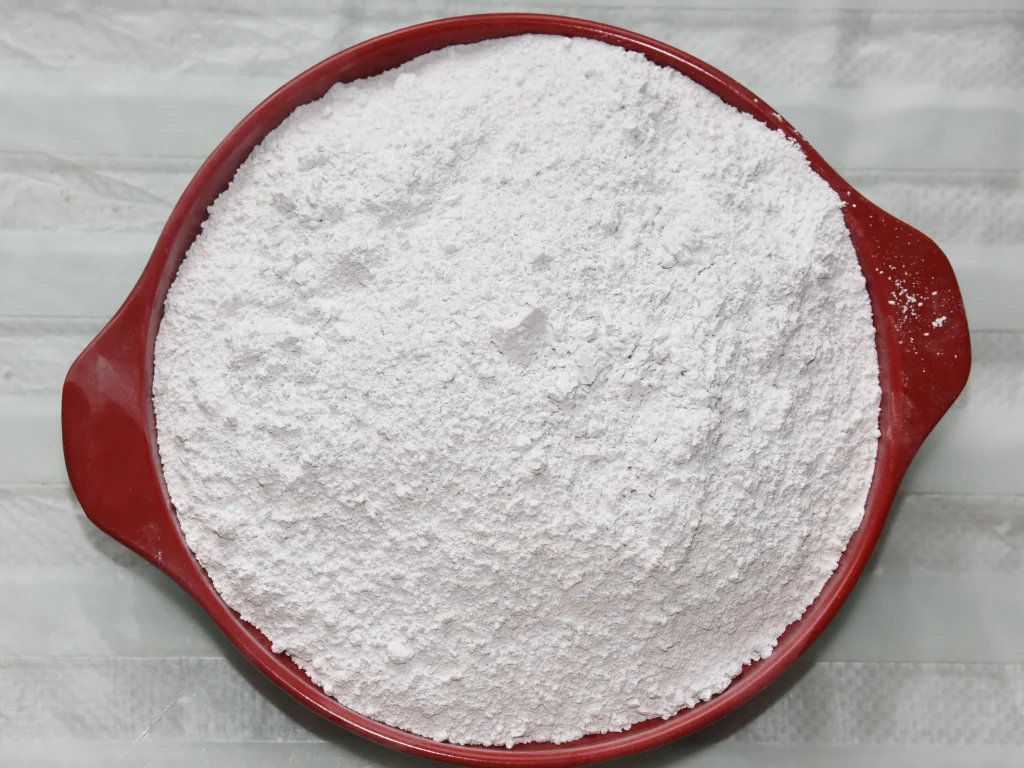
Where the Water Comes From
Material stored in the open exchanges water with the surrounding air. It gains during rain and loses during dry spells, and even a covered pile adsorbs moisture overnight when humidity is high. Water migrates slowly through a static pile, so surface feed and core feed can differ by a full percentage point. A single shift may see both extremes, with no change in the mining plan.
The conveying gas carries its own load. Air at 30 °C and 80% relative humidity holds about 24 g of water per kilogram of dry air. That water passes through the mill and leaves by the bag filter. Any drop in temperature on the way forces part of it back out of the stream.
A mechanical mill turns most of its shaft energy into heat inside the product. A jet mill gives most of that energy to the gas. Neither machine works as a dryer. Evaporation inside the chamber also removes latent heat, so gas leaving the mill can be colder than the gas entering it.
Hydrated minerals behave differently. Gypsum and several hydrated salts hold water inside the crystal lattice, and that water leaves only at a higher temperature. A phase change often accompanies the release. For those feeds the drying temperature belongs to the process design. Treated as a maintenance detail, it yields a product that has lost its crystal structure.
What Water Does Inside the Machine
Damp fines adhere to media, liners, rotor faces and classifier wheels. The film that forms absorbs part of the impact energy that would otherwise reach the particle bed. Throughput falls while power draw and setpoints stay where they were. The loss is then blamed on the material.
Moisture also binds fines into loose agglomerates, and the analyzer counts each cluster as one particle. The reported D97 rises although the comminution work is unchanged. The same sample, dried and re-measured, gives a finer curve. That gap between wet and dry measurement is the clearest sign of agglomeration.
In the classifying zone, a crust on the rotor alters the clearance and the balance between drag and centrifugal force. The cut point migrates toward the coarse side, and oversize leaves with the fines. The movement is gradual and rarely trips an alarm. It usually surfaces when a customer finds residue on the acceptance sieve.
Vapour leaving the mill meets a bag house that runs below the duct temperature. Once the gas drops under its dew point, condensation forms on the filter medium. Dust adheres to the wet surface, pressure drop rises, and the fan delivers less volume at the same speed. In severe cases the deposit hardens and pulse cleaning stops working.
| Where it shows | What you see | What it costs |
|---|---|---|
| Grinding zone | Coating on media, liners and rotor | Lower tonnage at the same power draw |
| Classifier | Crust on rotor blades and guide vanes | Cut point drifts coarse, oversize reports to the product silo |
| Product | Loose agglomerates, coarse reading on the analyzer | Rejected lot, or a re-test after drying |
| Bag filter | Rising pressure drop, damp bags | Lost air volume, manual cleaning, shorter bag life |
| Ducts and elbows | Build-up on the inside wall | Blockage, uneven feed, unplanned stops |
What Each Circuit Tolerates
Tolerance is a property of the circuit, not of the material alone. The same limestone grinds at 3% surface moisture in a ball mill with a hot gas sweep. In a jet mill the limit is nearer 0.5%. Residence time, gas temperature and the presence of a drying stage set that limit.
| Circuit | Feed moisture in common practice | What makes it work |
|---|---|---|
| Ball mill with hot gas sweep | 2-5% | Heat from a stove, kiln or hot gas generator; the mill doubles as a dryer |
| Roller mill with hot gas | 1-3% | Long residence time and internal classification |
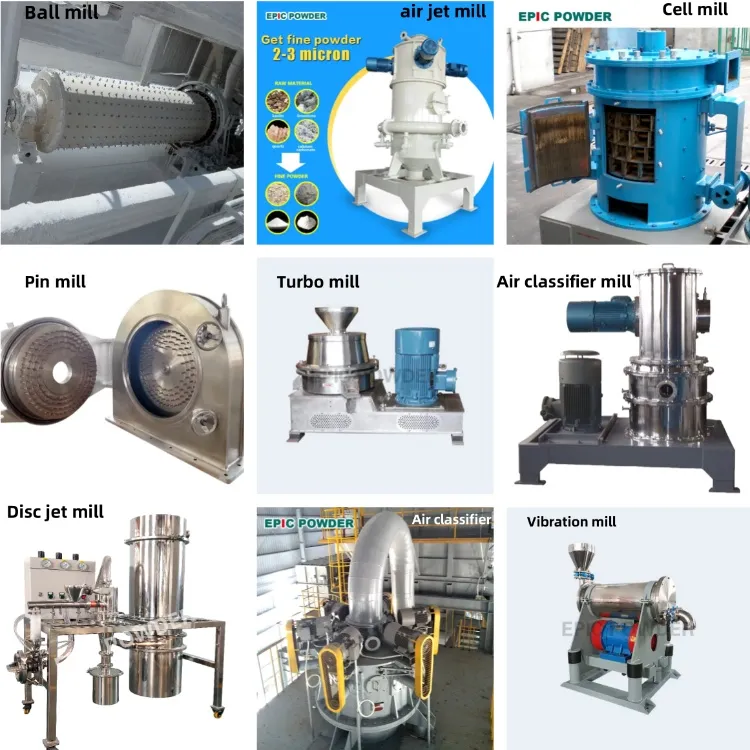
| Air classifier mill, pin mill | Below 1% | Dry feed, dried conveying air, warm ductwork |
| Fluidized bed jet mill | Below 0.5-1% | Dry feed; water collects on nozzles and on the classifier wheel first |
| مطحنة اهتزازية | Below 1% | Dry feed; coating on the media cuts throughput before anything else fails |
Ranges describe common practice for brittle minerals. The figure for a specific material comes from a drying test and a grinding test performed on that material.
Measure It Before Changing Anything
Sampling position decides whether the number means anything. A sample from a warehouse bag describes material that may have stood for weeks. A sample from the feed belt describes what the mill receives this shift, provided it is sealed and tested the same day.
Loss on drying at 105 °C is the standard basis for free water. That temperature removes surface moisture without decomposing the mineral. Hydrated materials need 40-60 °C, or an analyzer with a temperature program. Above that range the crystal water leaves as well and reads as free moisture.
A throughput log kept against moisture for several weeks produces the curve that matters. Cover at least one humid period and one dry period. The critical moisture content can be read from that curve. Any later modification has to be designed against that value, not against a handbook limit.
Measure one sample before and after laboratory drying. A wide gap between the two curves means the particles were bound into clusters. That result implicates the dispersion step in the buyer’s test as much as the mill.
What Fixes It, in Order of Cost
1. Shelter the material. A covered stockpile and a sealed silo take the weather out of the feed. This is the cheapest measure, and in marginal cases it recovers most of the seasonal loss.
2. Dry the feed ahead of the mill. A rotary dryer or a flash dryer costs fuel and floor space. In exchange, the mill holds its design rate through the year, which matters when shipments are fixed.
3. Add heat to the circuit. Hot gas into a ball mill and classifier line or a مطحنة أسطوانية does two jobs at once. It dries the feed, and it keeps the gas above its dew point as far as the filter.
4. Insulate the duct run and shorten it. Every metre of uninsulated duct loses heat to the surroundings. A bag house placed far from the mill may receive gas that is already below its dew point.
5. Dry the compressed air on a jet mill. A مطحنة نفاثة ذات طبقة مميعة runs on compressed gas, and that gas carries water according to its pressure dew point. A refrigerant dryer holds about 3 °C. A desiccant dryer goes lower at a higher running cost.
6. Warm the machine before feeding. On a humid morning the liner and the classifier wheel sit below the ambient dew point. The first powder that touches them picks up a film of water, so a short warm-up run before feeding prevents the build-up.
7. Do not cool the product below its dew point. Where the powder needs cooling, a closed loop with dry air keeps the moisture out. Ambient humid air returns water to a product that has just been dried.
Diagnosis on a Running Line
| Symptom | Likely cause | What to check |
|---|---|---|
| Tonnage falls in humid months only | Feed moisture up | Loss on drying at the mill inlet, compared across seasons |
| Product fails the top cut, D50 unchanged | Classifier build-up | Inspect rotor and guide vanes, compare the cut setting with the measured curve |
| D97 high on the laser, fine on the sieve | Agglomerates not dispersed | Re-measure with higher dispersion pressure, and on a dried split |
| Bag pressure drop climbs within one shift | Condensation on the bags | Dew point at the bag inlet against gas temperature there |
| Powder sets in a duct elbow | Local cooling, gas velocity too low | Insulation on the elbow, gas velocity against the settling velocity of the powder |
The duct layout and insulation details behind the fourth row are covered in this note on dust collector condensation.
A moisture test at the mill inlet, plus a throughput log covering one humid week, gives the value a drying stage has to be designed against. That value decides between a roof, a dryer and a different circuit. Send the feed data and the target distribution through the contact form or to [email protected]. The proposal returns with the drying stage sized alongside the mill.
Get a Quote for Your Grinding Circuit
شركة إيبك لتصنيع المساحيق
We build jet mills, air classifier mills, pin mills and the classifiers that set their cut. Every project begins with a material test. Each machine is sized from the feed data and the target distribution, including the moisture the feed carries during the wet season.
ال machine range lists the models and their working ranges, and the air classifier range covers the units used downstream of the mill.

“شكرًا لقراءتكم. أتمنى أن يكون مقالي مفيدًا. يُرجى ترك تعليق أدناه. كما يمكنكم التواصل مع ممثل خدمة عملاء EPIC Powder عبر الإنترنت. مولي لأي استفسارات أخرى.”
– إميلي تشين, مهندس